 Add to Chrome
 Add to Firefox
 Add to Edge
From Graphs to Gates: DNS-HyXNet, A Lightweight and Deployable Sequential Model for Real-Time DNS Tunnel Detection
Dec 10, 2025
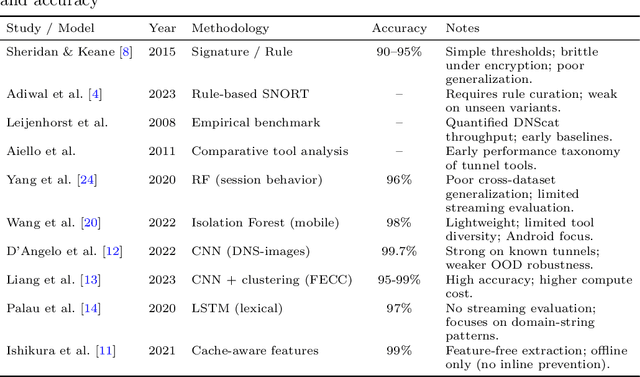
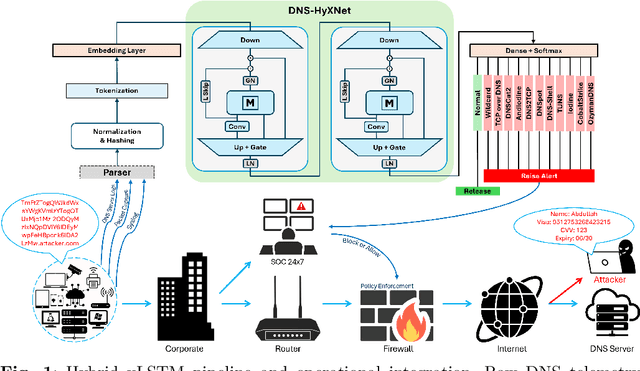
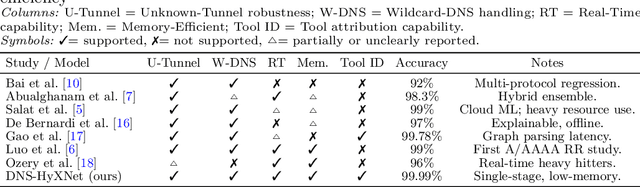
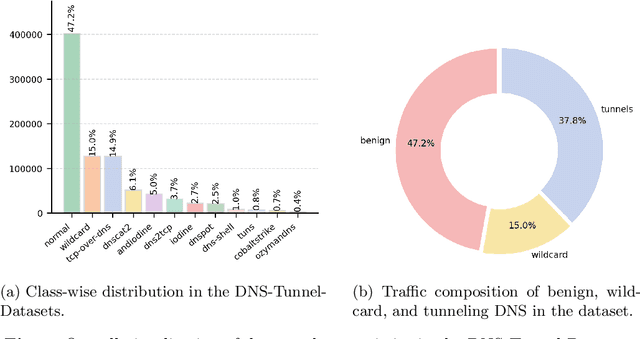
Domain Name System (DNS) tunneling remains a covert channel for data exfiltration and command-and-control communication. Although graph-based methods such as GraphTunnel achieve strong accuracy, they introduce significant latency and computational overhead due to recursive parsing and graph construction, limiting their suitability for real-time deployment. This work presents DNS-HyXNet, a lightweight extended Long Short-Term Memory (xLSTM) hybrid framework designed for efficient sequence-based DNS tunnel detection. DNS-HyXNet integrates tokenized domain embeddings with normalized numerical DNS features and processes them through a two-layer xLSTM network that directly learns temporal dependencies from packet sequences, eliminating the need for graph reconstruction and enabling single-stage multi-class classification. The model was trained and evaluated on two public benchmark datasets with carefully tuned hyperparameters to ensure low memory consumption and fast inference. Across all experimental splits of the DNS-Tunnel-Datasets, DNS-HyXNet achieved up to 99.99% accuracy, with macro-averaged precision, recall, and F1-scores exceeding 99.96%, and demonstrated a per-sample detection latency of just 0.041 ms, confirming its scalability and real-time readiness. These results show that sequential modeling with xLSTM can effectively replace computationally expensive recursive graph generation, offering a deployable and energy-efficient alternative for real-time DNS tunnel detection on commodity hardware.

Ethics of AI: A Systematic Literature Review of Principles and Challenges
Sep 12, 2021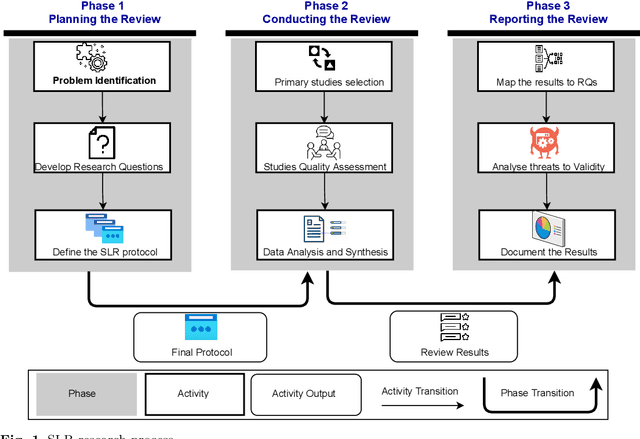
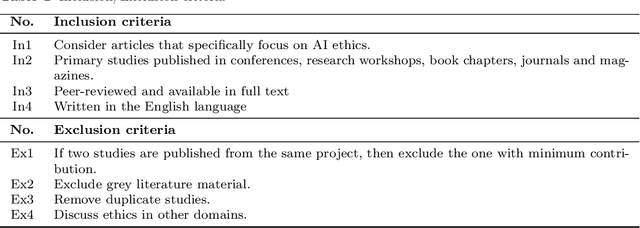
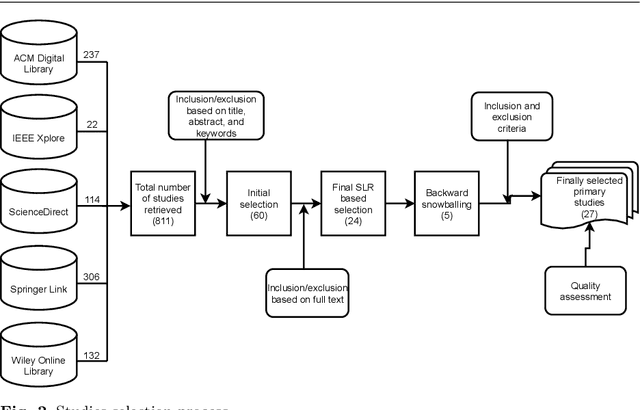
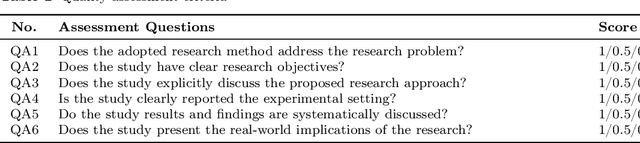
Ethics in AI becomes a global topic of interest for both policymakers and academic researchers. In the last few years, various research organizations, lawyers, think tankers and regulatory bodies get involved in developing AI ethics guidelines and principles. However, there is still debate about the implications of these principles. We conducted a systematic literature review (SLR) study to investigate the agreement on the significance of AI principles and identify the challenging factors that could negatively impact the adoption of AI ethics principles. The results reveal that the global convergence set consists of 22 ethical principles and 15 challenges. Transparency, privacy, accountability and fairness are identified as the most common AI ethics principles. Similarly, lack of ethical knowledge and vague principles are reported as the significant challenges for considering ethics in AI. The findings of this study are the preliminary inputs for proposing a maturity model that assess the ethical capabilities of AI systems and provide best practices for further improvements.