 Add to Chrome
 Add to Firefox
 Add to Edge
Transforming Heart Disease Prediction with Advanced Machine Learning Techniques
Aug 19, 2026
Heart disease remains the leading cause of mortality globally, necessitating early and accurate detection to improve patient outcomes. This research focuses on the predictive analysis of heart disease using machine learning (ML) techniques, comparing the performance of multiple classifiers to identify the most accurate and least error-prone method. Two datasets from UCI and Kaggle repositories were utilized, each containing 14 attributes related to heart health indicators. Techniques including J48, Naive Bayes, Logistic Regression, Simple Cart, Bagging, Decision Stump, AdaBoost, Artificial Neural Networks, and Support Vector Machine (SVM) were applied. Evaluation metrics such as Mean Absolute Error (MAE), Relative Absolute Error (RAE), accuracy, precision, recall, and F-measure were used for performance comparison. Results revealed that SVM achieved the highest performance on the UCI dataset, while Simple Cart performed best on the Kaggle dataset, offering the highest accuracy and lowest error rates. The research work concludes that ML models, when properly tuned and validated, can significantly assist in the early diagnosis of heart disease, offering critical support for clinical decision-making. Future work may involve hybrid approaches and the use of more recent datasets to further improve prediction accuracy.

Extended multi-stream temporal-attention module for skeleton-based human action recognition (HAR)
Nov 10, 2024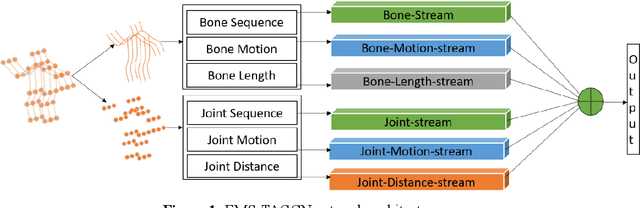
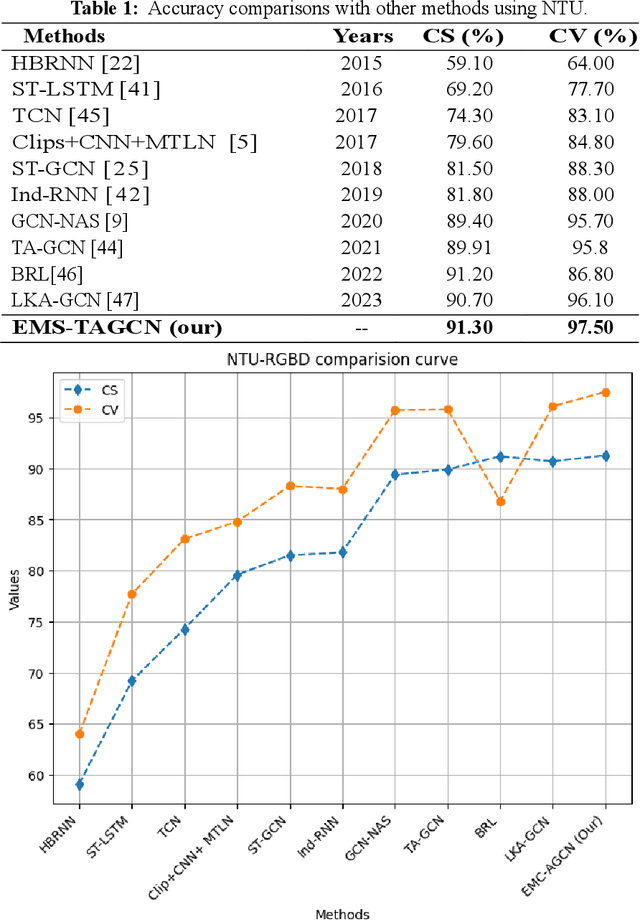
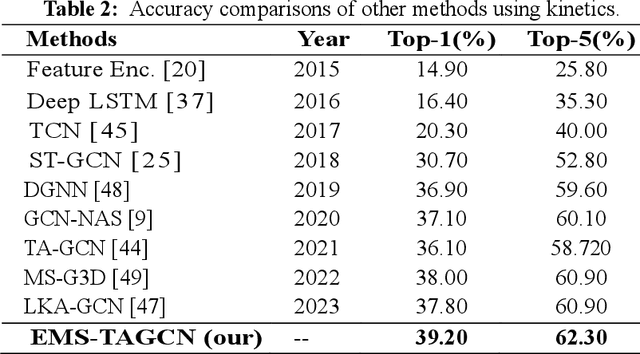
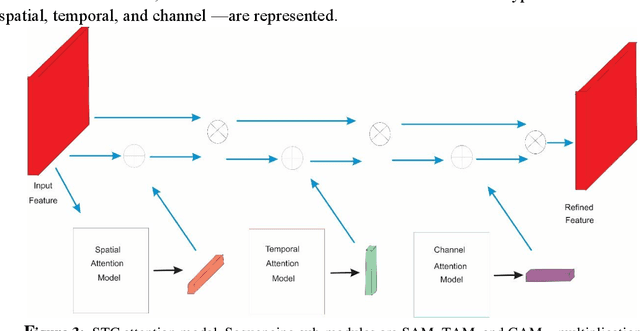
Graph convolutional networks (GCNs) are an effective skeleton-based human action recognition (HAR) technique. GCNs enable the specification of CNNs to a non-Euclidean frame that is more flexible. The previous GCN-based models still have a lot of issues: (I) The graph structure is the same for all model layers and input data.
A Fusion-Driven Approach of Attention-Based CNN-BiLSTM for Protein Family Classification -- ProFamNet
Oct 21, 2024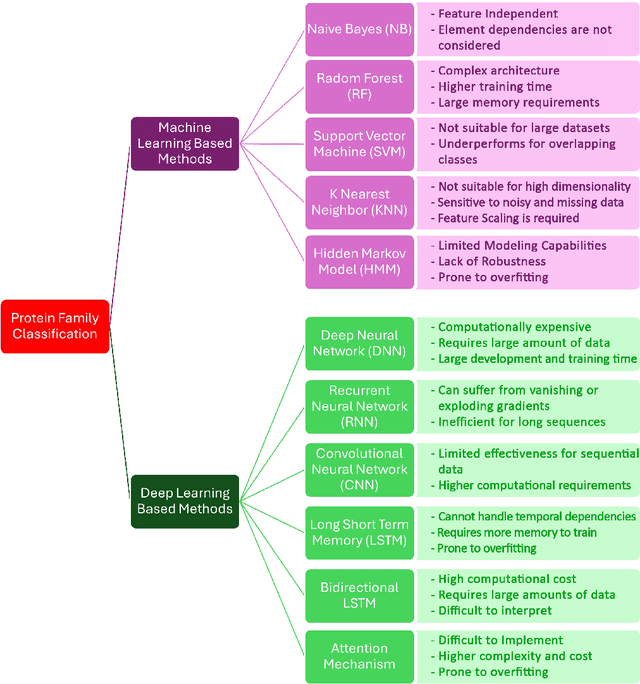

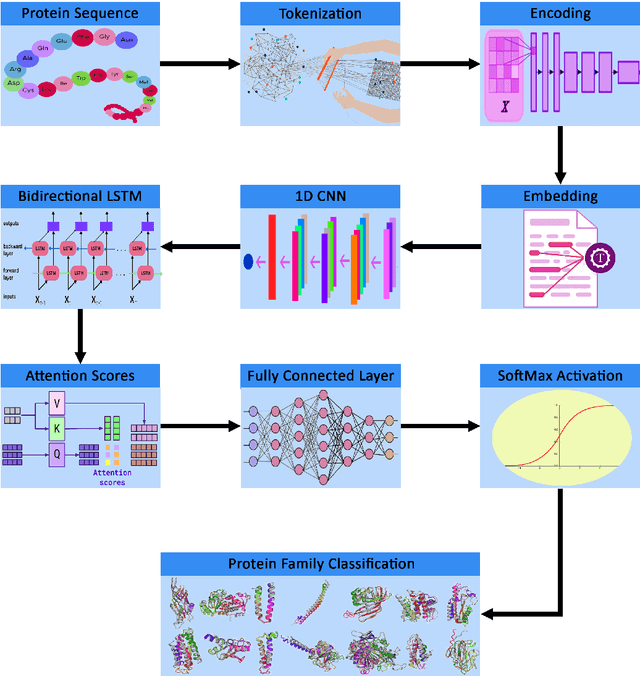
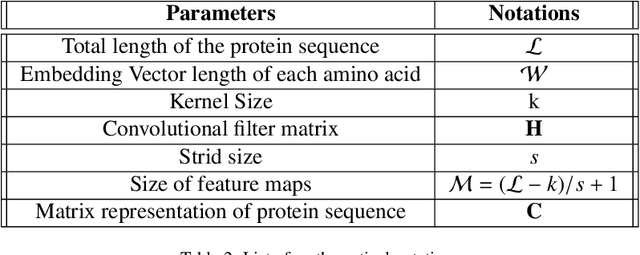
Advanced automated AI techniques allow us to classify protein sequences and discern their biological families and functions. Conventional approaches for classifying these protein families often focus on extracting N-Gram features from the sequences while overlooking crucial motif information and the interplay between motifs and neighboring amino acids. Recently, convolutional neural networks have been applied to amino acid and motif data, even with a limited dataset of well-characterized proteins, resulting in improved performance. This study presents a model for classifying protein families using the fusion of 1D-CNN, BiLSTM, and an attention mechanism, which combines spatial feature extraction, long-term dependencies, and context-aware representations. The proposed model (ProFamNet) achieved superior model efficiency with 450,953 parameters and a compact size of 1.72 MB, outperforming the state-of-the-art model with 4,578,911 parameters and a size of 17.47 MB. Further, we achieved a higher F1 score (98.30% vs. 97.67%) with more instances (271,160 vs. 55,077) in fewer training epochs (25 vs. 30).