 Add to Chrome
 Add to Firefox
 Add to Edge
Isotonic Conformal Prediction
Jul 18, 2026
A point prediction that is well calibrated on average can still be systematically biased conditional on its own value, undermining its use in downstream decision-making. We consider two objectives for reliable uncertainty quantification: self-calibration, requiring a point prediction to be unbiased conditional on its own value, and prediction-conditional validity, requiring a prediction interval to attain nominal coverage conditional on the prediction. Self-Calibrating Conformal Prediction (SC-CP) attains both objectives exactly in finite samples, but requires refitting its calibrator for every candidate outcome, which is computationally prohibitive for continuous outcomes. We propose Isotonic Conformal Prediction (ICP), a framework that decouples calibration from prediction-set construction by fitting a single isotonic recalibration map and constructing prediction intervals within strata of similar recalibrated predictions. Within this framework we develop two procedures. Split Isotonic Conformal Prediction (SICP) attains prediction-conditional validity in finite samples and self-calibration asymptotically, at the computational cost of split conformal prediction. Transductive Isotonic Conformal Prediction (TICP) attains both objectives exactly in finite samples through a per-test-point inner loop that avoids refitting the isotonic calibrator. On synthetic heteroscedastic regression problems and a real-world healthcare-utilization dataset, both procedures match the coverage of SC-CP at substantially lower computational cost.

Disentangling Shared and Target-Enriched Topics via Background-Contrastive Non-negative Matrix Factorization
Feb 25, 2026Biological signals of interest in high-dimensional data are often masked by dominant variation shared across conditions. This variation, arising from baseline biological structure or technical effects, can prevent standard dimensionality reduction methods from resolving condition-specific structure. The challenge is that these confounding topics are often unknown and mixed with biological signals. Existing background correction methods are either unscalable to high dimensions or not interpretable. We introduce background contrastive Non-negative Matrix Factorization (\model), which extracts target-enriched latent topics by jointly factorizing a target dataset and a matched background using shared non-negative bases under a contrastive objective that suppresses background-expressed structure. This approach yields non-negative components that are directly interpretable at the feature level, and explicitly isolates target-specific variation. \model is learned by an efficient multiplicative update algorithm via matrix multiplication such that it is highly efficient on GPU hardware and scalable to big data via minibatch training akin to deep learning approach. Across simulations and diverse biological datasets, \model reveals signals obscured by conventional methods, including disease-associated programs in postmortem depressive brain single-cell RNA-seq, genotype-linked protein expression patterns in mice, treatment-specific transcriptional changes in leukemia, and TP53-dependent drug responses in cancer cell lines.
CAIRO: Decoupling Order from Scale in Regression
Feb 16, 2026Standard regression methods typically optimize a single pointwise objective, such as mean squared error, which conflates the learning of ordering with the learning of scale. This coupling renders models vulnerable to outliers and heavy-tailed noise. We propose CAIRO (Calibrate After Initial Rank Ordering), a framework that decouples regression into two distinct stages. In the first stage, we learn a scoring function by minimizing a scale-invariant ranking loss; in the second, we recover the target scale via isotonic regression. We theoretically characterize a class of "Optimal-in-Rank-Order" objectives -- including variants of RankNet and Gini covariance -- and prove that they recover the ordering of the true conditional mean under mild assumptions. We further show that subsequent monotone calibration guarantees recovery of the true regression function. Empirically, CAIRO combines the representation learning of neural networks with the robustness of rank-based statistics. It matches the performance of state-of-the-art tree ensembles on tabular benchmarks and significantly outperforms standard regression objectives in regimes with heavy-tailed or heteroskedastic noise.
Why Self-Training Helps and Hurts: Denoising vs. Signal Forgetting
Feb 15, 2026Iterative self-training (self-distillation) repeatedly refits a model on pseudo-labels generated by its own predictions. We study this procedure in overparameterized linear regression: an initial estimator is trained on noisy labels, and each subsequent iterate is trained on fresh covariates with noiseless pseudo-labels from the previous model. In the high-dimensional regime, we derive deterministic-equivalent recursions for the prediction risk and effective noise across iterations, and prove that the empirical quantities concentrate sharply around these limits. The recursion separates two competing forces: a systematic component that grows with iteration due to progressive signal forgetting, and a stochastic component that decays due to denoising via repeated data-dependent projections. Their interaction yields a $U$-shaped test-risk curve and an optimal early-stopping time. In spiked covariance models, iteration further acts as an iteration-dependent spectral filter that preserves strong eigendirections while suppressing weaker ones, inducing an implicit form of soft feature selection distinct from ridge regression. Finally, we propose an iterated generalized cross-validation criterion and prove its uniform consistency for estimating the risk along the self-training trajectory, enabling fully data-driven selection of the stopping time and regularization. Experiments on synthetic covariances validate the theory and illustrate the predicted denoising-forgetting trade-off.
Multivariate Conformal Selection
May 01, 2025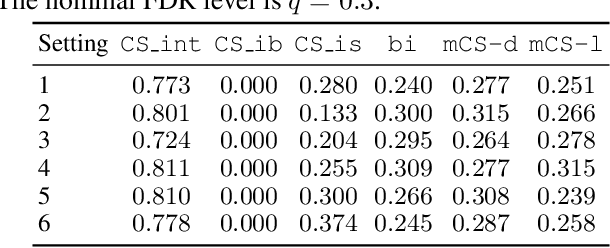
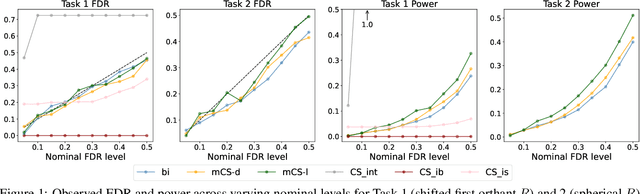
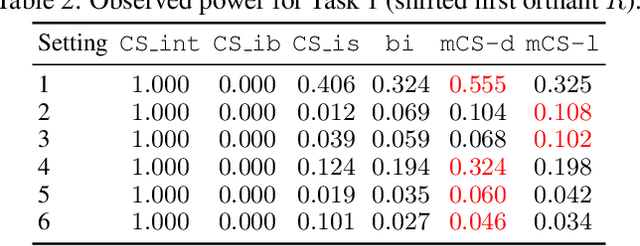
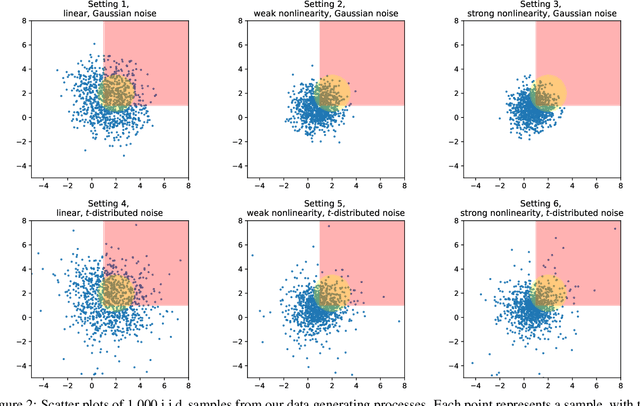
Selecting high-quality candidates from large datasets is critical in applications such as drug discovery, precision medicine, and alignment of large language models (LLMs). While Conformal Selection (CS) provides rigorous uncertainty quantification, it is limited to univariate responses and scalar criteria. To address this issue, we propose Multivariate Conformal Selection (mCS), a generalization of CS designed for multivariate response settings. Our method introduces regional monotonicity and employs multivariate nonconformity scores to construct conformal p-values, enabling finite-sample False Discovery Rate (FDR) control. We present two variants: mCS-dist, using distance-based scores, and mCS-learn, which learns optimal scores via differentiable optimization. Experiments on simulated and real-world datasets demonstrate that mCS significantly improves selection power while maintaining FDR control, establishing it as a robust framework for multivariate selection tasks.
QComp: A QSAR-Based Data Completion Framework for Drug Discovery
May 20, 2024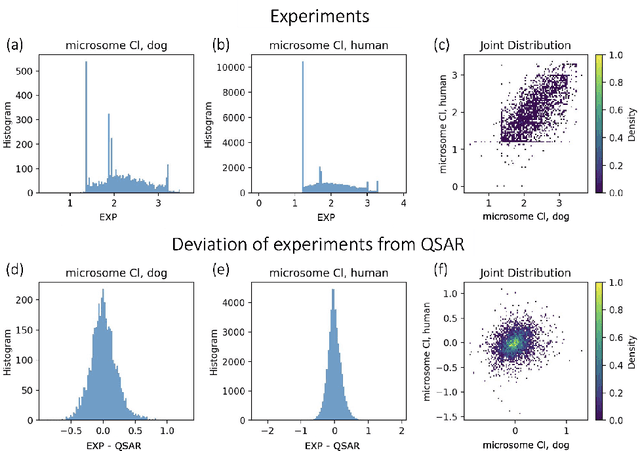
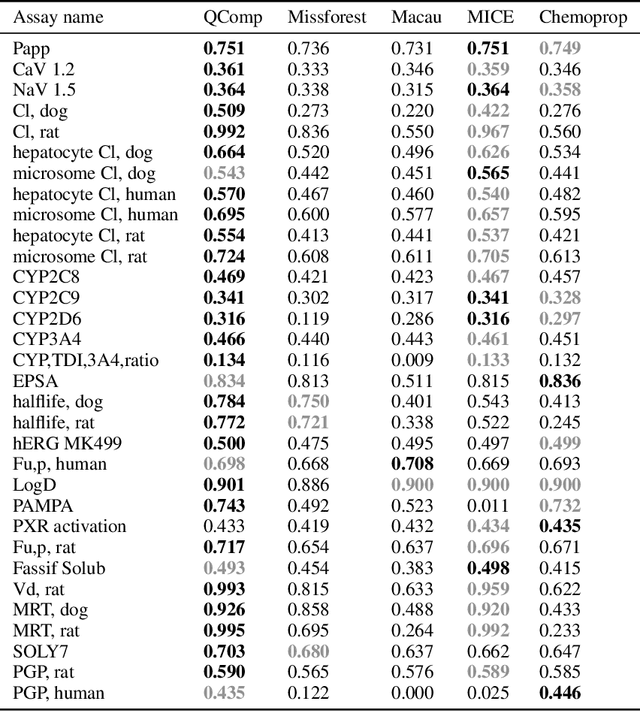
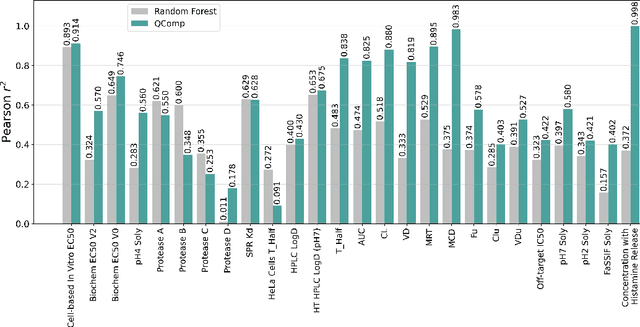
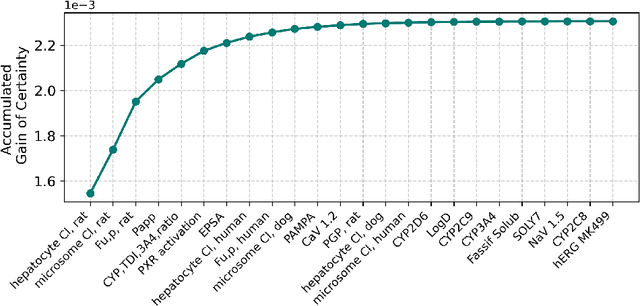
In drug discovery, in vitro and in vivo experiments reveal biochemical activities related to the efficacy and toxicity of compounds. The experimental data accumulate into massive, ever-evolving, and sparse datasets. Quantitative Structure-Activity Relationship (QSAR) models, which predict biochemical activities using only the structural information of compounds, face challenges in integrating the evolving experimental data as studies progress. We develop QSAR-Complete (QComp), a data completion framework to address this issue. Based on pre-existing QSAR models, QComp utilizes the correlation inherent in experimental data to enhance prediction accuracy across various tasks. Moreover, QComp emerges as a promising tool for guiding the optimal sequence of experiments by quantifying the reduction in statistical uncertainty for specific endpoints, thereby aiding in rational decision-making throughout the drug discovery process.
MixEHR-SurG: a joint proportional hazard and guided topic model for inferring mortality-associated topics from electronic health records
Dec 20, 2023Objective: To improve survival analysis using EHR data, we aim to develop a supervised topic model called MixEHR-SurG to simultaneously integrate heterogeneous EHR data and model survival hazard. Materials and Methods: Our technical contributions are three-folds: (1) integrating EHR topic inference with Cox proportional hazards likelihood; (2) inferring patient-specific topic hyperparameters using the PheCode concepts such that each topic can be identified with exactly one PheCode-associated phenotype; (3) multi-modal survival topic inference. This leads to a highly interpretable survival and guided topic model that can infer PheCode-specific phenotype topics associated with patient mortality. We evaluated MixEHR-G using a simulated dataset and two real-world EHR datasets: the Quebec Congenital Heart Disease (CHD) data consisting of 8,211 subjects with 75,187 outpatient claim data of 1,767 unique ICD codes; the MIMIC-III consisting of 1,458 subjects with multi-modal EHR records. Results: Compared to the baselines, MixEHR-G achieved a superior dynamic AUROC for mortality prediction, with a mean AUROC score of 0.89 in the simulation dataset and a mean AUROC of 0.645 on the CHD dataset. Qualitatively, MixEHR-G associates severe cardiac conditions with high mortality risk among the CHD patients after the first heart failure hospitalization and critical brain injuries with increased mortality among the MIMIC-III patients after their ICU discharge. Conclusion: The integration of the Cox proportional hazards model and EHR topic inference in MixEHR-SurG led to not only competitive mortality prediction but also meaningful phenotype topics for systematic survival analysis. The software is available at GitHub: https://github.com/li-lab-mcgill/MixEHR-SurG.
Structured Learning in Time-dependent Cox Models
Jun 21, 2023Cox models with time-dependent coefficients and covariates are widely used in survival analysis. In high-dimensional settings, sparse regularization techniques are employed for variable selection, but existing methods for time-dependent Cox models lack flexibility in enforcing specific sparsity patterns (i.e., covariate structures). We propose a flexible framework for variable selection in time-dependent Cox models, accommodating complex selection rules. Our method can adapt to arbitrary grouping structures, including interaction selection, temporal, spatial, tree, and directed acyclic graph structures. It achieves accurate estimation with low false alarm rates. We develop the sox package, implementing a network flow algorithm for efficiently solving models with complex covariate structures. Sox offers a user-friendly interface for specifying grouping structures and delivers fast computation. Through examples, including a case study on identifying predictors of time to all-cause death in atrial fibrillation patients, we demonstrate the practical application of our method with specific selection rules.