 Add to Chrome
 Add to Firefox
 Add to Edge
Sar Image Despeckling
Synthetic aperture radar (SAR) image despeckling is the process of removing speckle noise from SAR images.
Papers and Code
Comparative Study of Weighted and Coupled Second- and Fourth-Order PDEs for Image Despeckling in Grayscale, Color, SAR, and Ultrasound
Apr 26, 2026
Partial Differential Equation (PDE)-based approaches have gained significant attention in image despeckling due to their strong capability to preserve structural details while suppressing noise. However, conventional second-order PDE models tend to generate blocky artifacts, whereas higher-order models often introduce speckle patterns. To resolve it, this paper proposes and comparatively analyzes two advanced PDE-based frameworks designed for speckle noise suppression while preserving the fine edges. The first model introduces a novel weighted formulation that combines second and fourth-order PDEs through a weighting parameter. The second-order diffusion coefficient employs grayscale and gradient-based indicators, while the fourth-order term is guided solely by a Laplacian-based indicator. The second model constructs a coupled PDE framework, where independent fourth and second-order components are explicitly solved in an iterative manner. In this coupled structure, each diffusion coefficient is defined separately to enhance adaptability in varying image regions. Both models are implemented using the explicit finite difference method. The proposed techniques are extensively evaluated on a variety of datasets, including standard grayscale, color, Synthetic Aperture Radar (SAR), and ultrasound images. Comparative experiments with the existing Telegraph Diffusion Model (TDM) and Fourth-Order Telegraph Diffusion Model (TDFM) demonstrate the superiority of the proposed approaches in reducing speckle noise while effectively preserving fine image structures and edges. Quantitative evaluations using PSNR, SSIM and Speckle Index metrics confirm that the proposed models produce higher image quality and enhanced visual perception. Overall, the presented PDE-based formulations provide a reliable and efficient framework for image despeckling in both natural and medical imaging.

Task-Guided Prompting for Unified Remote Sensing Image Restoration
Apr 03, 2026Remote sensing image restoration (RSIR) is essential for recovering high-fidelity imagery from degraded observations, enabling accurate downstream analysis. However, most existing methods focus on single degradation types within homogeneous data, restricting their practicality in real-world scenarios where multiple degradations often across diverse spectral bands or sensor modalities, creating a significant operational bottleneck. To address this fundamental gap, we propose TGPNet, a unified framework capable of handling denoising, cloud removal, shadow removal, deblurring, and SAR despeckling within a single, unified architecture. The core of our framework is a novel Task-Guided Prompting (TGP) strategy. TGP leverages learnable, task-specific embeddings to generate degradation-aware cues, which then hierarchically modulate features throughout the decoder. This task-adaptive mechanism allows the network to precisely tailor its restoration process for distinct degradation patterns while maintaining a single set of shared weights. To validate our framework, we construct a unified RSIR benchmark covering RGB, multispectral, SAR, and thermal infrared modalities for five aforementioned restoration tasks. Experimental results demonstrate that TGPNet achieves state-of-the-art performance on both unified multi-task scenarios and unseen composite degradations, surpassing even specialized models in individual domains such as cloud removal. By successfully unifying heterogeneous degradation removal within a single adaptive framework, this work presents a significant advancement for multi-task RSIR, offering a practical and scalable solution for operational pipelines. The code and benchmark will be released at https://github.com/huangwenwenlili/TGPNet.
* 17 pages, 11 figures
Self-Supervised Score-Based Despeckling for SAR Imagery via Log-Domain Transformation
Jan 20, 2026The speckle noise inherent in Synthetic Aperture Radar (SAR) imagery significantly degrades image quality and complicates subsequent analysis. Given that SAR speckle is multiplicative and Gamma-distributed, effectively despeckling SAR imagery remains challenging. This paper introduces a novel self-supervised framework for SAR image despeckling based on score-based generative models operating in the transformed log domain. We first transform the data into the log-domain and then convert the speckle noise residuals into an approximately additive Gaussian distribution. This step enables the application of score-based models, which are trained in the transformed domain using a self-supervised objective. This objective allows our model to learn the clean underlying signal by training on further corrupted versions of the input data itself. Consequently, our method exhibits significantly shorter inference times compared to many existing self-supervised techniques, offering a robust and practical solution for SAR image restoration.
Sim2Real SAR Image Restoration: Metadata-Driven Models for Joint Despeckling and Sidelobes Reduction
Jan 04, 2026Synthetic aperture radar (SAR) provides valuable information about the Earth's surface under all weather and illumination conditions. However, the inherent phenomenon of speckle and the presence of sidelobes around bright targets pose challenges for accurate interpretation of SAR imagery. Most existing SAR image restoration methods address despeckling and sidelobes reduction as separate tasks. In this paper, we propose a unified framework that jointly performs both tasks using neural networks (NNs) trained on a realistic SAR simulated dataset generated with MOCEM. Inference can then be performed on real SAR images, demonstrating effective simulation to real (Sim2Real) transferability. Additionally, we incorporate acquisition metadata as auxiliary input to the NNs, demonstrating improved restoration performance.
* Accepted at the Conference on Artificial Intelligence for Defense (CAID), 2025, Rennes, France
Towards Frequency-Adaptive Learning for SAR Despeckling
Nov 08, 2025Synthetic Aperture Radar (SAR) images are inherently corrupted by speckle noise, limiting their utility in high-precision applications. While deep learning methods have shown promise in SAR despeckling, most methods employ a single unified network to process the entire image, failing to account for the distinct speckle statistics associated with different spatial physical characteristics. It often leads to artifacts, blurred edges, and texture distortion. To address these issues, we propose SAR-FAH, a frequency-adaptive heterogeneous despeckling model based on a divide-and-conquer architecture. First, wavelet decomposition is used to separate the image into frequency sub-bands carrying different intrinsic characteristics. Inspired by their differing noise characteristics, we design specialized sub-networks for different frequency components. The tailored approach leverages statistical variations across frequencies, improving edge and texture preservation while suppressing noise. Specifically, for the low-frequency part, denoising is formulated as a continuous dynamic system via neural ordinary differential equations, ensuring structural fidelity and sufficient smoothness that prevents artifacts. For high-frequency sub-bands rich in edges and textures, we introduce an enhanced U-Net with deformable convolutions for noise suppression and enhanced features. Extensive experiments on synthetic and real SAR images validate the superior performance of the proposed model in noise removal and structural preservation.
Bayesian Despeckling of Structured Sources
Jan 21, 2025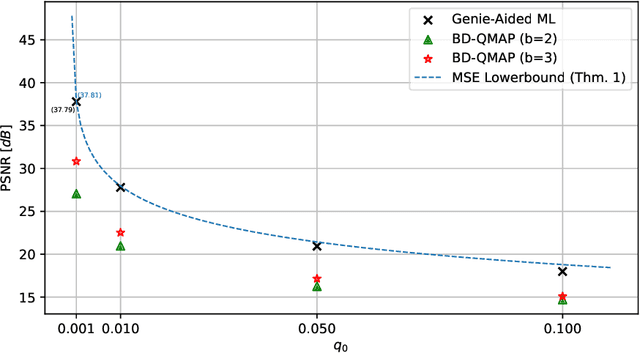
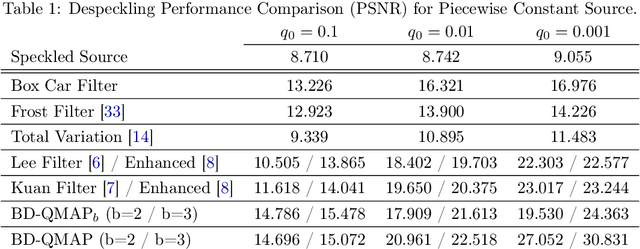
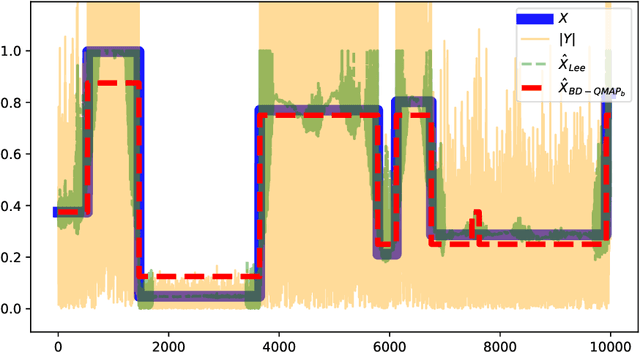
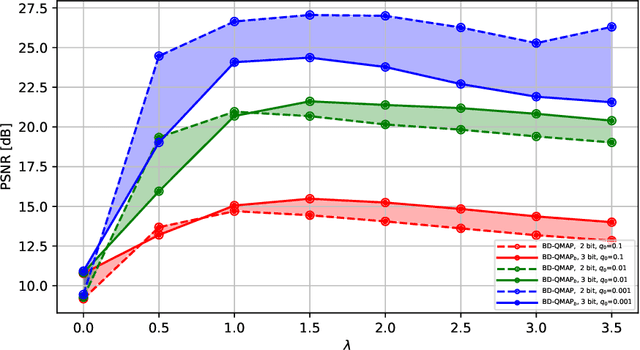
Speckle noise is a fundamental challenge in coherent imaging systems, significantly degrading image quality. Over the past decades, numerous despeckling algorithms have been developed for applications such as Synthetic Aperture Radar (SAR) and digital holography. In this paper, we aim to establish a theoretically grounded approach to despeckling. We propose a method applicable to general structured stationary stochastic sources. We demonstrate the effectiveness of the proposed method on piecewise constant sources. Additionally, we theoretically derive a lower bound on the despeckling performance for such sources. The proposed depseckler applied to the 1-Markov structured sources achieves better reconstruction performance with no strong simplification of the ground truth signal model or speckle noise.
Deep Learning Based Speckle Filtering for Polarimetric SAR Images. Application to Sentinel-1
Aug 29, 2024Speckle suppression in synthetic aperture radar (SAR) images is a key processing step which continues to be a research topic. A wide variety of methods, using either spatially-based approaches or transform-based strategies, have been developed and have shown to provide outstanding results. However, recent advances in deep learning techniques and their application to SAR image despeckling have been demonstrated to offer state-of-the-art results. Unfortunately, they have been mostly applied to single-polarimetric images. The extension of a deep learning-based approach for speckle removal to polarimetric SAR (PolSAR) images is complicated because of the complex nature of the measured covariance matrices for every image pixel, the properties of which must be preserved during filtering. In this work, we propose a complete framework to remove speckle in polarimetric SAR images using a convolutional neural network. The methodology includes a reversible transformation of the original complex covariance matrix to obtain a set of real-valued intensity bands which are fed to the neural network. In addition, the proposed method includes a change detection strategy to avoid the neural network to learn erroneous features in areas strongly affected by temporal changes, so that the network only learns the underlying speckle component present in the data. The method is implemented and tested with dual-polarimetric images acquired by Sentinel-1. Experiments show that the proposed approach offers exceptional results in both speckle reduction and resolution preservation. More importantly, it is also shown that the neural network is not generating artifacts or introducing bias in the filtered images, making them suitable for further polarimetric processing and exploitation.
A Tunable Despeckling Neural Network Stabilized via Diffusion Equation
Nov 24, 2024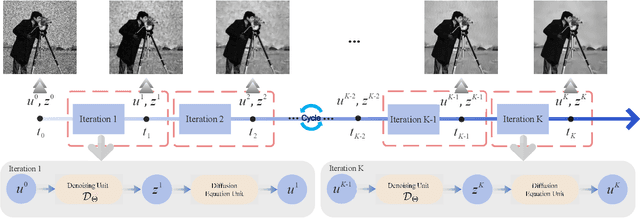
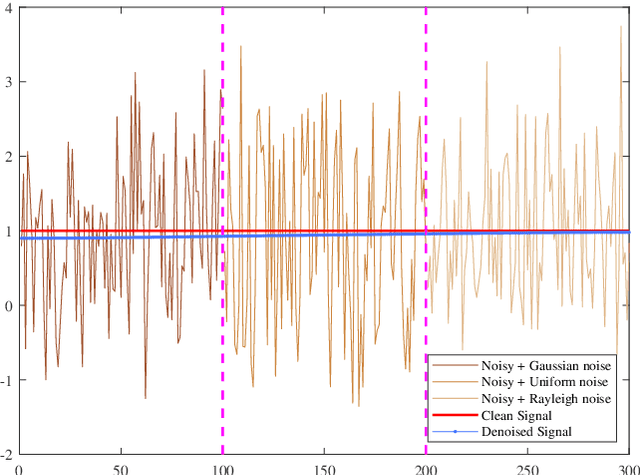
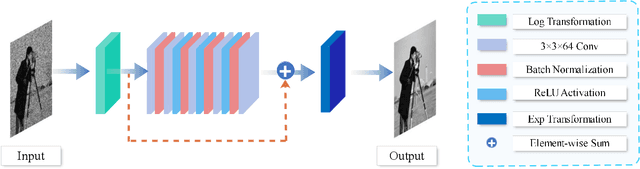
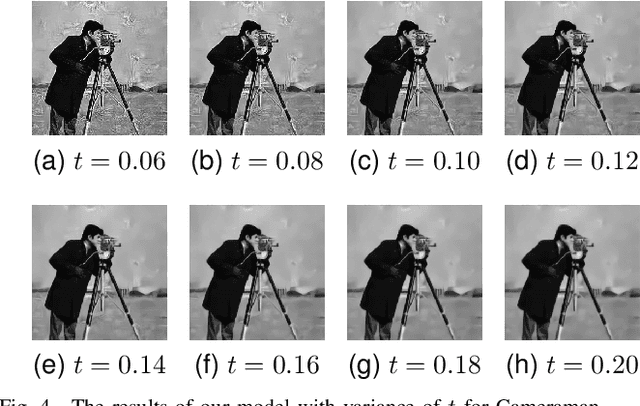
Multiplicative Gamma noise remove is a critical research area in the application of synthetic aperture radar (SAR) imaging, where neural networks serve as a potent tool. However, real-world data often diverges from theoretical models, exhibiting various disturbances, which makes the neural network less effective. Adversarial attacks work by finding perturbations that significantly disrupt functionality of neural networks, as the inherent instability of neural networks makes them highly susceptible. A network designed to withstand such extreme cases can more effectively mitigate general disturbances in real SAR data. In this work, the dissipative nature of diffusion equations is employed to underpin a novel approach for countering adversarial attacks and improve the resistance of real noise disturbance. We propose a tunable, regularized neural network that unrolls a denoising unit and a regularization unit into a single network for end-to-end training. In the network, the denoising unit and the regularization unit are composed of the denoising network and the simplest linear diffusion equation respectively. The regularization unit enhances network stability, allowing post-training time step adjustments to effectively mitigate the adverse impacts of adversarial attacks. The stability and convergence of our model are theoretically proven, and in the experiments, we compare our model with several state-of-the-art denoising methods on simulated images, adversarial samples, and real SAR images, yielding superior results in both quantitative and visual evaluations.
Just Project! Multi-Channel Despeckling, the Easy Way
Aug 21, 2024
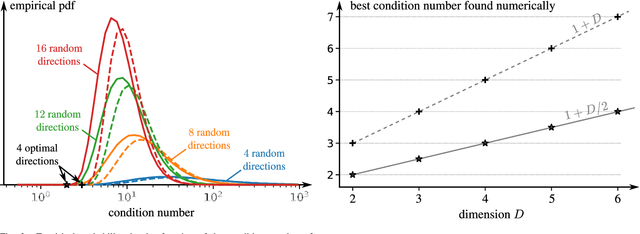


Reducing speckle fluctuations in multi-channel SAR images is essential in many applications of SAR imaging such as polarimetric classification or interferometric height estimation. While single-channel despeckling has widely benefited from the application of deep learning techniques, extensions to multi-channel SAR images are much more challenging.This paper introduces MuChaPro, a generic framework that exploits existing single-channel despeckling methods. The key idea is to generate numerous single-channel projections, restore these projections, and recombine them into the final multi-channel estimate. This simple approach is shown to be effective in polarimetric and/or interferometric modalities. A special appeal of MuChaPro is the possibility to apply a self-supervised training strategy to learn sensor-specific networks for single-channel despeckling.
Multi-task SAR Image Processing via GAN-based Unsupervised Manipulation
Aug 02, 2024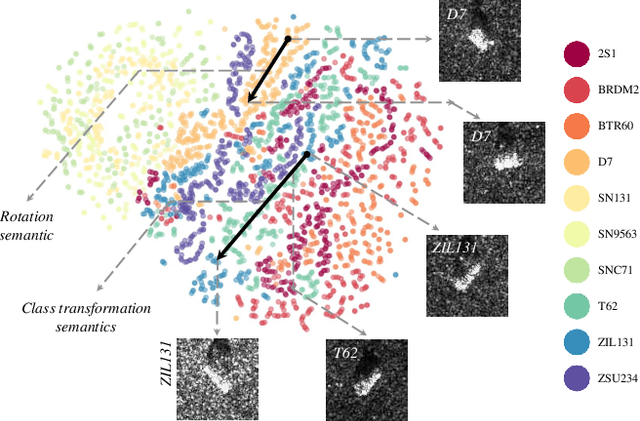
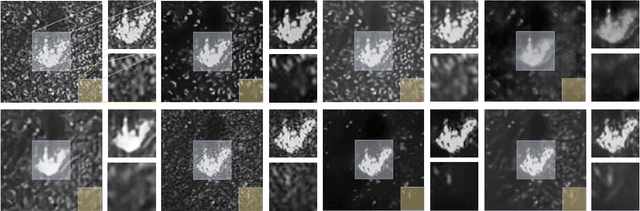
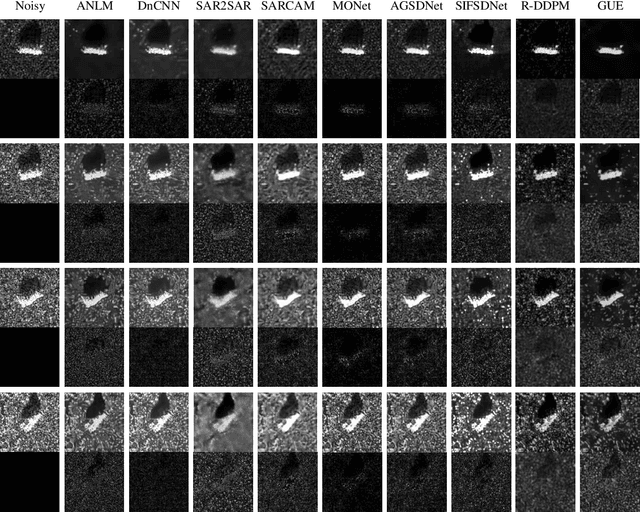
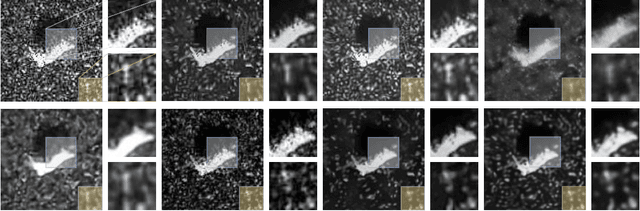
Generative Adversarial Networks (GANs) have shown tremendous potential in synthesizing a large number of realistic SAR images by learning patterns in the data distribution. Some GANs can achieve image editing by introducing latent codes, demonstrating significant promise in SAR image processing. Compared to traditional SAR image processing methods, editing based on GAN latent space control is entirely unsupervised, allowing image processing to be conducted without any labeled data. Additionally, the information extracted from the data is more interpretable. This paper proposes a novel SAR image processing framework called GAN-based Unsupervised Editing (GUE), aiming to address the following two issues: (1) disentangling semantic directions in the GAN latent space and finding meaningful directions; (2) establishing a comprehensive SAR image processing framework while achieving multiple image processing functions. In the implementation of GUE, we decompose the entangled semantic directions in the GAN latent space by training a carefully designed network. Moreover, we can accomplish multiple SAR image processing tasks (including despeckling, localization, auxiliary identification, and rotation editing) in a single training process without any form of supervision. Extensive experiments validate the effectiveness of the proposed method.