 Add to Chrome
 Add to Firefox
 Add to Edge
Netflow
Papers and Code
Toward Real-World IoT Security: Concept Drift-Resilient IoT Botnet Detection via Latent Space Representation Learning and Alignment
Dec 27, 2025
Although AI-based models have achieved high accuracy in IoT threat detection, their deployment in enterprise environments is constrained by reliance on stationary datasets that fail to reflect the dynamic nature of real-world IoT NetFlow traffic, which is frequently affected by concept drift. Existing solutions typically rely on periodic classifier retraining, resulting in high computational overhead and the risk of catastrophic forgetting. To address these challenges, this paper proposes a scalable framework for adaptive IoT threat detection that eliminates the need for continuous classifier retraining. The proposed approach trains a classifier once on latent-space representations of historical traffic, while an alignment model maps incoming traffic to the learned historical latent space prior to classification, thereby preserving knowledge of previously observed attacks. To capture inter-instance relationships among attack samples, the low-dimensional latent representations are further transformed into a graph-structured format and classified using a graph neural network. Experimental evaluations on real-world heterogeneous IoT traffic datasets demonstrate that the proposed framework maintains robust detection performance under concept drift. These results highlight the framework's potential for practical deployment in dynamic and large-scale IoT environments.

PROVEX: Enhancing SOC Analyst Trust with Explainable Provenance-Based IDS
Dec 20, 2025
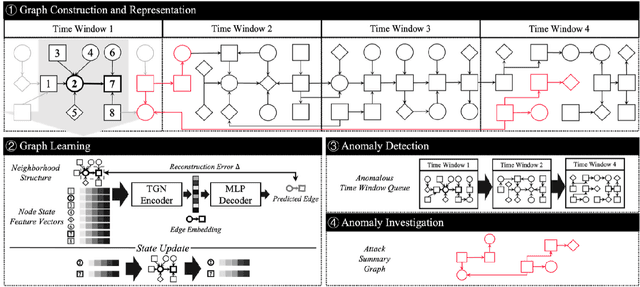
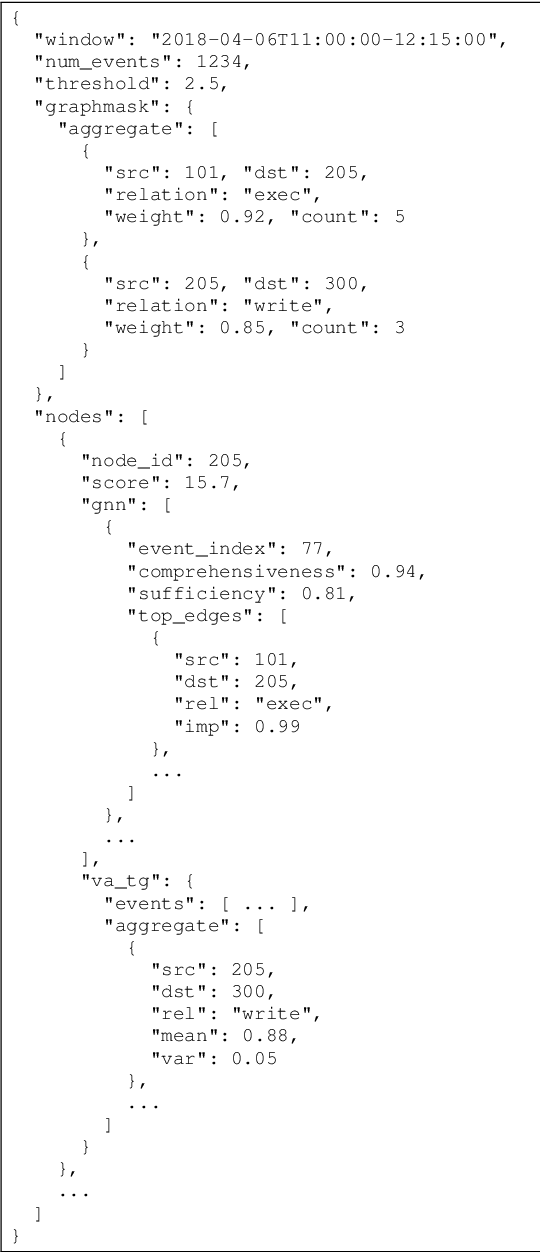
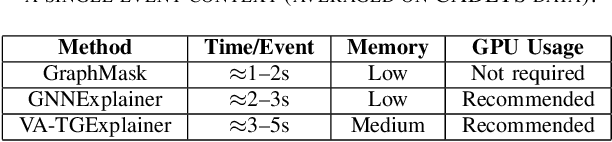
Modern intrusion detection systems (IDS) leverage graph neural networks (GNNs) to detect malicious activity in system provenance data, but their decisions often remain a black box to analysts. This paper presents a comprehensive XAI framework designed to bridge the trust gap in Security Operations Centers (SOCs) by making graph-based detection transparent. We implement this framework on top of KAIROS, a state-of-the-art temporal graph-based IDS, though our design is applicable to any temporal graph-based detector with minimal adaptation. The complete codebase is available at https://github.com/devang1304/provex.git. We augment the detection pipeline with post-hoc explanations that highlight why an alert was triggered, identifying key causal subgraphs and events. We adapt three GNN explanation methods - GraphMask, GNNExplainer, and a variational temporal GNN explainer (VA-TGExplainer) - to the temporal provenance context. These tools output human-interpretable representations of anomalous behavior, including important edges and uncertainty estimates. Our contributions focus on the practical integration of these explainers, addressing challenges in memory management and reproducibility. We demonstrate our framework on the DARPA CADETS Engagement 3 dataset and show that it produces concise window-level explanations for detected attacks. Our evaluation reveals that the explainers preserve the TGNN's decisions with high fidelity, surfacing critical edges such as malicious file interactions and anomalous netflows. The average explanation overhead is 3-5 seconds per event. By providing insight into the model's reasoning, our framework aims to improve analyst trust and triage speed.
Graph Attention Neural Network for Botnet Detection: Evaluating Autoencoder, VAE and PCA-Based Dimension Reduction
May 23, 2025With the rise of IoT-based botnet attacks, researchers have explored various learning models for detection, including traditional machine learning, deep learning, and hybrid approaches. A key advancement involves deploying attention mechanisms to capture long-term dependencies among features, significantly improving detection accuracy. However, most models treat attack instances independently, overlooking inter-instance relationships. Graph Neural Networks (GNNs) address this limitation by learning an embedding space via iterative message passing where similar instances are placed closer based on node features and relationships, enhancing classification performance. To further improve detection, attention mechanisms have been embedded within GNNs, leveraging both long-range dependencies and inter-instance connections. However, transforming the high dimensional IoT attack datasets into a graph structured dataset poses challenges, such as large graph structures leading computational overhead. To mitigate this, this paper proposes a framework that first reduces dimensionality of the NetFlow-based IoT attack dataset before transforming it into a graph dataset. We evaluate three dimension reduction techniques--Variational Autoencoder (VAE-encoder), classical autoencoder (AE-encoder), and Principal Component Analysis (PCA)--and compare their effects on a Graph Attention neural network (GAT) model for botnet attack detection
Self-Supervised Transformer-based Contrastive Learning for Intrusion Detection Systems
May 12, 2025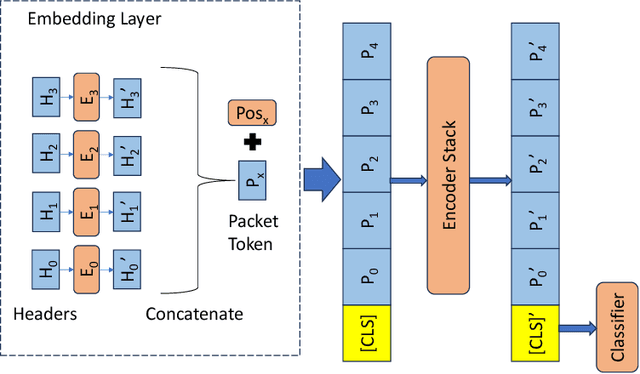
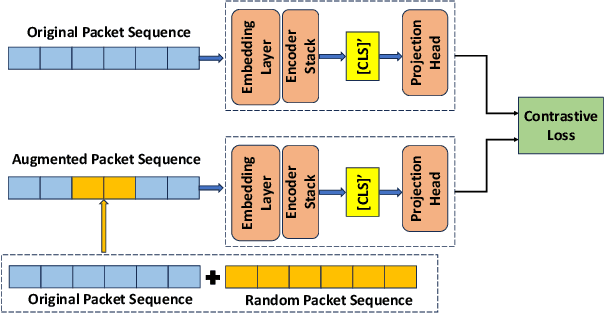
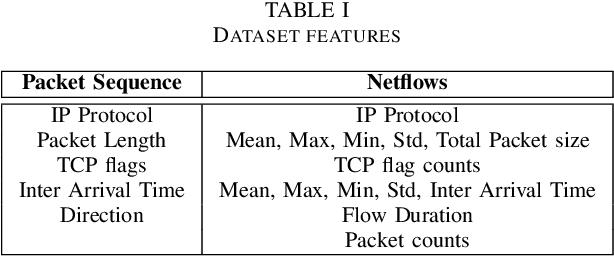
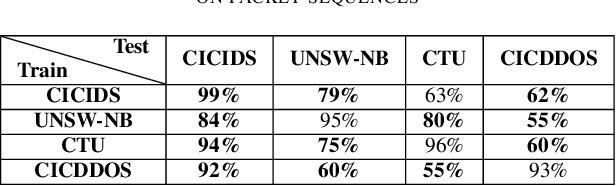
As the digital landscape becomes more interconnected, the frequency and severity of zero-day attacks, have significantly increased, leading to an urgent need for innovative Intrusion Detection Systems (IDS). Machine Learning-based IDS that learn from the network traffic characteristics and can discern attack patterns from benign traffic offer an advanced solution to traditional signature-based IDS. However, they heavily rely on labeled datasets, and their ability to generalize when encountering unseen traffic patterns remains a challenge. This paper proposes a novel self-supervised contrastive learning approach based on transformer encoders, specifically tailored for generalizable intrusion detection on raw packet sequences. Our proposed learning scheme employs a packet-level data augmentation strategy combined with a transformer-based architecture to extract and generate meaningful representations of traffic flows. Unlike traditional methods reliant on handcrafted statistical features (NetFlow), our approach automatically learns comprehensive packet sequence representations, significantly enhancing performance in anomaly identification tasks and supervised learning for intrusion detection. Our transformer-based framework exhibits better performance in comparison to existing NetFlow self-supervised methods. Specifically, we achieve up to a 3% higher AUC in anomaly detection for intra-dataset evaluation and up to 20% higher AUC scores in inter-dataset evaluation. Moreover, our model provides a strong baseline for supervised intrusion detection with limited labeled data, exhibiting an improvement over self-supervised NetFlow models of up to 1.5% AUC when pretrained and evaluated on the same dataset. Additionally, we show the adaptability of our pretrained model when fine-tuned across different datasets, demonstrating strong performance even when lacking benign data from the target domain.
Synthesizing Diverse Network Flow Datasets with Scalable Dynamic Multigraph Generation
May 12, 2025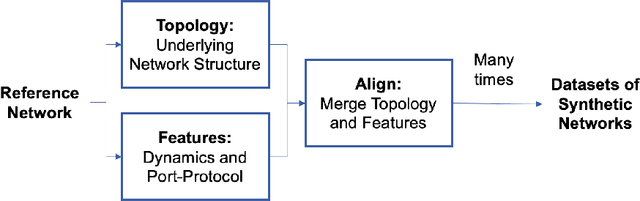
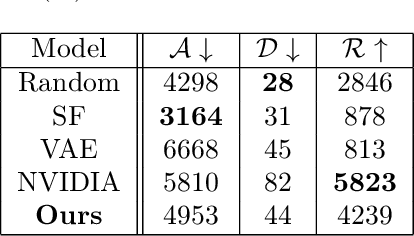
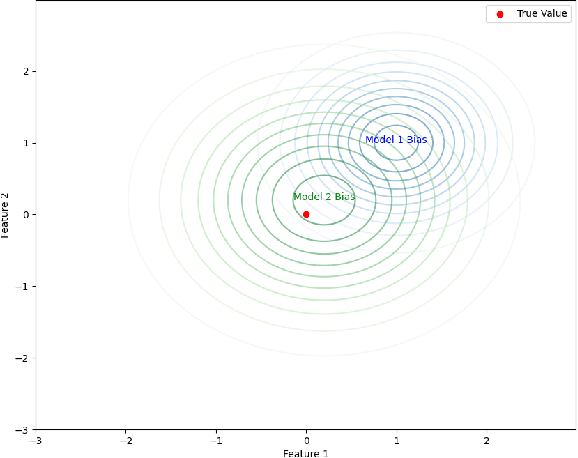
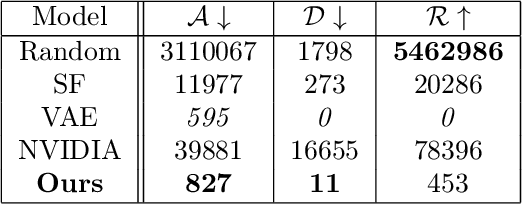
Obtaining real-world network datasets is often challenging because of privacy, security, and computational constraints. In the absence of such datasets, graph generative models become essential tools for creating synthetic datasets. In this paper, we introduce a novel machine learning model for generating high-fidelity synthetic network flow datasets that are representative of real-world networks. Our approach involves the generation of dynamic multigraphs using a stochastic Kronecker graph generator for structure generation and a tabular generative adversarial network for feature generation. We further employ an XGBoost (eXtreme Gradient Boosting) model for graph alignment, ensuring accurate overlay of features onto the generated graph structure. We evaluate our model using new metrics that assess both the accuracy and diversity of the synthetic graphs. Our results demonstrate improvements in accuracy over previous large-scale graph generation methods while maintaining similar efficiency. We also explore the trade-off between accuracy and diversity in synthetic graph dataset creation, a topic not extensively covered in related works. Our contributions include the synthesis and evaluation of large real-world netflow datasets and the definition of new metrics for evaluating synthetic graph generative models.
Temporal Analysis of NetFlow Datasets for Network Intrusion Detection Systems
Mar 06, 2025This paper investigates the temporal analysis of NetFlow datasets for machine learning (ML)-based network intrusion detection systems (NIDS). Although many previous studies have highlighted the critical role of temporal features, such as inter-packet arrival time and flow length/duration, in NIDS, the currently available NetFlow datasets for NIDS lack these temporal features. This study addresses this gap by creating and making publicly available a set of NetFlow datasets that incorporate these temporal features [1]. With these temporal features, we provide a comprehensive temporal analysis of NetFlow datasets by examining the distribution of various features over time and presenting time-series representations of NetFlow features. This temporal analysis has not been previously provided in the existing literature. We also borrowed an idea from signal processing, time frequency analysis, and tested it to see how different the time frequency signal presentations (TFSPs) are for various attacks. The results indicate that many attacks have unique patterns, which could help ML models to identify them more easily.
NetFlowGen: Leveraging Generative Pre-training for Network Traffic Dynamics
Dec 30, 2024Understanding the traffic dynamics in networks is a core capability for automated systems to monitor and analyze networking behaviors, reducing expensive human efforts and economic risks through tasks such as traffic classification, congestion prediction, and attack detection. However, it is still challenging to accurately model network traffic with machine learning approaches in an efficient and broadly applicable manner. Task-specific models trained from scratch are used for different networking applications, which limits the efficiency of model development and generalization of model deployment. Furthermore, while networking data is abundant, high-quality task-specific labels are often insufficient for training individual models. Large-scale self-supervised learning on unlabeled data provides a natural pathway for tackling these challenges. We propose to pre-train a general-purpose machine learning model to capture traffic dynamics with only traffic data from NetFlow records, with the goal of fine-tuning for different downstream tasks with small amount of labels. Our presented NetFlowGen framework goes beyond a proof-of-concept for network traffic pre-training and addresses specific challenges such as unifying network feature representations, learning from large unlabeled traffic data volume, and testing on real downstream tasks in DDoS attack detection. Experiments demonstrate promising results of our pre-training framework on capturing traffic dynamics and adapting to different networking tasks.
State Frequency Estimation for Anomaly Detection
Dec 04, 2024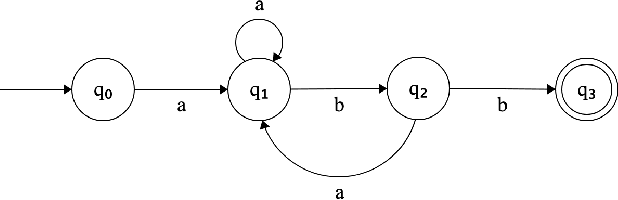
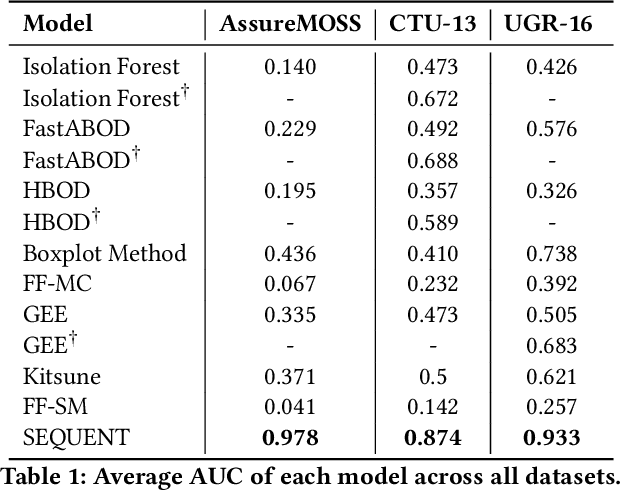
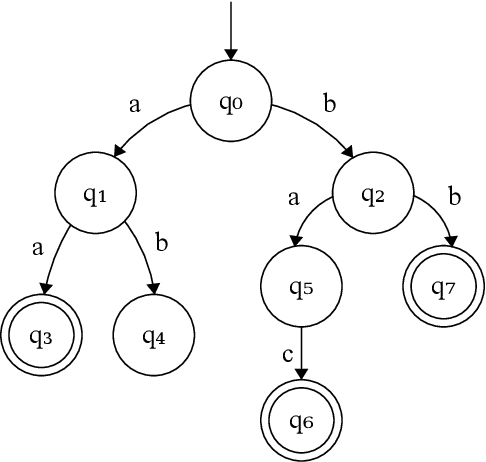
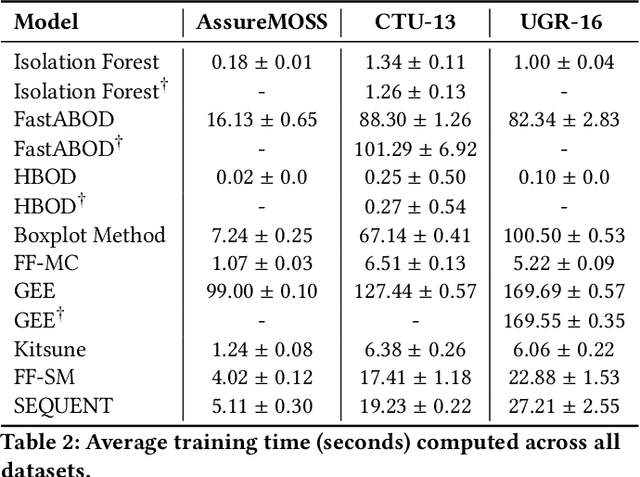
Many works have studied the efficacy of state machines for detecting anomalies within NetFlows. These works typically learn a model from unlabeled data and compute anomaly scores for arbitrary traces based on their likelihood of occurrence or how well they fit within the model. However, these methods do not dynamically adapt their scores based on the traces seen at test time. This becomes a problem when an adversary produces seemingly common traces in their attack, causing the model to miss the detection by assigning low anomaly scores. We propose SEQUENT, a new approach that uses the state visit frequency to adapt its scoring for anomaly detection dynamically. SEQUENT subsequently uses the scores to generate root causes for anomalies. These allow the grouping of alarms and simplify the analysis of anomalies. Our evaluation of SEQUENT on three NetFlow datasets indicates that our approach outperforms existing methods, demonstrating its effectiveness in detecting anomalies.
Systematic Evaluation of Synthetic Data Augmentation for Multi-class NetFlow Traffic
Aug 28, 2024

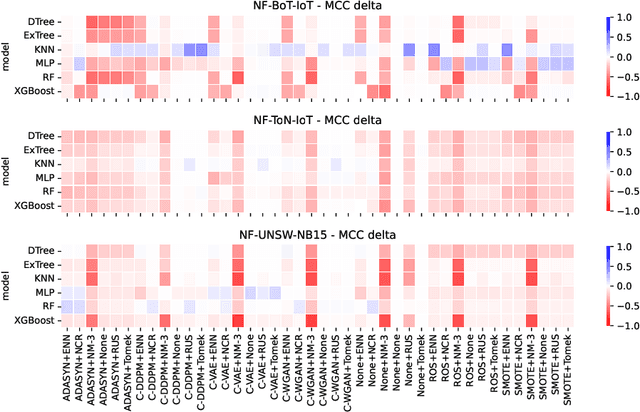

The detection of cyber-attacks in computer networks is a crucial and ongoing research challenge. Machine learning-based attack classification offers a promising solution, as these models can be continuously updated with new data, enhancing the effectiveness of network intrusion detection systems (NIDS). Unlike binary classification models that simply indicate the presence of an attack, multi-class models can identify specific types of attacks, allowing for more targeted and effective incident responses. However, a significant drawback of these classification models is their sensitivity to imbalanced training data. Recent advances suggest that generative models can assist in data augmentation, claiming to offer superior solutions for imbalanced datasets. Classical balancing methods, although less novel, also provide potential remedies for this issue. Despite these claims, a comprehensive comparison of these methods within the NIDS domain is lacking. Most existing studies focus narrowly on individual methods, making it difficult to compare results due to varying experimental setups. To close this gap, we designed a systematic framework to compare classical and generative resampling methods for class balancing across multiple popular classification models in the NIDS domain, evaluated on several NIDS benchmark datasets. Our experiments indicate that resampling methods for balancing training data do not reliably improve classification performance. Although some instances show performance improvements, the majority of results indicate decreased performance, with no consistent trend in favor of a specific resampling technique enhancing a particular classifier.
Towards Explainable Network Intrusion Detection using Large Language Models
Aug 08, 2024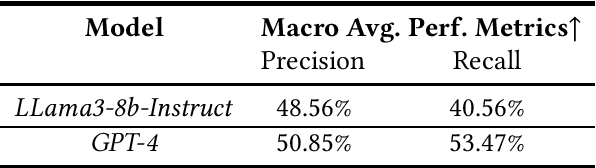
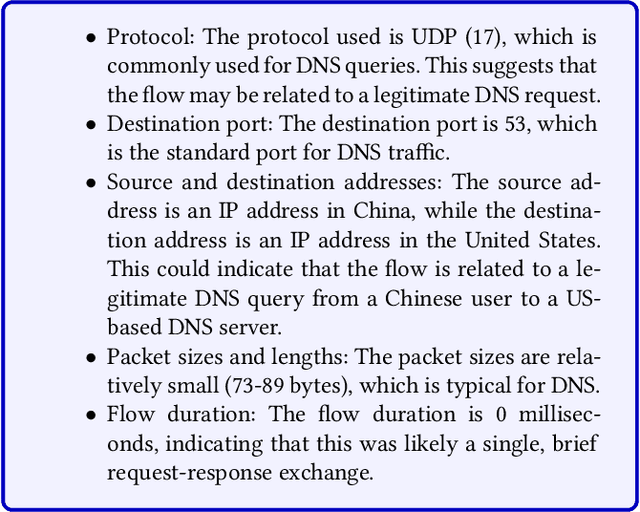
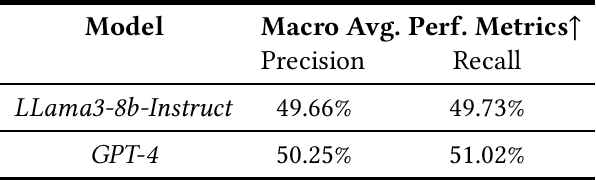
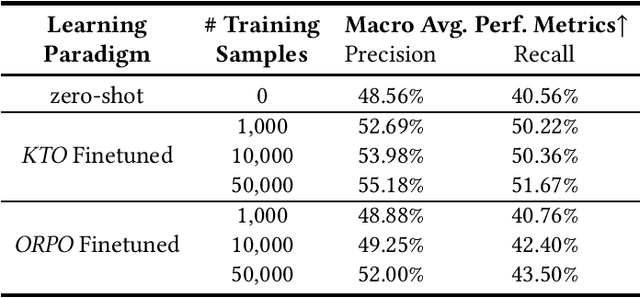
Large Language Models (LLMs) have revolutionised natural language processing tasks, particularly as chat agents. However, their applicability to threat detection problems remains unclear. This paper examines the feasibility of employing LLMs as a Network Intrusion Detection System (NIDS), despite their high computational requirements, primarily for the sake of explainability. Furthermore, considerable resources have been invested in developing LLMs, and they may offer utility for NIDS. Current state-of-the-art NIDS rely on artificial benchmarking datasets, resulting in skewed performance when applied to real-world networking environments. Therefore, we compare the GPT-4 and LLama3 models against traditional architectures and transformer-based models to assess their ability to detect malicious NetFlows without depending on artificially skewed datasets, but solely on their vast pre-trained acquired knowledge. Our results reveal that, although LLMs struggle with precise attack detection, they hold significant potential for a path towards explainable NIDS. Our preliminary exploration shows that LLMs are unfit for the detection of Malicious NetFlows. Most promisingly, however, these exhibit significant potential as complementary agents in NIDS, particularly in providing explanations and aiding in threat response when integrated with Retrieval Augmented Generation (RAG) and function calling capabilities.