 Add to Chrome
 Add to Firefox
 Add to Edge
Mitosis Detection
Papers and Code
Mitosis detection in domain shift scenarios: a Mamba-based approach
Aug 28, 2025
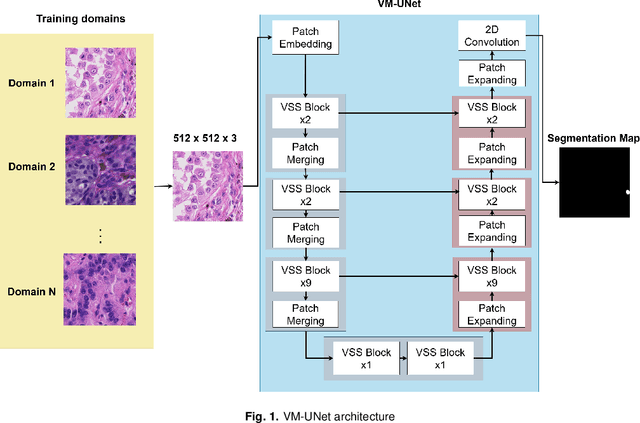
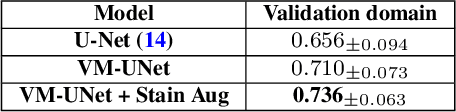
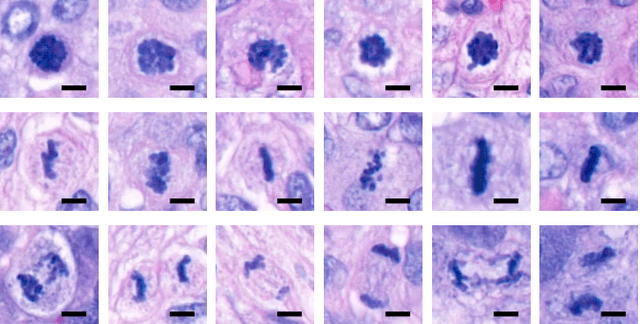
Mitosis detection in histopathology images plays a key role in tumor assessment. Although machine learning algorithms could be exploited for aiding physicians in accurately performing such a task, these algorithms suffer from significative performance drop when evaluated on images coming from domains that are different from the training ones. In this work, we propose a Mamba-based approach for mitosis detection under domain shift, inspired by the promising performance demonstrated by Mamba in medical imaging segmentation tasks. Specifically, our approach exploits a VM-UNet architecture for carrying out the addressed task, as well as stain augmentation operations for further improving model robustness against domain shift. Our approach has been submitted to the track 1 of the MItosis DOmain Generalization (MIDOG) challenge. Preliminary experiments, conducted on the MIDOG++ dataset, show large room for improvement for the proposed method.

Teacher-Student Model for Detecting and Classifying Mitosis in the MIDOG 2025 Challenge
Sep 03, 2025Counting mitotic figures is time-intensive for pathologists and leads to inter-observer variability. Artificial intelligence (AI) promises a solution by automatically detecting mitotic figures while maintaining decision consistency. However, AI tools are susceptible to domain shift, where a significant drop in performance can occur due to differences in the training and testing sets, including morphological diversity between organs, species, and variations in staining protocols. Furthermore, the number of mitoses is much less than the count of normal nuclei, which introduces severely imbalanced data for the detection task. In this work, we formulate mitosis detection as a pixel-level segmentation and propose a teacher-student model that simultaneously addresses mitosis detection (Track 1) and atypical mitosis classification (Track 2). Our method is based on a UNet segmentation backbone that integrates domain generalization modules, namely contrastive representation learning and domain-adversarial training. A teacher-student strategy is employed to generate pixel-level pseudo-masks not only for annotated mitoses and hard negatives but also for normal nuclei, thereby enhancing feature discrimination and improving robustness against domain shift. For the classification task, we introduce a multi-scale CNN classifier that leverages feature maps from the segmentation model within a multi-task learning paradigm. On the preliminary test set, the algorithm achieved an F1 score of 0.7660 in Track 1 and balanced accuracy of 0.8414 in Track 2, demonstrating the effectiveness of integrating segmentation-based detection and classification into a unified framework for robust mitosis analysis.
Efficient Fine-Tuning of DINOv3 Pretrained on Natural Images for Atypical Mitotic Figure Classification in MIDOG 2025
Aug 28, 2025Atypical mitotic figures (AMFs) are markers of abnormal cell division associated with poor prognosis, yet their detection remains difficult due to low prevalence, subtle morphology, and inter-observer variability. The MIDOG 2025 challenge introduces a benchmark for AMF classification across multiple domains. In this work, we evaluate the recently published DINOv3-H+ vision transformer, pretrained on natural images, which we fine-tuned using low-rank adaptation (LoRA, 650k trainable parameters) and extensive augmentation. Despite the domain gap, DINOv3 transfers effectively to histopathology, achieving a balanced accuracy of 0.8871 on the preliminary test set. These results highlight the robustness of DINOv3 pretraining and show that, when combined with parameter-efficient fine-tuning, it provides a strong baseline for atypical mitosis classification in MIDOG 2025.
A bag of tricks for real-time Mitotic Figure detection
Aug 27, 2025Mitotic figure (MF) detection in histopathology images is challenging due to large variations in slide scanners, staining protocols, tissue types, and the presence of artifacts. This paper presents a collection of training techniques - a bag of tricks - that enable robust, real-time MF detection across diverse domains. We build on the efficient RTMDet single stage object detector to achieve high inference speed suitable for clinical deployment. Our method addresses scanner variability and tumor heterogeneity via extensive multi-domain training data, balanced sampling, and careful augmentation. Additionally, we employ targeted, hard negative mining on necrotic and debris tissue to reduce false positives. In a grouped 5-fold cross-validation across multiple MF datasets, our model achieves an F1 score between 0.78 and 0.84. On the preliminary test set of the MItosis DOmain Generalization (MIDOG) 2025 challenge, our single-stage RTMDet-S based approach reaches an F1 of 0.81, outperforming larger models and demonstrating adaptability to new, unfamiliar domains. The proposed solution offers a practical trade-off between accuracy and speed, making it attractive for real-world clinical adoption.
Z-Stack Scanning can Improve AI Detection of Mitosis: A Case Study of Meningiomas
Jan 27, 2025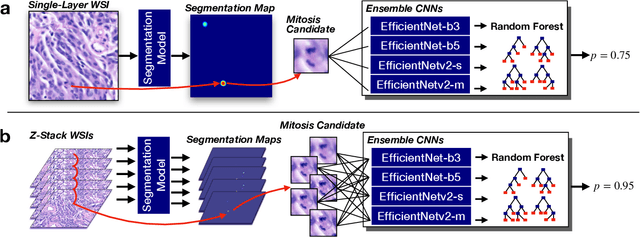
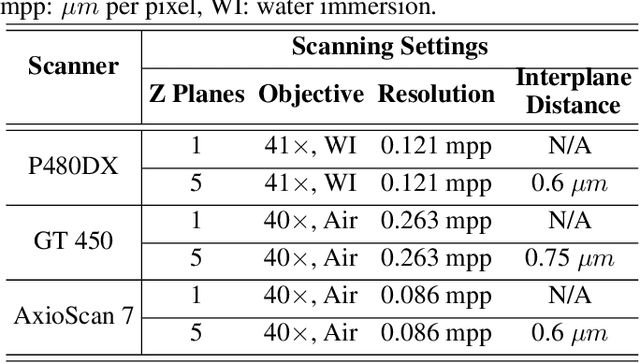
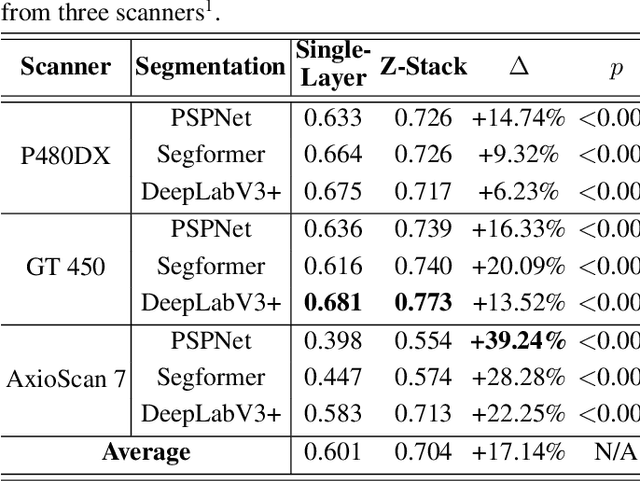
Z-stack scanning is an emerging whole slide imaging technology that captures multiple focal planes alongside the z-axis of a glass slide. Because z-stacking can offer enhanced depth information compared to the single-layer whole slide imaging, this technology can be particularly useful in analyzing small-scaled histopathological patterns. However, its actual clinical impact remains debated with mixed results. To clarify this, we investigate the effect of z-stack scanning on artificial intelligence (AI) mitosis detection of meningiomas. With the same set of 22 Hematoxylin and Eosin meningioma glass slides scanned by three different digital pathology scanners, we tested the performance of three AI pipelines on both single-layer and z-stacked whole slide images (WSIs). Results showed that in all scanner-AI combinations, z-stacked WSIs significantly increased AI's sensitivity (+17.14%) on the mitosis detection with only a marginal impact on precision. Our findings provide quantitative evidence that highlights z-stack scanning as a promising technique for AI mitosis detection, paving the way for more reliable AI-assisted pathology workflows, which can ultimately benefit patient management.
Supporting Mitosis Detection AI Training with Inter-Observer Eye-Gaze Consistencies
Apr 02, 2024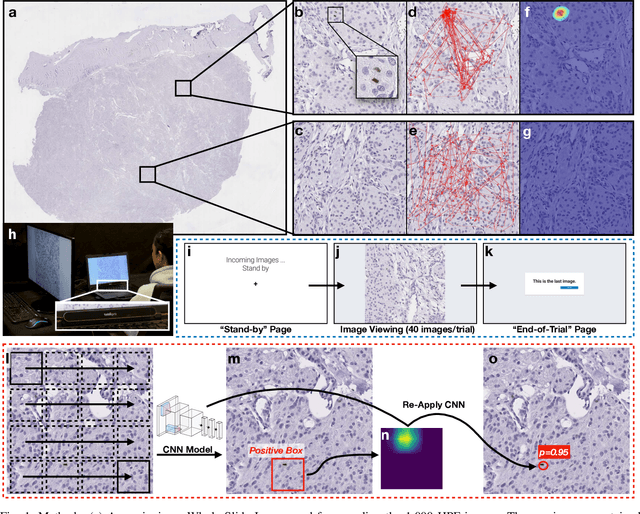
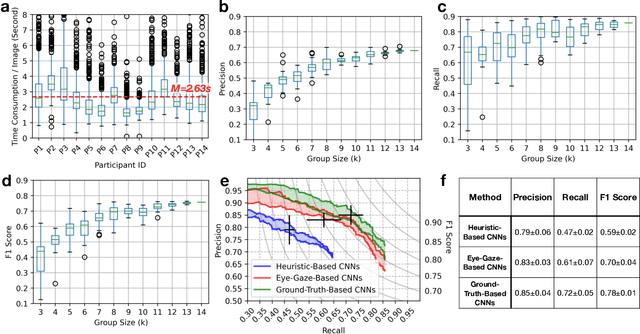
The expansion of artificial intelligence (AI) in pathology tasks has intensified the demand for doctors' annotations in AI development. However, collecting high-quality annotations from doctors is costly and time-consuming, creating a bottleneck in AI progress. This study investigates eye-tracking as a cost-effective technology to collect doctors' behavioral data for AI training with a focus on the pathology task of mitosis detection. One major challenge in using eye-gaze data is the low signal-to-noise ratio, which hinders the extraction of meaningful information. We tackled this by levering the properties of inter-observer eye-gaze consistencies and creating eye-gaze labels from consistent eye-fixations shared by a group of observers. Our study involved 14 non-medical participants, from whom we collected eye-gaze data and generated eye-gaze labels based on varying group sizes. We assessed the efficacy of such eye-gaze labels by training Convolutional Neural Networks (CNNs) and comparing their performance to those trained with ground truth annotations and a heuristic-based baseline. Results indicated that CNNs trained with our eye-gaze labels closely followed the performance of ground-truth-based CNNs, and significantly outperformed the baseline. Although primarily focused on mitosis, we envision that insights from this study can be generalized to other medical imaging tasks.
Cell Tracking according to Biological Needs -- Strong Mitosis-aware Random-finite Sets Tracker with Aleatoric Uncertainty
Mar 25, 2024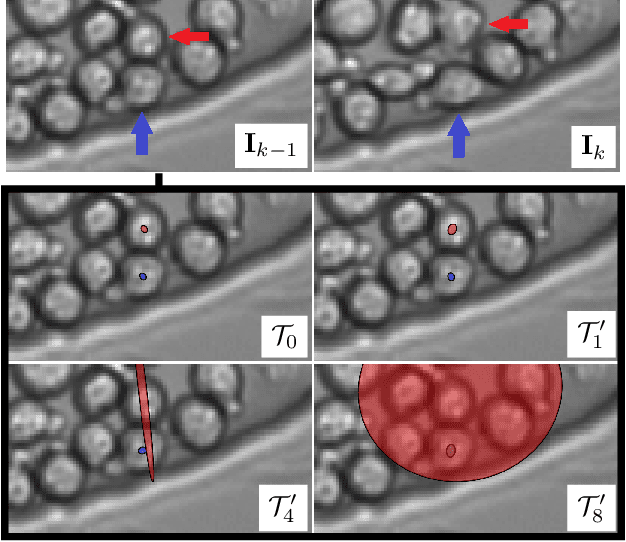
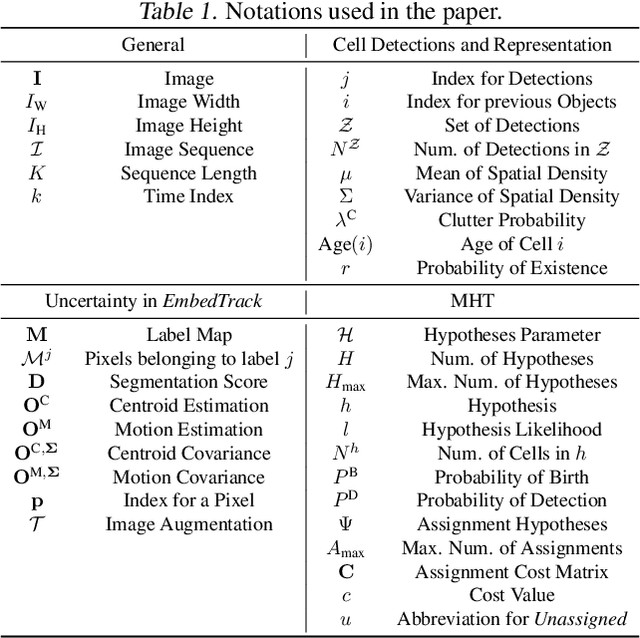
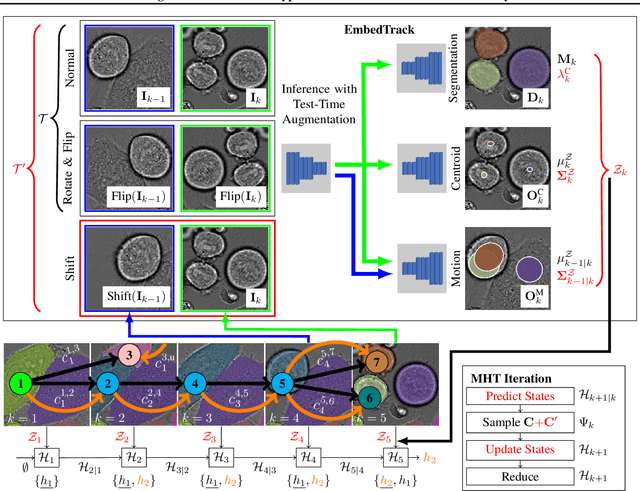
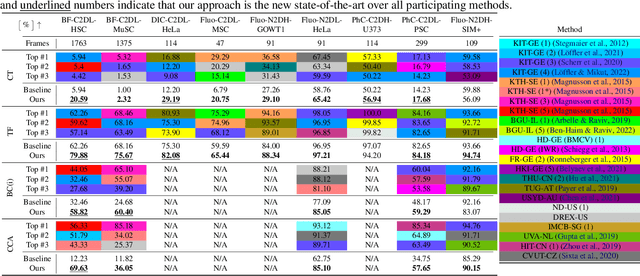
Cell tracking and segmentation assist biologists in extracting insights from large-scale microscopy time-lapse data. Driven by local accuracy metrics, current tracking approaches often suffer from a lack of long-term consistency. To address this issue, we introduce an uncertainty estimation technique for neural tracking-by-regression frameworks and incorporate it into our novel extended Poisson multi-Bernoulli mixture tracker. Our uncertainty estimation identifies uncertain associations within high-performing tracking-by-regression methods using problem-specific test-time augmentations. Leveraging this uncertainty, along with a novel mitosis-aware assignment problem formulation, our tracker resolves false associations and mitosis detections stemming from long-term conflicts. We evaluate our approach on nine competitive datasets and demonstrate that it outperforms the current state-of-the-art on biologically relevant metrics substantially, achieving improvements by a factor of approximately $5.75$. Furthermore, we uncover new insights into the behavior of tracking-by-regression uncertainty.
BOrg: A Brain Organoid-Based Mitosis Dataset for Automatic Analysis of Brain Diseases
Jun 27, 2024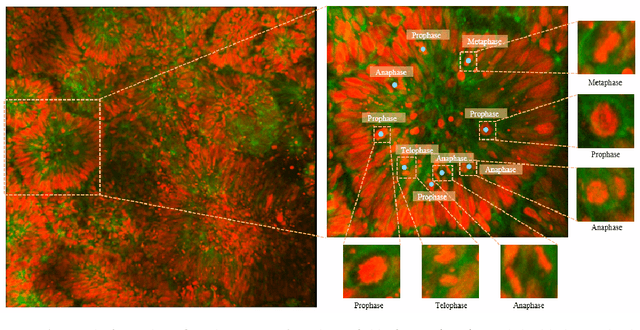
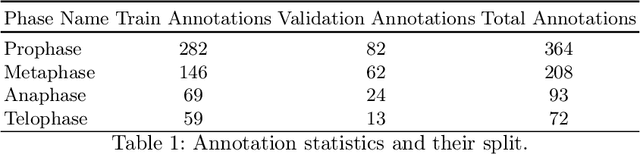
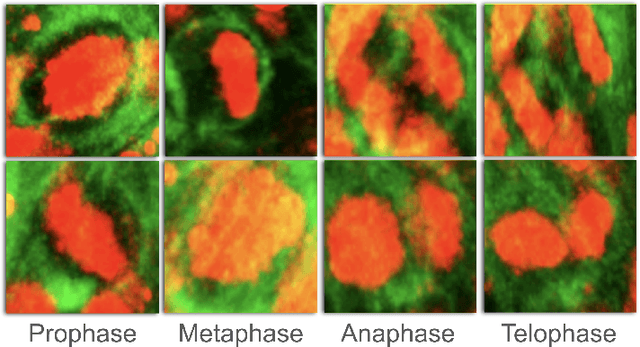
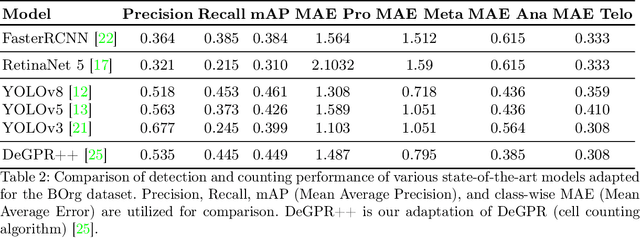
Recent advances have enabled the study of human brain development using brain organoids derived from stem cells. Quantifying cellular processes like mitosis in these organoids offers insights into neurodevelopmental disorders, but the manual analysis is time-consuming, and existing datasets lack specific details for brain organoid studies. We introduce BOrg, a dataset designed to study mitotic events in the embryonic development of the brain using confocal microscopy images of brain organoids. BOrg utilizes an efficient annotation pipeline with sparse point annotations and techniques that minimize expert effort, overcoming limitations of standard deep learning approaches on sparse data. We adapt and benchmark state-of-the-art object detection and cell counting models on BOrg for detecting and analyzing mitotic cells across prophase, metaphase, anaphase, and telophase stages. Our results demonstrate these adapted models significantly improve mitosis analysis efficiency and accuracy for brain organoid research compared to existing methods. BOrg facilitates the development of automated tools to quantify statistics like mitosis rates, aiding mechanistic studies of neurodevelopmental processes and disorders. Data and code are available at https://github.com/awaisrauf/borg.
Improving mitosis detection on histopathology images using large vision-language models
Oct 11, 2023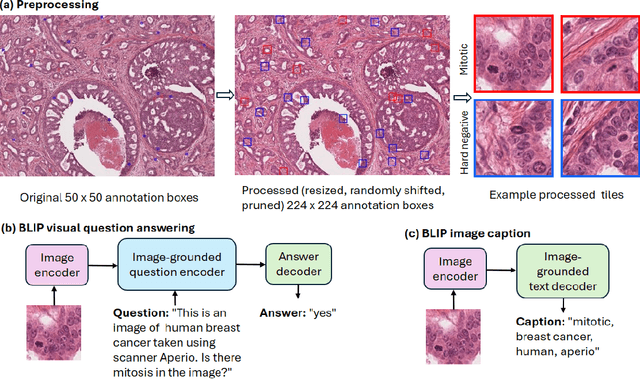
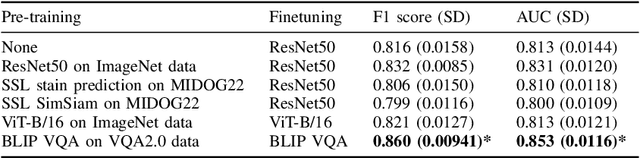
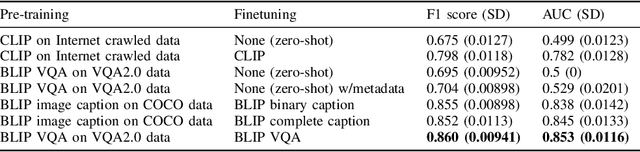
In certain types of cancerous tissue, mitotic count has been shown to be associated with tumor proliferation, poor prognosis, and therapeutic resistance. Due to the high inter-rater variability of mitotic counting by pathologists, convolutional neural networks (CNNs) have been employed to reduce the subjectivity of mitosis detection in hematoxylin and eosin (H&E)-stained whole slide images. However, most existing models have performance that lags behind expert panel review and only incorporate visual information. In this work, we demonstrate that pre-trained large-scale vision-language models that leverage both visual features and natural language improve mitosis detection accuracy. We formulate the mitosis detection task as an image captioning task and a visual question answering (VQA) task by including metadata such as tumor and scanner types as context. The effectiveness of our pipeline is demonstrated via comparison with various baseline models using 9,501 mitotic figures and 11,051 hard negatives (non-mitotic figures that are difficult to characterize) from the publicly available Mitosis Domain Generalization Challenge (MIDOG22) dataset.
Mitosis Detection from Partial Annotation by Dataset Generation via Frame-Order Flipping
Jul 09, 2023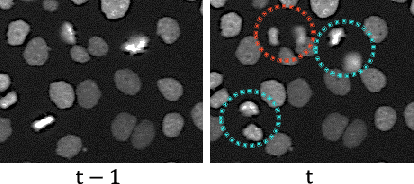
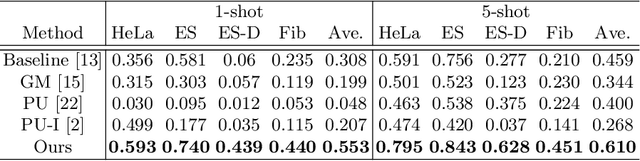
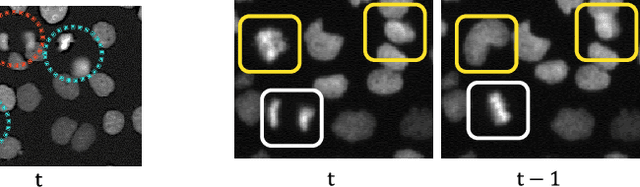
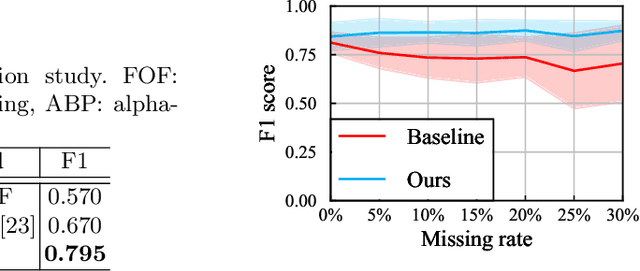
Detection of mitosis events plays an important role in biomedical research. Deep-learning-based mitosis detection methods have achieved outstanding performance with a certain amount of labeled data. However, these methods require annotations for each imaging condition. Collecting labeled data involves time-consuming human labor. In this paper, we propose a mitosis detection method that can be trained with partially annotated sequences. The base idea is to generate a fully labeled dataset from the partial labels and train a mitosis detection model with the generated dataset. First, we generate an image pair not containing mitosis events by frame-order flipping. Then, we paste mitosis events to the image pair by alpha-blending pasting and generate a fully labeled dataset. We demonstrate the performance of our method on four datasets, and we confirm that our method outperforms other comparisons which use partially labeled sequences.