 Add to Chrome
 Add to Firefox
 Add to Edge
Li-ion battery
Papers and Code
Conformalized Transfer Learning for Li-ion Battery State of Health Forecasting under Manufacturing and Usage Variability
Mar 25, 2026
Accurate forecasting of state-of-health (SOH) is essential for ensuring safe and reliable operation of lithium-ion cells. However, existing models calibrated on laboratory tests at specific conditions often fail to generalize to new cells that differ due to small manufacturing variations or operate under different conditions. To address this challenge, an uncertainty-aware transfer learning framework is proposed, combining a Long Short-Term Memory (LSTM) model with domain adaptation via Maximum Mean Discrepancy (MMD) and uncertainty quantification through Conformal Prediction (CP). The LSTM model is trained on a virtual battery dataset designed to capture real-world variability in electrode manufacturing and operating conditions. MMD aligns latent feature distributions between simulated and target domains to mitigate domain shift, while CP provides calibrated, distribution-free prediction intervals. This framework improves both the generalization and trustworthiness of SOH forecasts across heterogeneous cells.

Learning Nonlinear Heterogeneity in Physical Kolmogorov-Arnold Networks
Jan 25, 2026Physical neural networks typically train linear synaptic weights while treating device nonlinearities as fixed. We show the opposite - by training the synaptic nonlinearity itself, as in Kolmogorov-Arnold Network (KAN) architectures, we yield markedly higher task performance per physical resource and improved performance-parameter scaling than conventional linear weight-based networks, demonstrating ability of KAN topologies to exploit reconfigurable nonlinear physical dynamics. We experimentally realise physical KANs in silicon-on-insulator devices we term 'Synaptic Nonlinear Elements' (SYNEs), operating at room temperature, microampere currents, 2 MHz speeds and ~250 fJ per nonlinear operation, with no observed degradation over 10^13 measurements and months-long timescales. We demonstrate nonlinear function regression, classification, and prediction of Li-Ion battery dynamics from noisy real-world multi-sensor data. Physical KANs outperform equivalently-parameterised software multilayer perceptron networks across all tasks, with up to two orders of magnitude fewer parameters, and two orders of magnitude fewer devices than linear weight based physical networks. These results establish learned physical nonlinearity as a hardware-native computational primitive for compact and efficient learning systems, and SYNE devices as effective substrates for heterogenous nonlinear computing.
RUL-QMoE: Multiple Non-crossing Quantile Mixture-of-Experts for Probabilistic Remaining Useful Life Predictions of Varying Battery Materials
Dec 19, 2025Lithium-ion batteries are the major type of battery used in a variety of everyday applications, including electric vehicles (EVs), mobile devices, and energy storage systems. Predicting the Remaining Useful Life (RUL) of Li-ion batteries is crucial for ensuring their reliability, safety, and cost-effectiveness in battery-powered systems. The materials used for the battery cathodes and their designs play a significant role in determining the degradation rates and RUL, as they lead to distinct electrochemical reactions. Unfortunately, RUL prediction models often overlook the cathode materials and designs to simplify the model-building process, ignoring the effects of these electrochemical reactions. Other reasons are that specifications related to battery materials may not always be readily available, and a battery might consist of a mix of different materials. As a result, the predictive models that are developed often lack generalizability. To tackle these challenges, this paper proposes a novel material-based Mixture-of-Experts (MoE) approach for predicting the RUL of batteries, specifically addressing the complexities associated with heterogeneous battery chemistries. The MoE is integrated into a probabilistic framework, called Multiple Non-crossing Quantile Mixture-of-Experts for Probabilistic Prediction (RUL-QMoE), which accommodates battery operational conditions and enables uncertainty quantification. The RUL-QMoE model integrates specialized expert networks for five battery types: LFP, NCA, NMC, LCO, and NMC-LCO, within a gating mechanism that dynamically assigns relevance based on the battery's input features. Furthermore, by leveraging non-crossing quantile regression, the proposed RUL-QMoE produces coherent and interpretable predictive distributions of the battery's RUL, enabling robust uncertainty quantification in the battery's RUL prediction.
SigMA: Path Signatures and Multi-head Attention for Learning Parameters in fBm-driven SDEs
Dec 17, 2025Stochastic differential equations (SDEs) driven by fractional Brownian motion (fBm) are increasingly used to model systems with rough dynamics and long-range dependence, such as those arising in quantitative finance and reliability engineering. However, these processes are non-Markovian and lack a semimartingale structure, rendering many classical parameter estimation techniques inapplicable or computationally intractable beyond very specific cases. This work investigates two central questions: (i) whether integrating path signatures into deep learning architectures can improve the trade-off between estimation accuracy and model complexity, and (ii) what constitutes an effective architecture for leveraging signatures as feature maps. We introduce SigMA (Signature Multi-head Attention), a neural architecture that integrates path signatures with multi-head self-attention, supported by a convolutional preprocessing layer and a multilayer perceptron for effective feature encoding. SigMA learns model parameters from synthetically generated paths of fBm-driven SDEs, including fractional Brownian motion, fractional Ornstein-Uhlenbeck, and rough Heston models, with a particular focus on estimating the Hurst parameter and on joint multi-parameter inference, and it generalizes robustly to unseen trajectories. Extensive experiments on synthetic data and two real-world datasets (i.e., equity-index realized volatility and Li-ion battery degradation) show that SigMA consistently outperforms CNN, LSTM, vanilla Transformer, and Deep Signature baselines in accuracy, robustness, and model compactness. These results demonstrate that combining signature transforms with attention-based architectures provides an effective and scalable framework for parameter inference in stochastic systems with rough or persistent temporal structure.
ALBATROSS: A robotised system for high-throughput electrolyte screening via automated electrolyte formulation, coin-cell fabrication, and electrochemical evaluation
Dec 15, 2025As battery technologies advance toward higher stability and energy density, the need for extensive cell-level testing across various component configurations becomes critical. To evaluate performance and understand the operating principles of batteries in laboratory scale, fabrication and evaluation of coin cells are essential processes. However, the conventional coin-cell assembly and testing processes require significant time and labor from researchers, posing challenges to high-throughput screening research. In this study, we introduce an Automated Li-ion BAttery Testing RObot SyStem (ALBATROSS), an automated system capable of electrolyte formulation, coin-cell assembly, and electrochemical evaluation. The system, integrated within a argon-filled glovebox, enables fully automated assembly and testing of up to 48 cells without researcher intervention. By incorporating custom-designed robot gripper and 3D-printed structures optimized for precise cell handling, ALBATROSS achieved high assembly reliability, yielding a relative standard deviation (RSD) of less than 1.2% in discharge capacity and a standard deviation of less than 3 Ω in EIS measurements for NCM811||Li half cells. Owing to its high reliability and automation capability, ALBATROSS allows for the acquisition of high-quality coin-cell datasets, which are expected to accelerate the development of next-generation electrolytes.
Learning continuous SOC-dependent thermal decomposition kinetics for Li-ion cathodes using KA-CRNNs
Dec 17, 2025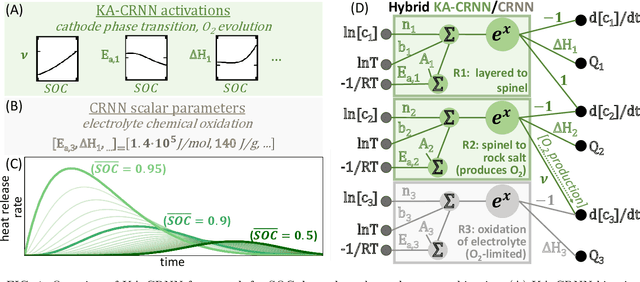
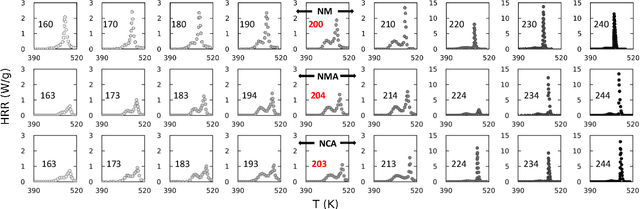
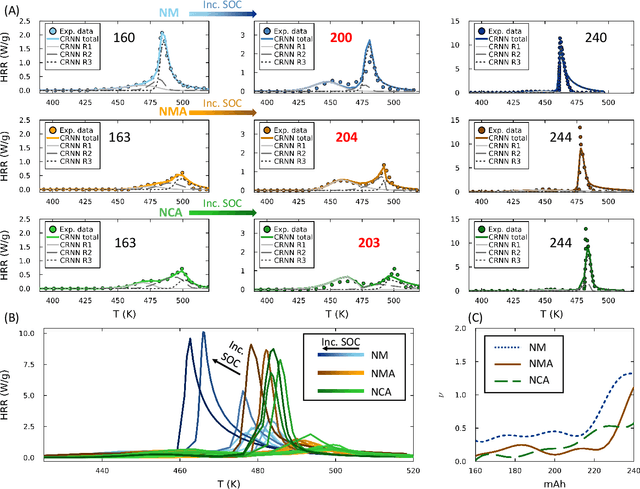
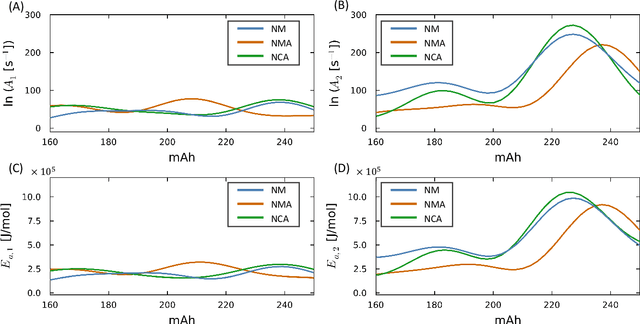
Thermal runaway in lithium-ion batteries is strongly influenced by the state of charge (SOC). Existing predictive models typically infer scalar kinetic parameters at a full SOC or a few discrete SOC levels, preventing them from capturing the continuous SOC dependence that governs exothermic behavior during abuse conditions. To address this, we apply the Kolmogorov-Arnold Chemical Reaction Neural Network (KA-CRNN) framework to learn continuous and realistic SOC-dependent exothermic cathode-electrolyte interactions. We apply a physics-encoded KA-CRNN to learn SOC-dependent kinetic parameters for cathode-electrolyte decomposition directly from differential scanning calorimetry (DSC) data. A mechanistically informed reaction pathway is embedded into the network architecture, enabling the activation energies, pre-exponential factors, enthalpies, and related parameters to be represented as continuous and fully interpretable functions of the SOC. The framework is demonstrated for NCA, NM, and NMA cathodes, yielding models that reproduce DSC heat-release features across all SOCs and provide interpretable insight into SOC-dependent oxygen-release and phase-transformation mechanisms. This approach establishes a foundation for extending kinetic parameter dependencies to additional environmental and electrochemical variables, supporting more accurate and interpretable thermal-runaway prediction and monitoring.
Reinforcement Learning for Robust Ageing-Aware Control of Li-ion Battery Systems with Data-Driven Formal Verification
Sep 04, 2025Rechargeable lithium-ion (Li-ion) batteries are a ubiquitous element of modern technology. In the last decades, the production and design of such batteries and their adjacent embedded charging and safety protocols, denoted by Battery Management Systems (BMS), has taken central stage. A fundamental challenge to be addressed is the trade-off between the speed of charging and the ageing behavior, resulting in the loss of capacity in the battery cell. We rely on a high-fidelity physics-based battery model and propose an approach to data-driven charging and safety protocol design. Following a Counterexample-Guided Inductive Synthesis scheme, we combine Reinforcement Learning (RL) with recent developments in data-driven formal methods to obtain a hybrid control strategy: RL is used to synthesise the individual controllers, and a data-driven abstraction guides their partitioning into a switched structure, depending on the initial output measurements of the battery. The resulting discrete selection among RL-based controllers, coupled with the continuous battery dynamics, realises a hybrid system. When a design meets the desired criteria, the abstraction provides probabilistic guarantees on the closed-loop performance of the cell.
AI-Driven Prognostics for State of Health Prediction in Li-ion Batteries: A Comprehensive Analysis with Validation
Apr 08, 2025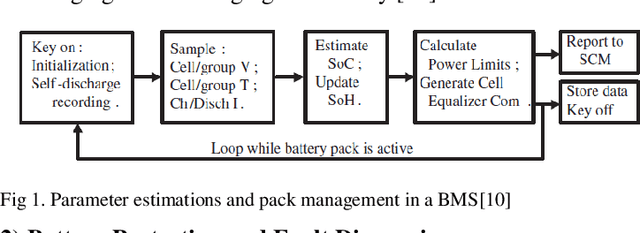
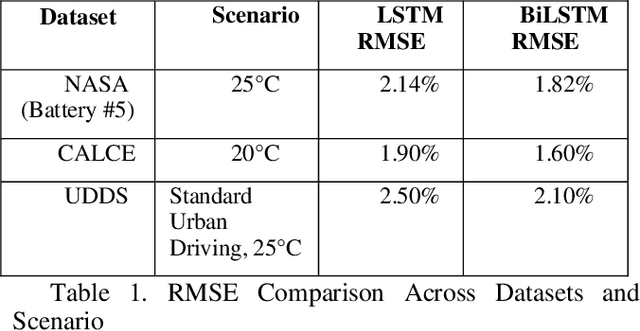
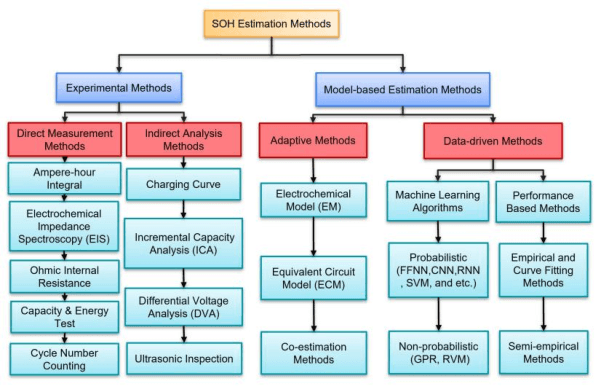
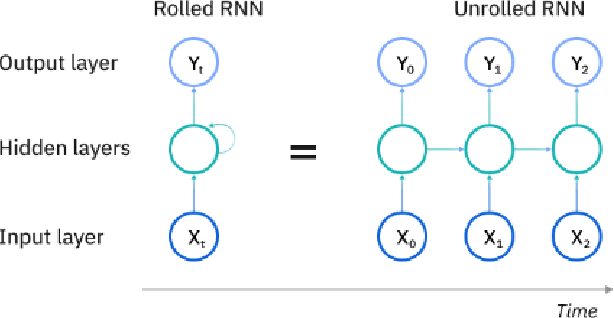
This paper presents a comprehensive review of AI-driven prognostics for State of Health (SoH) prediction in lithium-ion batteries. We compare the effectiveness of various AI algorithms, including FFNN, LSTM, and BiLSTM, across multiple datasets (CALCE, NASA, UDDS) and scenarios (e.g., varying temperatures and driving conditions). Additionally, we analyze the factors influencing SoH fluctuations, such as temperature and charge-discharge rates, and validate our findings through simulations. The results demonstrate that BiLSTM achieves the highest accuracy, with an average RMSE reduction of 15% compared to LSTM, highlighting its robustness in real-world applications.
An Improved Approach to Estimate the Internal Resistance of a Battery
May 09, 2025
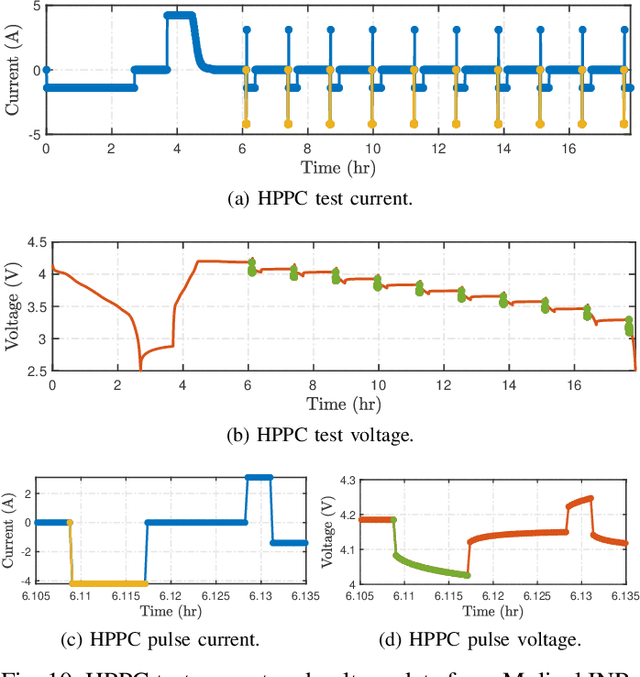
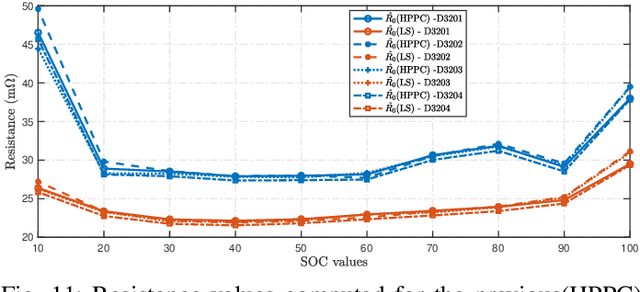
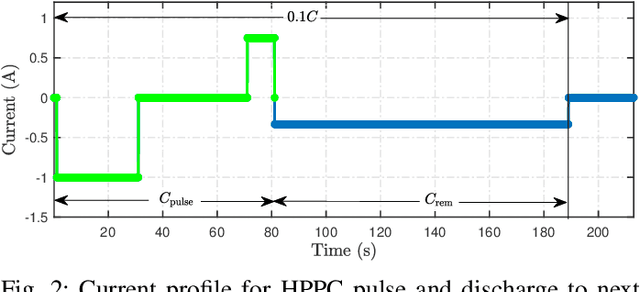
This paper considers the problem of resistance estimation in electronic systems including battery management systems (BMS) and battery chargers. In typical applications, the battery resistance is obtained through an approximate method computed as the ratio of the voltage difference to the applied current excitation pulse or vice versa for admittance. When estimating the battery resistance, this approach ignores the change in the open circuit voltage (OCV) as a result of the excitation signal. In this paper, we formally demonstrate and quantify the effect of the OCV drop on the errors in internal resistance estimation. Then, we propose a novel method to accurately estimate the internal resistance by accounting for the change in OCV caused by the applied current excitation signal. The proposed approach is based on a novel observation model that allows one to estimate the effect of OCV without requiring any additional information, such as the state of charge (SOC), parameters of the OCV-SOC curve, and the battery capacity. As such, the proposed approach is independent of the battery chemistry, size, age, and the ambient temperature. A performance analysis of the proposed approach using the battery simulator shows significant performance gain in the range of 30% to more than 250% in percentage estimation error. Then, the proposed approach is applied for resistance estimation during the hybrid pulse power characterization (HPPC) of cylindrical Li-ion battery cells. Results from tested batteries show that the proposed approach reduced the overestimated internal resistance of the batteries by up to 20 m{\Omega}.
Real-Time Optimal Design of Experiment for Parameter Identification of Li-Ion Cell Electrochemical Model
Apr 22, 2025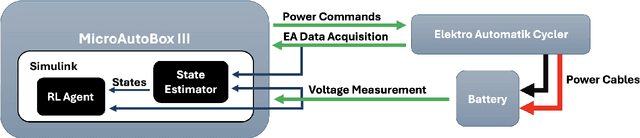
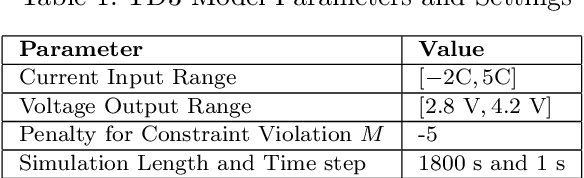
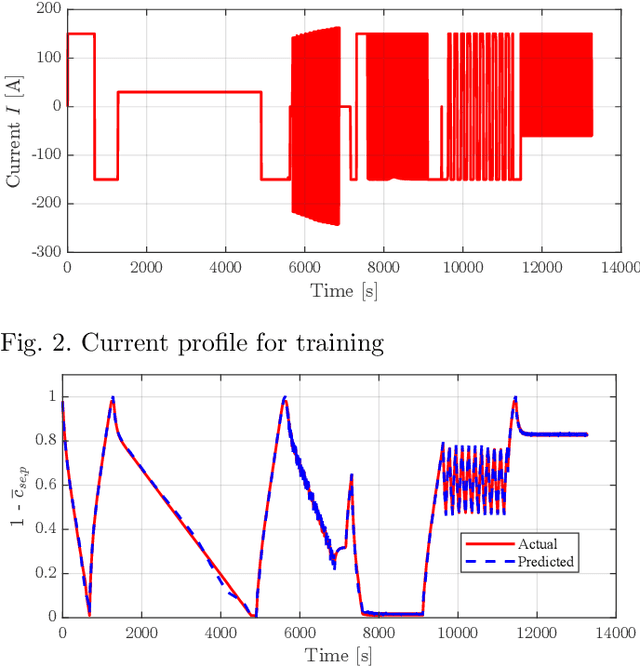

Accurately identifying the parameters of electrochemical models of li-ion battery (LiB) cells is a critical task for enhancing the fidelity and predictive ability. Traditional parameter identification methods often require extensive data collection experiments and lack adaptability in dynamic environments. This paper describes a Reinforcement Learning (RL) based approach that dynamically tailors the current profile applied to a LiB cell to optimize the parameters identifiability of the electrochemical model. The proposed framework is implemented in real-time using a Hardware-in-the-Loop (HIL) setup, which serves as a reliable testbed for evaluating the RL-based design strategy. The HIL validation confirms that the RL-based experimental design outperforms conventional test protocols used for parameter identification in terms of both reducing the modeling errors on a verification test and minimizing the duration of the experiment used for parameter identification.