 Add to Chrome
 Add to Firefox
 Add to Edge
ALBATROSS: A robotised system for high-throughput electrolyte screening via automated electrolyte formulation, coin-cell fabrication, and electrochemical evaluation
Dec 15, 2025
As battery technologies advance toward higher stability and energy density, the need for extensive cell-level testing across various component configurations becomes critical. To evaluate performance and understand the operating principles of batteries in laboratory scale, fabrication and evaluation of coin cells are essential processes. However, the conventional coin-cell assembly and testing processes require significant time and labor from researchers, posing challenges to high-throughput screening research. In this study, we introduce an Automated Li-ion BAttery Testing RObot SyStem (ALBATROSS), an automated system capable of electrolyte formulation, coin-cell assembly, and electrochemical evaluation. The system, integrated within a argon-filled glovebox, enables fully automated assembly and testing of up to 48 cells without researcher intervention. By incorporating custom-designed robot gripper and 3D-printed structures optimized for precise cell handling, ALBATROSS achieved high assembly reliability, yielding a relative standard deviation (RSD) of less than 1.2% in discharge capacity and a standard deviation of less than 3 Ω in EIS measurements for NCM811||Li half cells. Owing to its high reliability and automation capability, ALBATROSS allows for the acquisition of high-quality coin-cell datasets, which are expected to accelerate the development of next-generation electrolytes.

Restoring the saturation response of a PMT using pulse-shape and artificial-neural-networks
Feb 13, 2023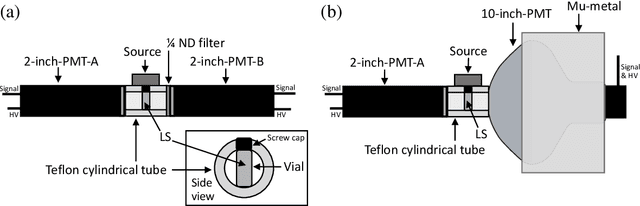
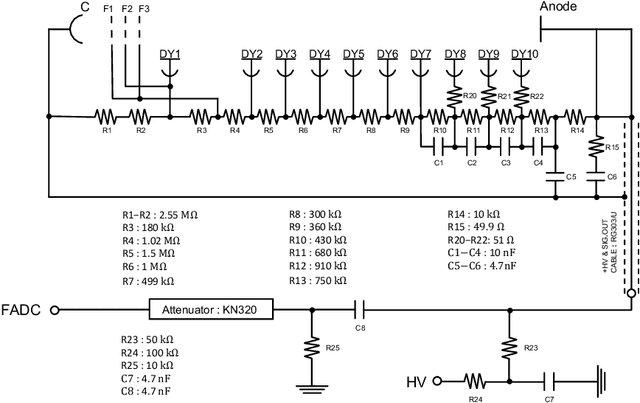
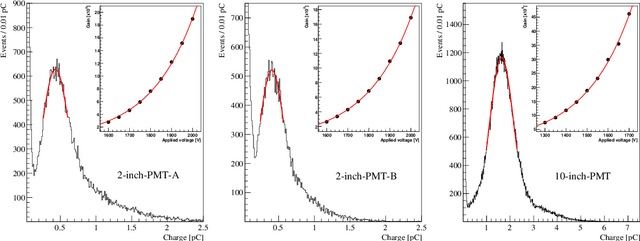
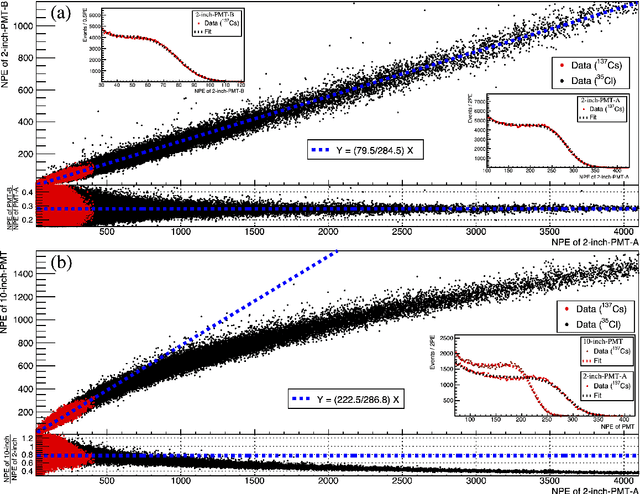
The linear response of a photomultiplier tube (PMT) is a required property for photon counting and reconstruction of the neutrino energy. The linearity valid region and the saturation response of PMT were investigated using a linear-alkyl-benzene (LAB)-based liquid scintillator. A correlation was observed between the two different saturation responses, with pulse-shape distortion and pulse-area decrease. The observed pulse-shape provides useful information for the estimation of the linearity region relative to the pulse-area. This correlation-based diagnosis allows an ${in}$-${situ}$ estimation of the linearity range, which was previously challenging. The measured correlation between the two saturation responses was employed to train an artificial-neural-network (ANN) to predict the decrease in pulse-area from the observed pulse-shape. The ANN-predicted pulse-area decrease enables the prediction of the ideal number of photoelectrons irrelevant to the saturation behavior. This pulse-shape-based machine learning technique offers a novel method for restoring the saturation response of PMTs.