 Add to Chrome
 Add to Firefox
 Add to Edge
ALBATROSS: A robotised system for high-throughput electrolyte screening via automated electrolyte formulation, coin-cell fabrication, and electrochemical evaluation
Dec 15, 2025
As battery technologies advance toward higher stability and energy density, the need for extensive cell-level testing across various component configurations becomes critical. To evaluate performance and understand the operating principles of batteries in laboratory scale, fabrication and evaluation of coin cells are essential processes. However, the conventional coin-cell assembly and testing processes require significant time and labor from researchers, posing challenges to high-throughput screening research. In this study, we introduce an Automated Li-ion BAttery Testing RObot SyStem (ALBATROSS), an automated system capable of electrolyte formulation, coin-cell assembly, and electrochemical evaluation. The system, integrated within a argon-filled glovebox, enables fully automated assembly and testing of up to 48 cells without researcher intervention. By incorporating custom-designed robot gripper and 3D-printed structures optimized for precise cell handling, ALBATROSS achieved high assembly reliability, yielding a relative standard deviation (RSD) of less than 1.2% in discharge capacity and a standard deviation of less than 3 Ω in EIS measurements for NCM811||Li half cells. Owing to its high reliability and automation capability, ALBATROSS allows for the acquisition of high-quality coin-cell datasets, which are expected to accelerate the development of next-generation electrolytes.

SurgT challenge: Benchmark of Soft-Tissue Trackers for Robotic Surgery
Feb 28, 2023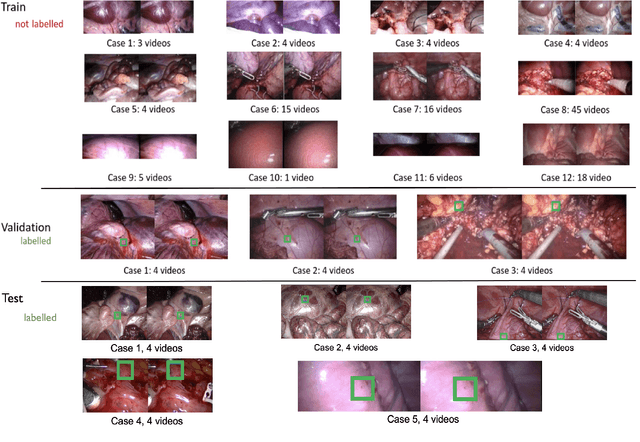
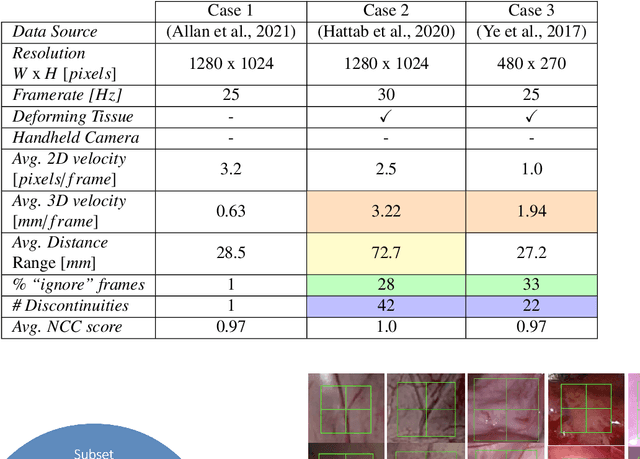
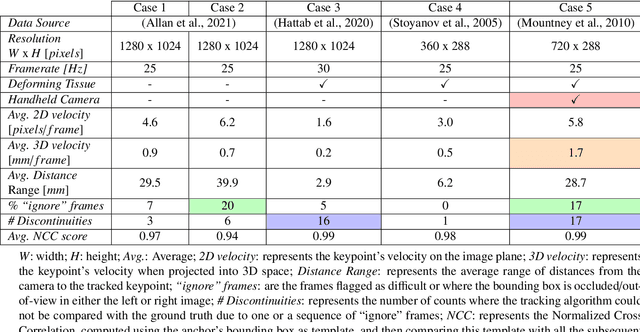

This paper introduces the "SurgT: Surgical Tracking" challenge which was organised in conjunction with the 25th International Conference on Medical Image Computing and Computer-Assisted Intervention (MICCAI 2022). There were two purposes for the creation of this challenge: (1) the establishment of the first standardised benchmark for the research community to assess soft-tissue trackers; and (2) to encourage the development of unsupervised deep learning methods, given the lack of annotated data in surgery. A dataset of 157 stereo endoscopic videos from 20 clinical cases, along with stereo camera calibration parameters, have been provided. The participants were tasked with the development of algorithms to track a bounding box on stereo endoscopic videos. At the end of the challenge, the developed methods were assessed on a previously hidden test subset. This assessment uses benchmarking metrics that were purposely developed for this challenge and are now available online. The teams were ranked according to their Expected Average Overlap (EAO) score, which is a weighted average of the Intersection over Union (IoU) scores. The performance evaluation study verifies the efficacy of unsupervised deep learning algorithms in tracking soft-tissue. The best-performing method achieved an EAO score of 0.583 in the test subset. The dataset and benchmarking tool created for this challenge have been made publicly available. This challenge is expected to contribute to the development of autonomous robotic surgery and other digital surgical technologies.