 Add to Chrome
 Add to Firefox
 Add to Edge
GAPD: Gold-Action Policy Distillation for Agentic Reinforcement Learning in Knowledge Base Question Answering
May 28, 2026
Reinforcement learning (RL) is a natural fit for agentic knowledge base question answering (KBQA), where a model must issue executable actions, observe knowledge-base feedback, and eventually return an answer. However, current RL-based KBQA systems mainly optimize sparse rewards from the final answer, leaving intermediate action errors weakly supervised. This is especially limiting for logical-form annotated KBQA benchmarks: gold logical forms can be converted into executable action sequences, but existing pipelines use them mainly for warm-start data construction rather than for on-policy RL updates. We propose GAPD, a training-time Gold-Action Policy Distillation framework that adds dense token-level guidance to outcome-based RL. To align gold actions with on-policy student rollouts, GAPD uses MID-ANCHOR MATCHING: it treats the intermediate entities reached during student exploration and gold execution as state anchors, and matches student states to gold states through these explored entity sets. The current policy conditioned on this aligned gold action serves as a stop-gradient teacher, whose token distribution is distilled back to the ordinary student policy over generated action-token spans. GAPD consistently surpasses the current state of the art on WebQSP, GrailQA, and GraphQ.

Beyond Static Personas: Situational Personality Steering for Large Language Models
Apr 16, 2026Personalized Large Language Models (LLMs) facilitate more natural, human-like interactions in human-centric applications. However, existing personalization methods are constrained by limited controllability and high resource demands. Furthermore, their reliance on static personality modeling restricts adaptability across varying situations. To address these limitations, we first demonstrate the existence of situation-dependency and consistent situation-behavior patterns within LLM personalities through a multi-perspective analysis of persona neurons. Building on these insights, we propose IRIS, a training-free, neuron-based Identify-Retrieve-Steer framework for advanced situational personality steering. Our approach comprises situational persona neuron identification, situation-aware neuron retrieval, and similarity-weighted steering. We empirically validate our framework on PersonalityBench and our newly introduced SPBench, a comprehensive situational personality benchmark. Experimental results show that our method surpasses best-performing baselines, demonstrating IRIS's generalization and robustness to complex, unseen situations and different models architecture.
Exploring Motion-Language Alignment for Text-driven Motion Generation
Apr 03, 2026Text-driven human motion generation aims to synthesize realistic motion sequences that follow textual descriptions. Despite recent advances, accurately aligning motion dynamics with textual semantics remains a fundamental challenge. In this paper, we revisit text-to-motion generation from the perspective of motion-language alignment and propose MLA-Gen, a framework that integrates global motion priors with fine-grained local conditioning. This design enables the model to capture common motion patterns, while establishing detailed alignment between texts and motions. Furthermore, we identify a previously overlooked attention sink phenomenon in human motion generation, where attention disproportionately concentrates on the start text token, limiting the utilization of informative textual cues and leading to degraded semantic grounding. To analyze this issue, we introduce SinkRatio, a metric for measuring attention concentration, and develop alignment-aware masking and control strategies to regulate attention during generation. Extensive experiments demonstrate that our approach consistently improves both motion quality and motion-language alignment over strong baselines. Code will be released upon acceptance.
RealChart2Code: Advancing Chart-to-Code Generation with Real Data and Multi-Task Evaluation
Mar 26, 2026Vision-Language Models (VLMs) have demonstrated impressive capabilities in code generation across various domains. However, their ability to replicate complex, multi-panel visualizations from real-world data remains largely unassessed. To address this gap, we introduce \textbf{\texttt{RealChart2Code}}, a new large-scale benchmark with over 2,800 instances grounded in authentic datasets and featuring tasks with clear analytical intent. Crucially, it is the first benchmark to systematically evaluate chart generation from large-scale raw data and assess iterative code refinement in a multi-turn conversational setting. Our comprehensive evaluation of 14 leading VLMs on \texttt{RealChart2Code} reveals significant performance degradation compared to simpler benchmarks, highlighting their struggles with complex plot structures and authentic data. Our analysis uncovers a substantial performance gap between proprietary and open-weight models and confirms that even state-of-the-art VLMs often fail to accurately replicate intricate, multi-panel charts. These findings provide valuable insights into the current limitations of VLMs and guide future research directions. We release the benchmark and code at \url{https://github.com/Speakn0w/RealChart2Code}.
Taming Momentum: Rethinking Optimizer States Through Low-Rank Approximation
Feb 27, 2026Modern optimizers like Adam and Muon are central to training large language models, but their reliance on first- and second-order momenta introduces significant memory overhead, which constrains scalability and computational efficiency. In this work, we reframe the exponential moving average (EMA) used in these momenta as the training of a linear regressor via online gradient flow. Building on this equivalence, we introduce LoRA-Pre, a novel low-rank optimizer designed for efficient pre-training. Specifically, LoRA-Pre reduces the optimizer's memory footprint by decomposing the full momentum matrix into a compact low-rank subspace within the online linear learner, thereby maintaining optimization performance while improving memory efficiency. We empirically validate LoRA-Pre's efficacy by pre-training models from the Llama architecture family, scaling from 60M to 1B parameters. LoRA-Pre achieves the highest performance across all model sizes. Notably, LoRA-Pre demonstrates remarkable rank efficiency, achieving comparable or superior results using only 1/8 the rank of baseline methods. Beyond pre-training, we evaluate LoRA-Pre's effectiveness in fine-tuning scenarios. With the same rank, LoRA-Pre consistently outperforms all efficient fine-tuning baselines. Specifically, compared to standard LoRA, LoRA-Pre achieves substantial improvements of 3.14 points on Llama-3.1-8B and 6.17 points on Llama-2-7B, validating our approach's effectiveness across both pre-training and fine-tuning paradigms. Our code is publicly available at https://github.com/mrflogs/LoRA-Pre.
Evaluating and Achieving Controllable Code Completion in Code LLM
Jan 22, 2026Code completion has become a central task, gaining significant attention with the rise of large language model (LLM)-based tools in software engineering. Although recent advances have greatly improved LLMs' code completion abilities, evaluation methods have not advanced equally. Most current benchmarks focus solely on functional correctness of code completions based on given context, overlooking models' ability to follow user instructions during completion-a common scenario in LLM-assisted programming. To address this limitation, we present the first instruction-guided code completion benchmark, Controllable Code Completion Benchmark (C3-Bench), comprising 2,195 carefully designed completion tasks. Through comprehensive evaluation of over 40 mainstream LLMs across C3-Bench and conventional benchmarks, we reveal substantial gaps in instruction-following capabilities between open-source and advanced proprietary models during code completion tasks. Moreover, we develop a straightforward data synthesis pipeline that leverages Qwen2.5-Coder to generate high-quality instruction-completion pairs for supervised fine-tuning (SFT). The resulting model, Qwen2.5-Coder-C3, achieves state-of-the-art performance on C3-Bench. Our findings provide valuable insights for enhancing LLMs' code completion and instruction-following capabilities, establishing new directions for future research in code LLMs. To facilitate reproducibility and foster further research in code LLMs, we open-source all code, datasets, and models.
From Completion to Editing: Unlocking Context-Aware Code Infilling via Search-and-Replace Instruction Tuning
Jan 19, 2026The dominant Fill-in-the-Middle (FIM) paradigm for code completion is constrained by its rigid inability to correct contextual errors and reliance on unaligned, insecure Base models. While Chat LLMs offer safety and Agentic workflows provide flexibility, they suffer from performance degradation and prohibitive latency, respectively. To resolve this dilemma, we propose Search-and-Replace Infilling (SRI), a framework that internalizes the agentic verification-and-editing mechanism into a unified, single-pass inference process. By structurally grounding edits via an explicit search phase, SRI harmonizes completion tasks with the instruction-following priors of Chat LLMs, extending the paradigm from static infilling to dynamic context-aware editing. We synthesize a high-quality dataset, SRI-200K, and fine-tune the SRI-Coder series. Extensive evaluations demonstrate that with minimal data (20k samples), SRI-Coder enables Chat models to surpass the completion performance of their Base counterparts. Crucially, unlike FIM-style tuning, SRI preserves general coding competencies and maintains inference latency comparable to standard FIM. We empower the entire Qwen3-Coder series with SRI, encouraging the developer community to leverage this framework for advanced auto-completion and assisted development.
Predict the Retrieval! Test time adaptation for Retrieval Augmented Generation
Jan 16, 2026Retrieval-Augmented Generation (RAG) has emerged as a powerful approach for enhancing large language models' question-answering capabilities through the integration of external knowledge. However, when adapting RAG systems to specialized domains, challenges arise from distribution shifts, resulting in suboptimal generalization performance. In this work, we propose TTARAG, a test-time adaptation method that dynamically updates the language model's parameters during inference to improve RAG system performance in specialized domains. Our method introduces a simple yet effective approach where the model learns to predict retrieved content, enabling automatic parameter adjustment to the target domain. Through extensive experiments across six specialized domains, we demonstrate that TTARAG achieves substantial performance improvements over baseline RAG systems. Code available at https://github.com/sunxin000/TTARAG.
KBQA-R1: Reinforcing Large Language Models for Knowledge Base Question Answering
Dec 10, 2025Knowledge Base Question Answering (KBQA) challenges models to bridge the gap between natural language and strict knowledge graph schemas by generating executable logical forms. While Large Language Models (LLMs) have advanced this field, current approaches often struggle with a dichotomy of failure: they either generate hallucinated queries without verifying schema existence or exhibit rigid, template-based reasoning that mimics synthesized traces without true comprehension of the environment. To address these limitations, we present \textbf{KBQA-R1}, a framework that shifts the paradigm from text imitation to interaction optimization via Reinforcement Learning. Treating KBQA as a multi-turn decision process, our model learns to navigate the knowledge base using a list of actions, leveraging Group Relative Policy Optimization (GRPO) to refine its strategies based on concrete execution feedback rather than static supervision. Furthermore, we introduce \textbf{Referenced Rejection Sampling (RRS)}, a data synthesis method that resolves cold-start challenges by strictly aligning reasoning traces with ground-truth action sequences. Extensive experiments on WebQSP, GrailQA, and GraphQuestions demonstrate that KBQA-R1 achieves state-of-the-art performance, effectively grounding LLM reasoning in verifiable execution.
Divide-Then-Align: Honest Alignment based on the Knowledge Boundary of RAG
May 27, 2025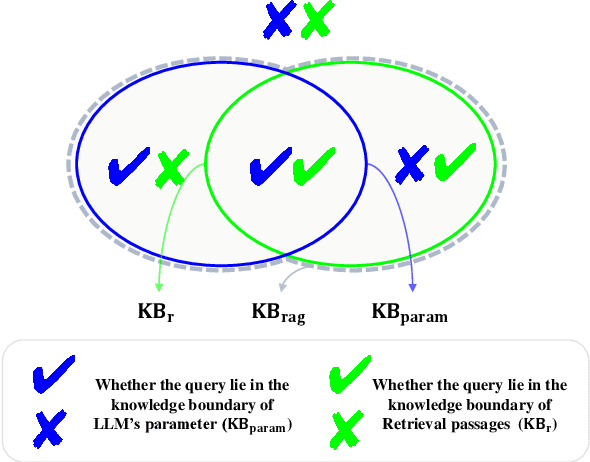
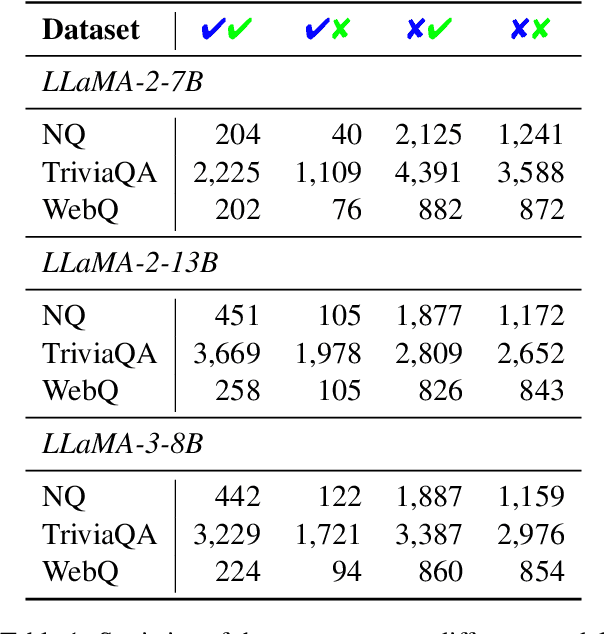
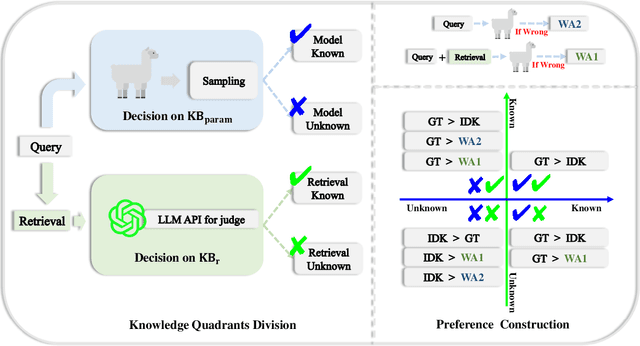
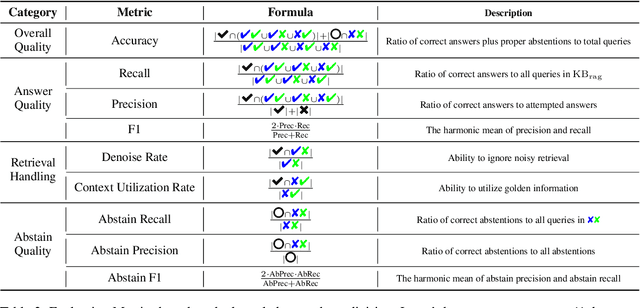
Large language models (LLMs) augmented with retrieval systems have significantly advanced natural language processing tasks by integrating external knowledge sources, enabling more accurate and contextually rich responses. To improve the robustness of such systems against noisy retrievals, Retrieval-Augmented Fine-Tuning (RAFT) has emerged as a widely adopted method. However, RAFT conditions models to generate answers even in the absence of reliable knowledge. This behavior undermines their reliability in high-stakes domains, where acknowledging uncertainty is critical. To address this issue, we propose Divide-Then-Align (DTA), a post-training approach designed to endow RAG systems with the ability to respond with "I don't know" when the query is out of the knowledge boundary of both the retrieved passages and the model's internal knowledge. DTA divides data samples into four knowledge quadrants and constructs tailored preference data for each quadrant, resulting in a curated dataset for Direct Preference Optimization (DPO). Experimental results on three benchmark datasets demonstrate that DTA effectively balances accuracy with appropriate abstention, enhancing the reliability and trustworthiness of retrieval-augmented systems.