 Add to Chrome
 Add to Firefox
 Add to Edge
FUSE: Active Functional Affordance Grounding through Adaptive Semantic-Geometric Evidence Acquisition
Aug 13, 2026
Embodied agents must often identify and interact with objects based on their function rather than their identity, requiring them to actively acquire observations that reveal discriminative functional evidence. Existing affordance grounding methods operate from fixed viewpoints and lack mechanisms for deciding where to look when functional cues are occluded or incomplete. We introduce Active Functional Affordance Grounding, a new task in which an agent sequentially explores a scene to identify and spatially ground an object satisfying a functional query. To address this problem, we propose FUSE, an adaptive semantic-geometric evidence acquisition framework that combines explicit uncertainty-driven exploration with a learned amortized planner to efficiently select informative viewpoints. We further introduce a Habitat-based benchmark for evaluating active functional grounding. Experiments show that FUSE achieves the highest observed non-oracle grounding performance while reducing computation by 1.33x relative to fully explicit exploration, and remains effective across multiple affordance knowledge sources.

Class Geometry as Supervision for Sample-Efficient Open-World Detection
Aug 13, 2026Open-world object detection requires models to recognize known categories, reject unfamiliar objects, and incorporate new classes over time. This is especially challenging in scarce-data settings such as biomedical and scientific imaging, where rare categories may have only a few annotated examples and fine-grained classes differ by subtle morphology. Prototype-based detectors are natural for this regime, but they typically learn class prototypes as independent anchors, ignoring relational structure among classes. We propose class-geometry supervision (CGS), a general framework that constrains learned prototype or class-representation spaces to preserve visual or semantic class dissimilarities estimated from training data. CGS introduces a dissimilarity-preserving objective that aligns pairwise distances among learned class representations with a target class-geometry matrix while retaining the standard task loss. We instantiate the same objective across prototype recognition, few-shot biomedical object detection, open-set detection, novel-class insertion, and OWOD adaptation on COCO. Experiments show that CGS improves sample efficiency in recognition and ova detection, substantially strengthens novel-class insertion, and improves unknown recall on COCO while retaining much of the known-class detection performance. Ablations show that meaningful visual geometry provides the most reliable gains, while random geometry can help novel separation but is less consistent for few-shot detection. These results suggest that relational class geometry is an effective supervisory signal for building calibrated and extensible open-world detectors under limited supervision.
TagRouter: Learning Route to LLMs through Tags for Open-Domain Text Generation Tasks
Jun 14, 2025Model routing allocates queries to the suitable model, improving system performance while reducing costs. However, existing routing methods face practical limitations that hinder scalability in large-scale applications and struggle to keep up with the rapid growth of the large language model (LLM) ecosystem. To tackle these challenges, we propose TagRouter, a training-free model routing method designed to optimize the synergy among multiple LLMs for open-domain text generation tasks. Experimental results demonstrate that TagRouter outperforms 13 baseline methods, increasing the accept rate of system by 6.15% and reducing costs by 17.20%, achieving optimal cost-efficiency. Our findings provides the LLM community with an efficient and scalable solution for model ensembling, offering users an evolvable "super model."
Automating the Training and Deployment of Models in MLOps by Integrating Systems with Machine Learning
May 16, 2024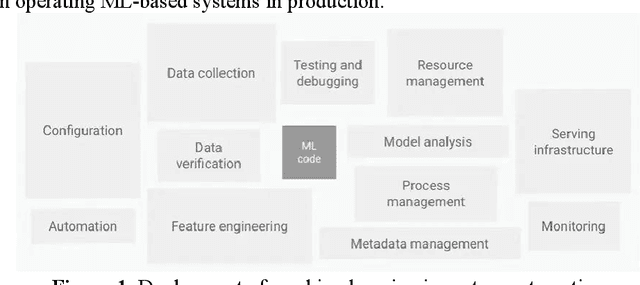
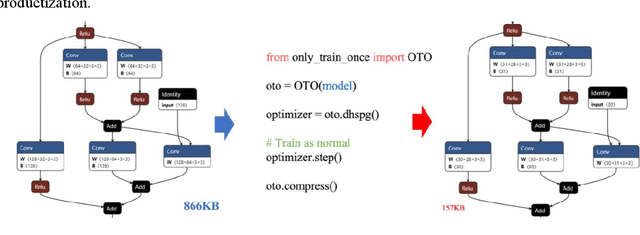

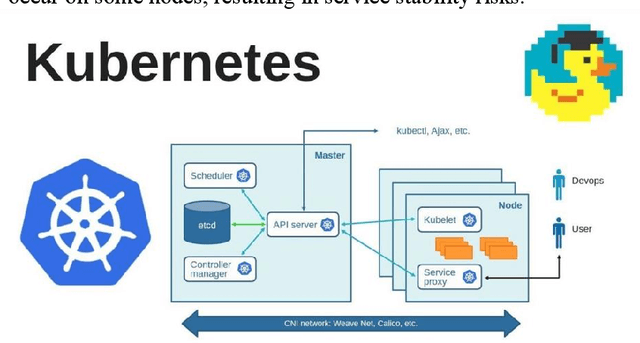
This article introduces the importance of machine learning in real-world applications and explores the rise of MLOps (Machine Learning Operations) and its importance for solving challenges such as model deployment and performance monitoring. By reviewing the evolution of MLOps and its relationship to traditional software development methods, the paper proposes ways to integrate the system into machine learning to solve the problems faced by existing MLOps and improve productivity. This paper focuses on the importance of automated model training, and the method to ensure the transparency and repeatability of the training process through version control system. In addition, the challenges of integrating machine learning components into traditional CI/CD pipelines are discussed, and solutions such as versioning environments and containerization are proposed. Finally, the paper emphasizes the importance of continuous monitoring and feedback loops after model deployment to maintain model performance and reliability. Using case studies and best practices from Netflix, the article presents key strategies and lessons learned for successful implementation of MLOps practices, providing valuable references for other organizations to build and optimize their own MLOps practices.
Digital twin-assisted three-dimensional electrical capacitance tomography for multiphase flow imaging
Dec 22, 2023Three-dimensional electrical capacitance tomography (3D-ECT) has shown promise for visualizing industrial multiphase flows. However, existing 3D-ECT approaches suffer from limited imaging resolution and lack assessment metrics, hampering their effectiveness in quantitative multiphase flow imaging. This paper presents a digital twin (DT)-assisted 3D-ECT, aiming to overcome these limitations and enhance our understanding of multiphase flow dynamics. The DT framework incorporates a 3D fluid-electrostatic field coupling model (3D-FECM) that digitally represents the physical 3D-ECT system, which enables us to simulate real multiphase flows and generate a comprehensive virtual multiphase flow 3D imaging dataset. Additionally, the framework includes a deep neural network named 3D deep back projection (3D-DBP), which learns multiphase flow features from the virtual dataset and enables more accurate 3D flow imaging in the real world. The DT-assisted 3D-ECT was validated through virtual and physical experiments, demonstrating superior image quality, noise robustness and computational efficiency compared to conventional 3D-ECT approaches. This research contributes to developing accurate and reliable 3D-ECT techniques and their implementation in multiphase flow systems across various industries.
Touch and deformation perception of soft manipulators with capacitive e-skins and deep learning
May 02, 2023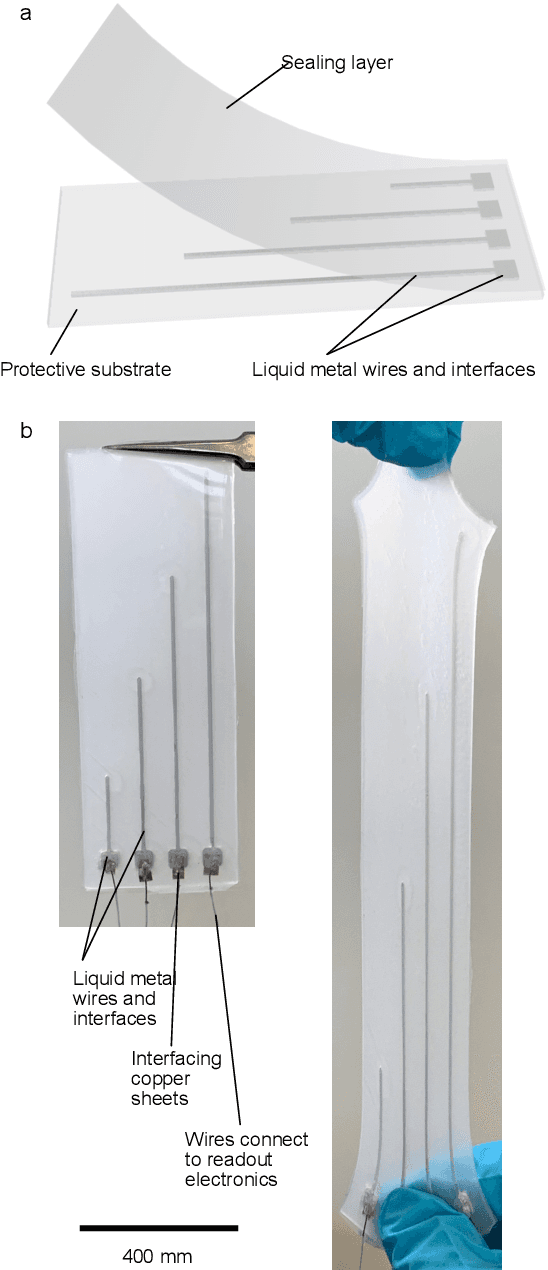
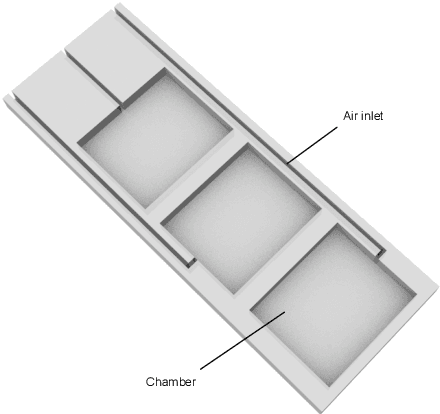
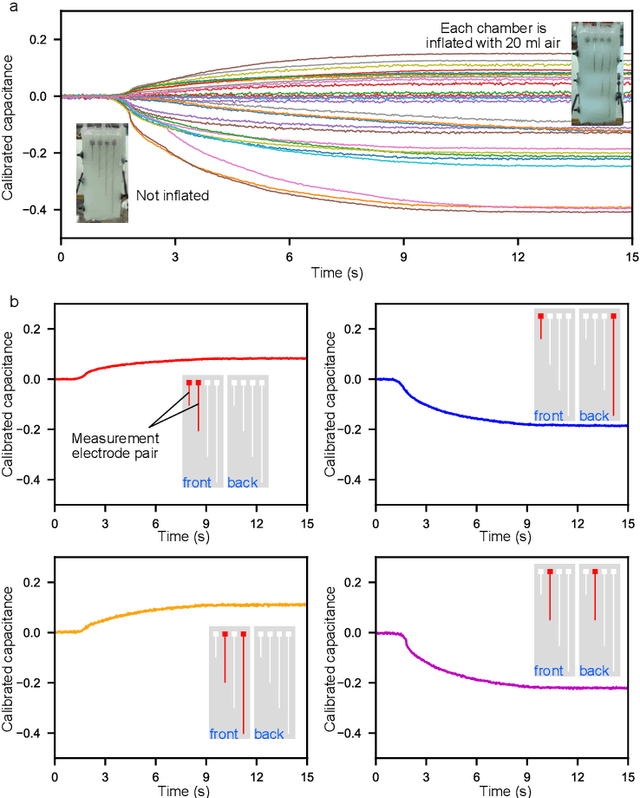

Tactile sensing in soft robots remains particularly challenging because of the coupling between contact and deformation information which the sensor is subject to during actuation and interaction with the environment. This often results in severe interference and makes disentangling tactile sensing and geometric deformation difficult. To address this problem, this paper proposes a soft capacitive e-skin with a sparse electrode distribution and deep learning for information decoupling. Our approach successfully separates tactile sensing from geometric deformation, enabling touch recognition on a soft pneumatic actuator subject to both internal (actuation) and external (manual handling) forces. Using a multi-layer perceptron, the proposed e-skin achieves 99.88\% accuracy in touch recognition across a range of deformations. When complemented with prior knowledge, a transformer-based architecture effectively tracks the deformation of the soft actuator. The average distance error in positional reconstruction of the manipulator is as low as 2.905$\pm$2.207 mm, even under operative conditions with different inflation states and physical contacts which lead to additional signal variations and consequently interfere with deformation tracking. These findings represent a tangible way forward in the development of e-skins that can endow soft robots with proprioception and exteroception.
Regularized Shallow Image Prior for Electrical Impedance Tomography
Mar 30, 2023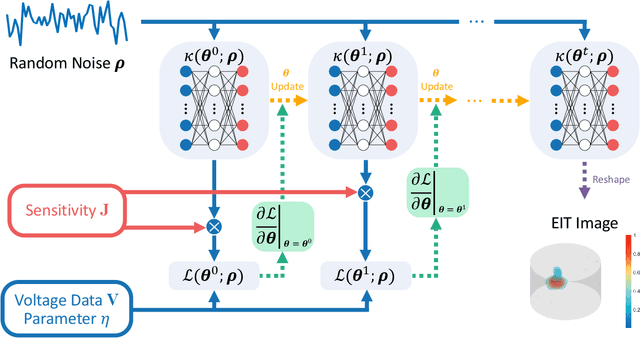
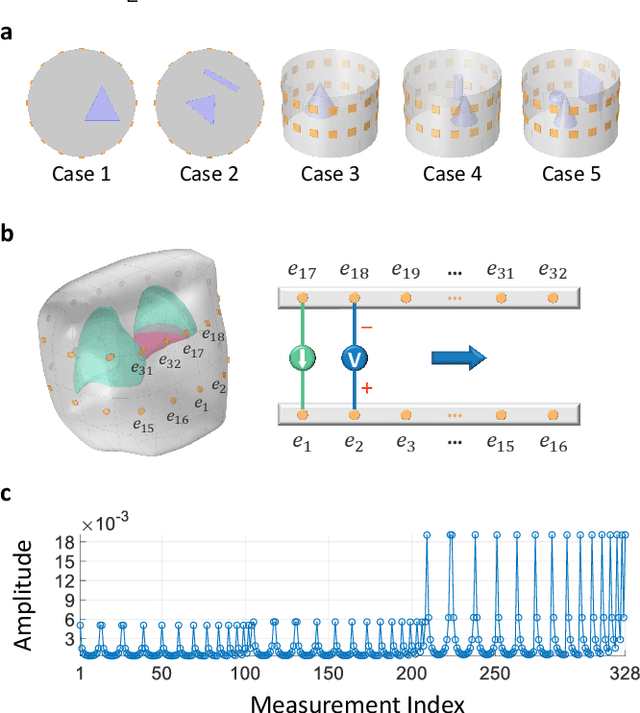

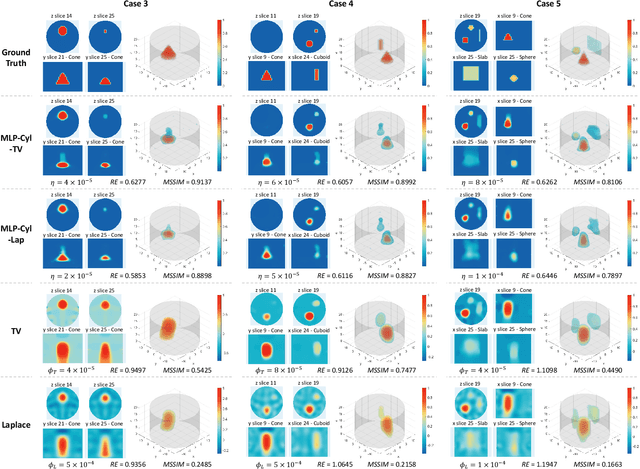
Untrained Neural Network Prior (UNNP) based algorithms have gained increasing popularity in tomographic imaging, as they offer superior performance compared to hand-crafted priors and do not require training. UNNP-based methods usually rely on deep architectures which are known for their excellent feature extraction ability compared to shallow ones. Contrary to common UNNP-based approaches, we propose a regularized shallow image prior method that combines UNNP with hand-crafted prior for Electrical Impedance Tomography (EIT). Our approach employs a 3-layer Multi-Layer Perceptron (MLP) as the UNNP in regularizing 2D and 3D EIT inversion. We demonstrate the influence of two typical hand-crafted regularizations when representing the conductivity distribution with shallow MLPs. We show considerably improved EIT image quality compared to conventional regularization algorithms, especially in structure preservation. The results suggest that combining the shallow image prior and the hand-crafted regularization can achieve similar performance to the Deep Image Prior (DIP) but with less architectural dependency and complexity of the neural network.
A Learning-Based 3D EIT Image Reconstruction Method
Aug 30, 2022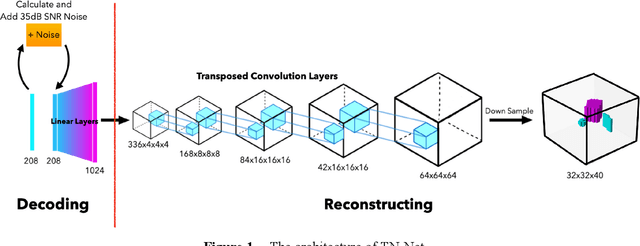
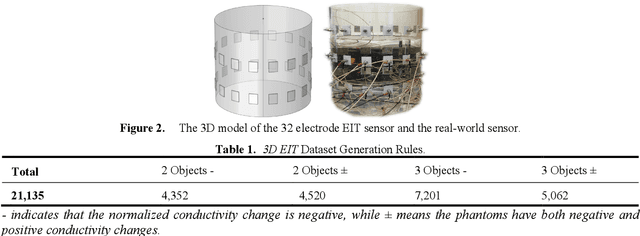

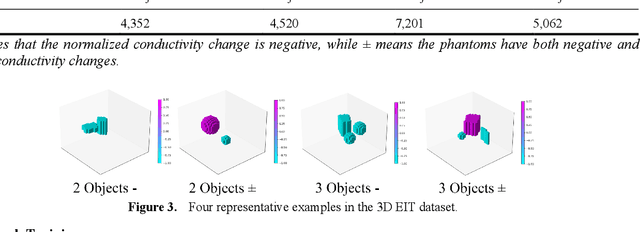
Deep learning has been widely employed to solve the Electrical Impedance Tomography (EIT) image reconstruction problem. Most existing physical model-based and learning-based approaches focus on 2D EIT image reconstruction. However, when they are directly extended to the 3D domain, the reconstruction performance in terms of image quality and noise robustness is hardly guaranteed mainly due to the significant increase in dimensionality. This paper presents a learning-based approach for 3D EIT image reconstruction, which is named Transposed convolution with Neurons Network (TN-Net). Simulation and experimental results show the superior performance and generalization ability of TN-Net compared with prevailing 3D EIT image reconstruction algorithms.
MMV-Net: A Multiple Measurement Vector Network for Multi-frequency Electrical Impedance Tomography
May 26, 2021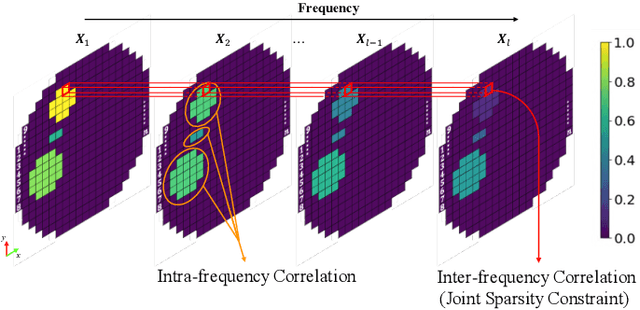
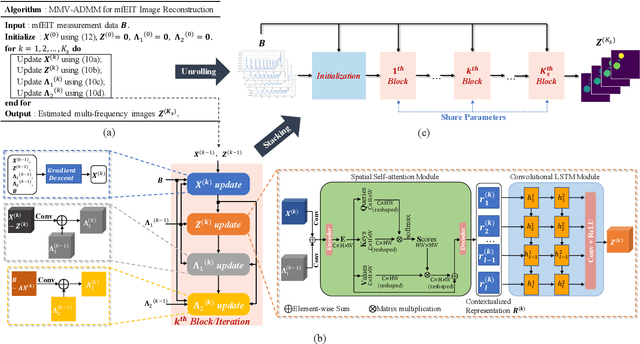
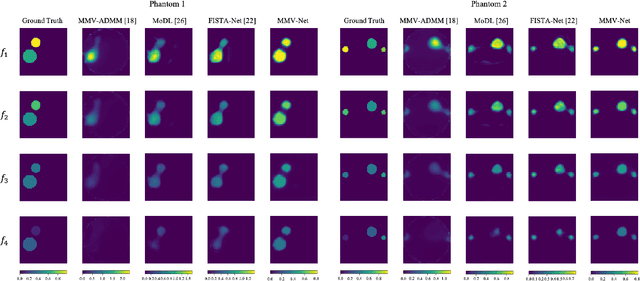
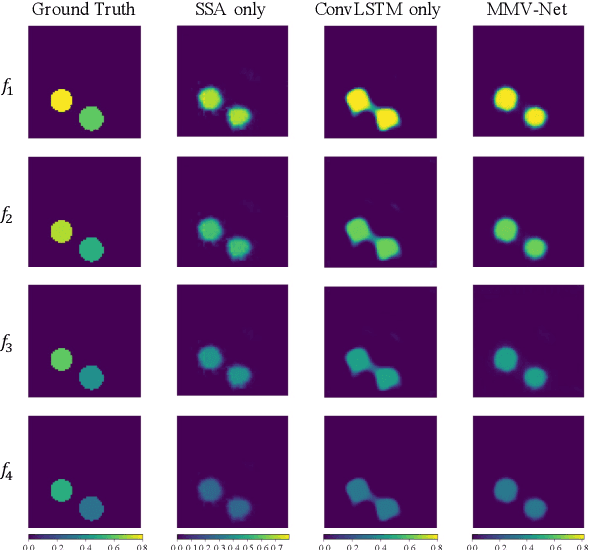
Multi-frequency Electrical Impedance Tomography (mfEIT) is an emerging biomedical imaging modality to reveal frequency-dependent conductivity distributions in biomedical applications. Conventional model-based image reconstruction methods suffer from low spatial resolution, unconstrained frequency correlation and high computational cost. Deep learning has been extensively applied in solving the EIT inverse problem in biomedical and industrial process imaging. However, most existing learning-based approaches deal with the single-frequency setup, which is inefficient and ineffective when extended to address the multi-frequency setup. In this paper, we present a Multiple Measurement Vector (MMV) model based learning algorithm named MMV-Net to solve the mfEIT image reconstruction problem. MMV-Net takes into account the correlations between mfEIT images and unfolds the update steps of the Alternating Direction Method of Multipliers (ADMM) for the MMV problem. The non-linear shrinkage operator associated with the weighted l2_1 regularization term is generalized with a cascade of a Spatial Self-Attention module and a Convolutional Long Short-Term Memory (ConvLSTM) module to capture intra- and inter-frequency dependencies. The proposed MMVNet was validated on our Edinburgh mfEIT Dataset and a series of comprehensive experiments. All reconstructed results show superior image quality, convergence performance and noise robustness against the state of the art.