 Add to Chrome
 Add to Firefox
 Add to Edge
Reconfigurable Intelligent Surface-Enabled Array Radar for Interference Mitigation
Jan 28, 2024
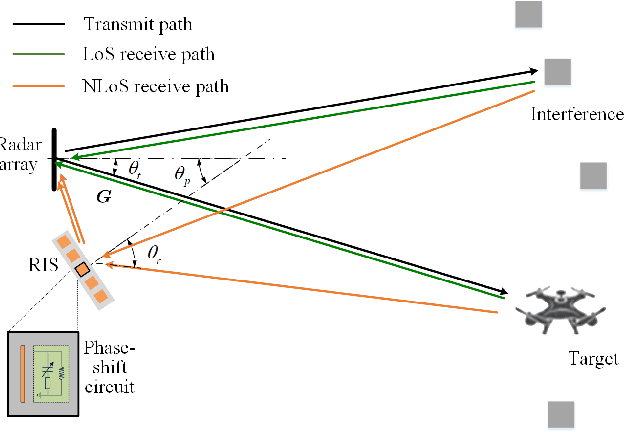
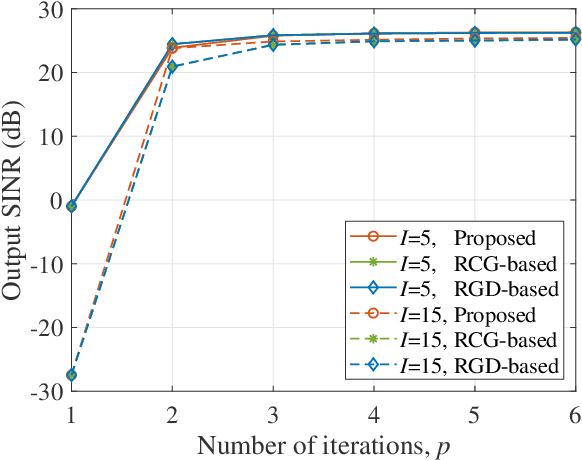
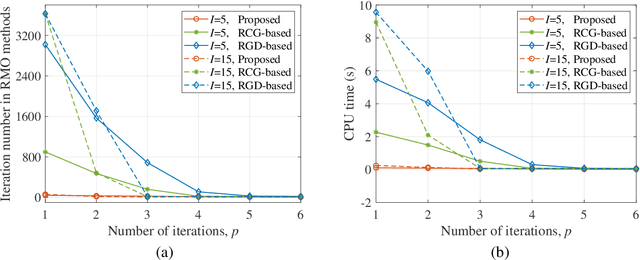
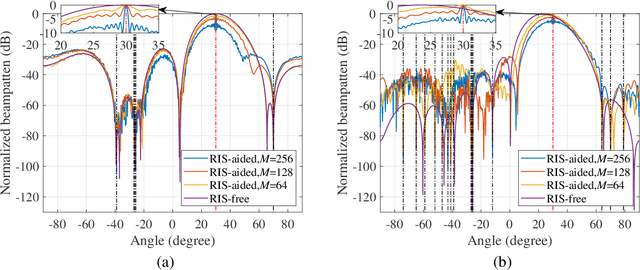
Conventional active array radars often jointly design the transmit and receive beamforming for effectively suppressing interferences. To further promote the interference suppression performance, this paper introduces a reconfigurable intelligent surface (RIS) to assist the radar receiver because the RIS has the ability to bring plentiful additional degrees-of-freedom. To maximize the output signal-to-interference-plus-noise ratio (SINR) of receive array, we formulate the codesign of transmit beamforming and RIS-assisted receive beamforming into a nonconvex constrained fractional programming problem, and then propose an alternating minimization-based algorithm to jointly optimize the transmitor beamfmer, receive beamformer and RIS reflection coefficients. Concretely, we translate the RIS reflection coefficients design into a series of unimodular quadratic programming (UQP) subproblems by employing the Dinkelbach transform, and offer the closed-form optimal solutions of transmit and receive beamformers according to the minimum variance distortionless response principle. To tackle the UQP subproblems efficiently, we propose a second-order Riemannian Newton method (RNM) with improved Riemannian Newton direction, which avoids the line search and has better convergence speed than typical first-order Riemannian manifold optimization methods. Moreover, we derive the convergence of the proposed codesign algorithm by deducing the explicit convergence condition of RNM. We also analyze the computational complexity. Numerical results demonstrate that the proposed RIS-assisted array radar has superior performance of interference suppression to the RIS-free one, and the SINR improvement is proportional to the number of RIS elements.

Machine Learning for the Multi-Dimensional Bin Packing Problem: Literature Review and Empirical Evaluation
Dec 13, 2023The Bin Packing Problem (BPP) is a well-established combinatorial optimization (CO) problem. Since it has many applications in our daily life, e.g. logistics and resource allocation, people are seeking efficient bin packing algorithms. On the other hand, researchers have been making constant advances in machine learning (ML), which is famous for its efficiency. In this article, we first formulate BPP, introducing its variants and practical constraints. Then, a comprehensive survey on ML for multi-dimensional BPP is provided. We further collect some public benchmarks of 3D BPP, and evaluate some online methods on the Cutting Stock Dataset. Finally, we share our perspective on challenges and future directions in BPP. To the best of our knowledge, this is the first systematic review of ML-related methods for BPP.
IEBins: Iterative Elastic Bins for Monocular Depth Estimation
Sep 25, 2023Monocular depth estimation (MDE) is a fundamental topic of geometric computer vision and a core technique for many downstream applications. Recently, several methods reframe the MDE as a classification-regression problem where a linear combination of probabilistic distribution and bin centers is used to predict depth. In this paper, we propose a novel concept of iterative elastic bins (IEBins) for the classification-regression-based MDE. The proposed IEBins aims to search for high-quality depth by progressively optimizing the search range, which involves multiple stages and each stage performs a finer-grained depth search in the target bin on top of its previous stage. To alleviate the possible error accumulation during the iterative process, we utilize a novel elastic target bin to replace the original target bin, the width of which is adjusted elastically based on the depth uncertainty. Furthermore, we develop a dedicated framework composed of a feature extractor and an iterative optimizer that has powerful temporal context modeling capabilities benefiting from the GRU-based architecture. Extensive experiments on the KITTI, NYU-Depth-v2 and SUN RGB-D datasets demonstrate that the proposed method surpasses prior state-of-the-art competitors. The source code is publicly available at https://github.com/ShuweiShao/IEBins.
The Expressive Power of Graph Neural Networks: A Survey
Aug 16, 2023
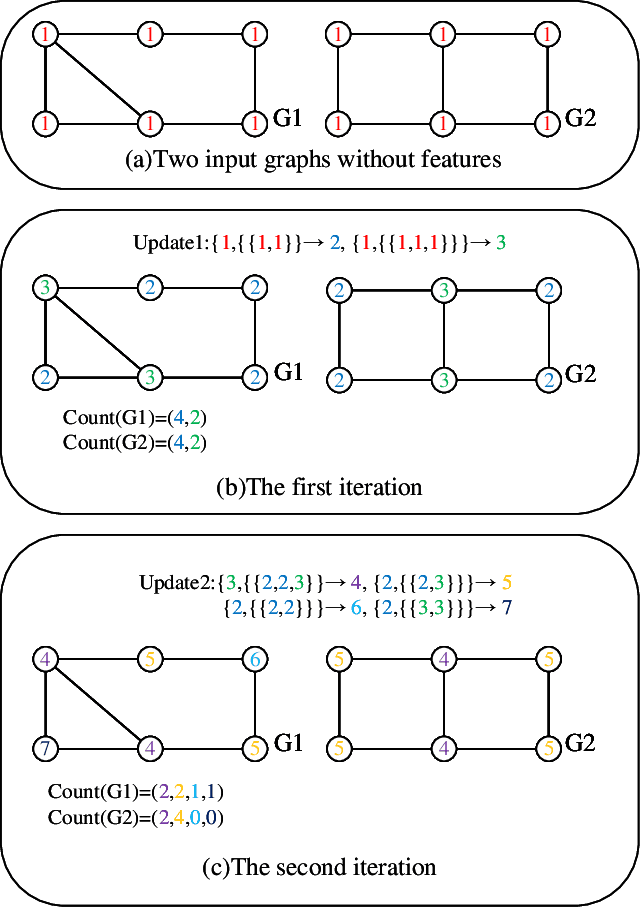
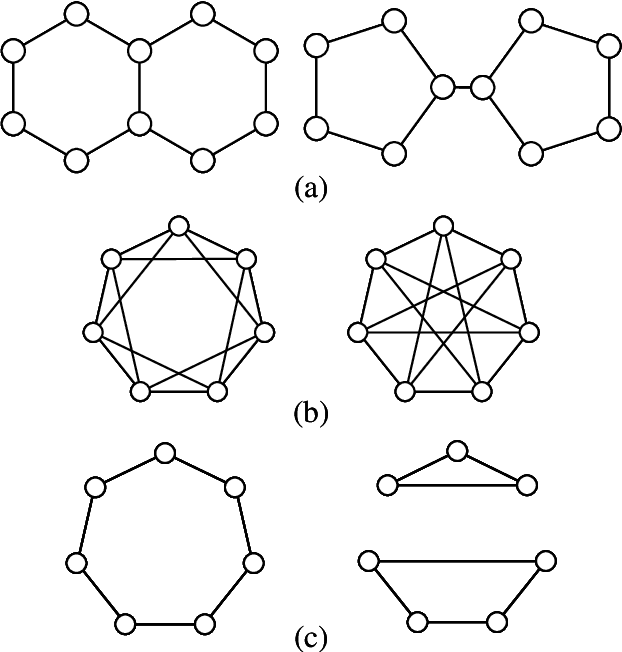

Graph neural networks (GNNs) are effective machine learning models for many graph-related applications. Despite their empirical success, many research efforts focus on the theoretical limitations of GNNs, i.e., the GNNs expressive power. Early works in this domain mainly focus on studying the graph isomorphism recognition ability of GNNs, and recent works try to leverage the properties such as subgraph counting and connectivity learning to characterize the expressive power of GNNs, which are more practical and closer to real-world. However, no survey papers and open-source repositories comprehensively summarize and discuss models in this important direction. To fill the gap, we conduct a first survey for models for enhancing expressive power under different forms of definition. Concretely, the models are reviewed based on three categories, i.e., Graph feature enhancement, Graph topology enhancement, and GNNs architecture enhancement.
Inductive Meta-path Learning for Schema-complex Heterogeneous Information Networks
Jul 08, 2023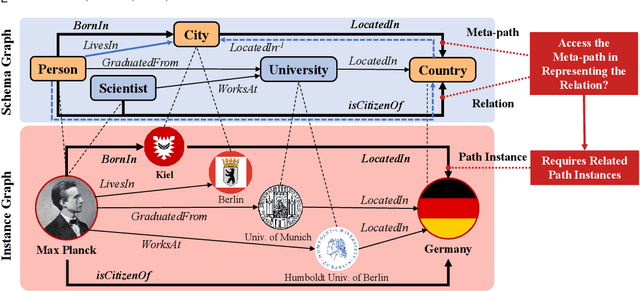
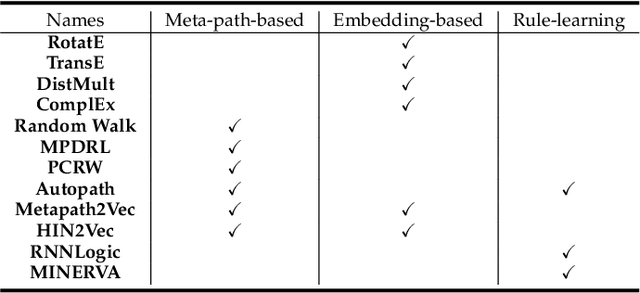
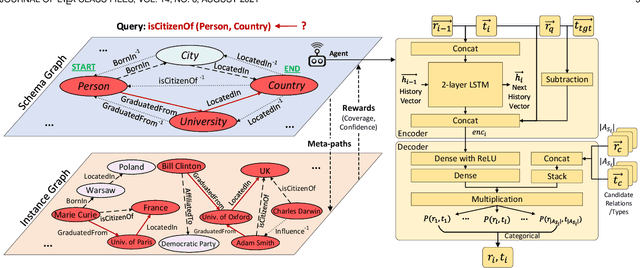
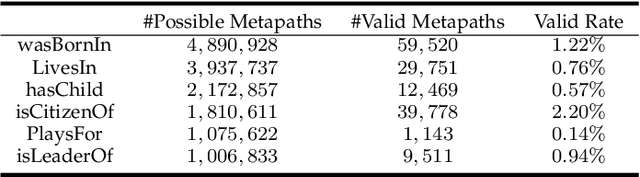
Heterogeneous Information Networks (HINs) are information networks with multiple types of nodes and edges. The concept of meta-path, i.e., a sequence of entity types and relation types connecting two entities, is proposed to provide the meta-level explainable semantics for various HIN tasks. Traditionally, meta-paths are primarily used for schema-simple HINs, e.g., bibliographic networks with only a few entity types, where meta-paths are often enumerated with domain knowledge. However, the adoption of meta-paths for schema-complex HINs, such as knowledge bases (KBs) with hundreds of entity and relation types, has been limited due to the computational complexity associated with meta-path enumeration. Additionally, effectively assessing meta-paths requires enumerating relevant path instances, which adds further complexity to the meta-path learning process. To address these challenges, we propose SchemaWalk, an inductive meta-path learning framework for schema-complex HINs. We represent meta-paths with schema-level representations to support the learning of the scores of meta-paths for varying relations, mitigating the need of exhaustive path instance enumeration for each relation. Further, we design a reinforcement-learning based path-finding agent, which directly navigates the network schema (i.e., schema graph) to learn policies for establishing meta-paths with high coverage and confidence for multiple relations. Extensive experiments on real data sets demonstrate the effectiveness of our proposed paradigm.
Online Unsupervised Video Object Segmentation via Contrastive Motion Clustering
Jun 21, 2023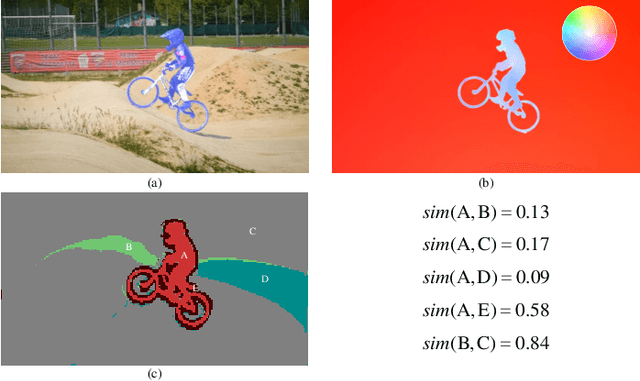
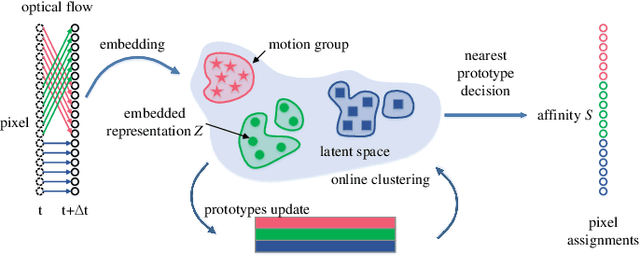
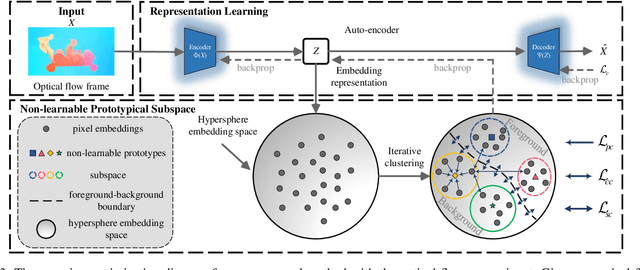
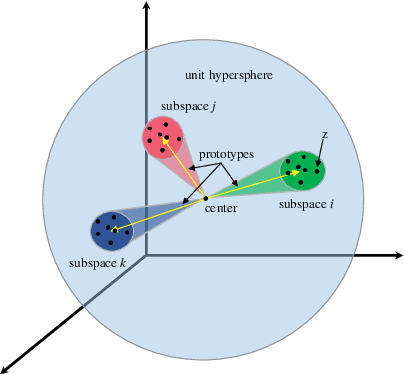
Online unsupervised video object segmentation (UVOS) uses the previous frames as its input to automatically separate the primary object(s) from a streaming video without using any further manual annotation. A major challenge is that the model has no access to the future and must rely solely on the history, i.e., the segmentation mask is predicted from the current frame as soon as it is captured. In this work, a novel contrastive motion clustering algorithm with an optical flow as its input is proposed for the online UVOS by exploiting the common fate principle that visual elements tend to be perceived as a group if they possess the same motion pattern. We build a simple and effective auto-encoder to iteratively summarize non-learnable prototypical bases for the motion pattern, while the bases in turn help learn the representation of the embedding network. Further, a contrastive learning strategy based on a boundary prior is developed to improve foreground and background feature discrimination in the representation learning stage. The proposed algorithm can be optimized on arbitrarily-scale data i.e., frame, clip, dataset) and performed in an online fashion. Experiments on $\textit{DAVIS}_{\textit{16}}$, $\textit{FBMS}$, and $\textit{SegTrackV2}$ datasets show that the accuracy of our method surpasses the previous state-of-the-art (SoTA) online UVOS method by a margin of 0.8%, 2.9%, and 1.1%, respectively. Furthermore, by using an online deep subspace clustering to tackle the motion grouping, our method is able to achieve higher accuracy at $3\times$ faster inference time compared to SoTA online UVOS method, and making a good trade-off between effectiveness and efficiency.
Self-Supervised Monocular Depth Estimation with Self-Reference Distillation and Disparity Offset Refinement
Feb 20, 2023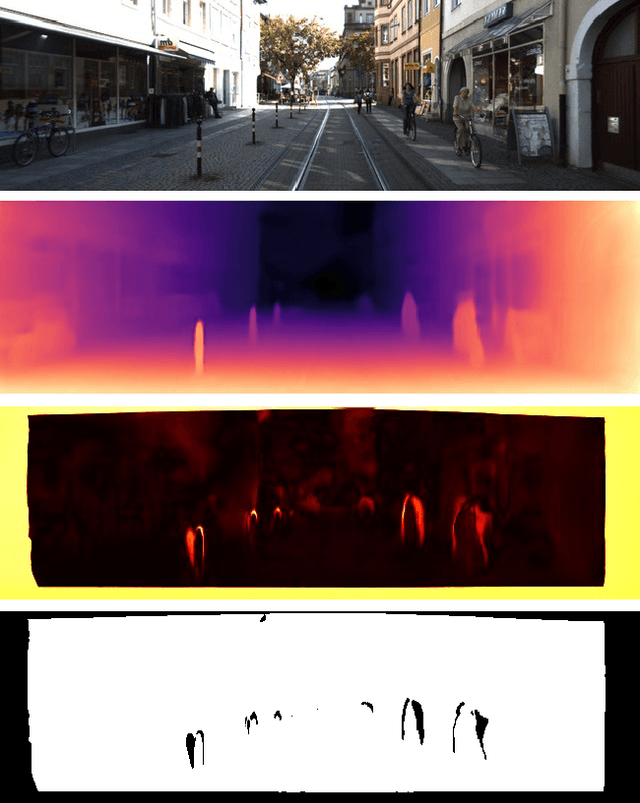
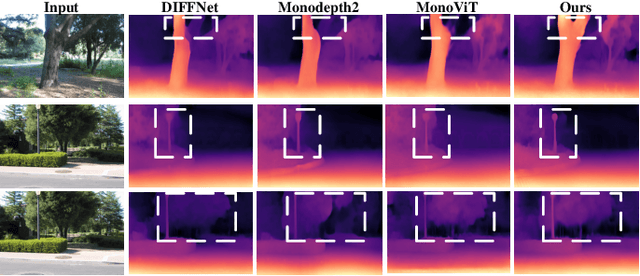
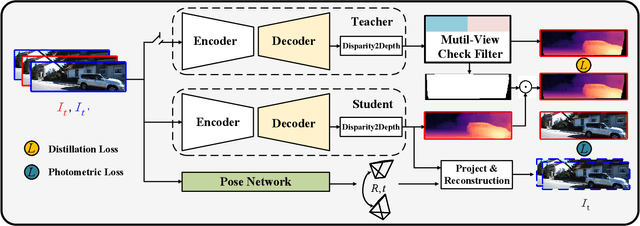
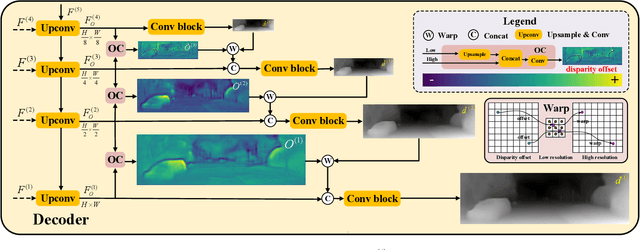
Monocular depth estimation plays a fundamental role in computer vision. Due to the costly acquisition of depth ground truth, self-supervised methods that leverage adjacent frames to establish a supervisory signal have emerged as the most promising paradigms. In this work, we propose two novel ideas to improve self-supervised monocular depth estimation: 1) self-reference distillation and 2) disparity offset refinement. Specifically, we use a parameter-optimized model as the teacher updated as the training epochs to provide additional supervision during the training process. The teacher model has the same structure as the student model, with weights inherited from the historical student model. In addition, a multiview check is introduced to filter out the outliers produced by the teacher model. Furthermore, we leverage the contextual consistency between high-scale and low-scale features to obtain multiscale disparity offsets, which are used to refine the disparity output incrementally by aligning disparity information at different scales. The experimental results on the KITTI and Make3D datasets show that our method outperforms previous state-of-the-art competitors.
URCDC-Depth: Uncertainty Rectified Cross-Distillation with CutFlip for Monocular Depth Estimation
Feb 17, 2023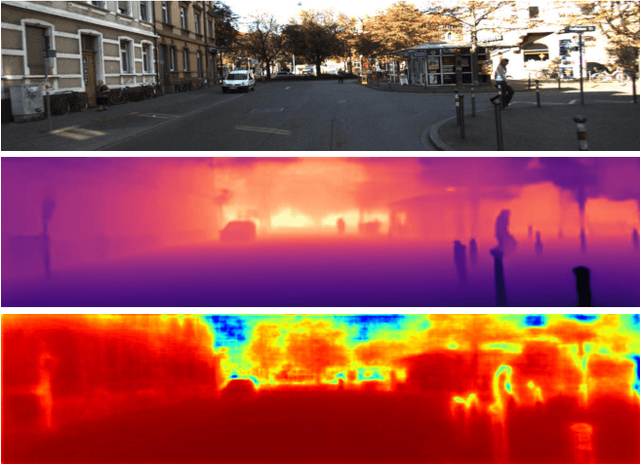
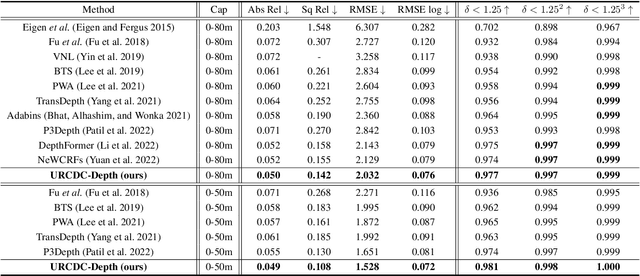
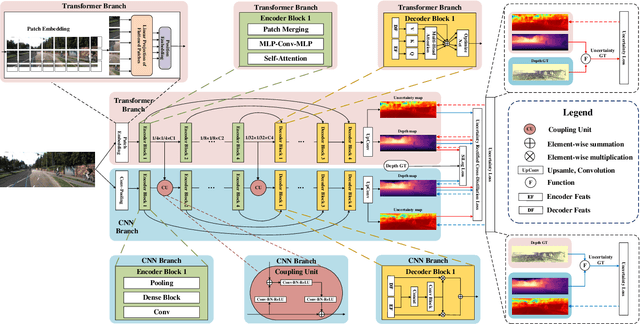
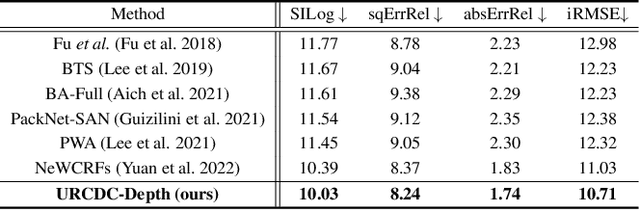
This work aims to estimate a high-quality depth map from a single RGB image. Due to the lack of depth clues, making full use of the long-range correlation and the local information is critical for accurate depth estimation. Towards this end, we introduce an uncertainty rectified cross-distillation between Transformer and convolutional neural network (CNN) to learn a unified depth estimator. Specifically, we use the depth estimates from the Transformer branch and the CNN branch as pseudo labels to teach each other. Meanwhile, we model the pixel-wise depth uncertainty to rectify the loss weights of noisy pseudo labels. To avoid the large capacity gap induced by the strong Transformer branch deteriorating the cross-distillation, we transfer the feature maps from Transformer to CNN and design coupling units to assist the weak CNN branch to leverage the transferred features. Furthermore, we propose a surprisingly simple yet highly effective data augmentation technique CutFlip, which enforces the model to exploit more valuable clues apart from the vertical image position for depth inference. Extensive experiments demonstrate that our model, termed~\textbf{URCDC-Depth}, exceeds previous state-of-the-art methods on the KITTI, NYU-Depth-v2 and SUN RGB-D datasets, even with no additional computational burden at inference time. The source code is publicly available at \url{https://github.com/ShuweiShao/URCDC-Depth}.
Time Encoding Sampling of Bandpass Signals
Feb 15, 2023This paper investigates the problem of sampling and reconstructing bandpass signals using time encoding machine(TEM). It is shown that the sampling in principle is equivalent to periodic non-uniform sampling (PNS). Then the TEM parameters can be set according to the signal bandwidth and amplitude instead of upper-edge frequency and amplitude as in the case of bandlimited/lowpass signals. For a bandpass signal of a single information band, it can be perfectly reconstructed if the TEM parameters are such that the difference between any consecutive values of the time sequence in each channel is bounded by the inverse of the signal bandwidth. A reconstruction method incorporating the interpolation functions of PNS is proposed. Numerical experiments validate the feasibility and effectiveness of the proposed TEM scheme.
Real-time Local Feature with Global Visual Information Enhancement
Nov 20, 2022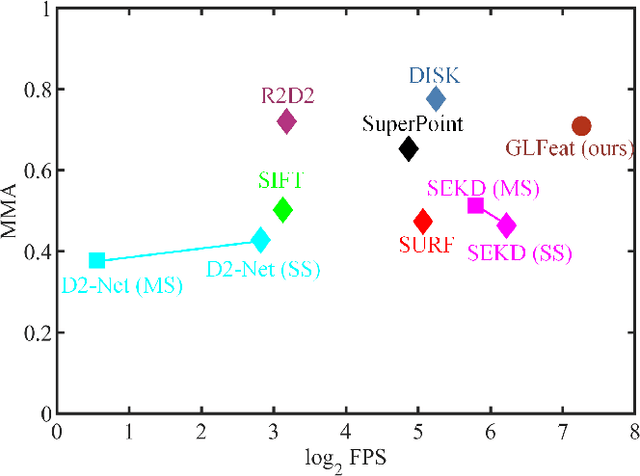
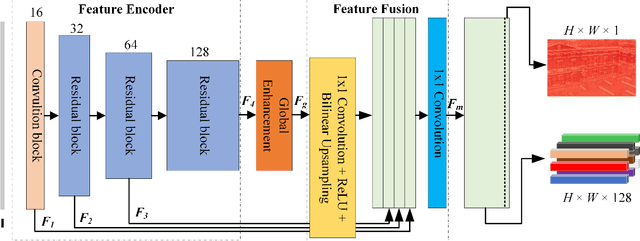
Local feature provides compact and invariant image representation for various visual tasks. Current deep learning-based local feature algorithms always utilize convolution neural network (CNN) architecture with limited receptive field. Besides, even with high-performance GPU devices, the computational efficiency of local features cannot be satisfactory. In this paper, we tackle such problems by proposing a CNN-based local feature algorithm. The proposed method introduces a global enhancement module to fuse global visual clues in a light-weight network, and then optimizes the network by novel deep reinforcement learning scheme from the perspective of local feature matching task. Experiments on the public benchmarks demonstrate that the proposal can achieve considerable robustness against visual interference and meanwhile run in real time.