 Add to Chrome
 Add to Firefox
 Add to Edge
Beyond the RF Paradigm: Rydberg Atomic Receivers for Next-Generation IoT
May 31, 2026
Next-generation Internet-of-Things (IoT) is evolving toward a ubiquitous, ultra-low-power, and multi-band heterogeneous networking paradigm that seamlessly integrates terrestrial, non-terrestrial, and ambient devices. This vision places unprecedented demands on conventional radio frequency (RF) receivers, whose fundamental bottlenecks in sensitivity, power consumption, coverage, and multi-band operation are rooted in the RF antenna. To tackle these issues, we show that the quantum properties of Rydberg atomic quantum receivers (RAQRs), including ultra-high sensitivity, broad frequency agility, and diverse reception modalities, provide a physically distinct receiver-side path that replaces the conventional antenna-and-low-noise-amplifier chain. Using LoRa, narrowband IoT, and ambient IoT as case studies, this article shows that RAQRs deliver significant gains in weak-uplink, low-power, and battery-free regimes. A stochastic-geometry analysis in cellular and cell-free architectures then maps these device-level gains onto network coverage, where the RAQR retains roughly a 4 dB half-coverage advantage over the RF receiver in sparse deployments at \(λ\sim 10^{-5}~{\mathrm m}^{-2}\), with the gain eroded as device density grows. The open challenges are presented to stand between current RAQR prototypes and deployable IoT infrastructure.

Do Neural Scaling Laws Exist on Graph Self-Supervised Learning?
Aug 20, 2024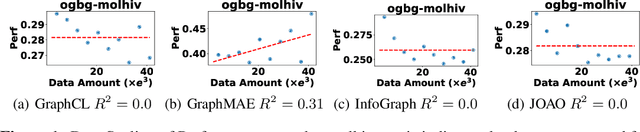


Self-supervised learning~(SSL) is essential to obtain foundation models in NLP and CV domains via effectively leveraging knowledge in large-scale unlabeled data. The reason for its success is that a suitable SSL design can help the model to follow the neural scaling law, i.e., the performance consistently improves with increasing model and dataset sizes. However, it remains a mystery whether existing SSL in the graph domain can follow the scaling behavior toward building Graph Foundation Models~(GFMs) with large-scale pre-training. In this study, we examine whether existing graph SSL techniques can follow the neural scaling behavior with the potential to serve as the essential component for GFMs. Our benchmark includes comprehensive SSL technique implementations with analysis conducted on both the conventional SSL setting and many new settings adopted in other domains. Surprisingly, despite the SSL loss continuously decreasing, no existing graph SSL techniques follow the neural scaling behavior on the downstream performance. The model performance only merely fluctuates on different data scales and model scales. Instead of the scales, the key factors influencing the performance are the choices of model architecture and pretext task design. This paper examines existing SSL techniques for the feasibility of Graph SSL techniques in developing GFMs and opens a new direction for graph SSL design with the new evaluation prototype. Our code implementation is available online to ease reproducibility on https://github.com/GraphSSLScaling/GraphSSLScaling.