 Add to Chrome
 Add to Firefox
 Add to Edge
Towards Fast Domain Adaptation and Fine-Grained User Simulation for Evaluating Conversational Recommender Systems
Jun 23, 2026
Conversational Recommender Systems (CRSs) enhance user experience through multi-turn interactions, yet evaluating their performance remains challenging. While Large Language Model (LLM) based user simulators are effective, they suffer from three key limitations: (1) Lack of Domain Adaptability: Reliance on fixed prompts and predefined action spaces hinders transfer to novel domains; (2) Limited User Modeling: Inability to accurately replicate subtle linguistic styles and dynamic preferences; (3) Insufficient Evaluation Validity: Existing simulators fail to adequately assess fundamental capabilities and system robustness. To overcome these, we propose AdaptSim, an Adaptive domain and automatic prompt tuning User Simulator. AdaptSim offers an efficient framework for evaluating CRSs by enabling realistic behavior modeling and diverse style generation. It leverages automatic prompt generation and an open action mechanism to reduce manual effort and improve cross-domain flexibility. For response generation, we employ controlled text generation with a "think-then-respond" strategy for fine-grained control over language style. For CRS evaluation, AdaptSim incorporates a novel Breadth-First Search (BFS)-based, turn-level pairwise comparison framework for comprehensive assessment. Extensive experiments across three domains and four LLMs demonstrate that AdaptSim generates realistic dialogues, enabling a highly effective and reliable evaluation of CRS capabilities and robustness.

ARCO: Adaptive Rubric with Co-Evolution for Multi-Step LLM-Based Agents
Jun 19, 2026Reinforcement learning for multi-step LLM agents often relies on scalar rewards that indicate success but cannot explain why a trajectory is good or bad. Rubric-based rewards improve interpretability through natural-language criteria, but existing methods score at the trajectory level and freeze the scorer behind a closed-source judge, leaving step-level credit assignment unresolved and the judge itself static. We propose ARCO (Adaptive Rubric CO-evolution), a rubric framework in which a same-scale model $μ$ shares a backbone with two heads: a generation head that produces per-step criteria, and a score head that predicts rubric-conditioned step-level rewards. A trajectory decomposition constraint ties the sum of step rewards to the terminal outcome, enabling credit assignment without step-level labels, while $μ$ and the policy $π$ are jointly updated on on-policy data so that the rubric content and the scoring function co-evolve at the parameter level. Across HotpotQA, 2WikiMultiHopQA, and MuSiQue with two open-source backbones, ARCO improves the best EM in every setting over strong outcome-, rubric-, and process-reward baselines, and analyses show that its rubrics are step-specific, robust to design choices, and useful for diagnosing agent behavior. Codes and data are available at https://github.com/zihangtian/ARCO.
Do Generative Recommenders Deepen the Information Cocoon? A Closed-Loop Simulation with LLM-powered User Simulators
Jun 16, 2026Recommender systems alleviate information overload, yet repeated feedback between recommendations and user interactions can reinforce existing preferences and narrow users' exposure, forming information cocoons. While this phenomenon has been widely studied in traditional sequential recommendation, its impact on generative recommendation remains unclear. By replacing atomic item IDs with Semantic ID (SID) sequences, generative recommenders introduce a different recommendation mechanism whose role in information cocoon formation is not yet understood. To investigate whether generative recommenders deepen information cocoons, we propose \textsc{RecLoop}, a closed-loop simulation framework with LLM-driven user agents. We compare two generative recommenders and two traditional sequential baselines on two Amazon datasets across multiple feedback cycles. In addition to standard exposure-level metrics, we introduce \emph{Code-Space Structural Cocoon}, a model-level metric that measures concentration in the generated SID space. Experimental results show that generative recommenders are generally less prone to exposure-level cocoon formation than traditional baselines, preserving broader exposure diversity and slowing cross-user homogenization. However, feedback loops can still induce concentration within the generated SID space. We further find that cocoon severity depends strongly on tokenization strategy and model scale: collaborative-signal tokenization produces stronger cocoon effects than semantic tokenization, whereas larger models maintain greater code-space diversity and better retain access to niche content. These findings suggest that information cocoons in generative recommendation are shaped not only by recommendation behavior, but also by item tokenization and model capacity. Our code is available at https://github.com/Dregen-Yor/RecLoop.
Seeing Before Agreeing: Aligning Multi-Agent Consensus with Visual Evidence
May 29, 2026Vision-language models (VLMs) have achieved strong performance on visual question answering (VQA). To mitigate individual hallucinations and blind spots, aggregating diverse perspectives via multi-agent collaboration has emerged as a promising paradigm. While this approach has shown great success in textual QA, its potential in the multimodal domain remains under-explored. Existing multi-agent VQA methods predominantly adapt text-centric protocols, focusing on textual discussions while ignoring the alignment of visual information. In this work, we reveal a key insight: answer-level agreement is insufficient for reliable multi-agent VQA; \textit{aligned visual evidence} -- shared support from the image regions agents rely on -- is essential for trustworthy consensus. To leverage this insight, we propose EAGLE (\textbf{E}vidence-\textbf{A}ligned \textbf{G}rounded mu\textbf{L}ti-agent r\textbf{E}asoning), a training-free evidence-centered framework for coordinating multiple VLM agents. EAGLE explicitly exposes each agent's grounding regions as visual evidence, enables mutual verification over the evidence, and uses evidence consistency to guide final decision-making. Experiments on six VQA benchmarks show that EAGLE achieves best average performance across domains while remaining lightweight, interpretable, and practical for deployment.
Divergence Meets Consensus: A Multi-Source Negative Sampling Framework for Sequential Recommendation
May 19, 2026Negative sampling is significant for training sequential recommendation models under implicit feedback. The predominant strategy, self-guided hard negative sampling, selects negatives based on the model's current state but suffers from three limitations: (1) the coupling between sampling and model updates triggers a vicious cycle that drives the model into local optima; (2) relying on current model parameters narrows sampling to a small region of the item space, reducing diversity and harming generalization; (3) identifying a hard negative requires scoring the entire candidate pool, causing substantial computational overhead with minimal information gain. To address these challenges, we propose MDCNS (Multi-source Divergence-Consensus for Negative Sampling), a novel "Teacher-Peer-Self" framework inspired by Vygotsky's Zone of Proximal Development (ZPD) theory. The proposed method comprises three components, including multi-source scoring, divergence re-ranking, and consensus distillation. Firstly, multi-source scoring incorporates peer and ensemble teacher models to inject external negative signals and break the self-reinforcement loop. Then, divergence re-ranking exploits prediction discrepancy between self and peer models to enhance sampling diversity. Finally, consensus distillation aligns the self model with the teacher via KL divergence, simultaneously improving computational cost utilization. Extensive experiments on six real-world datasets and five backbone models show that MDCNS consistently outperforms state-of-the-art negative sampling methods, demonstrating strong effectiveness and generalization.
LLM Agents as Social Scientists: A Human-AI Collaborative Platform for Social Science Automation
Apr 02, 2026Traditional social science research often requires designing complex experiments across vast methodological spaces and depends on real human participants, making it labor-intensive, costly, and difficult to scale. Here we present S-Researcher, an LLM-agent-based platform that assists researchers in conducting social science research more efficiently and at greater scale by "siliconizing" both the research process and the participant pool. To build S-Researcher, we first develop YuLan-OneSim, a large-scale social simulation system designed around three core requirements: generality via auto-programming from natural language to executable scenarios, scalability via a distributed architecture supporting up to 100,000 concurrent agents, and reliability via feedback-driven LLM fine-tuning. Leveraging this system, S-Researcher supports researchers in designing social experiments, simulating human behavior with LLM agents, analyzing results, and generating reports, forming a complete human-AI collaborative research loop in which researchers retain oversight and intervention at every stage. We operationalize LLM simulation research paradigms into three canonical reasoning modes (induction, deduction, and abduction) and validate S-Researcher through systematic case studies: inductive reproduction of cultural dynamics consistent with Axelrod's theory, deductive testing of competing hypotheses on teacher attention validated against survey data, and abductive identification of a cooperation mechanism in public goods games confirmed by human experiments. S-Researcher establishes a new human--AI collaborative paradigm for social science, in which computational simulation augments human researchers to accelerate discovery across the full spectrum of social inquiry.
Evaluating and Calibrating LLM Confidence on Questions with Multiple Correct Answers
Feb 08, 2026Confidence calibration is essential for making large language models (LLMs) reliable, yet existing training-free methods have been primarily studied under single-answer question answering. In this paper, we show that these methods break down in the presence of multiple valid answers, where disagreement among equally correct responses leads to systematic underestimation of confidence. To enable a systematic study of this phenomenon, we introduce MACE, a benchmark of 12,000 factual questions spanning six domains with varying numbers of correct answers. Experiments across 15 representative calibration methods and four LLM families (7B-72B) reveal that while accuracy increases with answer cardinality, estimated confidence consistently decreases, causing severe miscalibration for questions with mixed answer counts. To address this issue, we propose Semantic Confidence Aggregation (SCA), which aggregates confidence over multiple high-probability sampled responses. SCA achieves state-of-the-art calibration performance under mixed-answer settings while preserving strong calibration on single-answer questions.
Uncovering Selective State Space Model's Capabilities in Lifelong Sequential Recommendation
Mar 25, 2024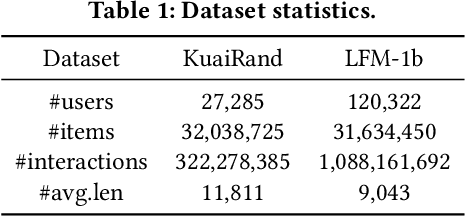
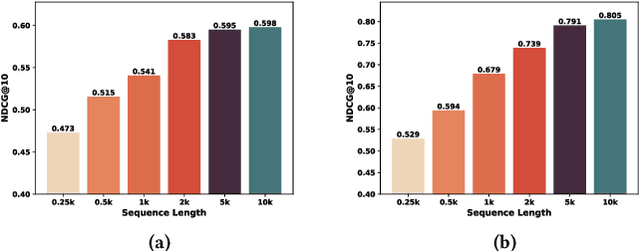
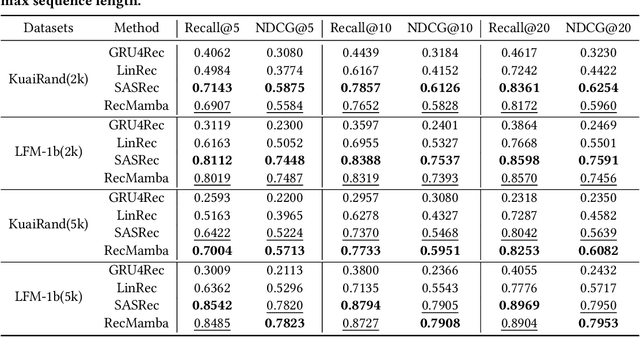
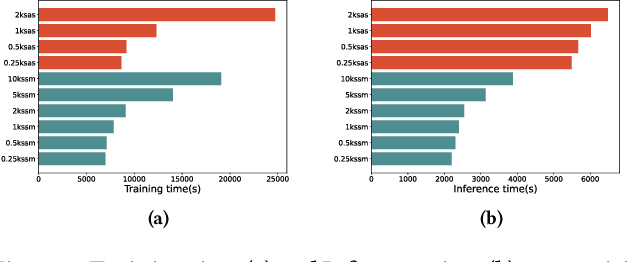
Sequential Recommenders have been widely applied in various online services, aiming to model users' dynamic interests from their sequential interactions. With users increasingly engaging with online platforms, vast amounts of lifelong user behavioral sequences have been generated. However, existing sequential recommender models often struggle to handle such lifelong sequences. The primary challenges stem from computational complexity and the ability to capture long-range dependencies within the sequence. Recently, a state space model featuring a selective mechanism (i.e., Mamba) has emerged. In this work, we investigate the performance of Mamba for lifelong sequential recommendation (i.e., length>=2k). More specifically, we leverage the Mamba block to model lifelong user sequences selectively. We conduct extensive experiments to evaluate the performance of representative sequential recommendation models in the setting of lifelong sequences. Experiments on two real-world datasets demonstrate the superiority of Mamba. We found that RecMamba achieves performance comparable to the representative model while significantly reducing training duration by approximately 70% and memory costs by 80%. Codes and data are available at \url{https://github.com/nancheng58/RecMamba}.