 Add to Chrome
 Add to Firefox
 Add to Edge
Impact of a Soft Wearable Back-Support Device on Postural Stability during Trip-Like Perturbations
Jun 01, 2026
The effectiveness of a soft wearable back-support device in enhancing postural stability was investigated under trip-like perturbations using two experimental paradigms: perturbed standing and perturbed walking. Healthy subjects completed trials under three different back-support conditions: no device, device worn with low stiffness, and device activated with high stiffness. Whole-body stability was quantified using the minimum Margin of Stability (MOS) at the point of maximal instability. Results demonstrated increased MOS during device use, indicating enhanced postural stability. In standing, MOS increased significantly with device stiffness, whereas in walking, both device conditions improved MOS relative to no device but did not differ significantly from each other. These findings highlight the potential of soft wearable back-support devices with adjustable stiffness to improve reactive balance control against external perturbations, with important implications for fall prevention. Future research should explore personalized stiffness optimization and evaluate efficacy in populations at elevated risk of falls.

Probing Minimalist Phase Structure in LLMs: What Universal Dependencies Cannot Represent
May 26, 2026Structural probes train on Universal Dependencies (UD), which does not encode formal-syntactic abstractions such as phase boundaries or phase-internal cohesion. Whether large language models (LLMs) encode these remains an open question that UD-based probing cannot answer by construction. We evaluate structural probes on wh-movement stimuli where UD distances are invariant across conditions by design -- any non-zero effect therefore reflects structure beyond UD. The three conditions -- bare small clause, infinitival, and finite -- are ordered by the number of Minimalist Program (MP) phase boundaries the wh-element crosses. Across 13 LLMs from four families, we find a phase-count gradient on a cross-clause pair (12/13 models) and a 13/13 sign asymmetry on a within-clause pair whose UD distance is identical across conditions -- the latter specifically predicted by phase-internal cohesion, an MP abstraction invisible to UD by construction. Activation patching confirms the representations are causally active in 12/13 models. These findings suggest that distributional pretraining can induce representations aligned with formal-syntactic abstractions beyond the reach of annotation-based probing; UD-grounded probes provide a lower bound on syntactic encoding, not an upper bound.
Sample-Efficient Policy Constraint Offline Deep Reinforcement Learning based on Sample Filtering
Dec 23, 2025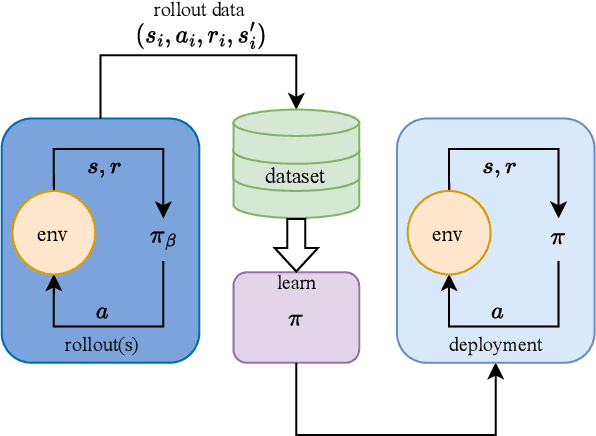
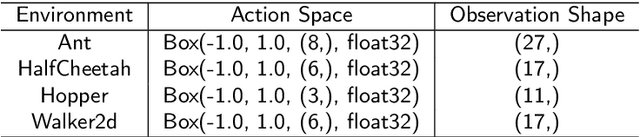
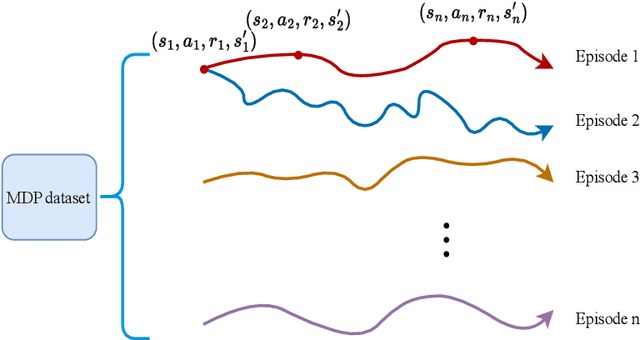
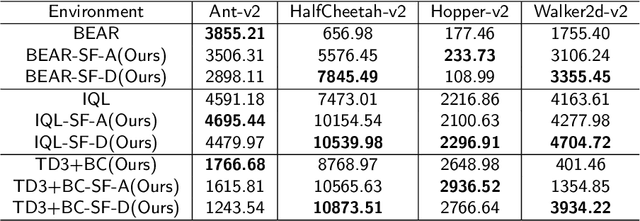
Offline reinforcement learning (RL) aims to learn a policy that maximizes the expected return using a given static dataset of transitions. However, offline RL faces the distribution shift problem. The policy constraint offline RL method is proposed to solve the distribution shift problem. During the policy constraint offline RL training, it is important to ensure the difference between the learned policy and behavior policy within a given threshold. Thus, the learned policy heavily relies on the quality of the behavior policy. However, a problem exists in existing policy constraint methods: if the dataset contains many low-reward transitions, the learned will be contained with a suboptimal reference policy, leading to slow learning speed, low sample efficiency, and inferior performances. This paper shows that the sampling method in policy constraint offline RL that uses all the transitions in the dataset can be improved. A simple but efficient sample filtering method is proposed to improve the sample efficiency and the final performance. First, we evaluate the score of the transitions by average reward and average discounted reward of episodes in the dataset and extract the transition samples of high scores. Second, the high-score transition samples are used to train the offline RL algorithms. We verify the proposed method in a series of offline RL algorithms and benchmark tasks. Experimental results show that the proposed method outperforms baselines.
Improving TTS for Shanghainese: Addressing Tone Sandhi via Word Segmentation
Jul 30, 2023
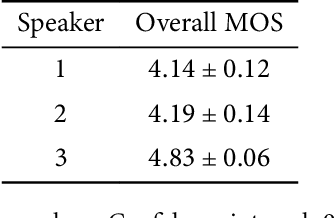
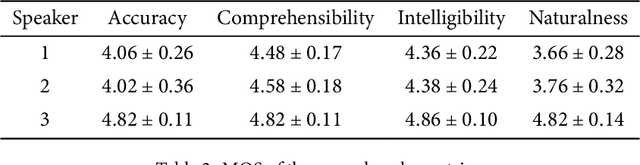
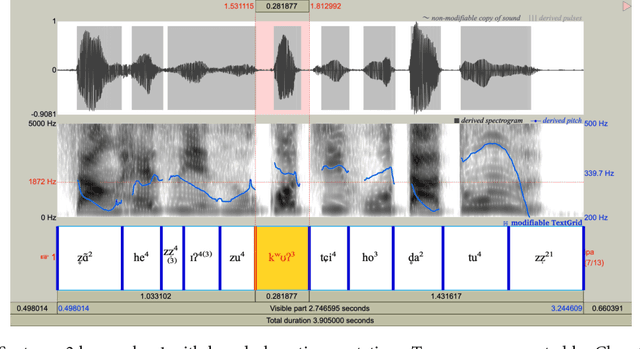
Tone is a crucial component of the prosody of Shanghainese, a Wu Chinese variety spoken primarily in urban Shanghai. Tone sandhi, which applies to all multi-syllabic words in Shanghainese, then, is key to natural-sounding speech. Unfortunately, recent work on Shanghainese TTS (text-to-speech) such as Apple's VoiceOver has shown poor performance with tone sandhi, especially LD (left-dominant sandhi). Here I show that word segmentation during text preprocessing can improve the quality of tone sandhi production in TTS models. Syllables within the same word are annotated with a special symbol, which serves as a proxy for prosodic information of the domain of LD. Contrary to the common practice of using prosodic annotation mainly for static pauses, this paper demonstrates that prosodic annotation can also be applied to dynamic tonal phenomena. I anticipate this project to be a starting point for bringing formal linguistic accounts of Shanghainese into computational projects. Too long have we been using the Mandarin models to approximate Shanghainese, but it is a different language with its own linguistic features, and its digitisation and revitalisation should be treated as such.
Evaluating Large Language Models for Radiology Natural Language Processing
Jul 27, 2023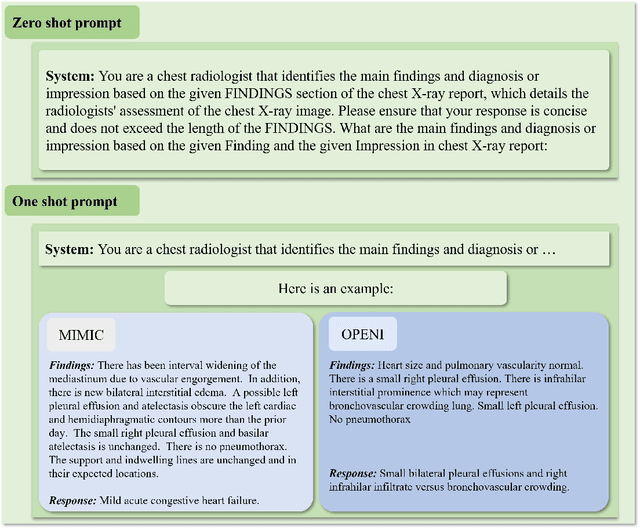
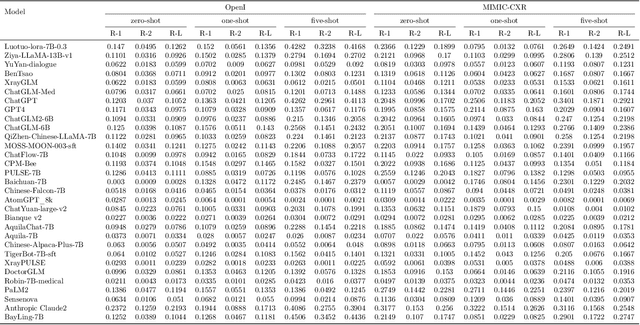
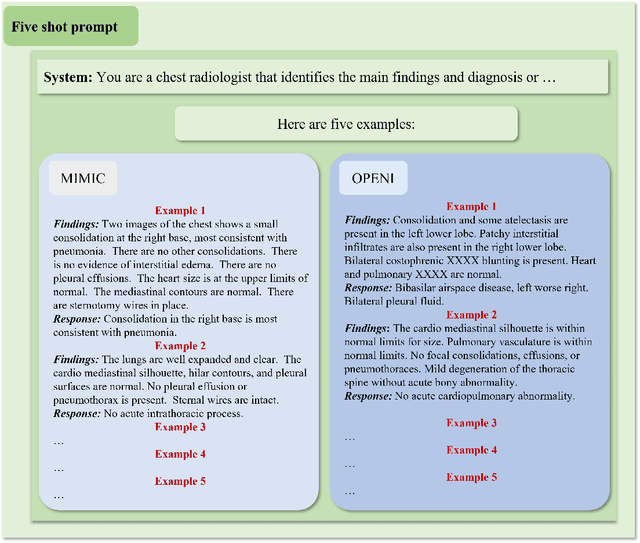
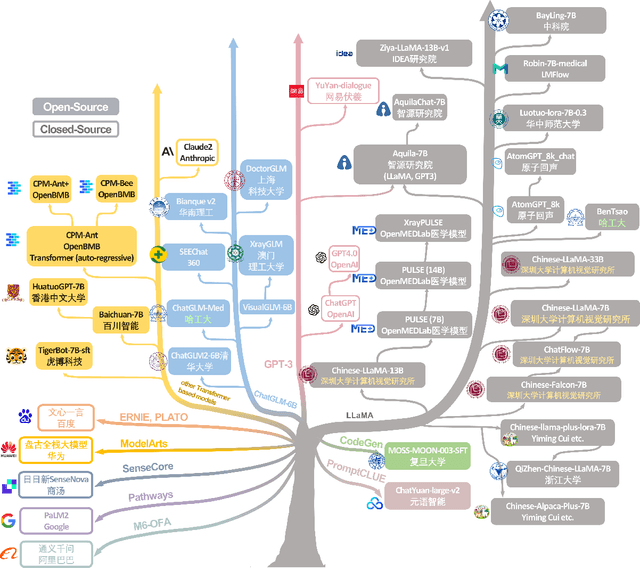
The rise of large language models (LLMs) has marked a pivotal shift in the field of natural language processing (NLP). LLMs have revolutionized a multitude of domains, and they have made a significant impact in the medical field. Large language models are now more abundant than ever, and many of these models exhibit bilingual capabilities, proficient in both English and Chinese. However, a comprehensive evaluation of these models remains to be conducted. This lack of assessment is especially apparent within the context of radiology NLP. This study seeks to bridge this gap by critically evaluating thirty two LLMs in interpreting radiology reports, a crucial component of radiology NLP. Specifically, the ability to derive impressions from radiologic findings is assessed. The outcomes of this evaluation provide key insights into the performance, strengths, and weaknesses of these LLMs, informing their practical applications within the medical domain.