 Add to Chrome
 Add to Firefox
 Add to Edge
Sample-Efficient Policy Constraint Offline Deep Reinforcement Learning based on Sample Filtering
Dec 23, 2025
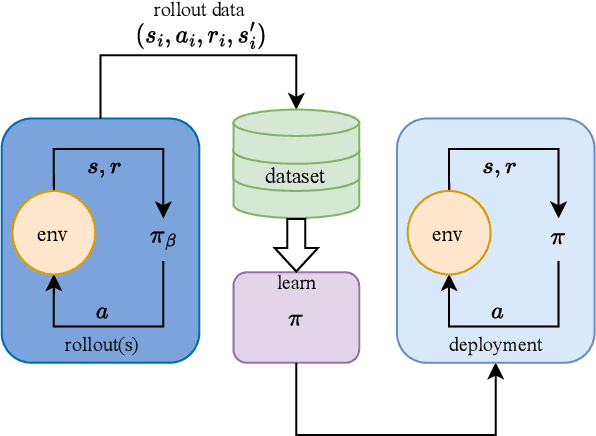
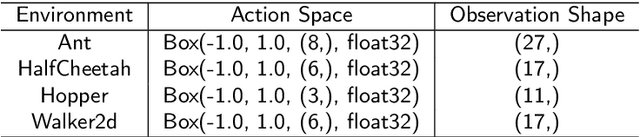
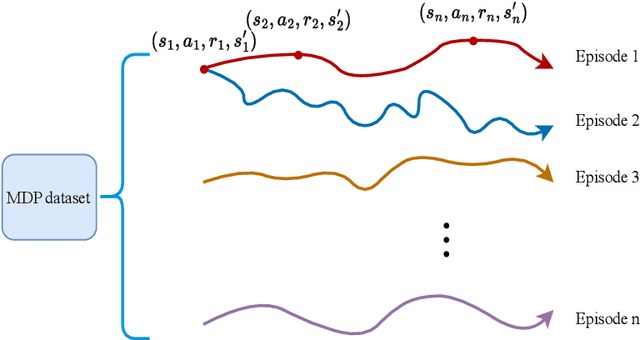
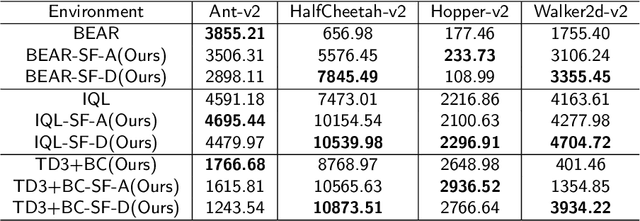
Offline reinforcement learning (RL) aims to learn a policy that maximizes the expected return using a given static dataset of transitions. However, offline RL faces the distribution shift problem. The policy constraint offline RL method is proposed to solve the distribution shift problem. During the policy constraint offline RL training, it is important to ensure the difference between the learned policy and behavior policy within a given threshold. Thus, the learned policy heavily relies on the quality of the behavior policy. However, a problem exists in existing policy constraint methods: if the dataset contains many low-reward transitions, the learned will be contained with a suboptimal reference policy, leading to slow learning speed, low sample efficiency, and inferior performances. This paper shows that the sampling method in policy constraint offline RL that uses all the transitions in the dataset can be improved. A simple but efficient sample filtering method is proposed to improve the sample efficiency and the final performance. First, we evaluate the score of the transitions by average reward and average discounted reward of episodes in the dataset and extract the transition samples of high scores. Second, the high-score transition samples are used to train the offline RL algorithms. We verify the proposed method in a series of offline RL algorithms and benchmark tasks. Experimental results show that the proposed method outperforms baselines.

Multi-Agent Target Assignment and Path Finding for Intelligent Warehouse: A Cooperative Multi-Agent Deep Reinforcement Learning Perspective
Aug 25, 2024


Multi-agent target assignment and path planning (TAPF) are two key problems in intelligent warehouse. However, most literature only addresses one of these two problems separately. In this study, we propose a method to simultaneously solve target assignment and path planning from a perspective of cooperative multi-agent deep reinforcement learning (RL). To the best of our knowledge, this is the first work to model the TAPF problem for intelligent warehouse to cooperative multi-agent deep RL, and the first to simultaneously address TAPF based on multi-agent deep RL. Furthermore, previous literature rarely considers the physical dynamics of agents. In this study, the physical dynamics of the agents is considered. Experimental results show that our method performs well in various task settings, which means that the target assignment is solved reasonably well and the planned path is almost shortest. Moreover, our method is more time-efficient than baselines.