 Add to Chrome
 Add to Firefox
 Add to Edge
Machine learning's own Industrial Revolution
Nov 04, 2023
Machine learning is expected to enable the next Industrial Revolution. However, lacking standardized and automated assembly networks, ML faces significant challenges to meet ever-growing enterprise demands and empower broad industries. In the Perspective, we argue that ML needs to first complete its own Industrial Revolution, elaborate on how to best achieve its goals, and discuss new opportunities to enable rapid translation from ML's innovation frontier to mass production and utilization.

Rethinking Domain Generalization: Discriminability and Generalizability
Sep 28, 2023Domain generalization (DG) endeavors to develop robust models that possess strong generalizability while preserving excellent discriminability. Nonetheless, pivotal DG techniques tend to improve the feature generalizability by learning domain-invariant representations, inadvertently overlooking the feature discriminability. On the one hand, the simultaneous attainment of generalizability and discriminability of features presents a complex challenge, often entailing inherent contradictions. This challenge becomes particularly pronounced when domain-invariant features manifest reduced discriminability owing to the inclusion of unstable factors, \emph{i.e.,} spurious correlations. On the other hand, prevailing domain-invariant methods can be categorized as category-level alignment, susceptible to discarding indispensable features possessing substantial generalizability and narrowing intra-class variations. To surmount these obstacles, we rethink DG from a new perspective that concurrently imbues features with formidable discriminability and robust generalizability, and present a novel framework, namely, Discriminative Microscopic Distribution Alignment (DMDA). DMDA incorporates two core components: Selective Channel Pruning~(SCP) and Micro-level Distribution Alignment (MDA). Concretely, SCP attempts to curtail redundancy within neural networks, prioritizing stable attributes conducive to accurate classification. This approach alleviates the adverse effect of spurious domain invariance and amplifies the feature discriminability. Besides, MDA accentuates micro-level alignment within each class, going beyond mere category-level alignment. This strategy accommodates sufficient generalizable features and facilitates within-class variations. Extensive experiments on four benchmark datasets corroborate the efficacy of our method.
Diverse Target and Contribution Scheduling for Domain Generalization
Sep 28, 2023Generalization under the distribution shift has been a great challenge in computer vision. The prevailing practice of directly employing the one-hot labels as the training targets in domain generalization~(DG) can lead to gradient conflicts, making it insufficient for capturing the intrinsic class characteristics and hard to increase the intra-class variation. Besides, existing methods in DG mostly overlook the distinct contributions of source (seen) domains, resulting in uneven learning from these domains. To address these issues, we firstly present a theoretical and empirical analysis of the existence of gradient conflicts in DG, unveiling the previously unexplored relationship between distribution shifts and gradient conflicts during the optimization process. In this paper, we present a novel perspective of DG from the empirical source domain's risk and propose a new paradigm for DG called Diverse Target and Contribution Scheduling (DTCS). DTCS comprises two innovative modules: Diverse Target Supervision (DTS) and Diverse Contribution Balance (DCB), with the aim of addressing the limitations associated with the common utilization of one-hot labels and equal contributions for source domains in DG. In specific, DTS employs distinct soft labels as training targets to account for various feature distributions across domains and thereby mitigates the gradient conflicts, and DCB dynamically balances the contributions of source domains by ensuring a fair decline in losses of different source domains. Extensive experiments with analysis on four benchmark datasets show that the proposed method achieves a competitive performance in comparison with the state-of-the-art approaches, demonstrating the effectiveness and advantages of the proposed DTCS.
Deep Reinforcement Learning for Efficient and Fair Allocation of Health Care Resources
Sep 15, 2023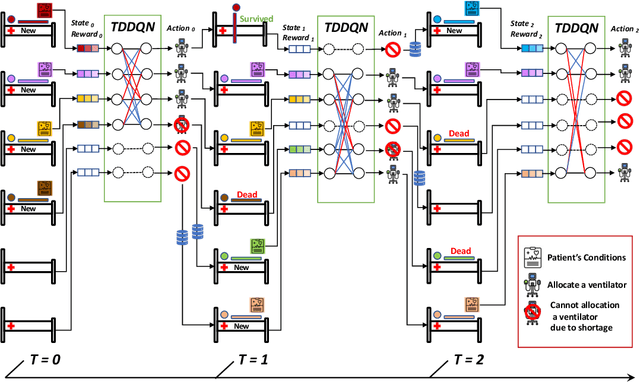
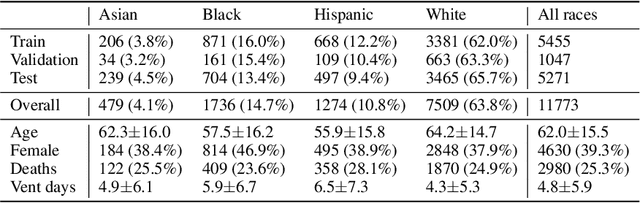
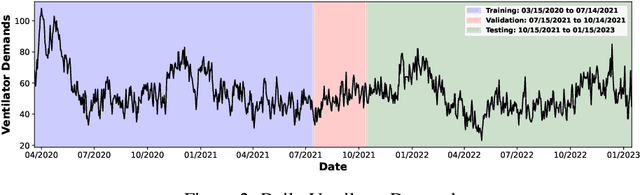
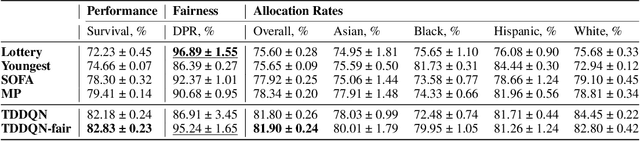
Scarcity of health care resources could result in the unavoidable consequence of rationing. For example, ventilators are often limited in supply, especially during public health emergencies or in resource-constrained health care settings, such as amid the pandemic of COVID-19. Currently, there is no universally accepted standard for health care resource allocation protocols, resulting in different governments prioritizing patients based on various criteria and heuristic-based protocols. In this study, we investigate the use of reinforcement learning for critical care resource allocation policy optimization to fairly and effectively ration resources. We propose a transformer-based deep Q-network to integrate the disease progression of individual patients and the interaction effects among patients during the critical care resource allocation. We aim to improve both fairness of allocation and overall patient outcomes. Our experiments demonstrate that our method significantly reduces excess deaths and achieves a more equitable distribution under different levels of ventilator shortage, when compared to existing severity-based and comorbidity-based methods in use by different governments. Our source code is included in the supplement and will be released on Github upon publication.
Exploring Large Language Models for Knowledge Graph Completion
Sep 10, 2023

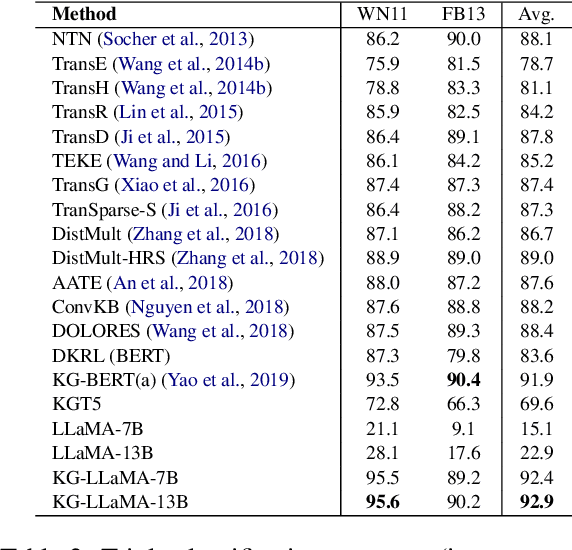

Knowledge graphs play a vital role in numerous artificial intelligence tasks, yet they frequently face the issue of incompleteness. In this study, we explore utilizing Large Language Models (LLM) for knowledge graph completion. We consider triples in knowledge graphs as text sequences and introduce an innovative framework called Knowledge Graph LLM (KG-LLM) to model these triples. Our technique employs entity and relation descriptions of a triple as prompts and utilizes the response for predictions. Experiments on various benchmark knowledge graphs demonstrate that our method attains state-of-the-art performance in tasks such as triple classification and relation prediction. We also find that fine-tuning relatively smaller models (e.g., LLaMA-7B, ChatGLM-6B) outperforms recent ChatGPT and GPT-4.
Medical Image Deidentification, Cleaning and Compression Using Pylogik
May 03, 2023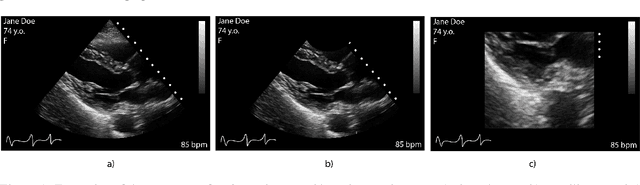


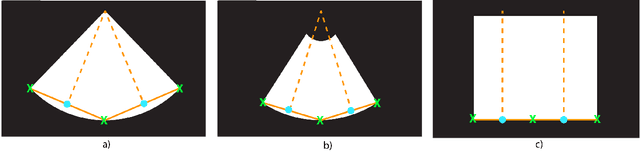
Leveraging medical record information in the era of big data and machine learning comes with the caveat that data must be cleaned and deidentified. Facilitating data sharing and harmonization for multi-center collaborations are particularly difficult when protected health information (PHI) is contained or embedded in image meta-data. We propose a novel library in the Python framework, called PyLogik, to help alleviate this issue for ultrasound images, which are particularly challenging because of the frequent inclusion of PHI directly on the images. PyLogik processes the image volumes through a series of text detection/extraction, filtering, thresholding, morphological and contour comparisons. This methodology deidentifies the images, reduces file sizes, and prepares image volumes for applications in deep learning and data sharing. To evaluate its effectiveness in the identification of regions of interest (ROI), a random sample of 50 cardiac ultrasounds (echocardiograms) were processed through PyLogik, and the outputs were compared with the manual segmentations by an expert user. The Dice coefficient of the two approaches achieved an average value of 0.976. Next, an investigation was conducted to ascertain the degree of information compression achieved using the algorithm. Resultant data was found to be on average approximately 72% smaller after processing by PyLogik. Our results suggest that PyLogik is a viable methodology for ultrasound data cleaning and deidentification, determining ROI, and file compression which will facilitate efficient storage, use, and dissemination of ultrasound data.
Deep Reinforcement Learning for Cost-Effective Medical Diagnosis
Feb 28, 2023Dynamic diagnosis is desirable when medical tests are costly or time-consuming. In this work, we use reinforcement learning (RL) to find a dynamic policy that selects lab test panels sequentially based on previous observations, ensuring accurate testing at a low cost. Clinical diagnostic data are often highly imbalanced; therefore, we aim to maximize the $F_1$ score instead of the error rate. However, optimizing the non-concave $F_1$ score is not a classic RL problem, thus invalidates standard RL methods. To remedy this issue, we develop a reward shaping approach, leveraging properties of the $F_1$ score and duality of policy optimization, to provably find the set of all Pareto-optimal policies for budget-constrained $F_1$ score maximization. To handle the combinatorially complex state space, we propose a Semi-Model-based Deep Diagnosis Policy Optimization (SM-DDPO) framework that is compatible with end-to-end training and online learning. SM-DDPO is tested on diverse clinical tasks: ferritin abnormality detection, sepsis mortality prediction, and acute kidney injury diagnosis. Experiments with real-world data validate that SM-DDPO trains efficiently and identifies all Pareto-front solutions. Across all tasks, SM-DDPO is able to achieve state-of-the-art diagnosis accuracy (in some cases higher than conventional methods) with up to $85\%$ reduction in testing cost. The code is available at [https://github.com/Zheng321/Deep-Reinforcement-Learning-for-Cost-Effective-Medical-Diagnosis].
IRTCI: Item Response Theory for Categorical Imputation
Feb 08, 2023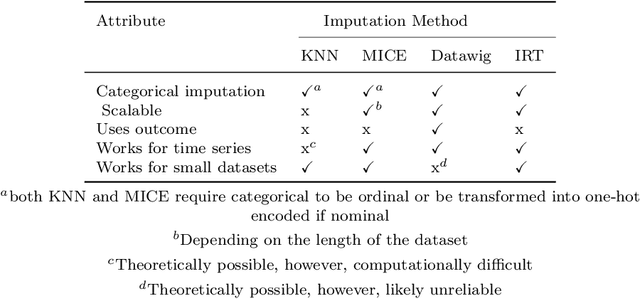
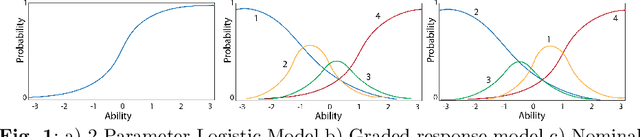
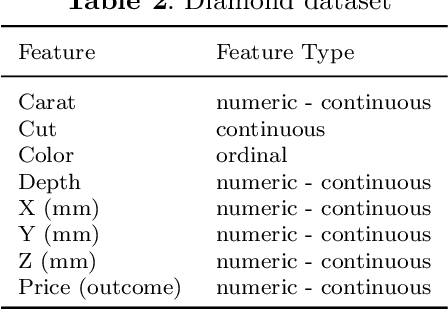
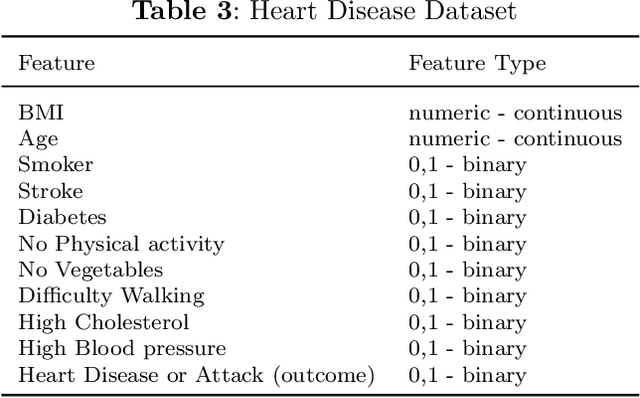
Most datasets suffer from partial or complete missing values, which has downstream limitations on the available models on which to test the data and on any statistical inferences that can be made from the data. Several imputation techniques have been designed to replace missing data with stand in values. The various approaches have implications for calculating clinical scores, model building and model testing. The work showcased here offers a novel means for categorical imputation based on item response theory (IRT) and compares it against several methodologies currently used in the machine learning field including k-nearest neighbors (kNN), multiple imputed chained equations (MICE) and Amazon Web Services (AWS) deep learning method, Datawig. Analyses comparing these techniques were performed on three different datasets that represented ordinal, nominal and binary categories. The data were modified so that they also varied on both the proportion of data missing and the systematization of the missing data. Two different assessments of performance were conducted: accuracy in reproducing the missing values, and predictive performance using the imputed data. Results demonstrated that the new method, Item Response Theory for Categorical Imputation (IRTCI), fared quite well compared to currently used methods, outperforming several of them in many conditions. Given the theoretical basis for the new approach, and the unique generation of probabilistic terms for determining category belonging for missing cells, IRTCI offers a viable alternative to current approaches.
Using Machine Learning to Develop Smart Reflex Testing Protocols
Feb 01, 2023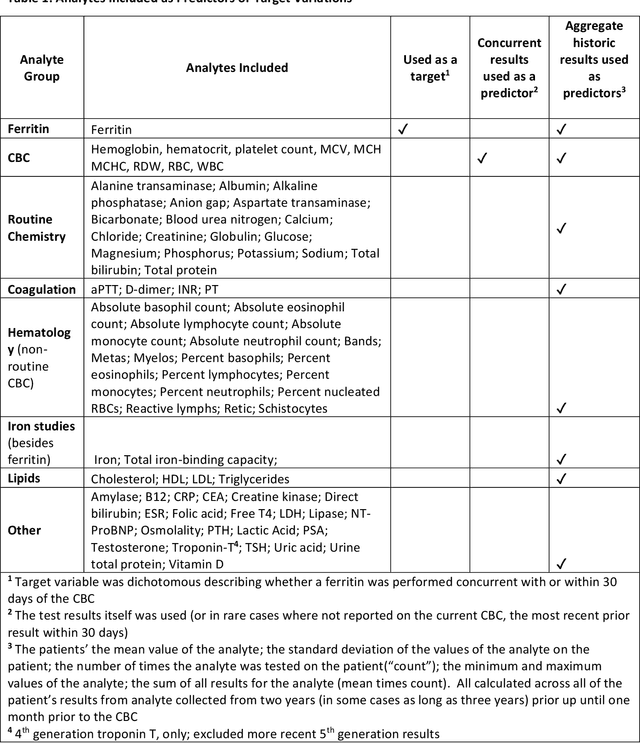
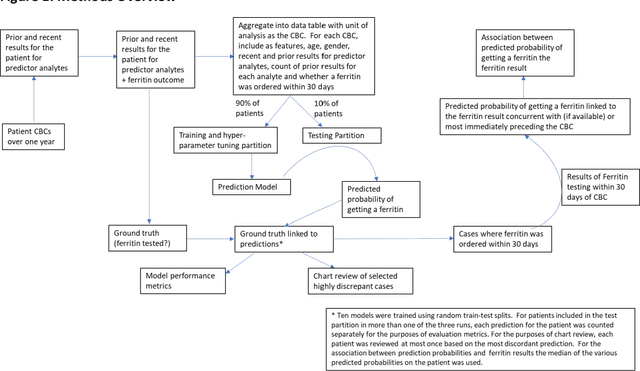
Objective: Reflex testing protocols allow clinical laboratories to perform second line diagnostic tests on existing specimens based on the results of initially ordered tests. Reflex testing can support optimal clinical laboratory test ordering and diagnosis. In current clinical practice, reflex testing typically relies on simple "if-then" rules; however, this limits their scope since most test ordering decisions involve more complexity than a simple rule will allow. Here, using the analyte ferritin as an example, we propose an alternative machine learning-based approach to "smart" reflex testing with a wider scope and greater impact than traditional rule-based approaches. Methods: Using patient data, we developed a machine learning model to predict whether a patient getting CBC testing will also have ferritin testing ordered, consider applications of this model to "smart" reflex testing, and evaluate the model by comparing its performance to possible rule-based approaches. Results: Our underlying machine learning models performed moderately well in predicting ferritin test ordering and demonstrated greater suitability to reflex testing than rule-based approaches. Using chart review, we demonstrate that our model may improve ferritin test ordering. Finally, as a secondary goal, we demonstrate that ferritin test results are missing not at random (MNAR), a finding with implications for unbiased imputation of missing test results. Conclusions: Machine learning may provide a foundation for new types of reflex testing with enhanced benefits for clinical diagnosis and laboratory utilization management.
A Comparative Study of Pretrained Language Models for Long Clinical Text
Jan 27, 2023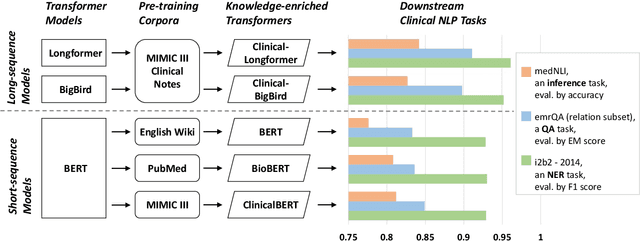
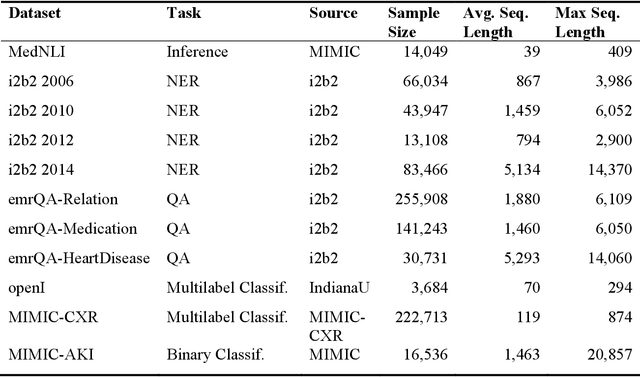
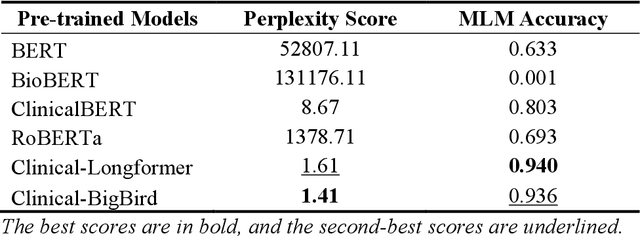
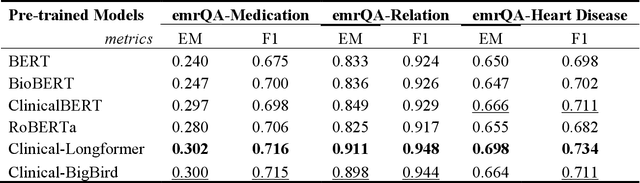
Objective: Clinical knowledge enriched transformer models (e.g., ClinicalBERT) have state-of-the-art results on clinical NLP (natural language processing) tasks. One of the core limitations of these transformer models is the substantial memory consumption due to their full self-attention mechanism, which leads to the performance degradation in long clinical texts. To overcome this, we propose to leverage long-sequence transformer models (e.g., Longformer and BigBird), which extend the maximum input sequence length from 512 to 4096, to enhance the ability to model long-term dependencies in long clinical texts. Materials and Methods: Inspired by the success of long sequence transformer models and the fact that clinical notes are mostly long, we introduce two domain enriched language models, Clinical-Longformer and Clinical-BigBird, which are pre-trained on a large-scale clinical corpus. We evaluate both language models using 10 baseline tasks including named entity recognition, question answering, natural language inference, and document classification tasks. Results: The results demonstrate that Clinical-Longformer and Clinical-BigBird consistently and significantly outperform ClinicalBERT and other short-sequence transformers in all 10 downstream tasks and achieve new state-of-the-art results. Discussion: Our pre-trained language models provide the bedrock for clinical NLP using long texts. We have made our source code available at https://github.com/luoyuanlab/Clinical-Longformer, and the pre-trained models available for public download at: https://huggingface.co/yikuan8/Clinical-Longformer. Conclusion: This study demonstrates that clinical knowledge enriched long-sequence transformers are able to learn long-term dependencies in long clinical text. Our methods can also inspire the development of other domain-enriched long-sequence transformers.