 Add to Chrome
 Add to Firefox
 Add to Edge
ABot-3DWorld 0: A Universal World Model to Explore Any 3D Space
Jul 14, 2026
We present ABot-3DWorld 0, a universal multimodal 3D world model that turns text, image, and video inputs into high-fidelity, explorable 3D worlds. At the heart of our framework is a unified Spatial Generative Primitive (SGP), a compact tuple of a high-quality panorama and a spatial point cloud that delivers an efficient description of any 3D space. Multimodal inputs are first lifted into this primitive; a 3D-consistent panoramic video generator then explores the primitive along a planned trajectory; finally, our panoramic video reconstruction engine converts the generated video into a clean, photorealistic 3D Gaussian Splatting (3DGS) world. This pipeline covers two regimes: rich inputs (multi-view sets, casual video) are lifted into the SGP through a geometry-rigorous recovery that mirrors the observed scene, while a single image or sentence is completed generatively into a creative world. The result is one low-barrier engine for general 3D content creation that further anchors generated worlds to geographic points of interest, enabling map-native spatial exploration at consumer scale. Experiments show that ABot-3DWorld 0 sets the state of the art among open-source methods and demonstrates stronger scene fidelity than Marble under rich multimodal inputs.

FA^{3}-CLIP: Frequency-Aware Cues Fusion and Attack-Agnostic Prompt Learning for Unified Face Attack Detection
Apr 01, 2025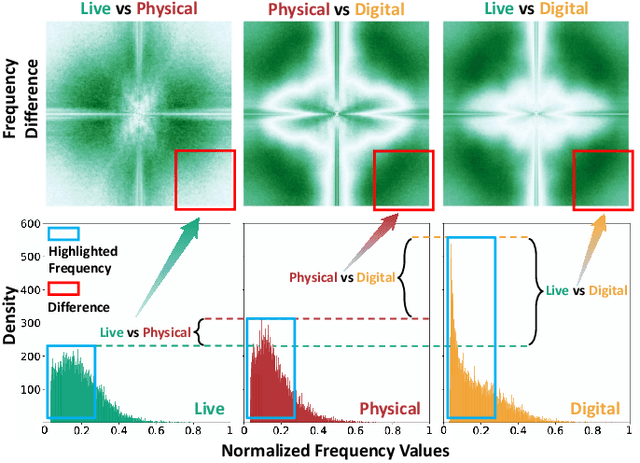
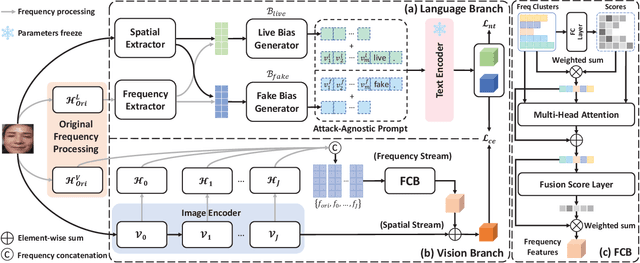
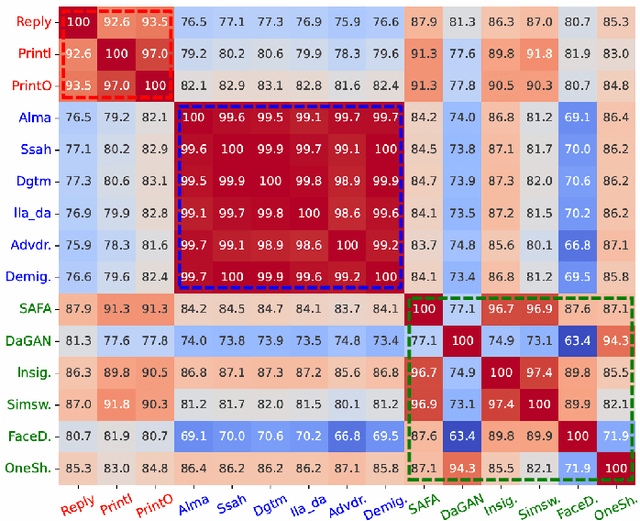
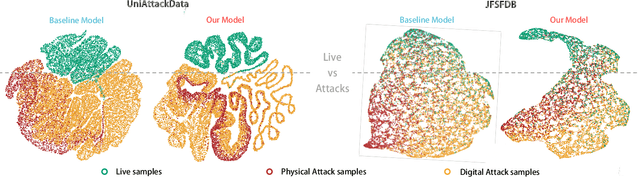
Facial recognition systems are vulnerable to physical (e.g., printed photos) and digital (e.g., DeepFake) face attacks. Existing methods struggle to simultaneously detect physical and digital attacks due to: 1) significant intra-class variations between these attack types, and 2) the inadequacy of spatial information alone to comprehensively capture live and fake cues. To address these issues, we propose a unified attack detection model termed Frequency-Aware and Attack-Agnostic CLIP (FA\textsuperscript{3}-CLIP), which introduces attack-agnostic prompt learning to express generic live and fake cues derived from the fusion of spatial and frequency features, enabling unified detection of live faces and all categories of attacks. Specifically, the attack-agnostic prompt module generates generic live and fake prompts within the language branch to extract corresponding generic representations from both live and fake faces, guiding the model to learn a unified feature space for unified attack detection. Meanwhile, the module adaptively generates the live/fake conditional bias from the original spatial and frequency information to optimize the generic prompts accordingly, reducing the impact of intra-class variations. We further propose a dual-stream cues fusion framework in the vision branch, which leverages frequency information to complement subtle cues that are difficult to capture in the spatial domain. In addition, a frequency compression block is utilized in the frequency stream, which reduces redundancy in frequency features while preserving the diversity of crucial cues. We also establish new challenging protocols to facilitate unified face attack detection effectiveness. Experimental results demonstrate that the proposed method significantly improves performance in detecting physical and digital face attacks, achieving state-of-the-art results.