 Add to Chrome
 Add to Firefox
 Add to Edge
Composing Flow-Matching Energies with Known Physics: Generation, OOD Detection, and Inversion on PDE Fields
Aug 18, 2026
Probabilistic modeling of physical fields benefits from both a data-driven prior and known physical structure such as the governing equations. Energy-based models (EBMs) are a natural fit since energies compose additively, which enables augmenting physics information during inference. However, EBMs have been difficult to train and sample from due to the intractable partition function. We show in this work that flow matching models with a potential-induced velocity yield an explicit scalar energy at all transport times, whose gradient is exactly the converted learned score and which recovers the marginal negative log-density at the population optimum. The time-dependent energy functions are obtained purely from the matching regression objective on an independent linear Gaussian interpolation, without a variational form or additional MCMC steps, and the sampling retains the flow ODE. Access to the energy function from a trained model serves three roles: energy-corrected data generation, energy as a scoring function for out-of-distribution (OOD) detection, and energy compositional posterior sampling for inverse problems. In particular, we show the explicit energy permits general MCMC samplers in the predictor-corrector sampling framework, reducing PDE residual and spectral distance compared to the flow ODE baseline. Furthermore, we demonstrate utilizing the data energy and physics-based energy (e.g., PDE residuals) as complementary mechanisms to improve detection accuracy for OOD tasks. In addition, we explore the connection to MCMC-based inference for inverse problems by composing the energy with a quadratic observational likelihood that yields a posterior energy, used as an explicitly chosen family of inference-time targets.

Music-to-Dance Generation via Atomic Movements
Jul 15, 2026Music-driven dance generation aims to produce human motion that is both rhythmically synchronized and semantically consistent with music. While recent neural approaches have achieved impressive visual realism, they typically model motion as a continuous signal and neglect its compositional nature, making generated dances structurally incoherent and difficult to control. In this work, we introduce a structure-aware framework that models choreography as a sequence of atomic movements-semantically interpretable motion events that serve as the building blocks of dance. To construct this atomic movement vocabulary, we first segment large-scale dance data and cluster them into atomic movement groups. We then employ a large language model to semantically relabel and refine the clusters, yielding a set of interpretable and reusable atomic movements. Based on these atomic movement annotations, we design a two-stage generation framework that mirrors the human choreography process. In the atomic movement planning stage, the model predicts the type, duration, and timing of atomic movements conditioned on the input music, forming a symbolic dance allocation. In the completion stage, a transition-aware generator synthesizes smooth and stylistically coherent motion conditioned on the planned structure. Extensive experiments demonstrate that our method produces dances with significantly improved structural coherence, rhythmic alignment, and perceptual naturalness compared to existing baselines, while providing enhanced interpretability and controllable editing through explicit structural representation.
Ling and Ring 2.6 Technical Report: Efficient and Instant Agentic Intelligence at Trillion-Parameter Scale
Jun 13, 2026Efficient and scalable agentic intelligence requires models that can deliver both low-latency responses and strong reasoning capabilities while remaining practical to train, serve, and deploy. In this report, we present Ling-2.6 and Ring-2.6, a family of models designed to address this challenge at scale. Ling-2.6 is optimized for instant response generation and high capability per output token, whereas Ring-2.6 is tailored for deeper reasoning and more advanced agentic workflows. Instead of training from scratch, we upgrade the Ling-2.0 base model through architectural migration pre-training and large-scale post-training. This upgrade is guided by a unified co-design of model architecture, optimization objectives, serving systems, and agent training environments, enabling improvements in both model capability and deployment efficiency. At the architectural level, we introduce a hybrid linear attention design that integrates Lightning Attention with MLA, improving the efficiency of long-context training and decoding. To further enhance token efficiency, we optimize capability per output token through Evolutionary Chain-of-Thought, Linguistic Unit Policy Optimization, bidirectional preference alignment, and shortest-correct-response distillation. For agentic capabilities, we propose KPop, a reinforcement learning framework designed to support stable training of Ring-2.6-1T on large-scale environment-grounded data. KPop improves training efficiency through asynchronous scheduling across coding, search, tool use, and workflow execution, enabling scalable learning from complex agent-environment interactions. Together, Ling-2.6 and Ring-2.6 provide a practical pathway toward efficient, scalable, and open agentic systems. We open-source all checkpoints in the 2.6 family to support further research and development in practical agentic intelligence.
Beyond Instance-Level Self-Supervision in 3D Multi-Modal Medical Imaging
May 14, 2026Self-supervised pre-training methods in medical imaging typically treat each individual as an isolated instance, learning representations through augmentation-based objectives or masked reconstruction. They often do not adequately capitalize on a key characteristic of physiological features: anatomical structures maintain consistent spatial relationships across individuals (instances), such as the thalamus being medial to the basal ganglia, regardless of variations in brain size, shape, or pathology. We propose leveraging this cross-instance topological consistency as a supervisory signal. The challenge arises from the inherent variability in medical imaging, which can differ significantly across instances and modalities. To tackle this, we focus on two alignment regimes. (i) Intra-instance: with pixel-level correspondences available, a cross-modal triplet objective explicitly preserves local neighborhood topology. (ii) Inter-instance: without such supervision, we derive pseudo-correspondences to control partial neighborhood alignment and prevent topology collapse across modalities. We validate our approach across 7 downstream multi-modal tasks, achieving average improvements of 1.1% and 5.94% in segmentation and classification tasks, respectively, and demonstrating significantly better robustness when modalities are missing at test time.
SWE-AGI: Benchmarking Specification-Driven Software Construction with MoonBit in the Era of Autonomous Agents
Feb 11, 2026Although large language models (LLMs) have demonstrated impressive coding capabilities, their ability to autonomously build production-scale software from explicit specifications remains an open question. We introduce SWE-AGI, an open-source benchmark for evaluating end-to-end, specification-driven construction of software systems written in MoonBit. SWE-AGI tasks require LLM-based agents to implement parsers, interpreters, binary decoders, and SAT solvers strictly from authoritative standards and RFCs under a fixed API scaffold. Each task involves implementing 1,000-10,000 lines of core logic, corresponding to weeks or months of engineering effort for an experienced human developer. By leveraging the nascent MoonBit ecosystem, SWE-AGI minimizes data leakage, forcing agents to rely on long-horizon architectural reasoning rather than code retrieval. Across frontier models, gpt-5.3-codex achieves the best overall performance (solving 19/22 tasks, 86.4%), outperforming claude-opus-4.6 (15/22, 68.2%), and kimi-2.5 exhibits the strongest performance among open-source models. Performance degrades sharply with increasing task difficulty, particularly on hard, specification-intensive systems. Behavioral analysis further reveals that as codebases scale, code reading, rather than writing, becomes the dominant bottleneck in AI-assisted development. Overall, while specification-driven autonomous software engineering is increasingly viable, substantial challenges remain before it can reliably support production-scale development.
Tracing the Heart's Pathways: ECG Representation Learning from a Cardiac Conduction Perspective
Dec 30, 2025The multi-lead electrocardiogram (ECG) stands as a cornerstone of cardiac diagnosis. Recent strides in electrocardiogram self-supervised learning (eSSL) have brightened prospects for enhancing representation learning without relying on high-quality annotations. Yet earlier eSSL methods suffer a key limitation: they focus on consistent patterns across leads and beats, overlooking the inherent differences in heartbeats rooted in cardiac conduction processes, while subtle but significant variations carry unique physiological signatures. Moreover, representation learning for ECG analysis should align with ECG diagnostic guidelines, which progress from individual heartbeats to single leads and ultimately to lead combinations. This sequential logic, however, is often neglected when applying pre-trained models to downstream tasks. To address these gaps, we propose CLEAR-HUG, a two-stage framework designed to capture subtle variations in cardiac conduction across leads while adhering to ECG diagnostic guidelines. In the first stage, we introduce an eSSL model termed Conduction-LEAd Reconstructor (CLEAR), which captures both specific variations and general commonalities across heartbeats. Treating each heartbeat as a distinct entity, CLEAR employs a simple yet effective sparse attention mechanism to reconstruct signals without interference from other heartbeats. In the second stage, we implement a Hierarchical lead-Unified Group head (HUG) for disease diagnosis, mirroring clinical workflow. Experimental results across six tasks show a 6.84% improvement, validating the effectiveness of CLEAR-HUG. This highlights its ability to enhance representations of cardiac conduction and align patterns with expert diagnostic guidelines.
Efficient Flow Matching using Latent Variables
May 07, 2025Flow matching models have shown great potential in image generation tasks among probabilistic generative models. Building upon the ideas of continuous normalizing flows, flow matching models generalize the transport path of the diffusion models from a simple prior distribution to the data. Most flow matching models in the literature do not explicitly model the underlying structure/manifold in the target data when learning the flow from a simple source distribution like the standard Gaussian. This leads to inefficient learning, especially for many high-dimensional real-world datasets, which often reside in a low-dimensional manifold. Existing strategies of incorporating manifolds, including data with underlying multi-modal distribution, often require expensive training and hence frequently lead to suboptimal performance. To this end, we present \texttt{Latent-CFM}, which provides simplified training/inference strategies to incorporate multi-modal data structures using pretrained deep latent variable models. Through experiments on multi-modal synthetic data and widely used image benchmark datasets, we show that \texttt{Latent-CFM} exhibits improved generation quality with significantly less training ($\sim 50\%$ less in some cases) and computation than state-of-the-art flow matching models. Using a 2d Darcy flow dataset, we demonstrate that our approach generates more physically accurate samples than competitive approaches. In addition, through latent space analysis, we demonstrate that our approach can be used for conditional image generation conditioned on latent features.
AuditVotes: A Framework Towards More Deployable Certified Robustness for Graph Neural Networks
Mar 29, 2025Despite advancements in Graph Neural Networks (GNNs), adaptive attacks continue to challenge their robustness. Certified robustness based on randomized smoothing has emerged as a promising solution, offering provable guarantees that a model's predictions remain stable under adversarial perturbations within a specified range. However, existing methods face a critical trade-off between accuracy and robustness, as achieving stronger robustness requires introducing greater noise into the input graph. This excessive randomization degrades data quality and disrupts prediction consistency, limiting the practical deployment of certifiably robust GNNs in real-world scenarios where both accuracy and robustness are essential. To address this challenge, we propose \textbf{AuditVotes}, the first framework to achieve both high clean accuracy and certifiably robust accuracy for GNNs. It integrates randomized smoothing with two key components, \underline{au}gmentation and con\underline{dit}ional smoothing, aiming to improve data quality and prediction consistency. The augmentation, acting as a pre-processing step, de-noises the randomized graph, significantly improving data quality and clean accuracy. The conditional smoothing, serving as a post-processing step, employs a filtering function to selectively count votes, thereby filtering low-quality predictions and improving voting consistency. Extensive experimental results demonstrate that AuditVotes significantly enhances clean accuracy, certified robustness, and empirical robustness while maintaining high computational efficiency. Notably, compared to baseline randomized smoothing, AuditVotes improves clean accuracy by $437.1\%$ and certified accuracy by $409.3\%$ when the attacker can arbitrarily insert $20$ edges on the Cora-ML datasets, representing a substantial step toward deploying certifiably robust GNNs in real-world applications.
Hierarchical Visual Categories Modeling: A Joint Representation Learning and Density Estimation Framework for Out-of-Distribution Detection
Aug 28, 2024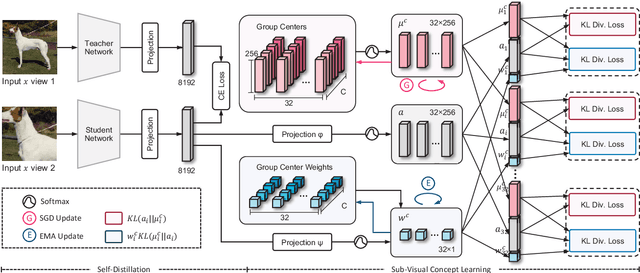


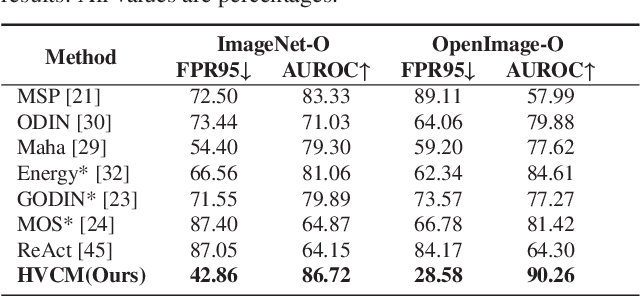
Detecting out-of-distribution inputs for visual recognition models has become critical in safe deep learning. This paper proposes a novel hierarchical visual category modeling scheme to separate out-of-distribution data from in-distribution data through joint representation learning and statistical modeling. We learn a mixture of Gaussian models for each in-distribution category. There are many Gaussian mixture models to model different visual categories. With these Gaussian models, we design an in-distribution score function by aggregating multiple Mahalanobis-based metrics. We don't use any auxiliary outlier data as training samples, which may hurt the generalization ability of out-of-distribution detection algorithms. We split the ImageNet-1k dataset into ten folds randomly. We use one fold as the in-distribution dataset and the others as out-of-distribution datasets to evaluate the proposed method. We also conduct experiments on seven popular benchmarks, including CIFAR, iNaturalist, SUN, Places, Textures, ImageNet-O, and OpenImage-O. Extensive experiments indicate that the proposed method outperforms state-of-the-art algorithms clearly. Meanwhile, we find that our visual representation has a competitive performance when compared with features learned by classical methods. These results demonstrate that the proposed method hasn't weakened the discriminative ability of visual recognition models and keeps high efficiency in detecting out-of-distribution samples.
The Merit of River Network Topology for Neural Flood Forecasting
May 30, 2024Climate change exacerbates riverine floods, which occur with higher frequency and intensity than ever. The much-needed forecasting systems typically rely on accurate river discharge predictions. To this end, the SOTA data-driven approaches treat forecasting at spatially distributed gauge stations as isolated problems, even within the same river network. However, incorporating the known topology of the river network into the prediction model has the potential to leverage the adjacency relationship between gauges. Thus, we model river discharge for a network of gauging stations with GNNs and compare the forecasting performance achieved by different adjacency definitions. Our results show that the model fails to benefit from the river network topology information, both on the entire network and small subgraphs. The learned edge weights correlate with neither of the static definitions and exhibit no regular pattern. Furthermore, the GNNs struggle to predict sudden, narrow discharge spikes. Our work hints at a more general underlying phenomenon of neural prediction not always benefitting from graphical structure and may inspire a systematic study of the conditions under which this happens.
* https://openreview.net/forum?id=QE6iC9s6vU