 Add to Chrome
 Add to Firefox
 Add to Edge
HiPrompt: Tuning-free Higher-Resolution Generation with Hierarchical MLLM Prompts
Sep 04, 2024


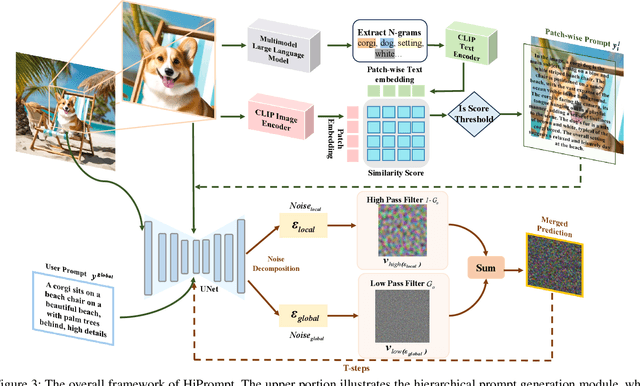
The potential for higher-resolution image generation using pretrained diffusion models is immense, yet these models often struggle with issues of object repetition and structural artifacts especially when scaling to 4K resolution and higher. We figure out that the problem is caused by that, a single prompt for the generation of multiple scales provides insufficient efficacy. In response, we propose HiPrompt, a new tuning-free solution that tackles the above problems by introducing hierarchical prompts. The hierarchical prompts offer both global and local guidance. Specifically, the global guidance comes from the user input that describes the overall content, while the local guidance utilizes patch-wise descriptions from MLLMs to elaborately guide the regional structure and texture generation. Furthermore, during the inverse denoising process, the generated noise is decomposed into low- and high-frequency spatial components. These components are conditioned on multiple prompt levels, including detailed patch-wise descriptions and broader image-level prompts, facilitating prompt-guided denoising under hierarchical semantic guidance. It further allows the generation to focus more on local spatial regions and ensures the generated images maintain coherent local and global semantics, structures, and textures with high definition. Extensive experiments demonstrate that HiPrompt outperforms state-of-the-art works in higher-resolution image generation, significantly reducing object repetition and enhancing structural quality.

Codec Does Matter: Exploring the Semantic Shortcoming of Codec for Audio Language Model
Aug 30, 2024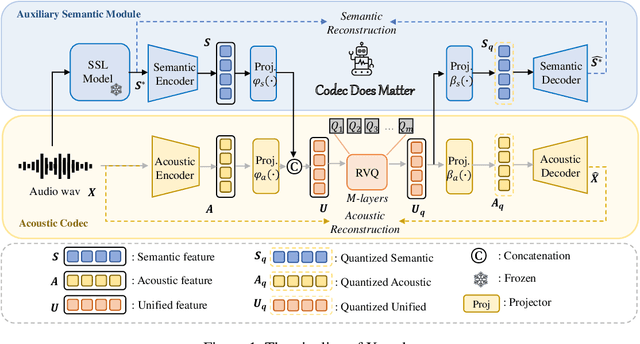
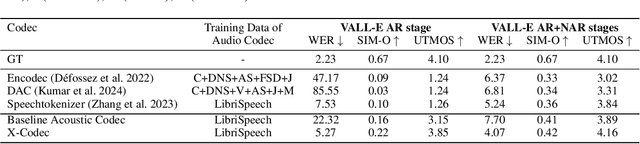
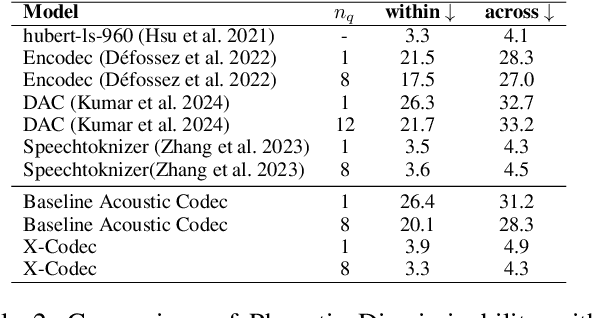

Recent advancements in audio generation have been significantly propelled by the capabilities of Large Language Models (LLMs). The existing research on audio LLM has primarily focused on enhancing the architecture and scale of audio language models, as well as leveraging larger datasets, and generally, acoustic codecs, such as EnCodec, are used for audio tokenization. However, these codecs were originally designed for audio compression, which may lead to suboptimal performance in the context of audio LLM. Our research aims to address the shortcomings of current audio LLM codecs, particularly their challenges in maintaining semantic integrity in generated audio. For instance, existing methods like VALL-E, which condition acoustic token generation on text transcriptions, often suffer from content inaccuracies and elevated word error rates (WER) due to semantic misinterpretations of acoustic tokens, resulting in word skipping and errors. To overcome these issues, we propose a straightforward yet effective approach called X-Codec. X-Codec incorporates semantic features from a pre-trained semantic encoder before the Residual Vector Quantization (RVQ) stage and introduces a semantic reconstruction loss after RVQ. By enhancing the semantic ability of the codec, X-Codec significantly reduces WER in speech synthesis tasks and extends these benefits to non-speech applications, including music and sound generation. Our experiments in text-to-speech, music continuation, and text-to-sound tasks demonstrate that integrating semantic information substantially improves the overall performance of language models in audio generation. Our code and demo are available (Demo: https://x-codec-audio.github.io Code: https://github.com/zhenye234/xcodec)
Deep learning surrogate models of JULES-INFERNO for wildfire prediction on a global scale
Aug 30, 2024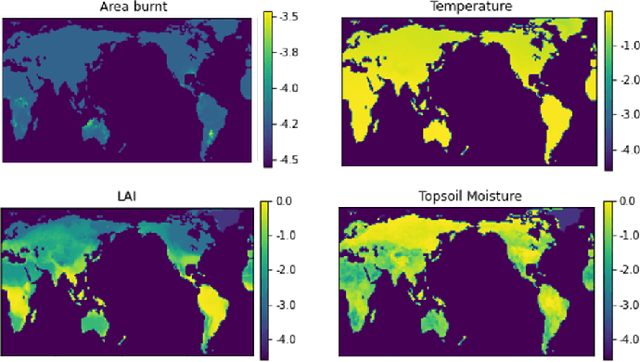
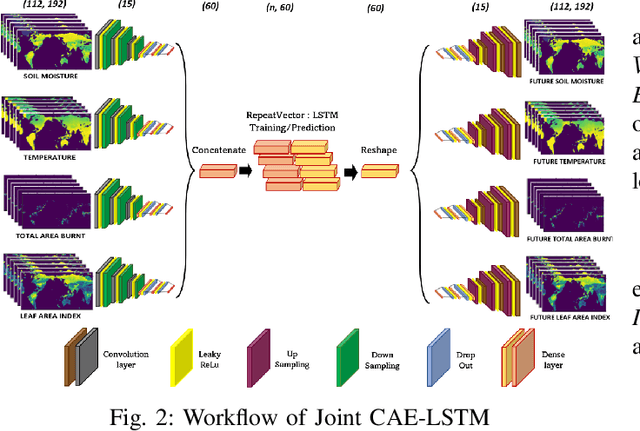
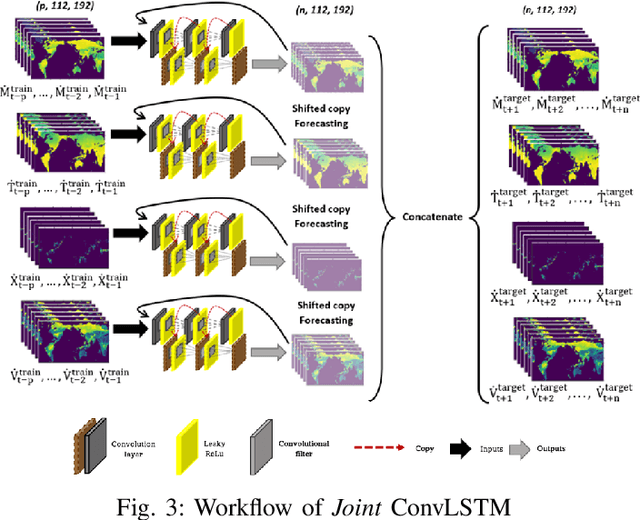
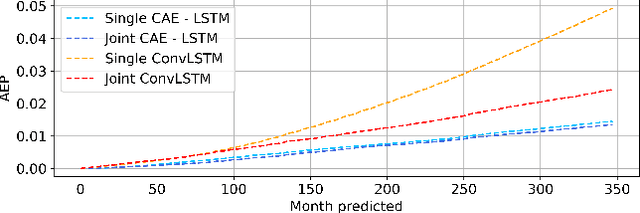
Global wildfire models play a crucial role in anticipating and responding to changing wildfire regimes. JULES-INFERNO is a global vegetation and fire model simulating wildfire emissions and area burnt on a global scale. However, because of the high data dimensionality and system complexity, JULES-INFERNO's computational costs make it challenging to apply to fire risk forecasting with unseen initial conditions. Typically, running JULES-INFERNO for 30 years of prediction will take several hours on High Performance Computing (HPC) clusters. To tackle this bottleneck, two data-driven models are built in this work based on Deep Learning techniques to surrogate the JULES-INFERNO model and speed up global wildfire forecasting. More precisely, these machine learning models take global temperature, vegetation density, soil moisture and previous forecasts as inputs to predict the subsequent global area burnt on an iterative basis. Average Error per Pixel (AEP) and Structural Similarity Index Measure (SSIM) are used as metrics to evaluate the performance of the proposed surrogate models. A fine tuning strategy is also proposed in this work to improve the algorithm performance for unseen scenarios. Numerical results show a strong performance of the proposed models, in terms of both computational efficiency (less than 20 seconds for 30 years of prediction on a laptop CPU) and prediction accuracy (with AEP under 0.3\% and SSIM over 98\% compared to the outputs of JULES-INFERNO).
AgentMonitor: A Plug-and-Play Framework for Predictive and Secure Multi-Agent Systems
Aug 27, 2024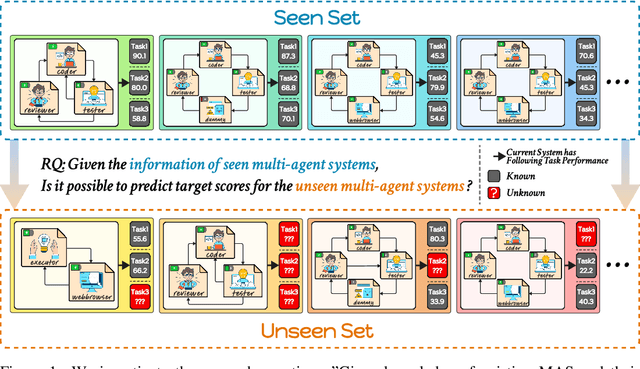
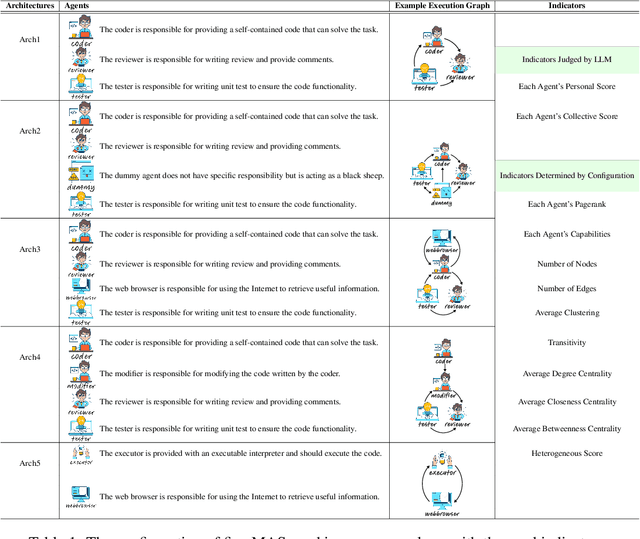
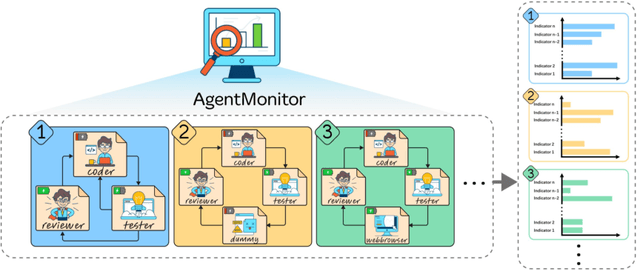
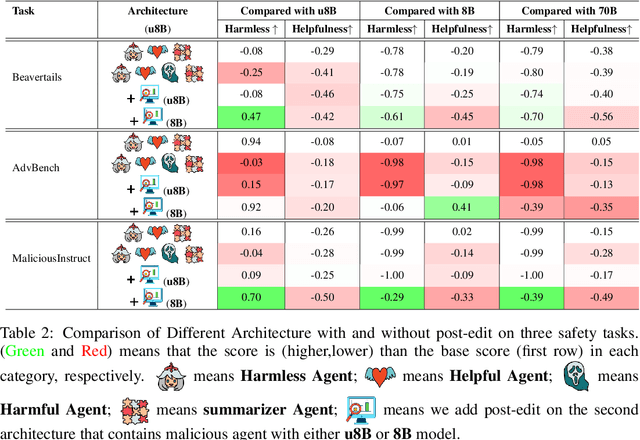
The rapid advancement of large language models (LLMs) has led to the rise of LLM-based agents. Recent research shows that multi-agent systems (MAS), where each agent plays a specific role, can outperform individual LLMs. However, configuring an MAS for a task remains challenging, with performance only observable post-execution. Inspired by scaling laws in LLM development, we investigate whether MAS performance can be predicted beforehand. We introduce AgentMonitor, a framework that integrates at the agent level to capture inputs and outputs, transforming them into statistics for training a regression model to predict task performance. Additionally, it can further apply real-time corrections to address security risks posed by malicious agents, mitigating negative impacts and enhancing MAS security. Experiments demonstrate that an XGBoost model achieves a Spearman correlation of 0.89 in-domain and 0.58 in more challenging scenarios. Furthermore, using AgentMonitor reduces harmful content by 6.2% and increases helpful content by 1.8% on average, enhancing safety and reliability. Code is available at \url{https://github.com/chanchimin/AgentMonitor}.
Importance Weighting Can Help Large Language Models Self-Improve
Aug 19, 2024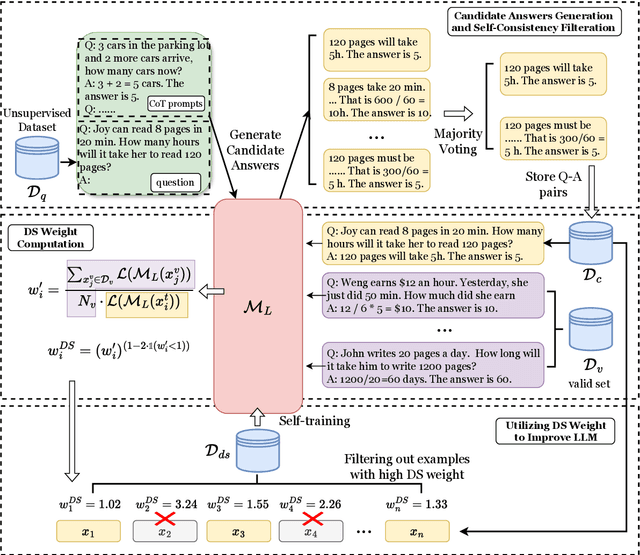
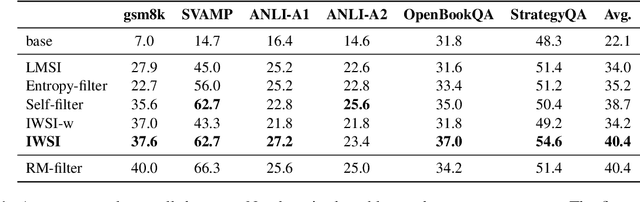
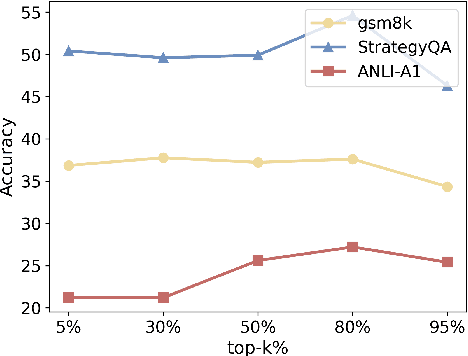
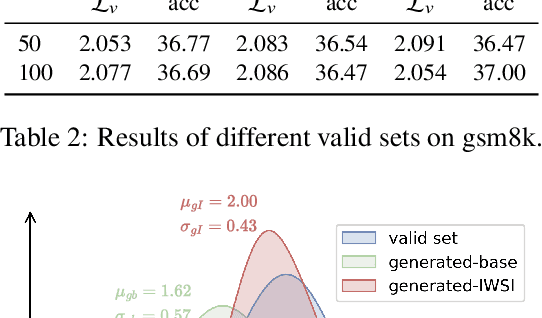
Large language models (LLMs) have shown remarkable capability in numerous tasks and applications. However, fine-tuning LLMs using high-quality datasets under external supervision remains prohibitively expensive. In response, LLM self-improvement approaches have been vibrantly developed recently. The typical paradigm of LLM self-improvement involves training LLM on self-generated data, part of which may be detrimental and should be filtered out due to the unstable data quality. While current works primarily employs filtering strategies based on answer correctness, in this paper, we demonstrate that filtering out correct but with high distribution shift extent (DSE) samples could also benefit the results of self-improvement. Given that the actual sample distribution is usually inaccessible, we propose a new metric called DS weight to approximate DSE, inspired by the Importance Weighting methods. Consequently, we integrate DS weight with self-consistency to comprehensively filter the self-generated samples and fine-tune the language model. Experiments show that with only a tiny valid set (up to 5\% size of the training set) to compute DS weight, our approach can notably promote the reasoning ability of current LLM self-improvement methods. The resulting performance is on par with methods that rely on external supervision from pre-trained reward models.
NoRA: Nested Low-Rank Adaptation for Efficient Fine-Tuning Large Models
Aug 18, 2024

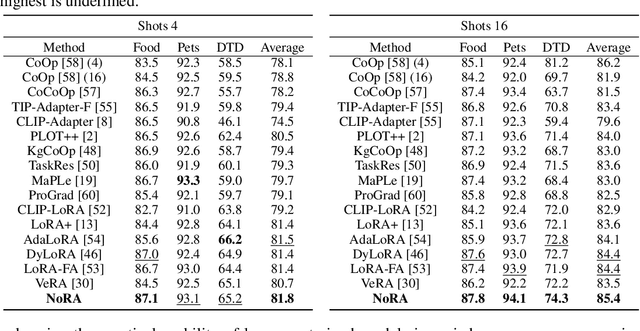

In this paper, we introduce Nested Low-Rank Adaptation (NoRA), a novel approach to parameter-efficient fine-tuning that extends the capabilities of Low-Rank Adaptation (LoRA) techniques. Vanilla LoRA overlooks pre-trained weight inheritance and still requires fine-tuning numerous parameters. To addresses these issues, our NoRA adopts a dual-layer nested structure with Singular Value Decomposition (SVD), effectively leveraging original matrix knowledge while reducing tunable parameters. Specifically, NoRA freezes the outer LoRA weights and utilizes an inner LoRA design, providing enhanced control over model optimization. This approach allows the model to more precisely adapt to specific tasks while maintaining a compact parameter space. By freezing outer LoRA weights and using an inner LoRA design, NoRA enables precise task adaptation with a compact parameter space. Evaluations on tasks including commonsense reasoning with large language models, fine-tuning vision-language models, and subject-driven generation demonstrate NoRA's superiority over LoRA and its variants. Notably, NoRA reduces fine-tuning parameters|training-time|memory-usage by 4\%|22.5\%|20.7\% compared to LoRA on LLaMA-3 8B, while achieving 2.2\% higher performance. Code will be released upon acceptance.
STBLLM: Breaking the 1-Bit Barrier with Structured Binary LLMs
Aug 03, 2024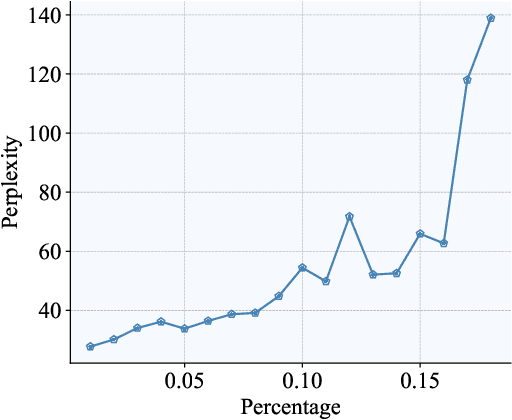

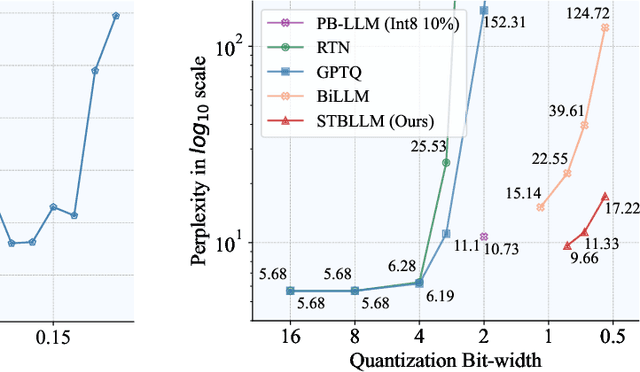
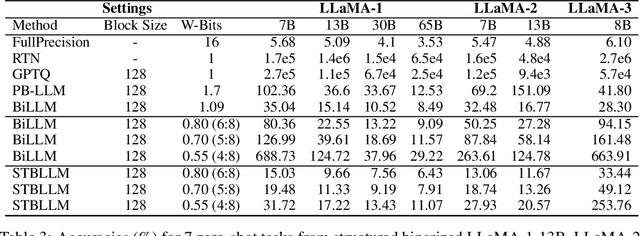
In this paper, we present STBLLM, the first structural binarization framework for compressing Large Language Models (LLMs) to less than 1-bit precision. LLMs have achieved remarkable performance, but their heavy memory requirements have hindered widespread adoption, particularly on resource-constrained devices. Binarization, which quantifies weights to a mere 1-bit, achieves a milestone in increasing computational efficiency. However, we observe that some weights in binarized LLMs can be randomly flipped without significant performance degradation, indicating the potential for further compression. To exploit this, our STBLLM employs an N:M sparsity to perform structural binarization of the weights. First, we introduce a new Standardized Importance (SI) metric that considers weight magnitude and input feature norm to better evaluate weight significance. Then, we propose a layer-wise approach where different layers of the LLM can be sparsified with varying N:M ratios, balancing compression and accuracy. Finally, we use residual approximation with double binarization to preserve information for salient weights. In addition, we utilize a fine-grained grouping strategy for less important weights that applies different quantization schemes to sparse, intermediate, and dense regions. We conduct extensive experiments on various language models, including the LLaMA-1/2/3, OPT family, and Mistral, to evaluate the effectiveness of STBLLM. The results demonstrate that our approach performs better than other compressed binarization LLM methods while significantly reducing memory requirements.
Can LLMs "Reason" in Music? An Evaluation of LLMs' Capability of Music Understanding and Generation
Jul 31, 2024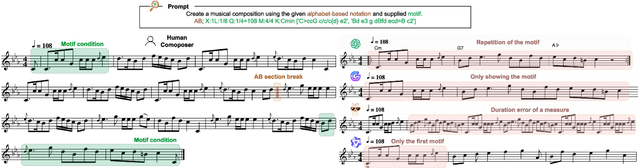
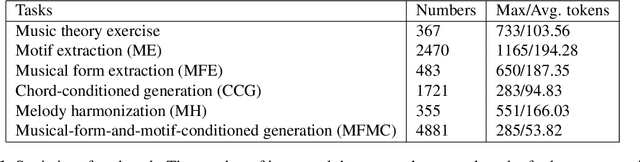
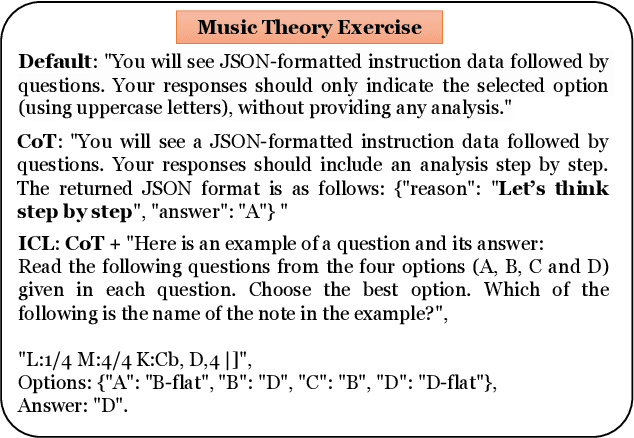
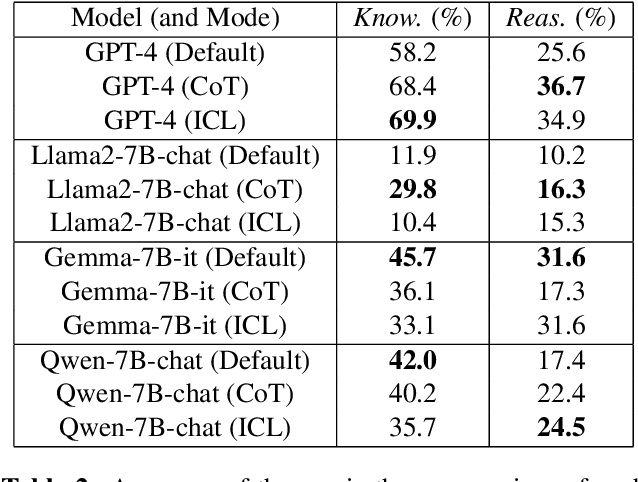
Symbolic Music, akin to language, can be encoded in discrete symbols. Recent research has extended the application of large language models (LLMs) such as GPT-4 and Llama2 to the symbolic music domain including understanding and generation. Yet scant research explores the details of how these LLMs perform on advanced music understanding and conditioned generation, especially from the multi-step reasoning perspective, which is a critical aspect in the conditioned, editable, and interactive human-computer co-creation process. This study conducts a thorough investigation of LLMs' capability and limitations in symbolic music processing. We identify that current LLMs exhibit poor performance in song-level multi-step music reasoning, and typically fail to leverage learned music knowledge when addressing complex musical tasks. An analysis of LLMs' responses highlights distinctly their pros and cons. Our findings suggest achieving advanced musical capability is not intrinsically obtained by LLMs, and future research should focus more on bridging the gap between music knowledge and reasoning, to improve the co-creation experience for musicians.
MMTrail: A Multimodal Trailer Video Dataset with Language and Music Descriptions
Jul 30, 2024



Massive multi-modality datasets play a significant role in facilitating the success of large video-language models. However, current video-language datasets primarily provide text descriptions for visual frames, considering audio to be weakly related information. They usually overlook exploring the potential of inherent audio-visual correlation, leading to monotonous annotation within each modality instead of comprehensive and precise descriptions. Such ignorance results in the difficulty of multiple cross-modality studies. To fulfill this gap, we present MMTrail, a large-scale multi-modality video-language dataset incorporating more than 20M trailer clips with visual captions, and 2M high-quality clips with multimodal captions. Trailers preview full-length video works and integrate context, visual frames, and background music. In particular, the trailer has two main advantages: (1) the topics are diverse, and the content characters are of various types, e.g., film, news, and gaming. (2) the corresponding background music is custom-designed, making it more coherent with the visual context. Upon these insights, we propose a systemic captioning framework, achieving various modality annotations with more than 27.1k hours of trailer videos. Here, to ensure the caption retains music perspective while preserving the authority of visual context, we leverage the advanced LLM to merge all annotations adaptively. In this fashion, our MMtrail dataset potentially paves the path for fine-grained large multimodal-language model training. In experiments, we provide evaluation metrics and benchmark results on our dataset, demonstrating the high quality of our annotation and its effectiveness for model training.
Discovering symbolic expressions with parallelized tree search
Jul 05, 2024Symbolic regression plays a crucial role in modern scientific research thanks to its capability of discovering concise and interpretable mathematical expressions from data. A grand challenge lies in the arduous search for parsimonious and generalizable mathematical formulas, in an infinite search space, while intending to fit the training data. Existing algorithms have faced a critical bottleneck of accuracy and efficiency over a decade when handling problems of complexity, which essentially hinders the pace of applying symbolic regression for scientific exploration across interdisciplinary domains. To this end, we introduce a parallelized tree search (PTS) model to efficiently distill generic mathematical expressions from limited data. Through a series of extensive experiments, we demonstrate the superior accuracy and efficiency of PTS for equation discovery, which greatly outperforms the state-of-the-art baseline models on over 80 synthetic and experimental datasets (e.g., lifting its performance by up to 99% accuracy improvement and one-order of magnitude speed up). PTS represents a key advance in accurate and efficient data-driven discovery of symbolic, interpretable models (e.g., underlying physical laws) and marks a pivotal transition towards scalable symbolic learning.