 Add to Chrome
 Add to Firefox
 Add to Edge
Making Collaborative Signals Count: Graph-Aware Large Language Models for Sequential Recommendation
Aug 12, 2026
Large language models (LLMs) have been widely adopted as backbones for recommender systems. However, their language-centric pretraining makes it difficult to capture collaborative signals implicit in user-item interactions, which are crucial for personalized recommendation. Existing methods either inject collaborative representations produced by external recommenders or model only intra-sequence dependencies, limiting their ability to exploit global collaborative patterns. To address this limitation, we propose GALLM, a graph-aware LLM framework for sequential recommendation. GALLM constructs a collaborative graph over text tokens and item tokens, and models three types of relations: Text--Text relations for preserving semantic dependencies, Item--Text relations for aligning item tokens with their textual descriptions, and Item--Item relations derived from global item co-occurrence patterns. These relations are transformed into lightweight learnable attention biases and incorporated into the LLM attention mechanism, enabling collaborative-aware token interactions without introducing an additional graph encoder. Experiments on four real-world benchmarks show that GALLM achieves the best performance among the compared baselines, improving over the strongest baseline by 9.76\% on average in HR@5.

IMFuse: Instance-Aware Multi-Layer Fusion for LLM-Enhanced Sequential Recommendation
Jul 29, 2026Recent advancements in Large Language Models (LLMs) have significantly enhanced sequential recommendation by encoding rich item textual information into semantic representations. However, existing methods typically rely on the final-layer hidden states of LLMs, overlooking potentially useful semantic signals encoded in other layers. Through empirical analysis, we reveal the limitations of this practice: final-layer representations often suffer from dimensional collapse, whereas intermediate layers preserve complementary, coarse-to-fine semantic knowledge. Furthermore, we observe that different items exhibit heterogeneous layer-wise representation evolution, making a uniform layer selection sub-optimal. To bridge this gap, we propose IMFuse, an instance-aware multi-layer fusion strategy designed for LLM-enhanced recommendation. Instead of relying on a single layer, IMFuse adaptively aggregates multi-layer semantic information by learning global dimension-wise layer preferences to capture general semantic contributions. To address item-level heterogeneity, IMFuse introduces an instance-aware expert modulation mechanism that dynamically adjusts these global preferences, generating personalized, item-specific semantic representations. Extensive experiments across four real-world datasets demonstrate the effectiveness of IMFuse. It consistently outperforms state-of-the-art baselines with an average relative improvement of 6.72%, while introducing limited parameter and computational overhead.
H+ Embedding: Harmonizing Global and Token-Level Retrieval with Context-Dependent Phrases
Jul 29, 2026Terminology-intensive retrieval, especially in medical settings, depends on preserving multi-word entities, abbreviations, numerical constraints, and compositional concepts. However, existing representations lie at two extremes: single-vector retrievers often over-compress local relevance signals, while token-level late interaction retains every tokenizer subword at substantial indexing, storage, and scoring cost. This mismatch raises a natural question: can context-dependent phrases provide a useful retrieval unit between global vectors and tokens? We introduce H+ Embedding, a unified multi-granularity retriever that predicts variable-length phrase partitions, preserves uncovered tokens as singletons, and applies importance-guided unit selection with weighted MaxSim interaction. Across 16 scientific, medical, and bilingual tasks, its phrase retrieval branch exceeds the global retrieval branch by 6.91 macro nDCG@10. It also nearly matches Token while using 13.7% fewer document vectors and outperforms content-independent grouping rules under moderate vector budgets. Context-dependent phrase interaction therefore provides an intermediate quality-cost point between global compression and token-level interaction for practical retrieval systems.
State-space models through the lens of ensemble control
Mar 13, 2026State-space models (SSMs) are effective architectures for sequential modeling, but a rigorous theoretical understanding of their training dynamics is still lacking. In this work, we formulate the training of SSMs as an ensemble optimal control problem, where a shared control law governs a population of input-dependent dynamical systems. We derive Pontryagin's maximum principle (PMP) for this ensemble control formulation, providing necessary conditions for optimality. Motivated by these conditions, we introduce an algorithm based on the method of successive approximations. We prove convergence of this iterative scheme along a subsequence and establish sufficient conditions for global optimality. The resulting framework provides a control-theoretic perspective on SSM training.
Human-AI Co-reasoning for Clinical Diagnosis with Evidence-Integrated Language Agent
Mar 11, 2026We present PULSE, a medical reasoning agent that combines a domain-tuned large language model with scientific literature retrieval to support diagnostic decision-making in complex real-world cases. To evaluate its capabilities, we curated a benchmark of 82 authentic endocrinology case reports encompassing a broad spectrum of disease types and incidence levels. In controlled experiments, we compared PULSE's performance against physicians with varying levels of expertise-from residents to senior specialists-and examined how AI assistance influenced human diagnostic reasoning. PULSE attained expert-competitive accuracy, outperforming residents and junior specialists while matching senior specialist performance at both Top@1 and Top@4 thresholds. Unlike physicians, whose accuracy declined with disease rarity, PULSE maintained stable performance across incidence tiers. The agent also exhibited adaptive reasoning, increasing output length with case difficulty in a manner analogous to the longer deliberation observed among expert clinicians. When used collaboratively, PULSE enabled physicians to correct initial errors and broaden diagnostic hypotheses, but also introduced risks of automation bias. The study explores both serial and concurrent collaboration workflows, revealing that PULSE offers robust support across common and rare presentations. These findings underscore both the promise and the limitations of language model-based agents in clinical diagnosis, and offer a framework for evaluating their role in real-world decision-making.
LLaMA Pro: Progressive LLaMA with Block Expansion
Jan 04, 2024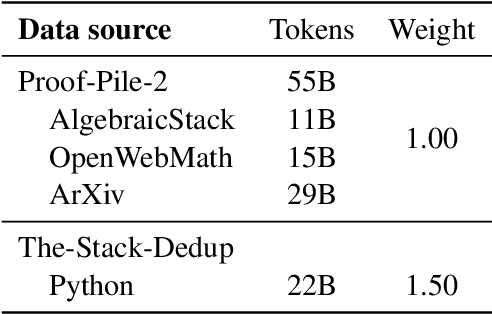
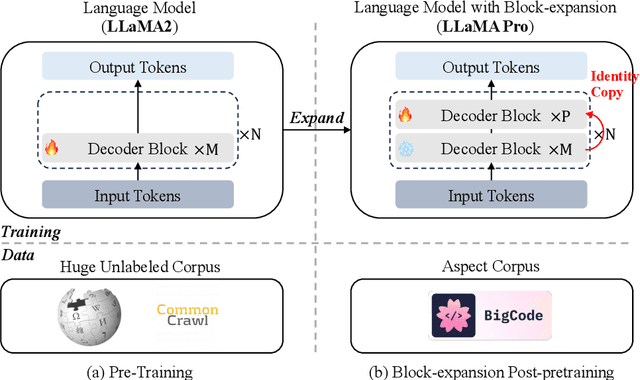
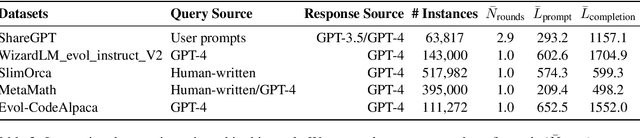
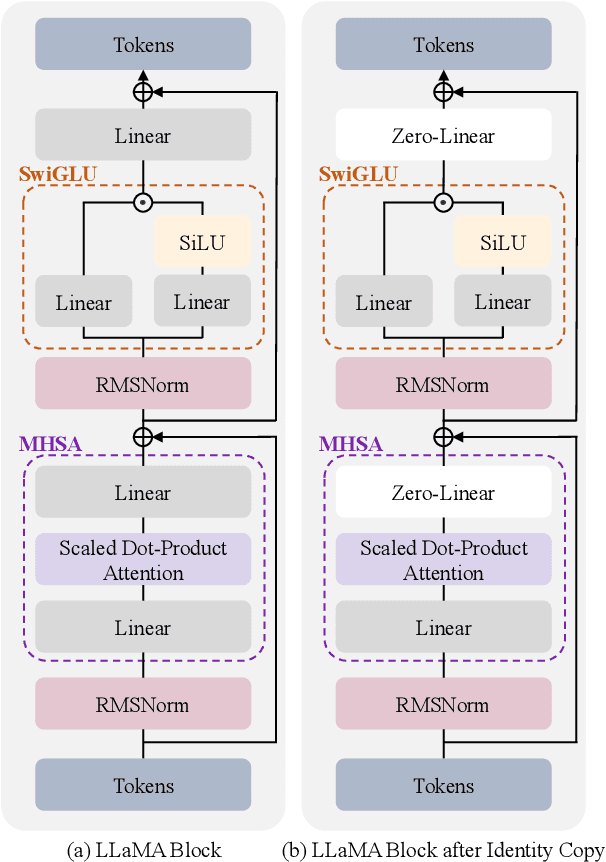
Humans generally acquire new skills without compromising the old; however, the opposite holds for Large Language Models (LLMs), e.g., from LLaMA to CodeLLaMA. To this end, we propose a new post-pretraining method for LLMs with an expansion of Transformer blocks. We tune the expanded blocks using only new corpus, efficiently and effectively improving the model's knowledge without catastrophic forgetting. In this paper, we experiment on the corpus of code and math, yielding LLaMA Pro-8.3B, a versatile foundation model initialized from LLaMA2-7B, excelling in general tasks, programming, and mathematics. LLaMA Pro and its instruction-following counterpart (LLaMA Pro-Instruct) achieve advanced performance among various benchmarks, demonstrating superiority over existing open models in the LLaMA family and the immense potential of reasoning and addressing diverse tasks as an intelligent agent. Our findings provide valuable insights into integrating natural and programming languages, laying a solid foundation for developing advanced language agents that operate effectively in various environments.
Sampling Clustering
Jun 21, 2018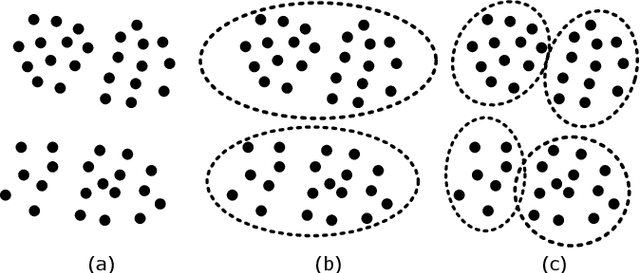
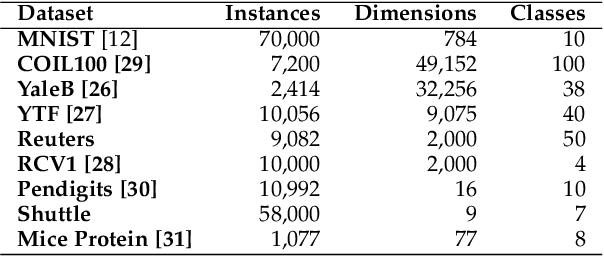
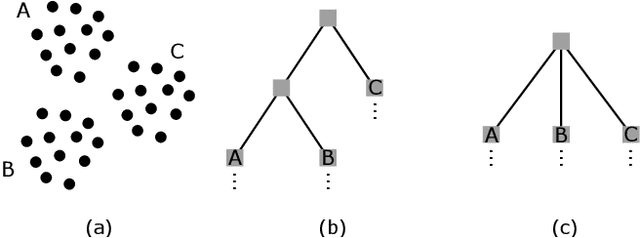
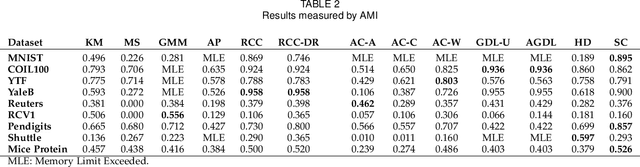
We propose an efficient graph-based divisive cluster analysis approach called sampling clustering. It constructs a lite informative dendrogram by recursively dividing a graph into subgraphs. In each recursive call, a graph is sampled first with a set of vertices being removed to disconnect latent clusters, then condensed by adding edges to the remaining vertices to avoid graph fragmentation caused by vertex removals. We also present some sampling and condensing methods and discuss the effectiveness in this paper. Our implementations run in linear time and achieve outstanding performance on various types of datasets. Experimental results show that they outperform state-of-the-art clustering algorithms with significantly less computing resources requirements.