 Add to Chrome
 Add to Firefox
 Add to Edge
Scalable Mean-Variance Portfolio Optimization via Subspace Embeddings and GPU-Friendly Nesterov-Accelerated Projected Gradient
Apr 03, 2026
We develop a sketch-based factor reduction and a Nesterov-accelerated projected gradient algorithm (NPGA) with GPU acceleration, yielding a doubly accelerated solver for large-scale constrained mean-variance portfolio optimization. Starting from the sample covariance factor $L$, the method combines randomized subspace embedding, spectral truncation, and ridge stabilization to construct an effective factor $L_{eff}$. It then solves the resulting constrained problem with a structured projection computed by scalar dual search and GPU-friendly matrix-vector kernels, yielding one computational pipeline for the baseline, sketched, and Sketch-Truncate-Ridge (STR)-regularized models. We also establish approximation, conditioning, and stability guarantees for the sketching and STR models, including explicit $O(\varepsilon)$ bounds for the covariance approximation, the optimal value error, and the solution perturbation under $(\varepsilon,δ)$-subspace embeddings. Experiments on synthetic and real equity-return data show that the method preserves objective accuracy while reducing runtime substantially. On a 5440-asset real-data benchmark with 48374 training periods, NPGA-GPU solves the unreduced full model in 2.80 seconds versus 64.84 seconds for Gurobi, while the optimized compressed GPU variants remain in the low-single-digit-second regime. These results show that the full dense model is already practical on modern GPUs and that, after compression, the remaining bottleneck is projection rather than matrix-vector multiplication.

Multistatic Integrated Sensing and Communication System in Cellular Networks
May 22, 2023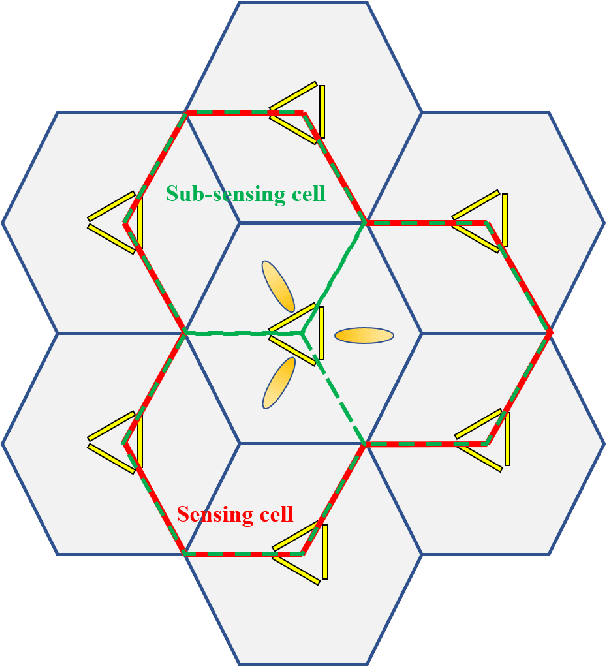

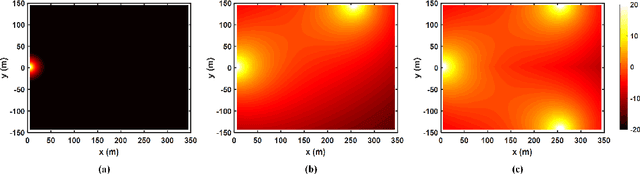
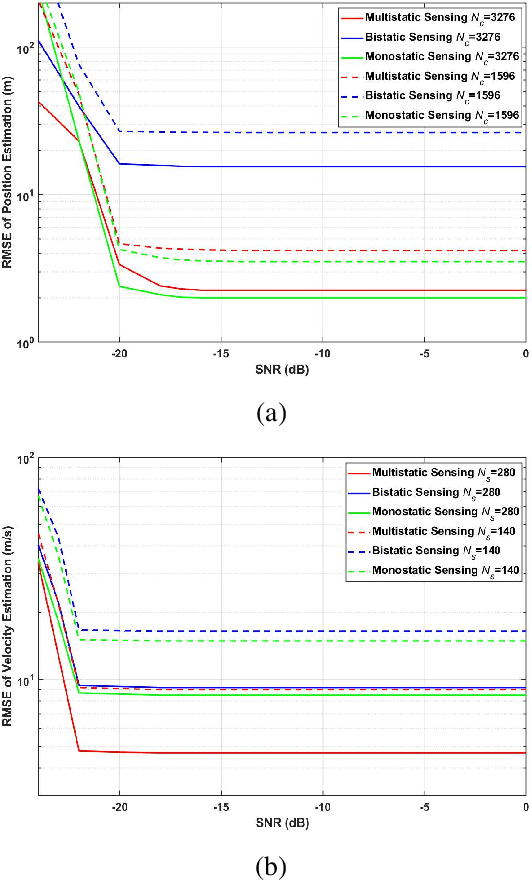
A novel multistatic multiple-input multiple-output (MIMO) integrated sensing and communication (ISAC) system in cellular networks is proposed. It can make use of widespread base stations (BSs) to perform cooperative sensing in wide area. This system is important since the deployment of sensing function can be achieved based on the existing mobile communication networks at a low cost. In this system, orthogonal frequency division multiplexing (OFDM) signals transmitted from the central BS are received and processed by each of the neighboring BSs to estimate sensing object parameters. A joint data processing method is then introduced to derive the closed-form solution of objects position and velocity. Numerical simulation shows that the proposed multistatic system can improve the position and velocity estimation accuracy compared with monostatic and bistatic system, demonstrating the effectiveness and promise of implementing ISAC in the upcoming fifth generation advanced (5G-A) and sixth generation (6G) mobile networks.
5G PRS-Based Sensing: A Sensing Reference Signal Approach for Joint Sensing and Communication System
Nov 21, 2022The emerging joint sensing and communication (JSC) technology is expected to support new applications and services, such as autonomous driving and extended reality (XR), in the future wireless communication systems. Pilot (or reference) signals in wireless communications usually have good passive detection performance, strong anti-noise capability and good auto-correlation characteristics, hence they bear the potential for applying in radar sensing. In this paper, we investigate how to apply the positioning reference signal (PRS) of the 5th generation (5G) mobile communications in radar sensing. This approach has the unique benefit of compatibility with the most advanced mobile communication system available so far. Thus, the PRS can be regarded as a sensing reference signal to simultaneously realize the functions of radar sensing, communication and positioning in a convenient manner. Firstly, we propose a PRS based radar sensing scheme and analyze its range and velocity estimation performance, based on which we propose a method that improves the accuracy of velocity estimation by using multiple frames. Furthermore, the Cramer-Rao lower bound (CRLB) of the range and velocity estimation for PRS based radar sensing and the CRLB of the range estimation for PRS based positioning are derived. Our analysis and simulation results demonstrate the feasibility and superiority of PRS over other pilot signals in radar sensing. Finally, some suggestions for the future 5G-Advanced and 6th generation (6G) frame structure design containing the sensing reference signal are derived based on our study.