 Add to Chrome
 Add to Firefox
 Add to Edge
Sensitive Data Detection with High-Throughput Machine Learning Models in Electrical Health Records
Apr 30, 2023
In the era of big data, there is an increasing need for healthcare providers, communities, and researchers to share data and collaborate to improve health outcomes, generate valuable insights, and advance research. The Health Insurance Portability and Accountability Act of 1996 (HIPAA) is a federal law designed to protect sensitive health information by defining regulations for protected health information (PHI). However, it does not provide efficient tools for detecting or removing PHI before data sharing. One of the challenges in this area of research is the heterogeneous nature of PHI fields in data across different parties. This variability makes rule-based sensitive variable identification systems that work on one database fail on another. To address this issue, our paper explores the use of machine learning algorithms to identify sensitive variables in structured data, thus facilitating the de-identification process. We made a key observation that the distributions of metadata of PHI fields and non-PHI fields are very different. Based on this novel finding, we engineered over 30 features from the metadata of the original features and used machine learning to build classification models to automatically identify PHI fields in structured Electronic Health Record (EHR) data. We trained the model on a variety of large EHR databases from different data sources and found that our algorithm achieves 99% accuracy when detecting PHI-related fields for unseen datasets. The implications of our study are significant and can benefit industries that handle sensitive data.

Predicting multiple sclerosis disease severity with multimodal deep neural networks
Apr 08, 2023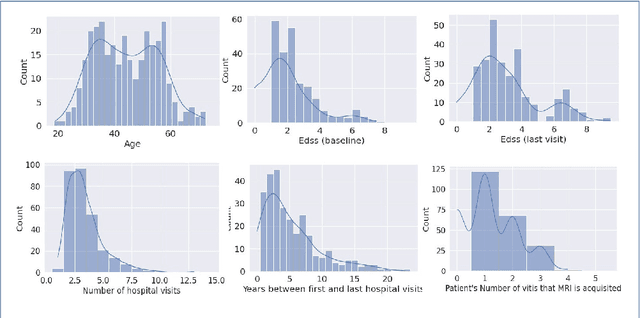
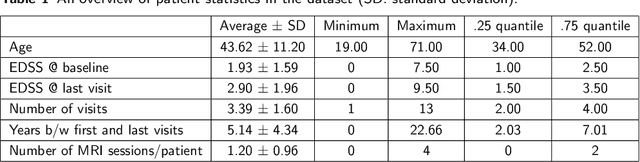
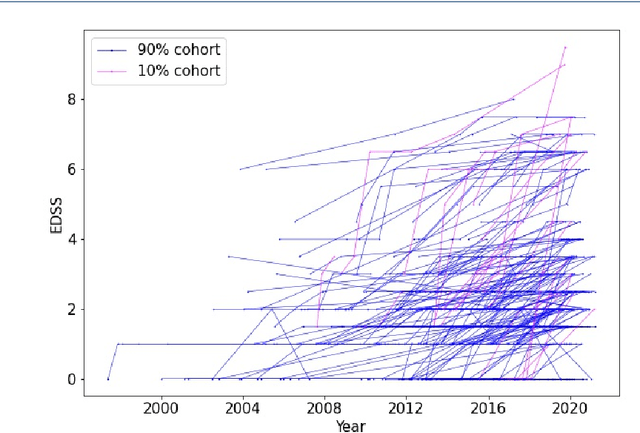
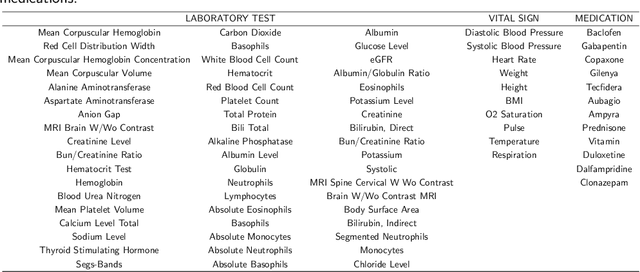
Multiple Sclerosis (MS) is a chronic disease developed in human brain and spinal cord, which can cause permanent damage or deterioration of the nerves. The severity of MS disease is monitored by the Expanded Disability Status Scale (EDSS), composed of several functional sub-scores. Early and accurate classification of MS disease severity is critical for slowing down or preventing disease progression via applying early therapeutic intervention strategies. Recent advances in deep learning and the wide use of Electronic Health Records (EHR) creates opportunities to apply data-driven and predictive modeling tools for this goal. Previous studies focusing on using single-modal machine learning and deep learning algorithms were limited in terms of prediction accuracy due to the data insufficiency or model simplicity. In this paper, we proposed an idea of using patients' multimodal longitudinal and longitudinal EHR data to predict multiple sclerosis disease severity at the hospital visit. This work has two important contributions. First, we describe a pilot effort to leverage structured EHR data, neuroimaging data and clinical notes to build a multi-modal deep learning framework to predict patient's MS disease severity. The proposed pipeline demonstrates up to 25% increase in terms of the area under the Area Under the Receiver Operating Characteristic curve (AUROC) compared to models using single-modal data. Second, the study also provides insights regarding the amount useful signal embedded in each data modality with respect to MS disease prediction, which may improve data collection processes.
A Transformer-Based Deep Learning Approach for Fairly Predicting Post-Liver Transplant Risk Factors
Apr 05, 2023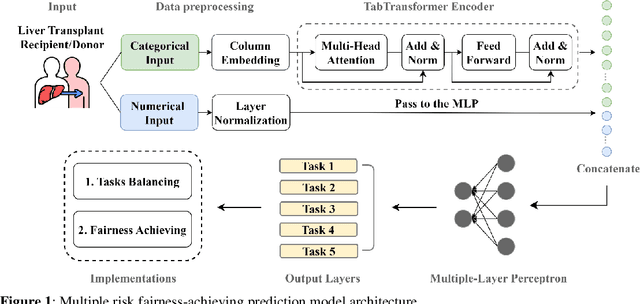

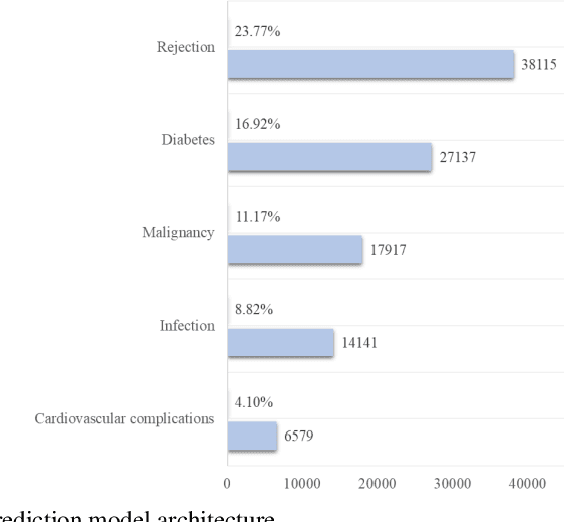
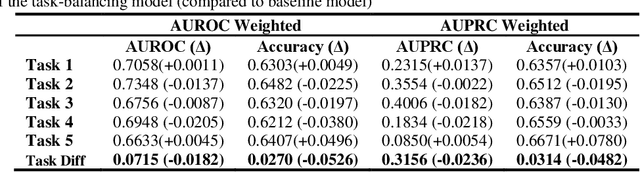
Liver transplantation is a life-saving procedure for patients with end-stage liver disease. There are two main challenges in liver transplant: finding the best matching patient for a donor and ensuring transplant equity among different subpopulations. The current MELD scoring system evaluates a patient's mortality risk if not receiving an organ within 90 days. However, the donor-patient matching should also take into consideration post-transplant risk factors, such as cardiovascular disease, chronic rejection, etc., which are all common complications after transplant. Accurate prediction of these risk scores remains a significant challenge. In this study, we will use predictive models to solve the above challenge. We propose a deep learning framework model to predict multiple risk factors after a liver transplant. By formulating it as a multi-task learning problem, the proposed deep neural network was trained on this data to simultaneously predict the five post-transplant risks and achieve equally good performance by leveraging task balancing techniques. We also propose a novel fairness achieving algorithm and to ensure prediction fairness across different subpopulations. We used electronic health records of 160,360 liver transplant patients, including demographic information, clinical variables, and laboratory values, collected from the liver transplant records of the United States from 1987 to 2018. The performance of the model was evaluated using various performance metrics such as AUROC, AURPC, and accuracy. The results of our experiments demonstrate that the proposed multitask prediction model achieved high accuracy and good balance in predicting all five post-transplant risk factors, with a maximum accuracy discrepancy of only 2.7%. The fairness-achieving algorithm significantly reduced the fairness disparity compared to the baseline model.
Multi-Task Learning for Post-transplant Cause of Death Analysis: A Case Study on Liver Transplant
Mar 30, 2023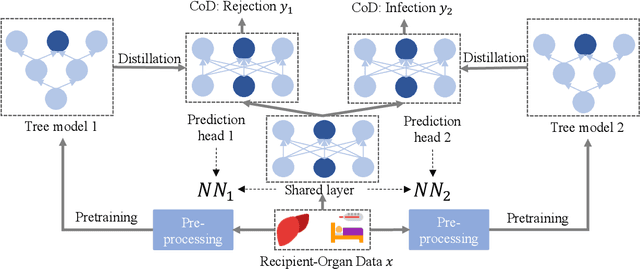
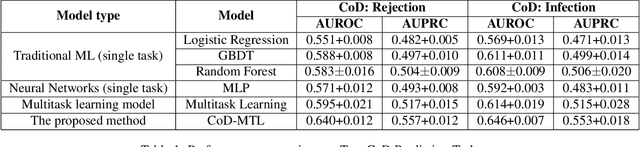
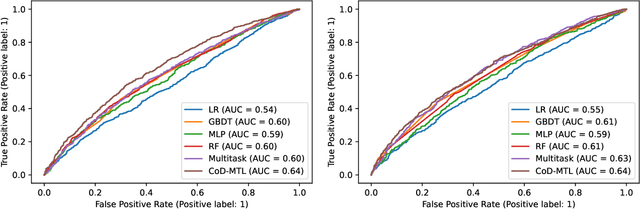
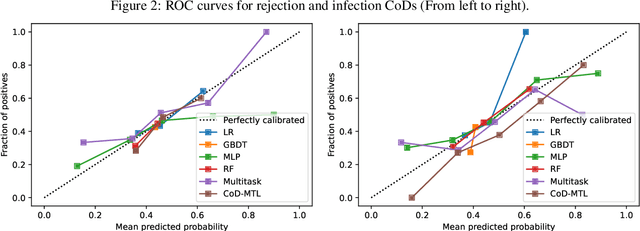
Organ transplant is the essential treatment method for some end-stage diseases, such as liver failure. Analyzing the post-transplant cause of death (CoD) after organ transplant provides a powerful tool for clinical decision making, including personalized treatment and organ allocation. However, traditional methods like Model for End-stage Liver Disease (MELD) score and conventional machine learning (ML) methods are limited in CoD analysis due to two major data and model-related challenges. To address this, we propose a novel framework called CoD-MTL leveraging multi-task learning to model the semantic relationships between various CoD prediction tasks jointly. Specifically, we develop a novel tree distillation strategy for multi-task learning, which combines the strength of both the tree model and multi-task learning. Experimental results are presented to show the precise and reliable CoD predictions of our framework. A case study is conducted to demonstrate the clinical importance of our method in the liver transplant.
Zero-shot Clinical Entity Recognition using ChatGPT
Mar 29, 2023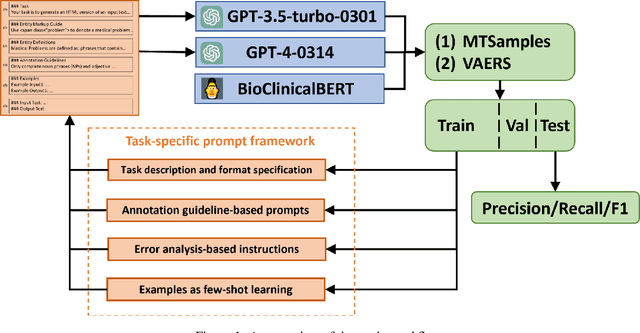
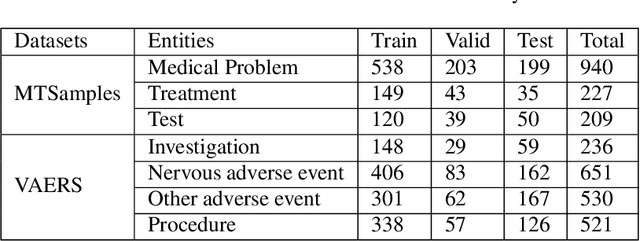
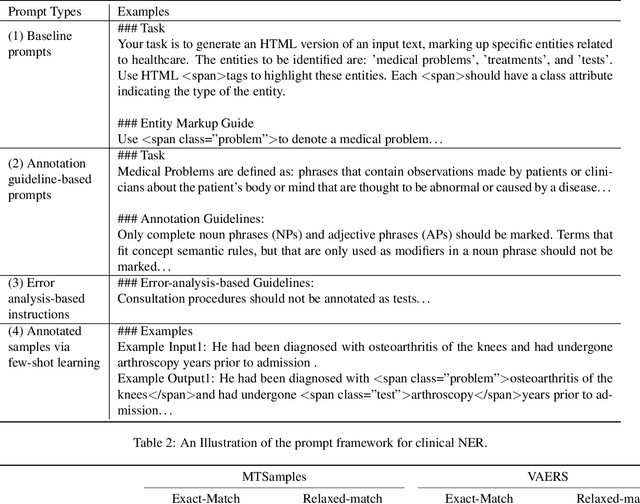
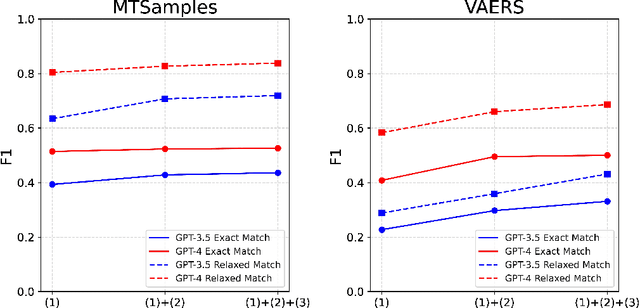
In this study, we investigated the potential of ChatGPT, a large language model developed by OpenAI, for the clinical named entity recognition task defined in the 2010 i2b2 challenge, in a zero-shot setting with two different prompt strategies. We compared its performance with GPT-3 in a similar zero-shot setting, as well as a fine-tuned BioClinicalBERT model using a set of synthetic clinical notes from MTSamples. Our findings revealed that ChatGPT outperformed GPT-3 in the zero-shot setting, with F1 scores of 0.418 (vs.0.250) and 0.620 (vs. 0.480) for exact- and relaxed-matching, respectively. Moreover, prompts affected ChatGPT's performance greatly, with relaxed-matching F1 scores of 0.628 vs.0.541 for two different prompt strategies. Although ChatGPT's performance was still lower than that of the supervised BioClinicalBERT model (i.e., relaxed-matching F1 scores of 0.628 vs. 0.870), our study demonstrates the great potential of ChatGPT for clinical NER tasks in a zero-shot setting, which is much more appealing as it does not require any annotation.
SPeC: A Soft Prompt-Based Calibration on Mitigating Performance Variability in Clinical Notes Summarization
Mar 27, 2023Electronic health records (EHRs) store an extensive array of patient information, encompassing medical histories, diagnoses, treatments, and test outcomes. These records are crucial for enabling healthcare providers to make well-informed decisions regarding patient care. Summarizing clinical notes further assists healthcare professionals in pinpointing potential health risks and making better-informed decisions. This process contributes to reducing errors and enhancing patient outcomes by ensuring providers have access to the most pertinent and current patient data. Recent research has shown that incorporating prompts with large language models (LLMs) substantially boosts the efficacy of summarization tasks. However, we show that this approach also leads to increased output variance, resulting in notably divergent outputs even when prompts share similar meanings. To tackle this challenge, we introduce a model-agnostic Soft Prompt-Based Calibration (SPeC) pipeline that employs soft prompts to diminish variance while preserving the advantages of prompt-based summarization. Experimental findings on multiple clinical note tasks and LLMs indicate that our method not only bolsters performance but also effectively curbs variance for various LLMs, providing a more uniform and dependable solution for summarizing vital medical information.
Towards Fair Patient-Trial Matching via Patient-Criterion Level Fairness Constraint
Mar 24, 2023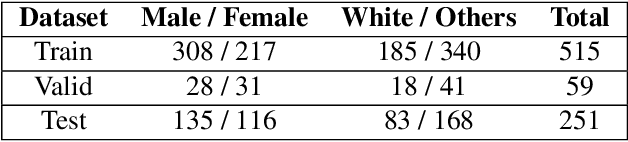
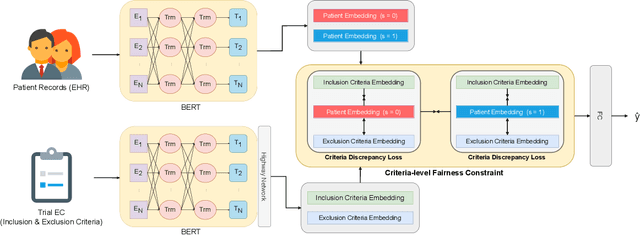
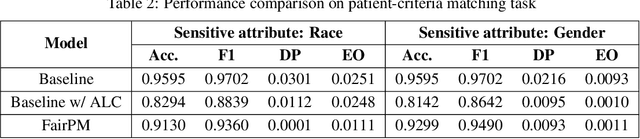

Clinical trials are indispensable in developing new treatments, but they face obstacles in patient recruitment and retention, hindering the enrollment of necessary participants. To tackle these challenges, deep learning frameworks have been created to match patients to trials. These frameworks calculate the similarity between patients and clinical trial eligibility criteria, considering the discrepancy between inclusion and exclusion criteria. Recent studies have shown that these frameworks outperform earlier approaches. However, deep learning models may raise fairness issues in patient-trial matching when certain sensitive groups of individuals are underrepresented in clinical trials, leading to incomplete or inaccurate data and potential harm. To tackle the issue of fairness, this work proposes a fair patient-trial matching framework by generating a patient-criterion level fairness constraint. The proposed framework considers the inconsistency between the embedding of inclusion and exclusion criteria among patients of different sensitive groups. The experimental results on real-world patient-trial and patient-criterion matching tasks demonstrate that the proposed framework can successfully alleviate the predictions that tend to be biased.
LLM for Patient-Trial Matching: Privacy-Aware Data Augmentation Towards Better Performance and Generalizability
Mar 24, 2023
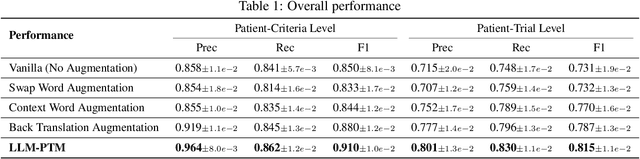

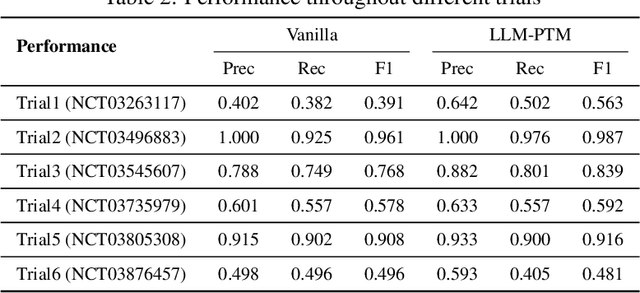
The process of matching patients with suitable clinical trials is essential for advancing medical research and providing optimal care. However, current approaches face challenges such as data standardization, ethical considerations, and a lack of interoperability between Electronic Health Records (EHRs) and clinical trial criteria. In this paper, we explore the potential of large language models (LLMs) to address these challenges by leveraging their advanced natural language generation capabilities to improve compatibility between EHRs and clinical trial descriptions. We propose an innovative privacy-aware data augmentation approach for LLM-based patient-trial matching (LLM-PTM), which balances the benefits of LLMs while ensuring the security and confidentiality of sensitive patient data. Our experiments demonstrate a 7.32% average improvement in performance using the proposed LLM-PTM method, and the generalizability to new data is improved by 12.12%. Additionally, we present case studies to further illustrate the effectiveness of our approach and provide a deeper understanding of its underlying principles.
Does Synthetic Data Generation of LLMs Help Clinical Text Mining?
Mar 08, 2023Recent advancements in large language models (LLMs) have led to the development of highly potent models like OpenAI's ChatGPT. These models have exhibited exceptional performance in a variety of tasks, such as question answering, essay composition, and code generation. However, their effectiveness in the healthcare sector remains uncertain. In this study, we seek to investigate the potential of ChatGPT to aid in clinical text mining by examining its ability to extract structured information from unstructured healthcare texts, with a focus on biological named entity recognition and relation extraction. However, our preliminary results indicate that employing ChatGPT directly for these tasks resulted in poor performance and raised privacy concerns associated with uploading patients' information to the ChatGPT API. To overcome these limitations, we propose a new training paradigm that involves generating a vast quantity of high-quality synthetic data with labels utilizing ChatGPT and fine-tuning a local model for the downstream task. Our method has resulted in significant improvements in the performance of downstream tasks, improving the F1-score from 23.37% to 63.99% for the named entity recognition task and from 75.86% to 83.59% for the relation extraction task. Furthermore, generating data using ChatGPT can significantly reduce the time and effort required for data collection and labeling, as well as mitigate data privacy concerns. In summary, the proposed framework presents a promising solution to enhance the applicability of LLM models to clinical text mining.
Fairly Predicting Graft Failure in Liver Transplant for Organ Assigning
Feb 18, 2023Liver transplant is an essential therapy performed for severe liver diseases. The fact of scarce liver resources makes the organ assigning crucial. Model for End-stage Liver Disease (MELD) score is a widely adopted criterion when making organ distribution decisions. However, it ignores post-transplant outcomes and organ/donor features. These limitations motivate the emergence of machine learning (ML) models. Unfortunately, ML models could be unfair and trigger bias against certain groups of people. To tackle this problem, this work proposes a fair machine learning framework targeting graft failure prediction in liver transplant. Specifically, knowledge distillation is employed to handle dense and sparse features by combining the advantages of tree models and neural networks. A two-step debiasing method is tailored for this framework to enhance fairness. Experiments are conducted to analyze unfairness issues in existing models and demonstrate the superiority of our method in both prediction and fairness performance.