 Add to Chrome
 Add to Firefox
 Add to Edge
UnlearnCanvas: A Stylized Image Dataset to Benchmark Machine Unlearning for Diffusion Models
Feb 26, 2024
The rapid advancement of diffusion models (DMs) has not only transformed various real-world industries but has also introduced negative societal concerns, including the generation of harmful content, copyright disputes, and the rise of stereotypes and biases. To mitigate these issues, machine unlearning (MU) has emerged as a potential solution, demonstrating its ability to remove undesired generative capabilities of DMs in various applications. However, by examining existing MU evaluation methods, we uncover several key challenges that can result in incomplete, inaccurate, or biased evaluations for MU in DMs. To address them, we enhance the evaluation metrics for MU, including the introduction of an often-overlooked retainability measurement for DMs post-unlearning. Additionally, we introduce UnlearnCanvas, a comprehensive high-resolution stylized image dataset that facilitates us to evaluate the unlearning of artistic painting styles in conjunction with associated image objects. We show that this dataset plays a pivotal role in establishing a standardized and automated evaluation framework for MU techniques on DMs, featuring 7 quantitative metrics to address various aspects of unlearning effectiveness. Through extensive experiments, we benchmark 5 state-of-the-art MU methods, revealing novel insights into their pros and cons, and the underlying unlearning mechanisms. Furthermore, we demonstrate the potential of UnlearnCanvas to benchmark other generative modeling tasks, such as style transfer. The UnlearnCanvas dataset, benchmark, and the codes to reproduce all the results in this work can be found at https://github.com/OPTML-Group/UnlearnCanvas.

Stumbling Blocks: Stress Testing the Robustness of Machine-Generated Text Detectors Under Attacks
Feb 18, 2024The widespread use of large language models (LLMs) is increasing the demand for methods that detect machine-generated text to prevent misuse. The goal of our study is to stress test the detectors' robustness to malicious attacks under realistic scenarios. We comprehensively study the robustness of popular machine-generated text detectors under attacks from diverse categories: editing, paraphrasing, prompting, and co-generating. Our attacks assume limited access to the generator LLMs, and we compare the performance of detectors on different attacks under different budget levels. Our experiments reveal that almost none of the existing detectors remain robust under all the attacks, and all detectors exhibit different loopholes. Averaging all detectors, the performance drops by 35% across all attacks. Further, we investigate the reasons behind these defects and propose initial out-of-the-box patches to improve robustness.
Does DetectGPT Fully Utilize Perturbation? Selective Perturbation on Model-Based Contrastive Learning Detector would be Better
Feb 04, 2024

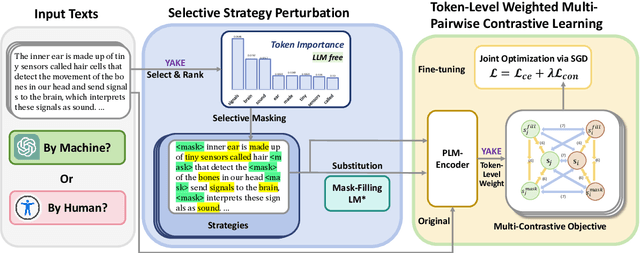

The burgeoning capabilities of large language models (LLMs) have raised growing concerns about abuse. DetectGPT, a zero-shot metric-based unsupervised machine-generated text detector, first introduces perturbation and shows great performance improvement. However, DetectGPT's random perturbation strategy might introduce noise, limiting the distinguishability and further performance improvements. Moreover, its logit regression module relies on setting the threshold, which harms the generalizability and applicability of individual or small-batch inputs. Hence, we propose a novel detector, Pecola, which uses selective strategy perturbation to relieve the information loss caused by random masking, and multi-pair contrastive learning to capture the implicit pattern information during perturbation, facilitating few-shot performance. The experiments show that Pecola outperforms the SOTA method by 1.20% in accuracy on average on four public datasets. We further analyze the effectiveness, robustness, and generalization of our perturbation method.
Unified Physical-Digital Face Attack Detection
Jan 31, 2024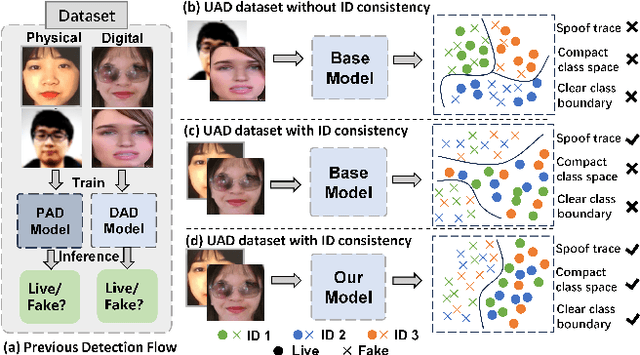
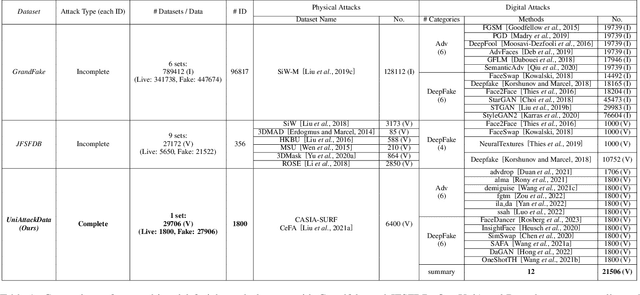
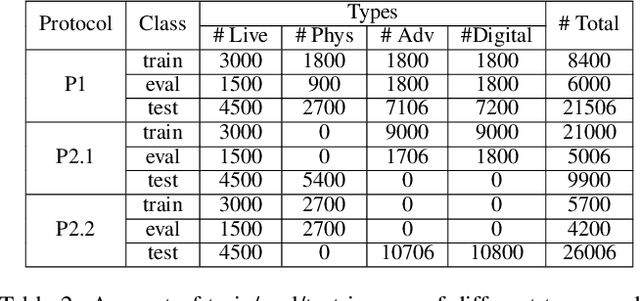
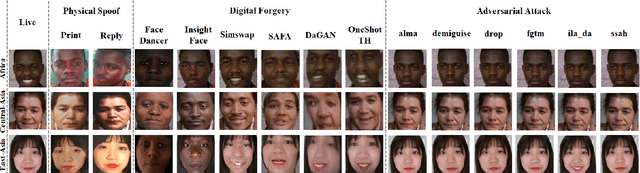
Face Recognition (FR) systems can suffer from physical (i.e., print photo) and digital (i.e., DeepFake) attacks. However, previous related work rarely considers both situations at the same time. This implies the deployment of multiple models and thus more computational burden. The main reasons for this lack of an integrated model are caused by two factors: (1) The lack of a dataset including both physical and digital attacks with ID consistency which means the same ID covers the real face and all attack types; (2) Given the large intra-class variance between these two attacks, it is difficult to learn a compact feature space to detect both attacks simultaneously. To address these issues, we collect a Unified physical-digital Attack dataset, called UniAttackData. The dataset consists of $1,800$ participations of 2 and 12 physical and digital attacks, respectively, resulting in a total of 29,706 videos. Then, we propose a Unified Attack Detection framework based on Vision-Language Models (VLMs), namely UniAttackDetection, which includes three main modules: the Teacher-Student Prompts (TSP) module, focused on acquiring unified and specific knowledge respectively; the Unified Knowledge Mining (UKM) module, designed to capture a comprehensive feature space; and the Sample-Level Prompt Interaction (SLPI) module, aimed at grasping sample-level semantics. These three modules seamlessly form a robust unified attack detection framework. Extensive experiments on UniAttackData and three other datasets demonstrate the superiority of our approach for unified face attack detection.
A Generalist FaceX via Learning Unified Facial Representation
Dec 31, 2023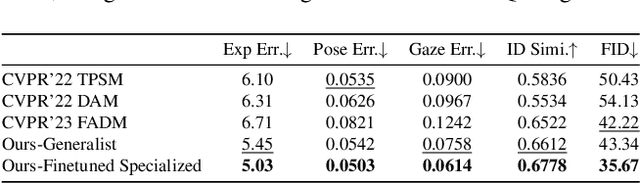

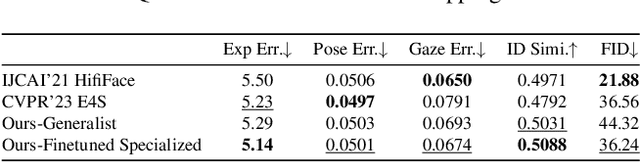
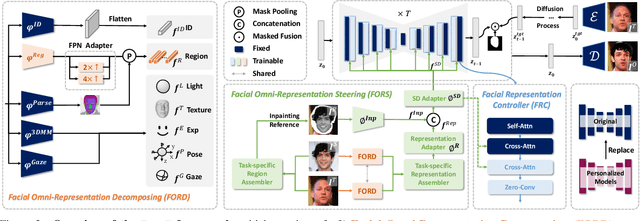
This work presents FaceX framework, a novel facial generalist model capable of handling diverse facial tasks simultaneously. To achieve this goal, we initially formulate a unified facial representation for a broad spectrum of facial editing tasks, which macroscopically decomposes a face into fundamental identity, intra-personal variation, and environmental factors. Based on this, we introduce Facial Omni-Representation Decomposing (FORD) for seamless manipulation of various facial components, microscopically decomposing the core aspects of most facial editing tasks. Furthermore, by leveraging the prior of a pretrained StableDiffusion (SD) to enhance generation quality and accelerate training, we design Facial Omni-Representation Steering (FORS) to first assemble unified facial representations and then effectively steer the SD-aware generation process by the efficient Facial Representation Controller (FRC). %Without any additional features, Our versatile FaceX achieves competitive performance compared to elaborate task-specific models on popular facial editing tasks. Full codes and models will be available at https://github.com/diffusion-facex/FaceX.
INFAMOUS-NeRF: ImproviNg FAce MOdeling Using Semantically-Aligned Hypernetworks with Neural Radiance Fields
Dec 23, 2023
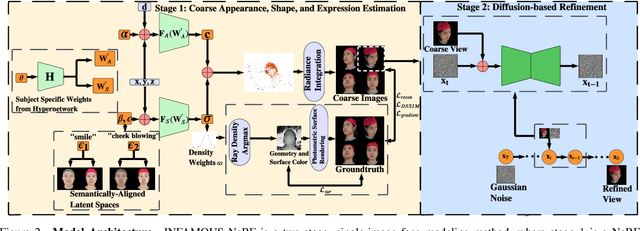


We propose INFAMOUS-NeRF, an implicit morphable face model that introduces hypernetworks to NeRF to improve the representation power in the presence of many training subjects. At the same time, INFAMOUS-NeRF resolves the classic hypernetwork tradeoff of representation power and editability by learning semantically-aligned latent spaces despite the subject-specific models, all without requiring a large pretrained model. INFAMOUS-NeRF further introduces a novel constraint to improve NeRF rendering along the face boundary. Our constraint can leverage photometric surface rendering and multi-view supervision to guide surface color prediction and improve rendering near the surface. Finally, we introduce a novel, loss-guided adaptive sampling method for more effective NeRF training by reducing the sampling redundancy. We show quantitatively and qualitatively that our method achieves higher representation power than prior face modeling methods in both controlled and in-the-wild settings. Code and models will be released upon publication.
Tracing Hyperparameter Dependencies for Model Parsing via Learnable Graph Pooling Network
Dec 03, 2023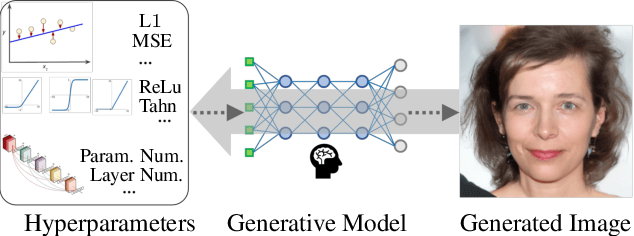

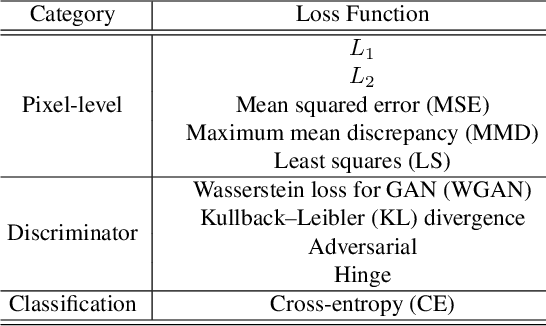
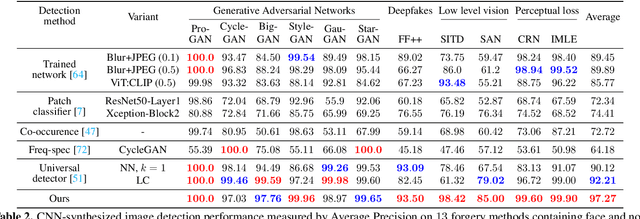
Model Parsing defines the research task of predicting hyperparameters of the generative model (GM), given a generated image as input. Since a diverse set of hyperparameters is jointly employed by the generative model, and dependencies often exist among them, it is crucial to learn these hyperparameter dependencies for the improved model parsing performance. To explore such important dependencies, we propose a novel model parsing method called Learnable Graph Pooling Network (LGPN). Specifically, we transform model parsing into a graph node classification task, using graph nodes and edges to represent hyperparameters and their dependencies, respectively. Furthermore, LGPN incorporates a learnable pooling-unpooling mechanism tailored to model parsing, which adaptively learns hyperparameter dependencies of GMs used to generate the input image. We also extend our proposed method to CNN-generated image detection and coordinate attacks detection. Empirically, we achieve state-of-the-art results in model parsing and its extended applications, showing the effectiveness of our method. Our source code are available.
FRCSyn Challenge at WACV 2024:Face Recognition Challenge in the Era of Synthetic Data
Nov 17, 2023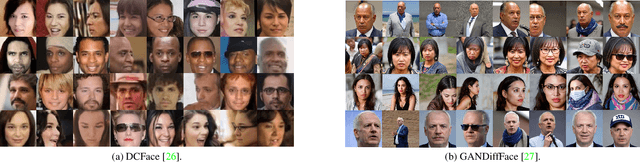
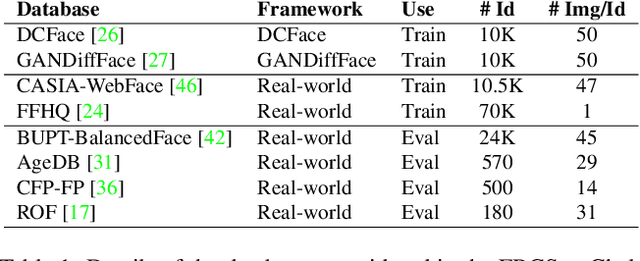
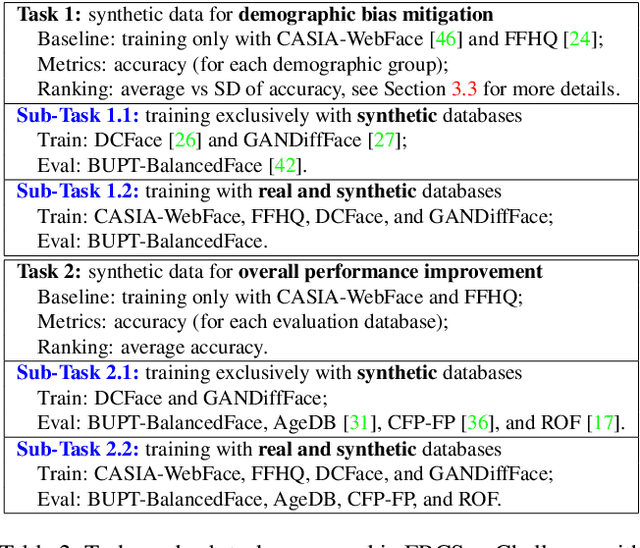
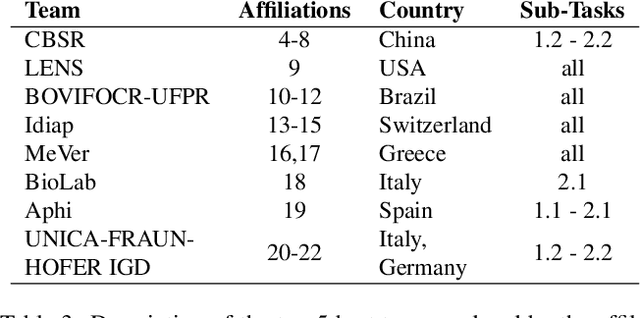
Despite the widespread adoption of face recognition technology around the world, and its remarkable performance on current benchmarks, there are still several challenges that must be covered in more detail. This paper offers an overview of the Face Recognition Challenge in the Era of Synthetic Data (FRCSyn) organized at WACV 2024. This is the first international challenge aiming to explore the use of synthetic data in face recognition to address existing limitations in the technology. Specifically, the FRCSyn Challenge targets concerns related to data privacy issues, demographic biases, generalization to unseen scenarios, and performance limitations in challenging scenarios, including significant age disparities between enrollment and testing, pose variations, and occlusions. The results achieved in the FRCSyn Challenge, together with the proposed benchmark, contribute significantly to the application of synthetic data to improve face recognition technology.
Improving Pacing in Long-Form Story Planning
Nov 08, 2023Existing LLM-based systems for writing long-form stories or story outlines frequently suffer from unnatural pacing, whether glossing over important events or over-elaborating on insignificant details, resulting in a jarring experience for the reader. We propose a CONCrete Outline ConTrol (CONCOCT) system to improve pacing when automatically generating story outlines. We first train a concreteness evaluator to judge which of two events is more concrete (low-level-detailed). This evaluator can then be used to control pacing in hierarchical outline generation; in this work, we explore a vaguest-first expansion procedure that aims for uniform pacing. We further use the evaluator to filter new outline items based on predicted concreteness. Compared to a baseline hierarchical outline generator, humans judge CONCOCT's pacing to be more consistent over 57% of the time across multiple outline lengths; the gains also translate to downstream stories. All code, data, and models are open-sourced.
ProS: Facial Omni-Representation Learning via Prototype-based Self-Distillation
Nov 07, 2023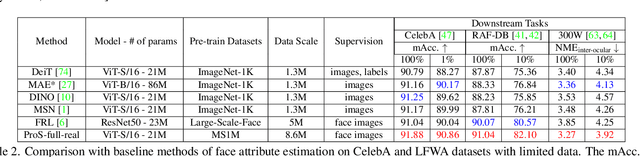
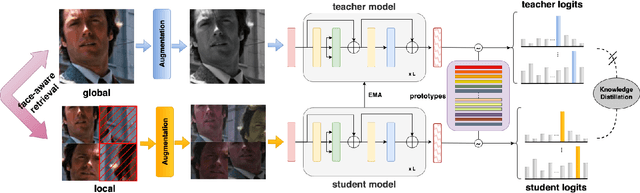
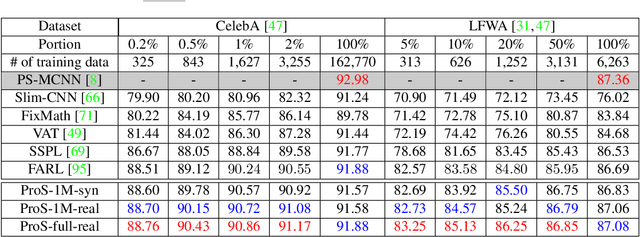
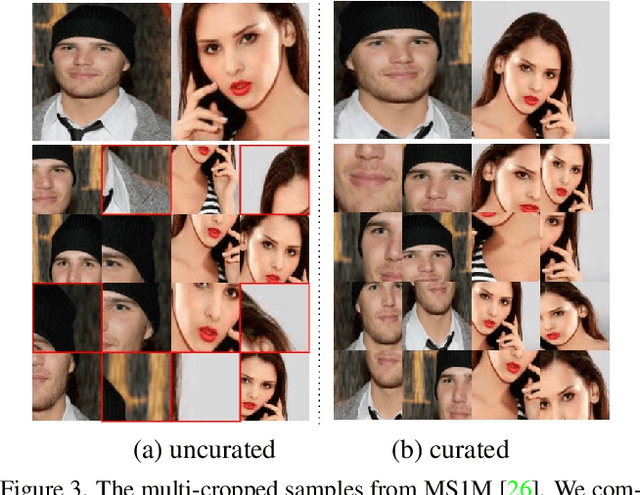
This paper presents a novel approach, called Prototype-based Self-Distillation (ProS), for unsupervised face representation learning. The existing supervised methods heavily rely on a large amount of annotated training facial data, which poses challenges in terms of data collection and privacy concerns. To address these issues, we propose ProS, which leverages a vast collection of unlabeled face images to learn a comprehensive facial omni-representation. In particular, ProS consists of two vision-transformers (teacher and student models) that are trained with different augmented images (cropping, blurring, coloring, etc.). Besides, we build a face-aware retrieval system along with augmentations to obtain the curated images comprising predominantly facial areas. To enhance the discrimination of learned features, we introduce a prototype-based matching loss that aligns the similarity distributions between features (teacher or student) and a set of learnable prototypes. After pre-training, the teacher vision transformer serves as a backbone for downstream tasks, including attribute estimation, expression recognition, and landmark alignment, achieved through simple fine-tuning with additional layers. Extensive experiments demonstrate that our method achieves state-of-the-art performance on various tasks, both in full and few-shot settings. Furthermore, we investigate pre-training with synthetic face images, and ProS exhibits promising performance in this scenario as well.