 Add to Chrome
 Add to Firefox
 Add to Edge
Evaluating the Diagnostic Classification Ability of Multimodal Large Language Models: Insights from the Osteoarthritis Initiative
Jan 05, 2026
Multimodal large language models (MLLMs) show promising performance on medical visual question answering (VQA) and report generation, but these generation and explanation abilities do not reliably transfer to disease-specific classification. We evaluated MLLM architectures on knee osteoarthritis (OA) radiograph classification, which remains underrepresented in existing medical MLLM benchmarks, even though knee OA affects an estimated 300 to 400 million people worldwide. Through systematic ablation studies manipulating the vision encoder, the connector, and the large language model (LLM) across diverse training strategies, we measured each component's contribution to diagnostic accuracy. In our classification task, a trained vision encoder alone could outperform full MLLM pipelines in classification accuracy and fine-tuning the LLM provided no meaningful improvement over prompt-based guidance. And LoRA fine-tuning on a small, class-balanced dataset (500 images) gave better results than training on a much larger but class-imbalanced set (5,778 images), indicating that data balance and quality can matter more than raw scale for this task. These findings suggest that for domain-specific medical classification, LLMs are more effective as interpreters and report generators rather than as primary classifiers. Therefore, the MLLM architecture appears less suitable for medical image diagnostic classification tasks that demand high certainty. We recommend prioritizing vision encoder optimization and careful dataset curation when developing clinically applicable systems.

Step-DeepResearch Technical Report
Dec 24, 2025As LLMs shift toward autonomous agents, Deep Research has emerged as a pivotal metric. However, existing academic benchmarks like BrowseComp often fail to meet real-world demands for open-ended research, which requires robust skills in intent recognition, long-horizon decision-making, and cross-source verification. To address this, we introduce Step-DeepResearch, a cost-effective, end-to-end agent. We propose a Data Synthesis Strategy Based on Atomic Capabilities to reinforce planning and report writing, combined with a progressive training path from agentic mid-training to SFT and RL. Enhanced by a Checklist-style Judger, this approach significantly improves robustness. Furthermore, to bridge the evaluation gap in the Chinese domain, we establish ADR-Bench for realistic deep research scenarios. Experimental results show that Step-DeepResearch (32B) scores 61.4% on Scale AI Research Rubrics. On ADR-Bench, it significantly outperforms comparable models and rivals SOTA closed-source models like OpenAI and Gemini DeepResearch. These findings prove that refined training enables medium-sized models to achieve expert-level capabilities at industry-leading cost-efficiency.
Exploration vs Exploitation: Rethinking RLVR through Clipping, Entropy, and Spurious Reward
Dec 21, 2025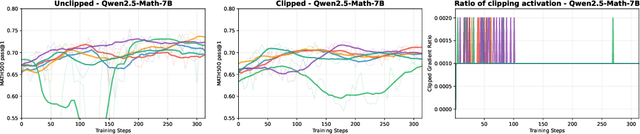
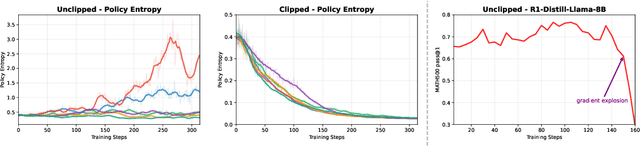

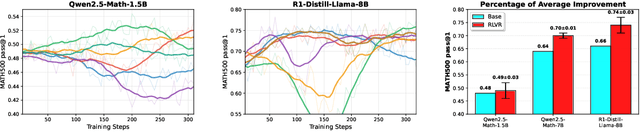
This paper examines the exploration-exploitation trade-off in reinforcement learning with verifiable rewards (RLVR), a framework for improving the reasoning of Large Language Models (LLMs). Recent studies suggest that RLVR can elicit strong mathematical reasoning in LLMs through two seemingly paradoxical mechanisms: spurious rewards, which suppress exploitation by rewarding outcomes unrelated to the ground truth, and entropy minimization, which suppresses exploration by pushing the model toward more confident and deterministic outputs, highlighting a puzzling dynamic: both discouraging exploitation and discouraging exploration improve reasoning performance, yet the underlying principles that reconcile these effects remain poorly understood. We focus on two fundamental questions: (i) how policy entropy relates to performance, and (ii) whether spurious rewards yield gains, potentially through the interplay of clipping bias and model contamination. Our results show that clipping bias under spurious rewards reduces policy entropy, leading to more confident and deterministic outputs, while entropy minimization alone is insufficient for improvement. We further propose a reward-misalignment model explaining why spurious rewards can enhance performance beyond contaminated settings. Our findings clarify the mechanisms behind spurious-reward benefits and provide principles for more effective RLVR training.
Video Detective: Seek Critical Clues Recurrently to Answer Question from Long Videos
Dec 19, 2025Long Video Question-Answering (LVQA) presents a significant challenge for Multi-modal Large Language Models (MLLMs) due to immense context and overloaded information, which could also lead to prohibitive memory consumption. While existing methods attempt to address these issues by reducing visual tokens or extending model's context length, they may miss useful information or take considerable computation. In fact, when answering given questions, only a small amount of crucial information is required. Therefore, we propose an efficient question-aware memory mechanism, enabling MLLMs to recurrently seek these critical clues. Our approach, named VideoDetective, simplifies this task by iteratively processing video sub-segments. For each sub-segment, a question-aware compression strategy is employed by introducing a few special memory tokens to achieve purposefully compression. This allows models to effectively seek critical clues while reducing visual tokens. Then, due to history context could have a significant impact, we recurrently aggregate and store these memory tokens to update history context, which would be reused for subsequent sub-segments. Furthermore, to more effectively measure model's long video understanding ability, we introduce GLVC (Grounding Long Video Clues), a long video question-answering dataset, which features grounding critical and concrete clues scattered throughout entire videos. Experimental results demonstrate our method enables MLLMs with limited context length of 32K to efficiently process 100K tokens (3600 frames, an hour-long video sampled at 1fps), requiring only 2 minutes and 37GB GPU memory usage. Evaluation results across multiple long video benchmarks illustrate our method can more effectively seek critical clues from massive information.
Spectro-temporal unitary transformations for coherent modulation: design trade-offs and practical considerations
Dec 19, 2025This paper analyzes the performance of spectro-temporal unitary transforms for coherent optical modulation. Unlike conventional IQ modulation, such transforms are based on a cascade of phase modulators and dispersive elements, so are theoretically lossless and not limited by the bandwidth of the constituent modulators. We analyse the performance limits and design trade-offs of this scheme: estimating how the number of stages, amount of dispersion, modulator bandwidth, symbol block length and electrical signal power impacts the achievable signal-to-distortion ratio (SDR). Importantly, we show that high (>30 dB) SDRs suitable for modern >200 GBd class coherent optical communications are achievable with a low (<6) number of stages and reasonable parameters for driver power, modulator bandwidth and on-chip dispersion. Finally we address the SDR penalties associated with potential phase, amplitude, or dispersion errors, and limited DAC resolution.
FOD-Diff: 3D Multi-Channel Patch Diffusion Model for Fiber Orientation Distribution
Dec 18, 2025Diffusion MRI (dMRI) is a critical non-invasive technique to estimate fiber orientation distribution (FOD) for characterizing white matter integrity. Estimating FOD from single-shell low angular resolution dMRI (LAR-FOD) is limited by accuracy, whereas estimating FOD from multi-shell high angular resolution dMRI (HAR-FOD) requires a long scanning time, which limits its applicability. Diffusion models have shown promise in estimating HAR-FOD based on LAR-FOD. However, using diffusion models to efficiently generate HAR-FOD is challenging due to the large number of spherical harmonic (SH) coefficients in FOD. Here, we propose a 3D multi-channel patch diffusion model to predict HAR-FOD from LAR-FOD. We design the FOD-patch adapter by introducing the prior brain anatomy for more efficient patch-based learning. Furthermore, we introduce a voxel-level conditional coordinating module to enhance the global understanding of the model. We design the SH attention module to effectively learn the complex correlations of the SH coefficients. Our experimental results show that our method achieves the best performance in HAR-FOD prediction and outperforms other state-of-the-art methods.
Alchemist: Unlocking Efficiency in Text-to-Image Model Training via Meta-Gradient Data Selection
Dec 18, 2025Recent advances in Text-to-Image (T2I) generative models, such as Imagen, Stable Diffusion, and FLUX, have led to remarkable improvements in visual quality. However, their performance is fundamentally limited by the quality of training data. Web-crawled and synthetic image datasets often contain low-quality or redundant samples, which lead to degraded visual fidelity, unstable training, and inefficient computation. Hence, effective data selection is crucial for improving data efficiency. Existing approaches rely on costly manual curation or heuristic scoring based on single-dimensional features in Text-to-Image data filtering. Although meta-learning based method has been explored in LLM, there is no adaptation for image modalities. To this end, we propose **Alchemist**, a meta-gradient-based framework to select a suitable subset from large-scale text-image data pairs. Our approach automatically learns to assess the influence of each sample by iteratively optimizing the model from a data-centric perspective. Alchemist consists of two key stages: data rating and data pruning. We train a lightweight rater to estimate each sample's influence based on gradient information, enhanced with multi-granularity perception. We then use the Shift-Gsampling strategy to select informative subsets for efficient model training. Alchemist is the first automatic, scalable, meta-gradient-based data selection framework for Text-to-Image model training. Experiments on both synthetic and web-crawled datasets demonstrate that Alchemist consistently improves visual quality and downstream performance. Training on an Alchemist-selected 50% of the data can outperform training on the full dataset.
Probing Scientific General Intelligence of LLMs with Scientist-Aligned Workflows
Dec 18, 2025Despite advances in scientific AI, a coherent framework for Scientific General Intelligence (SGI)-the ability to autonomously conceive, investigate, and reason across scientific domains-remains lacking. We present an operational SGI definition grounded in the Practical Inquiry Model (PIM: Deliberation, Conception, Action, Perception) and operationalize it via four scientist-aligned tasks: deep research, idea generation, dry/wet experiments, and experimental reasoning. SGI-Bench comprises over 1,000 expert-curated, cross-disciplinary samples inspired by Science's 125 Big Questions, enabling systematic evaluation of state-of-the-art LLMs. Results reveal gaps: low exact match (10--20%) in deep research despite step-level alignment; ideas lacking feasibility and detail; high code executability but low execution result accuracy in dry experiments; low sequence fidelity in wet protocols; and persistent multimodal comparative-reasoning challenges. We further introduce Test-Time Reinforcement Learning (TTRL), which optimizes retrieval-augmented novelty rewards at inference, enhancing hypothesis novelty without reference answer. Together, our PIM-grounded definition, workflow-centric benchmark, and empirical insights establish a foundation for AI systems that genuinely participate in scientific discovery.
MemFlow: Flowing Adaptive Memory for Consistent and Efficient Long Video Narratives
Dec 16, 2025The core challenge for streaming video generation is maintaining the content consistency in long context, which poses high requirement for the memory design. Most existing solutions maintain the memory by compressing historical frames with predefined strategies. However, different to-generate video chunks should refer to different historical cues, which is hard to satisfy with fixed strategies. In this work, we propose MemFlow to address this problem. Specifically, before generating the coming chunk, we dynamically update the memory bank by retrieving the most relevant historical frames with the text prompt of this chunk. This design enables narrative coherence even if new event happens or scenario switches in future frames. In addition, during generation, we only activate the most relevant tokens in the memory bank for each query in the attention layers, which effectively guarantees the generation efficiency. In this way, MemFlow achieves outstanding long-context consistency with negligible computation burden (7.9% speed reduction compared with the memory-free baseline) and keeps the compatibility with any streaming video generation model with KV cache.
ARCHE: A Novel Task to Evaluate LLMs on Latent Reasoning Chain Extraction
Nov 16, 2025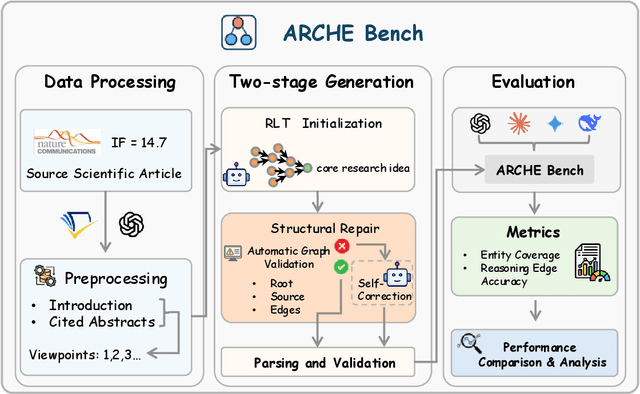
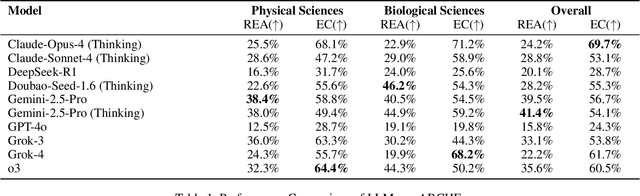
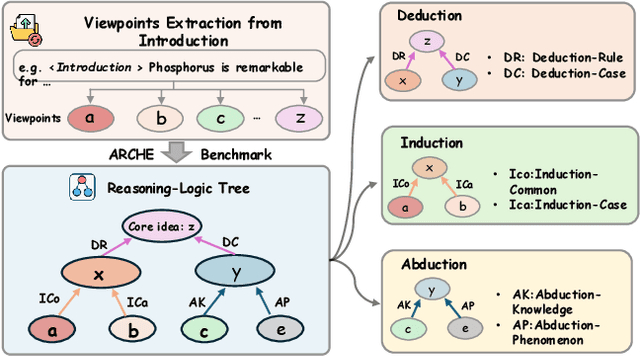
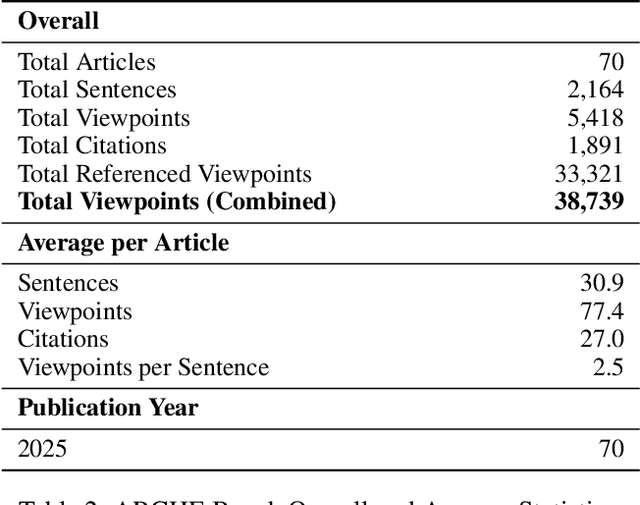
Large language models (LLMs) are increasingly used in scientific domains. While they can produce reasoning-like content via methods such as chain-of-thought prompting, these outputs are typically unstructured and informal, obscuring whether models truly understand the fundamental reasoning paradigms that underpin scientific inference. To address this, we introduce a novel task named Latent Reasoning Chain Extraction (ARCHE), in which models must decompose complex reasoning arguments into combinations of standard reasoning paradigms in the form of a Reasoning Logic Tree (RLT). In RLT, all reasoning steps are explicitly categorized as one of three variants of Peirce's fundamental inference modes: deduction, induction, or abduction. To facilitate this task, we release ARCHE Bench, a new benchmark derived from 70 Nature Communications articles, including more than 1,900 references and 38,000 viewpoints. We propose two logic-aware evaluation metrics: Entity Coverage (EC) for content completeness and Reasoning Edge Accuracy (REA) for step-by-step logical validity. Evaluations on 10 leading LLMs on ARCHE Bench reveal that models exhibit a trade-off between REA and EC, and none are yet able to extract a complete and standard reasoning chain. These findings highlight a substantial gap between the abilities of current reasoning models and the rigor required for scientific argumentation.