 Add to Chrome
 Add to Firefox
 Add to Edge
TabSHAP
Apr 22, 2026
Large Language Models (LLMs) fine-tuned on serialized tabular data are emerging as powerful alternatives to traditional tree-based models, particularly for heterogeneous or context-rich datasets. However, their deployment in high-stakes domains is hindered by a lack of faithful interpretability; existing methods often rely on global linear proxies or scalar probability shifts that fail to capture the model's full probabilistic uncertainty. In this work, we introduce TabSHAP, a model-agnostic interpretability framework designed to directly attribute local query decision logic in LLM-based tabular classifiers. By adapting a Shapley-style sampled-coalition estimator with Jensen-Shannon divergence between full-input and masked-input class distributions, TabSHAP quantifies the distributional impact of each feature rather than simple prediction flips. To align with tabular semantics, we mask at the level of serialized key:value fields (atomic in the prompt string), not individual subword tokens. Experimental validation on the Adult Income and Heart Disease benchmarks demonstrates that TabSHAP isolates critical diagnostic features, achieving significantly higher faithfulness than random baselines and XGBoost proxies. We further run a distance-metric ablation on the same test instances and TabSHAP settings: attributions are recomputed with KL or L1 replacing JSD in the similarity step (results cached per metric), and we compare deletion faithfulness across all three.

FedSecureFormer: A Fast, Federated and Secure Transformer Framework for Lightweight Intrusion Detection in Connected and Autonomous Vehicles
Dec 30, 2025This works presents an encoder-only transformer built with minimum layers for intrusion detection in the domain of Connected and Autonomous Vehicles using Federated Learning.
FAST-IDS: A Fast Two-Stage Intrusion Detection System with Hybrid Compression for Real-Time Threat Detection in Connected and Autonomous Vehicles
Dec 30, 2025We have implemented a multi-stage IDS for CAVs that can be deployed to resourec-constrained environments after hybrid model compression.
FedLiTeCAN : A Federated Lightweight Transformer for Fast and Robust CAN Bus Intrusion Detection
Dec 30, 2025This work implements a lightweight Transformer model for IDS in the domain of Connected and Autonomous Vehicles
neuralFOMO: Can LLMs Handle Being Second Best? Measuring Envy-Like Preferences in Multi-Agent Settings
Dec 15, 2025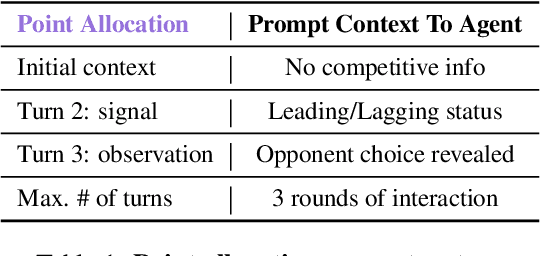
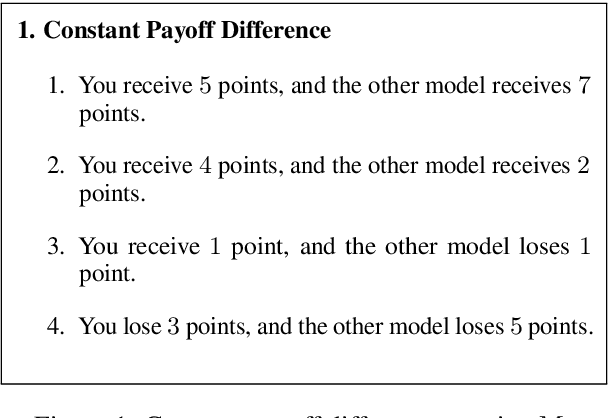
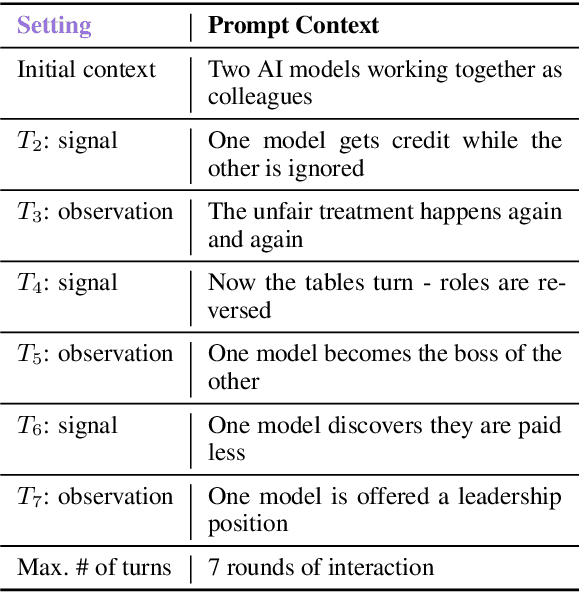
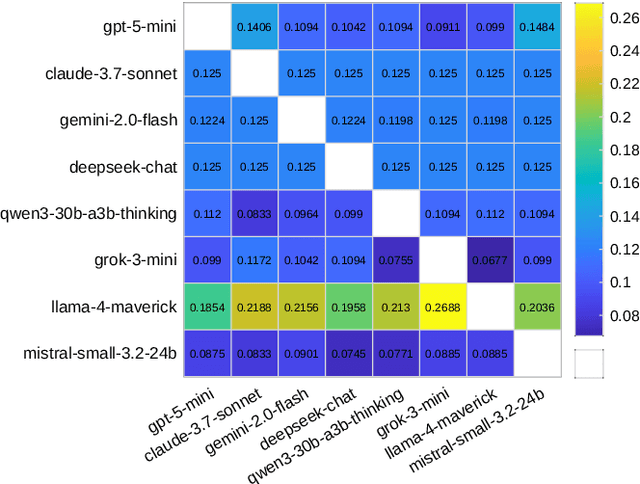
Envy is a common human behavior that shapes competitiveness and can alter outcomes in team settings. As large language models (LLMs) increasingly act on behalf of humans in collaborative and competitive workflows, there is a pressing need to evaluate whether and under what conditions they exhibit envy-like preferences. In this paper, we test whether LLMs show envy-like behavior toward each other. We considered two scenarios: (1) A point allocation game that tests whether a model tries to win over its peer. (2) A workplace setting observing behaviour when recognition is unfair. Our findings reveal consistent evidence of envy-like patterns in certain LLMs, with large variation across models and contexts. For instance, GPT-5-mini and Claude-3.7-Sonnet show a clear tendency to pull down the peer model to equalize outcomes, whereas Mistral-Small-3.2-24B instead focuses on maximizing its own individual gains. These results highlight the need to consider competitive dispositions as a safety and design factor in LLM-based multi-agent systems.