 Add to Chrome
 Add to Firefox
 Add to Edge
Polaris: Learning to Generate Table Descriptions from Retrieval Feedback
Aug 17, 2026
Many table-centric NLP tasks such as NL2SQL first retrieve relevant tables from large collections using keyword search. Recent work uses LLMs to generate natural-language table descriptions to improve retrieval, but they are typically optimized for fluency rather than retrieval effectiveness. We present Polaris, a system that trains an LLM to generate table descriptions directly from retrieval feedback. Our key insight is that existing table retrieval benchmarks already contain the supervision needed for this task: given query-table relevance judgments, we generate multiple candidate descriptions for each table, rank them by their BM25 retrieval effectiveness, and use the resulting preference pairs to fine-tune the LLM with Direct Preference Optimization (DPO). Polaris further expands abbreviated table and column names before generation to reduce vocabulary mismatch. Extensive experiments show that Polaris outperforms the state-of-the-art AutoDDG solution, often by a significant margin. More broadly, our results demonstrate that retrieval benchmarks can be repurposed as supervision for training LLMs to generate retrieval-oriented metadata.

TACO: Task-Aware Column Description Generation Using LLMs
Jun 19, 2026Generating accurate and informative column descriptions (e.g. "membership status of customers" for the column name "cust_mem") is essential for a wide range of downstream NLP tasks on tabular data, including NL2SQL, table question answering, and entity linking. This problem arises in enterprises, domain sciences, government data portals, and so on. Despite its importance, most real-world datasets suffer from missing or cryptic documentation, often due to abbreviated column names or domain-specific jargon. Existing approaches largely rely on single-prompt large language models (LLMs), which struggle with three key issues: (i) inconsistent or incorrect handling of abbreviations, (ii) hallucinated or incomplete descriptions, and (iii) redundancy or vagueness that hinders downstream performance. We present TACO, a task-aware framework for automatic column description generation using LLMs. TACO introduces a three-step pipeline: (1) abbreviation expansion, which standardizes column names; (2) description generation, which produces initial semantic descriptions enriched with synonyms and search-oriented keywords; and (3) description revision, which refines these outputs using simulated downstream tasks. In addition, we investigate human-in-the-loop extensions and release new evaluation datasets for entity linking and schema enrichment. Extensive experiments across public and proprietary datasets show that TACO consistently outperforms existing methods, improving downstream task performance by up to 32%.
Constrained Best Arm Identification with Tests for Feasibility
Nov 12, 2025Best arm identification (BAI) aims to identify the highest-performance arm among a set of $K$ arms by collecting stochastic samples from each arm. In real-world problems, the best arm needs to satisfy additional feasibility constraints. While there is limited prior work on BAI with feasibility constraints, they typically assume the performance and constraints are observed simultaneously on each pull of an arm. However, this assumption does not reflect most practical use cases, e.g., in drug discovery, we wish to find the most potent drug whose toxicity and solubility are below certain safety thresholds. These safety experiments can be conducted separately from the potency measurement. Thus, this requires designing BAI algorithms that not only decide which arm to pull but also decide whether to test for the arm's performance or feasibility. In this work, we study feasible BAI which allows a decision-maker to choose a tuple $(i,\ell)$, where $i\in [K]$ denotes an arm and $\ell$ denotes whether she wishes to test for its performance ($\ell=0$) or any of its $N$ feasibility constraints ($\ell\in[N]$). We focus on the fixed confidence setting, which is to identify the \textit{feasible} arm with the \textit{highest performance}, with a probability of at least $1-δ$. We propose an efficient algorithm and upper-bound its sample complexity, showing our algorithm can naturally adapt to the problem's difficulty and eliminate arms by worse performance or infeasibility, whichever is easier. We complement this upper bound with a lower bound showing that our algorithm is \textit{asymptotically ($δ\rightarrow 0$) optimal}. Finally, we empirically show that our algorithm outperforms other state-of-the-art BAI algorithms in both synthetic and real-world datasets.
RakutenAI-7B: Extending Large Language Models for Japanese
Mar 21, 2024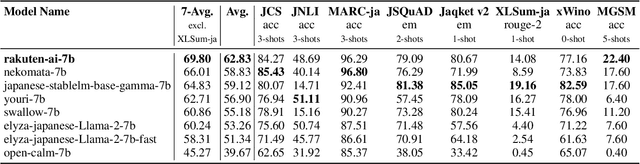
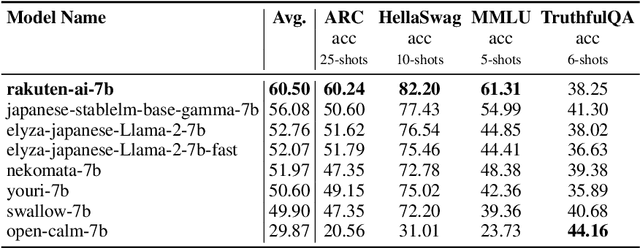
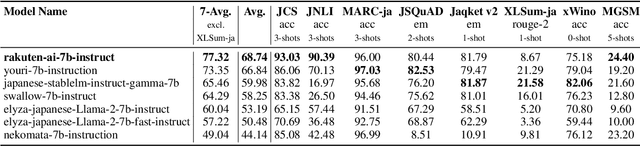
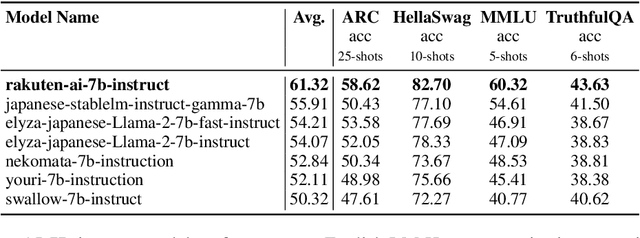
We introduce RakutenAI-7B, a suite of Japanese-oriented large language models that achieve the best performance on the Japanese LM Harness benchmarks among the open 7B models. Along with the foundation model, we release instruction- and chat-tuned models, RakutenAI-7B-instruct and RakutenAI-7B-chat respectively, under the Apache 2.0 license.
Active Cost-aware Labeling of Streaming Data
Apr 13, 2023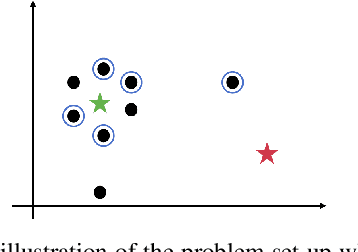

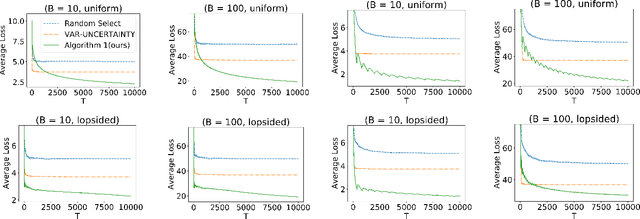

We study actively labeling streaming data, where an active learner is faced with a stream of data points and must carefully choose which of these points to label via an expensive experiment. Such problems frequently arise in applications such as healthcare and astronomy. We first study a setting when the data's inputs belong to one of $K$ discrete distributions and formalize this problem via a loss that captures the labeling cost and the prediction error. When the labeling cost is $B$, our algorithm, which chooses to label a point if the uncertainty is larger than a time and cost dependent threshold, achieves a worst-case upper bound of $O(B^{\frac{1}{3}} K^{\frac{1}{3}} T^{\frac{2}{3}})$ on the loss after $T$ rounds. We also provide a more nuanced upper bound which demonstrates that the algorithm can adapt to the arrival pattern, and achieves better performance when the arrival pattern is more favorable. We complement both upper bounds with matching lower bounds. We next study this problem when the inputs belong to a continuous domain and the output of the experiment is a smooth function with bounded RKHS norm. After $T$ rounds in $d$ dimensions, we show that the loss is bounded by $O(B^{\frac{1}{d+3}} T^{\frac{d+2}{d+3}})$ in an RKHS with a squared exponential kernel and by $O(B^{\frac{1}{2d+3}} T^{\frac{2d+2}{2d+3}})$ in an RKHS with a Mat\'ern kernel. Our empirical evaluation demonstrates that our method outperforms other baselines in several synthetic experiments and two real experiments in medicine and astronomy.
MVCNet: Multiview Contrastive Network for Unsupervised Representation Learning for 3D CT Lesions
Aug 18, 2021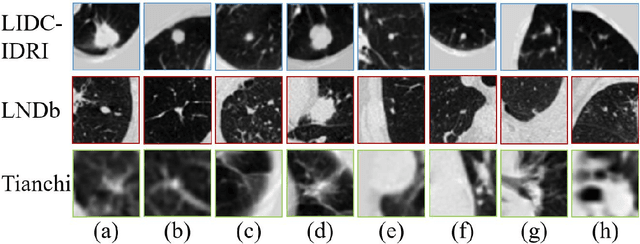
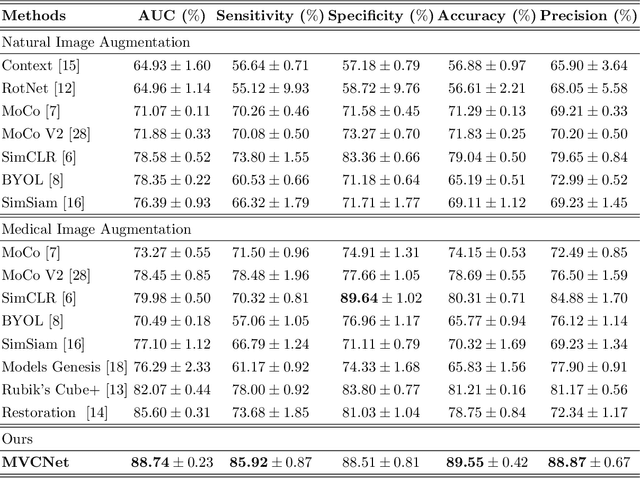
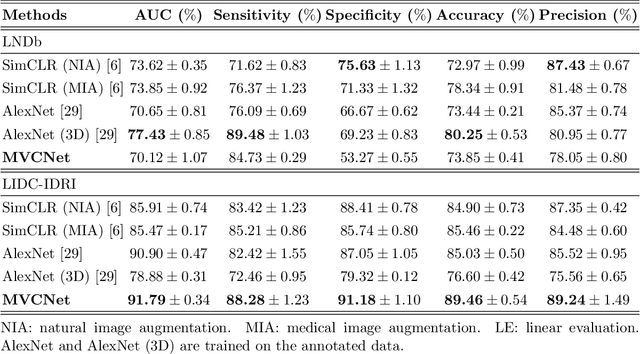
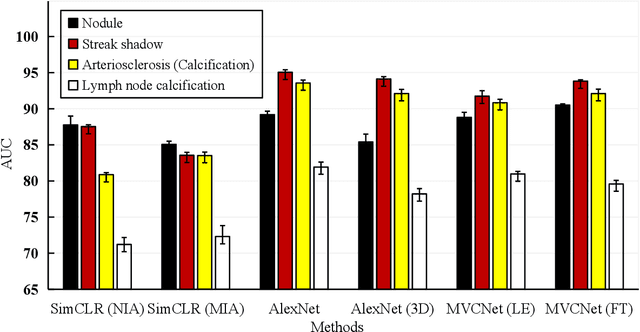
\emph{Objective and Impact Statement}. With the renaissance of deep learning, automatic diagnostic systems for computed tomography (CT) have achieved many successful applications. However, they are mostly attributed to careful expert annotations, which are often scarce in practice. This drives our interest to the unsupervised representation learning. \emph{Introduction}. Recent studies have shown that self-supervised learning is an effective approach for learning representations, but most of them rely on the empirical design of transformations and pretext tasks. \emph{Methods}. To avoid the subjectivity associated with these methods, we propose the MVCNet, a novel unsupervised three dimensional (3D) representation learning method working in a transformation-free manner. We view each 3D lesion from different orientations to collect multiple two dimensional (2D) views. Then, an embedding function is learned by minimizing a contrastive loss so that the 2D views of the same 3D lesion are aggregated, and the 2D views of different lesions are separated. We evaluate the representations by training a simple classification head upon the embedding layer. \emph{Results}. Experimental results show that MVCNet achieves state-of-the-art accuracies on the LIDC-IDRI (89.55\%), LNDb (77.69\%) and TianChi (79.96\%) datasets for \emph{unsupervised representation learning}. When fine-tuned on 10\% of the labeled data, the accuracies are comparable to the supervised learning model (89.46\% vs. 85.03\%, 73.85\% vs. 73.44\%, 83.56\% vs. 83.34\% on the three datasets, respectively). \emph{Conclusion}. Results indicate the superiority of MVCNet in \emph{learning representations with limited annotations}.
Adversarially-Trained Nonnegative Matrix Factorization
Apr 10, 2021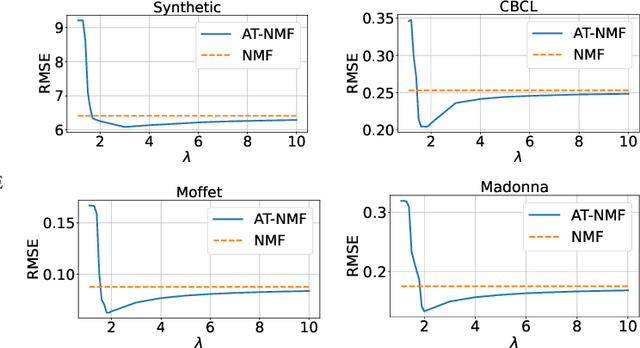
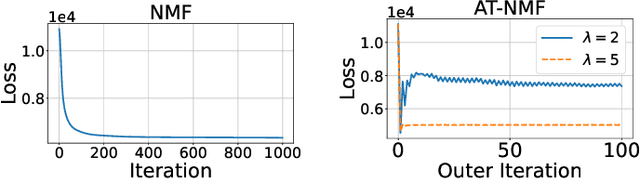
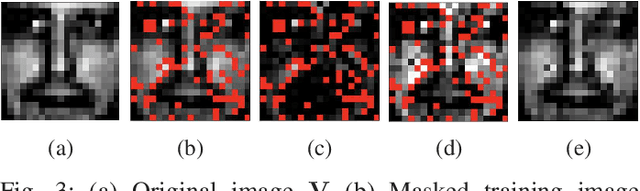
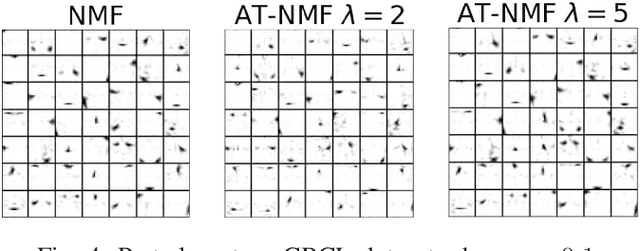
We consider an adversarially-trained version of the nonnegative matrix factorization, a popular latent dimensionality reduction technique. In our formulation, an attacker adds an arbitrary matrix of bounded norm to the given data matrix. We design efficient algorithms inspired by adversarial training to optimize for dictionary and coefficient matrices with enhanced generalization abilities. Extensive simulations on synthetic and benchmark datasets demonstrate the superior predictive performance on matrix completion tasks of our proposed method compared to state-of-the-art competitors, including other variants of adversarial nonnegative matrix factorization.
Investigating Critical Risk Factors in Liver Cancer Prediction
Feb 03, 2021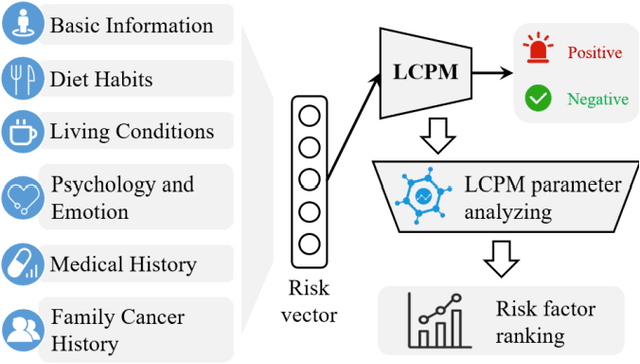
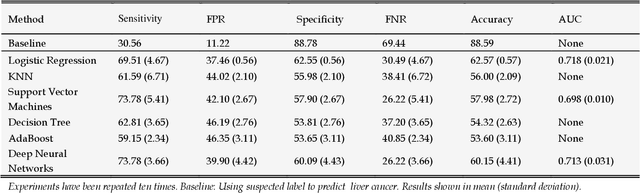
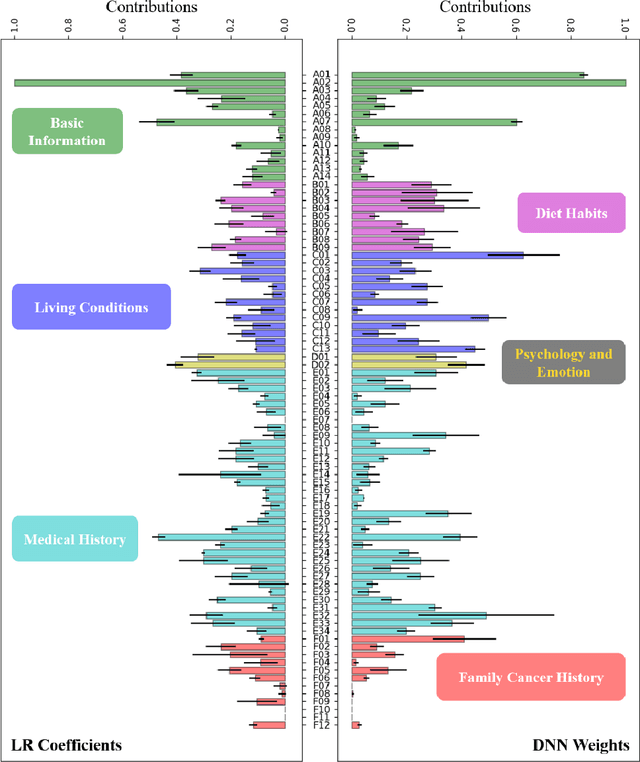
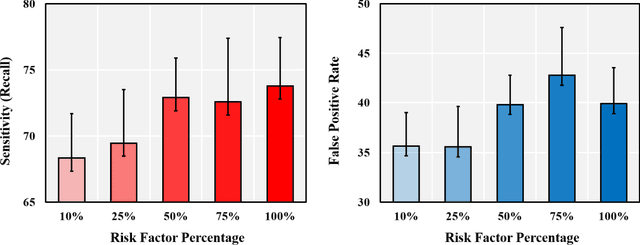
We exploit liver cancer prediction model using machine learning algorithms based on epidemiological data of over 55 thousand peoples from 2014 to the present. The best performance is an AUC of 0.71. We analyzed model parameters to investigate critical risk factors that contribute the most to prediction.