 Add to Chrome
 Add to Firefox
 Add to Edge
Reasoning for Mobile User Experience with Multimodal LLMs: Task, Benchmark, and Approach
Jun 11, 2026
User experience (UX) centered on usability, perceived consistency, and functional clarity is fundamental to real-world user interfaces (UI). The application of multimodal large language models (MLLMs) in the field of user interfaces is evolving rapidly, such as visual element grounding, graphical user interface (GUI) agents, and design-to-code generation. However, research efforts on evaluating UX based on UI screenshots are still immature. To address this, we propose UXBench, a novel multimodal benchmark consisting of 2,000 VQA data samples designed to assess MLLMs' ability to perform UI-based reasoning. UXBench includes 8 tasks based on real-world UI screenshots that require fine-grained diagnosis of UX issues across layout relationships, visual hierarchy, and content consistency. Our extensive evaluation of mainstream MLLMs shows that they remain fundamentally limited in their capacity for UI-based reasoning. The results underscore the need for further advancements in this area. To bridge this gap, we propose UI-UX, an MLLM based on Qwen3-VL-4B-Thinking foundation model and enhanced via reinforcement learning with two key innovations: a reward routing mechanism that dynamically balances perceptual understanding and logical reasoning during inference, and an asymmetric transition reward that suppresses redundant or insufficient reasoning steps. Experiments demonstrate that UI-UX achieves state-of-the-art (SOTA) performance on UXBench, attaining an accuracy of 0.7963 -- surpassing Claude-4.5-Sonnet's 0.6550 -- while exhibiting strong generalization across diverse UI tasks and maintaining low inference latency.

P-MIA: A Profiled-Based Membership Inference Attack on Cognitive Diagnosis Models
Nov 06, 2025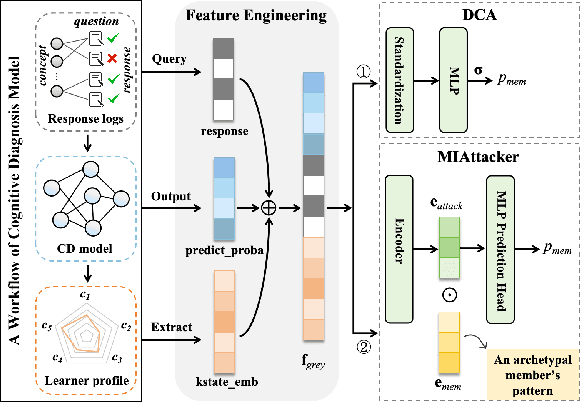
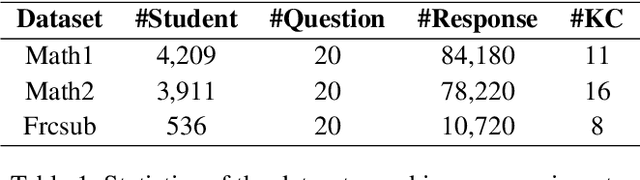
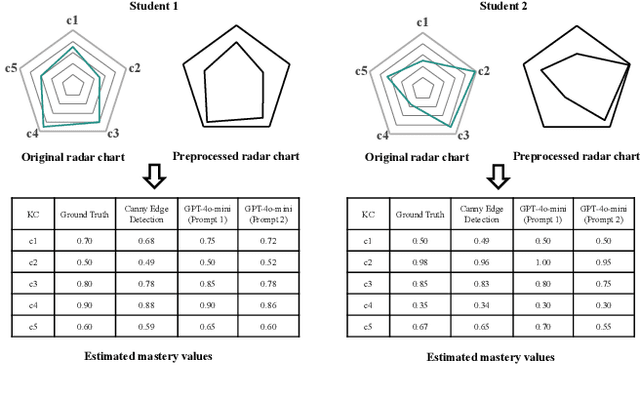
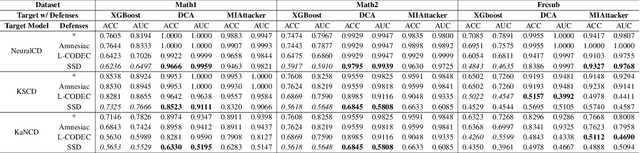
Cognitive diagnosis models (CDMs) are pivotal for creating fine-grained learner profiles in modern intelligent education platforms. However, these models are trained on sensitive student data, raising significant privacy concerns. While membership inference attacks (MIA) have been studied in various domains, their application to CDMs remains a critical research gap, leaving their privacy risks unquantified. This paper is the first to systematically investigate MIA against CDMs. We introduce a novel and realistic grey box threat model that exploits the explainability features of these platforms, where a model's internal knowledge state vectors are exposed to users through visualizations such as radar charts. We demonstrate that these vectors can be accurately reverse-engineered from such visualizations, creating a potent attack surface. Based on this threat model, we propose a profile-based MIA (P-MIA) framework that leverages both the model's final prediction probabilities and the exposed internal knowledge state vectors as features. Extensive experiments on three real-world datasets against mainstream CDMs show that our grey-box attack significantly outperforms standard black-box baselines. Furthermore, we showcase the utility of P-MIA as an auditing tool by successfully evaluating the efficacy of machine unlearning techniques and revealing their limitations.
PrivacyCD: Hierarchical Unlearning for Protecting Student Privacy in Cognitive Diagnosis
Nov 06, 2025The need to remove specific student data from cognitive diagnosis (CD) models has become a pressing requirement, driven by users' growing assertion of their "right to be forgotten". However, existing CD models are largely designed without privacy considerations and lack effective data unlearning mechanisms. Directly applying general purpose unlearning algorithms is suboptimal, as they struggle to balance unlearning completeness, model utility, and efficiency when confronted with the unique heterogeneous structure of CD models. To address this, our paper presents the first systematic study of the data unlearning problem for CD models, proposing a novel and efficient algorithm: hierarchical importanceguided forgetting (HIF). Our key insight is that parameter importance in CD models exhibits distinct layer wise characteristics. HIF leverages this via an innovative smoothing mechanism that combines individual and layer, level importance, enabling a more precise distinction of parameters associated with the data to be unlearned. Experiments on three real world datasets show that HIF significantly outperforms baselines on key metrics, offering the first effective solution for CD models to respond to user data removal requests and for deploying high-performance, privacy preserving AI systems
From Theory to Practice: Advancing Multi-Robot Path Planning Algorithms and Applications
Jun 11, 2025The labeled MRPP (Multi-Robot Path Planning) problem involves routing robots from start to goal configurations efficiently while avoiding collisions. Despite progress in solution quality and runtime, its complexity and industrial relevance continue to drive research. This dissertation introduces scalable MRPP methods with provable guarantees and practical heuristics. First, we study dense MRPP on 2D grids, relevant to warehouse and parcel systems. We propose the Rubik Table method, achieving $(1 + \delta)$-optimal makespan (with $\delta \in (0, 0.5]$) for up to $\frac{m_1 m_2}{2}$ robots, solving large instances efficiently and setting a new theoretical benchmark. Next, we address real-world MRPP. We design optimal layouts for structured environments (e.g., warehouses, parking systems) and propose a puzzle-based system for dense, deadlock-free autonomous vehicle parking. We also extend MRPP to Reeds-Shepp robots, introducing motion primitives and smoothing techniques to ensure feasible, efficient paths under nonholonomic constraints. Simulations and real-world tests validate the approach in urban driving and robotic transport scenarios.
Expected $1.x$-Makespan-Optimal MAPF on Grids in Low-Poly Time
Aug 09, 2024Multi-Agent Path Finding (MAPF) is NP-hard to solve optimally, even on graphs, suggesting no polynomial-time algorithms can compute exact optimal solutions for them. This raises a natural question: How optimal can polynomial-time algorithms reach? Whereas algorithms for computing constant-factor optimal solutions have been developed, the constant factor is generally very large, limiting their application potential. In this work, among other breakthroughs, we propose the first low-polynomial-time MAPF algorithms delivering $1$-$1.5$ (resp., $1$-$1.67$) asymptotic makespan optimality guarantees for 2D (resp., 3D) grids for random instances at a very high $1/3$ agent density, with high probability. Moreover, when regularly distributed obstacles are introduced, our methods experience no performance degradation. These methods generalize to support $100\%$ agent density. Regardless of the dimensionality and density, our high-quality methods are enabled by a unique hierarchical integration of two key building blocks. At the higher level, we apply the labeled Grid Rearrangement Algorithm (RTA), capable of performing efficient reconfiguration on grids through row/column shuffles. At the lower level, we devise novel methods that efficiently simulate row/column shuffles returned by RTA. Our implementations of RTA-based algorithms are highly effective in extensive numerical evaluations, demonstrating excellent scalability compared to other SOTA methods. For example, in 3D settings, \rta-based algorithms readily scale to grids with over $370,000$ vertices and over $120,000$ agents and consistently achieve conservative makespan optimality approaching $1.5$, as predicted by our theoretical analysis.
Decentralized Lifelong Path Planning for Multiple Ackerman Car-Like Robots
Feb 19, 2024Path planning for multiple non-holonomic robots in continuous domains constitutes a difficult robotics challenge with many applications. Despite significant recent progress on the topic, computationally efficient and high-quality solutions are lacking, especially in lifelong settings where robots must continuously take on new tasks. In this work, we make it possible to extend key ideas enabling state-of-the-art (SOTA) methods for multi-robot planning in discrete domains to the motion planning of multiple Ackerman (car-like) robots in lifelong settings, yielding high-performance centralized and decentralized planners. Our planners compute trajectories that allow the robots to reach precise $SE(2)$ goal poses. The effectiveness of our methods is thoroughly evaluated and confirmed using both simulation and real-world experiments.
Well-Connected Set and Its Application to Multi-Robot Path Planning
Feb 19, 2024Parking lots and autonomous warehouses for accommodating many vehicles/robots adopt designs in which the underlying graphs are \emph{well-connected} to simplify planning and reduce congestion. In this study, we formulate and delve into the \emph{largest well-connected set} (LWCS) problem and explore its applications in layout design for multi-robot path planning. Roughly speaking, a well-connected set over a connected graph is a set of vertices such that there is a path on the graph connecting any pair of vertices in the set without passing through any additional vertices of the set. Identifying an LWCS has many potential high-utility applications, e.g., for determining parking garage layout and capacity, as prioritized planning can be shown to be complete when start/goal configurations belong to an LWCS. In this work, we establish that computing an LWCS is NP-complete. We further develop optimal and near-optimal LWCS algorithms, with the near-optimal algorithm targeting large maps. A complete prioritized planning method is given for planning paths for multiple robots residing on an LWCS.
Targeted Parallelization of Conflict-Based Search for Multi-Robot Path Planning
Feb 19, 2024Multi-Robot Path Planning (MRPP) on graphs, equivalently known as Multi-Agent Path Finding (MAPF), is a well-established NP-hard problem with critically important applications. As serial computation in (near)-optimally solving MRPP approaches the computation efficiency limit, parallelization offers a promising route to push the limit further, especially in handling hard or large MRPP instances. In this study, we initiated a \emph{targeted} parallelization effort to boost the performance of conflict-based search for MRPP. Specifically, when instances are relatively small but robots are densely packed with strong interactions, we apply a decentralized parallel algorithm that concurrently explores multiple branches that leads to markedly enhanced solution discovery. On the other hand, when instances are large with sparse robot-robot interactions, we prioritize node expansion and conflict resolution. Our innovative multi-threaded approach to parallelizing bounded-suboptimal conflict search-based algorithms demonstrates significant improvements over baseline serial methods in success rate or runtime. Our contribution further pushes the understanding of MRPP and charts a promising path for elevating solution quality and computational efficiency through parallel algorithmic strategies.
SSPNet: Scale and Spatial Priors Guided Generalizable and Interpretable Pedestrian Attribute Recognition
Dec 11, 2023


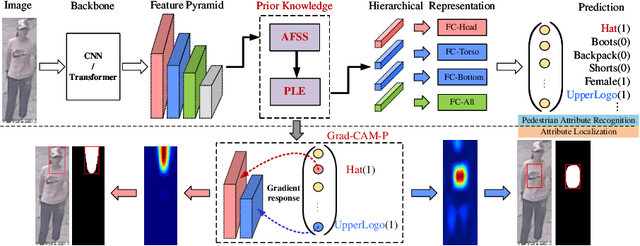
Global feature based Pedestrian Attribute Recognition (PAR) models are often poorly localized when using Grad-CAM for attribute response analysis, which has a significant impact on the interpretability, generalizability and performance. Previous researches have attempted to improve generalization and interpretation through meticulous model design, yet they often have neglected or underutilized effective prior information crucial for PAR. To this end, a novel Scale and Spatial Priors Guided Network (SSPNet) is proposed for PAR, which is mainly composed of the Adaptive Feature Scale Selection (AFSS) and Prior Location Extraction (PLE) modules. The AFSS module learns to provide reasonable scale prior information for different attribute groups, allowing the model to focus on different levels of feature maps with varying semantic granularity. The PLE module reveals potential attribute spatial prior information, which avoids unnecessary attention on irrelevant areas and lowers the risk of model over-fitting. More specifically, the scale prior in AFSS is adaptively learned from different layers of feature pyramid with maximum accuracy, while the spatial priors in PLE can be revealed from part feature with different granularity (such as image blocks, human pose keypoint and sparse sampling points). Besides, a novel IoU based attribute localization metric is proposed for Weakly-supervised Pedestrian Attribute Localization (WPAL) based on the improved Grad-CAM for attribute response mask. The experimental results on the intra-dataset and cross-dataset evaluations demonstrate the effectiveness of our proposed method in terms of mean accuracy (mA). Furthermore, it also achieves superior performance on the PCS dataset for attribute localization in terms of IoU. Code will be released at https://github.com/guotengg/SSPNet.
Bin Assignment and Decentralized Path Planning for Multi-Robot Parcel Sorting
Oct 26, 2023At modern warehouses, mobile robots transport packages and drop them into collection bins/chutes based on shipping destinations grouped by, e.g., the ZIP code. System throughput, measured as the number of packages sorted per unit of time, determines the efficiency of the warehouse. This research develops a scalable, high-throughput multi-robot parcel sorting solution, decomposing the task into two related processes, bin assignment and offline/online multi-robot path planning, and optimizing both. Bin assignment matches collection bins with package types to minimize traveling costs. Subsequently, robots are assigned to pick up and drop packages into assigned bins. Multiple highly effective bin assignment algorithms are proposed that can work with an arbitrary planning algorithm. We propose a decentralized path planning routine using only local information to route the robots over a carefully constructed directed road network for multi-robot path planning. Our decentralized planner, provably probabilistically deadlock-free, consistently delivers near-optimal results on par with some top-performing centralized planners while significantly reducing computation times by orders of magnitude. Extensive simulations show that our overall framework delivers promising performances.