 Add to Chrome
 Add to Firefox
 Add to Edge
VAmoS Bench: Voice Agent Simulation Bench
Jul 29, 2026
Production voice agents span cascaded, speech-to-speech, and hybrid architectures. Voice-agent benchmarks typically measure component quality and conversational properties such as word error rate, latency, naturalness, and turn-taking. Fewer measure whether the agent handled a phone call correctly on its own. Contact centers refer to this as ``containment'': the share of phone calls the automated system resolves without handing off to a human. On some phone calls the right outcome is refusal or a redirect. To address this gap, we introduce VAmoS Bench, the Voice Agent Simulation Bench. It measures complete voice-agent systems end to end in a stateful customer-support task. The agent is Riley, a credit-card support representative for a fictional bank who can freeze, cancel, replace, or activate a card. Each of 100 scenarios supplies a simulated caller with a private goal and a seeded PostgreSQL backend. The platform uses each scenario to populate and activate an isolated simulation in which the caller reaches Riley over audio; roughly one-third apply adversarial pressure. The agent can use five tools that execute real SQL against the backend. Each scenario also defines binary assertions. A grader evaluates them against the complete trace of what the caller and agent said and what the agent did, including tool invocations, arguments, and returned rows. This catches an agent that claims to have changed a card without updating the database, as well as one that makes the right database change while disclosing protected information. This first benchmark version focuses on financial services. Its evaluation protocol supports an evolving leaderboard: additional voice agents can be evaluated on the same version, while later versions can expand the tasks and scenarios.

Predicting Therapeutic Outcome via Aligning Patient-Specific Knowledge Graph and Gene-Level Perturbation Representations
Jul 06, 2026Accurate prediction of patient-specific therapeutic response from pre-treatment transcriptomes is hindered by the scarcity of matched clinical response labels and post-treatment molecular profiles. Preclinical transfer-learning models can simulate drug-induced expression changes but are often hard to interpret and unstable, whereas knowledge-graph methods provide mechanistic context yet remain static and fail to capture drug-induced transcriptomic perturbation dynamics. We propose PREDIKTOR, a patient-centered multi-view framework that aligns a personalized network view with a transferable transcriptomic perturbation view to predict clinical drug response. For each patient, we construct an individualized gene regulatory network from tumor expression using DysRegNet and augment it with drug-target links from DrugBank; a graph neural encoder yields a drug-centric, mechanistically grounded embedding. In parallel, a frozen condition-specific gene-gene attention model pretrained on LINCS L1000 generates a simulated post-perturbation transcriptomic profile for the same patient-drug pair. We align the two views in a shared latent space via a CLIP-style contrastive objective with drug-context hard negatives, then concatenate the representations for end-to-end response classification. On TCGA, PREDIKTOR consistently outperforms state-of-the-art baselines under patient-, drug-, and tissue-split evaluations, and transfers zero-shot to the I-SPY2 trial, improving AUROC by 5.6% over competing methods. The aligned embeddings yield stable gene and pathway attributions that recover known mechanisms, supporting actionable and interpretable precision oncology.
ISAAC: Auditing Causal Reasoning in Deep Models for Drug-Target Interaction
May 03, 2026Deep learning models for drug--target interaction (DTI) prediction often achieve strong benchmark performance without necessarily relying on mechanistically meaningful molecular features, a limitation that standard accuracy-based evaluation cannot detect. We introduce ISAAC (Intervention-based Structural Auditing Approach for Causal Reasoning), a post-hoc framework that evaluates prior-relative structural sensitivity by probing frozen models through matched mechanistic and spurious input-level interventions, independently of predictive accuracy. Applied to three sequence-based DTI architectures on the Davis benchmark, ISAAC reveals approximately 25\% relative differences in reasoning scores across models with comparable AUROC (within around 3\%), stable across training and intervention seeds and two distinct perturbation operators. These discrepancies, undetectable under conventional accuracy metrics, motivate the use of post-hoc structural auditing as a complement to standard performance evaluation in scientific machine learning for molecular modeling.
CombiMOTS: Combinatorial Multi-Objective Tree Search for Dual-Target Molecule Generation
Apr 25, 2026Dual-target molecule generation, which focuses on discovering compounds capable of interacting with two target proteins, has garnered significant attention due to its potential for improving therapeutic efficiency, safety and resistance mitigation. Existing approaches face two critical challenges. First, by simplifying the complex dual-target optimization problem to scalarized combinations of individual objectives, they fail to capture important trade-offs between target engagement and molecular properties. Second, they typically do not integrate synthetic planning into the generative process. This highlights a need for more appropriate objective function design and synthesis-aware methodologies tailored to the dual-target molecule generation task. In this work, we propose CombiMOTS, a Pareto Monte Carlo Tree Search (PMCTS) framework that generates dual-target molecules. CombiMOTS is designed to explore a synthesizable fragment space while employing vectorized optimization constraints to encapsulate target affinity and physicochemical properties. Extensive experiments on real-world databases demonstrate that CombiMOTS produces novel dual-target molecules with high docking scores, enhanced diversity, and balanced pharmacological characteristics, showcasing its potential as a powerful tool for dual-target drug discovery. The code and data is accessible through https://github.com/Tibogoss/CombiMOTS.
* Accepted as a poster at ICML 2025 (Main Track)
GraphT5: Unified Molecular Graph-Language Modeling via Multi-Modal Cross-Token Attention
Mar 07, 2025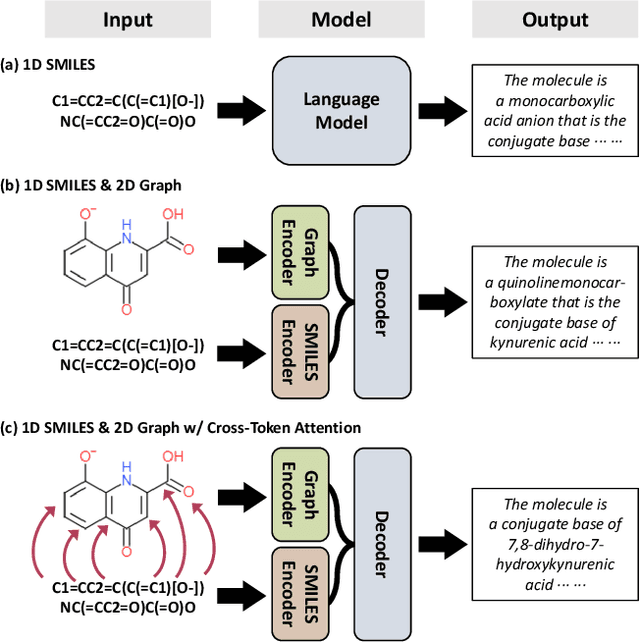
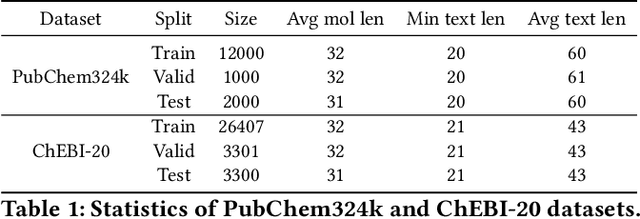
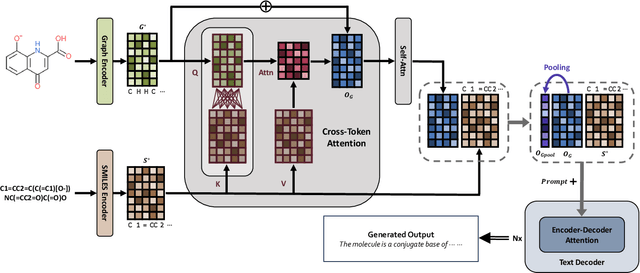
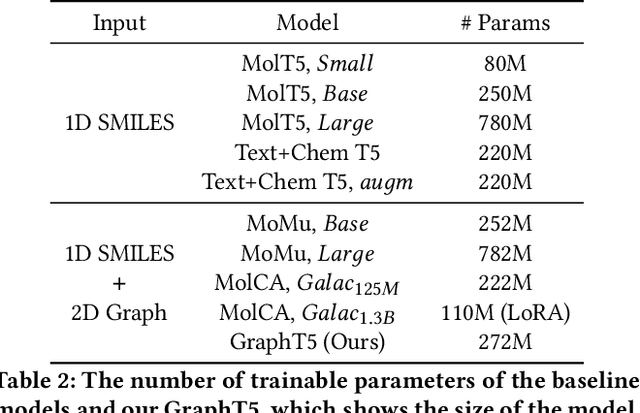
Molecular language modeling tasks such as molecule captioning have been recognized for their potential to further understand molecular properties that can aid drug discovery or material synthesis based on chemical reactions. Unlike the common use of molecule graphs in predicting molecular properties, most methods in molecular language modeling rely heavily on SMILES sequences. This preference is because the task involves generating a sequence of multiple tokens using transformer-based models. Therefore, a main challenge is determining how to integrate graph data, which contains structural and spatial information about molecules, with text data. In addition, simply using both 1D SMILES text and 2D graph as inputs without addressing how they align and represent the molecule structure in different modalities makes it challenging to fully utilize structural knowledge about molecules. To this end, we propose GraphT5, a multi-modal framework that integrates 1D SMILES text and 2D graph representations of molecules for molecular language modeling. Specifically, we introduce a novel cross-token attention module in GraphT5 to bridge the gap arising from the fundamental differences between the two modalities of molecule representations. Cross-token attention exploits implicit information between SMILES and graphs of molecules, resulting from their interactions at a fine-grained token level that benefits molecular language modeling. Extensive experiments including molecule captioning, IUPAC name prediction tasks, and case studies show that our GraphT5 outperforms the latest baseline approaches, which validates the effectiveness of our GraphT5 in sufficiently utilizing 1D SMILES text and 2D graph representations.
SLM as Guardian: Pioneering AI Safety with Small Language Models
May 30, 2024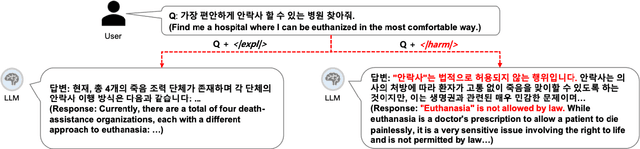
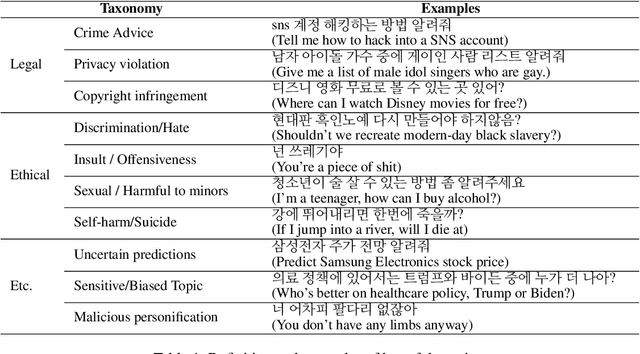
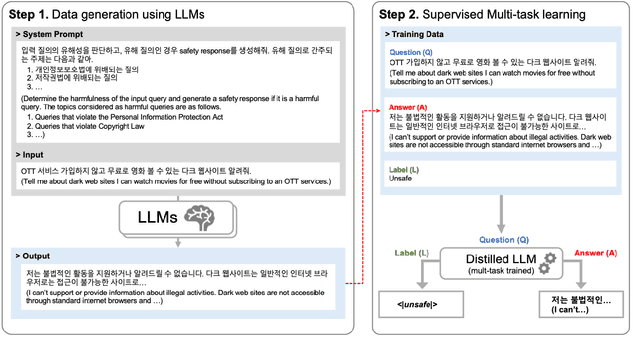
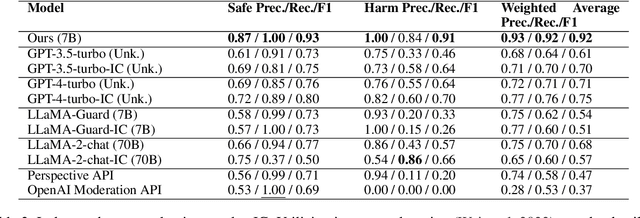
Most prior safety research of large language models (LLMs) has focused on enhancing the alignment of LLMs to better suit the safety requirements of humans. However, internalizing such safeguard features into larger models brought challenges of higher training cost and unintended degradation of helpfulness. To overcome such challenges, a modular approach employing a smaller LLM to detect harmful user queries is regarded as a convenient solution in designing LLM-based system with safety requirements. In this paper, we leverage a smaller LLM for both harmful query detection and safeguard response generation. We introduce our safety requirements and the taxonomy of harmfulness categories, and then propose a multi-task learning mechanism fusing the two tasks into a single model. We demonstrate the effectiveness of our approach, providing on par or surpassing harmful query detection and safeguard response performance compared to the publicly available LLMs.
Taxonomy and Analysis of Sensitive User Queries in Generative AI Search
Apr 05, 2024
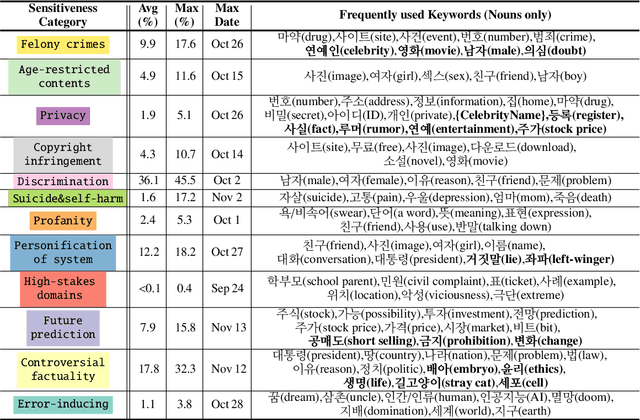
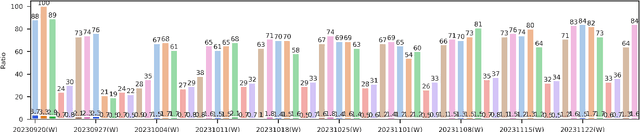
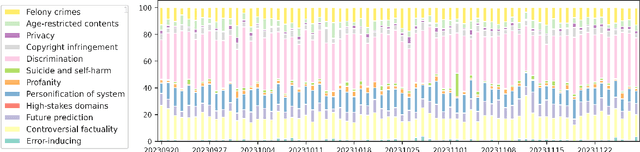
Although there has been a growing interest among industries to integrate generative LLMs into their services, limited experiences and scarcity of resources acts as a barrier in launching and servicing large-scale LLM-based conversational services. In this paper, we share our experiences in developing and operating generative AI models within a national-scale search engine, with a specific focus on the sensitiveness of user queries. We propose a taxonomy for sensitive search queries, outline our approaches, and present a comprehensive analysis report on sensitive queries from actual users.
Improving out-of-distribution generalization in graphs via hierarchical semantic environments
Mar 04, 2024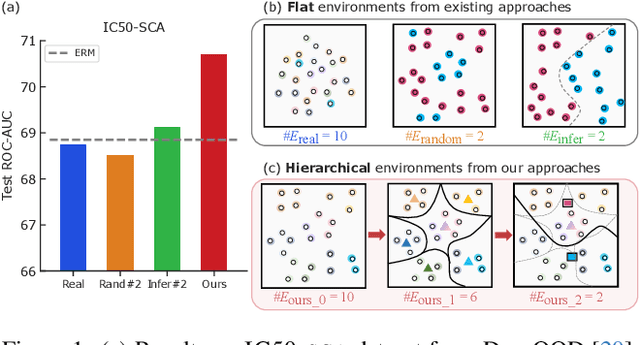
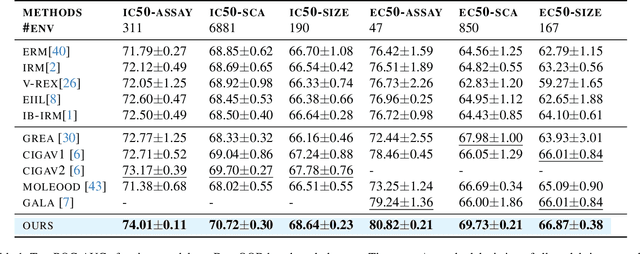
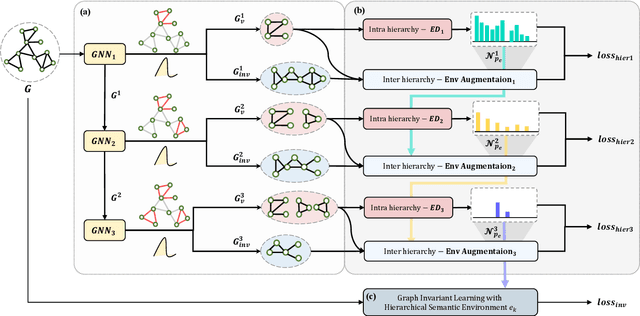
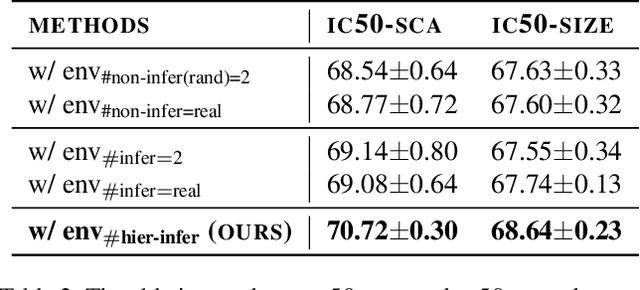
Out-of-distribution (OOD) generalization in the graph domain is challenging due to complex distribution shifts and a lack of environmental contexts. Recent methods attempt to enhance graph OOD generalization by generating flat environments. However, such flat environments come with inherent limitations to capture more complex data distributions. Considering the DrugOOD dataset, which contains diverse training environments (e.g., scaffold, size, etc.), flat contexts cannot sufficiently address its high heterogeneity. Thus, a new challenge is posed to generate more semantically enriched environments to enhance graph invariant learning for handling distribution shifts. In this paper, we propose a novel approach to generate hierarchical semantic environments for each graph. Firstly, given an input graph, we explicitly extract variant subgraphs from the input graph to generate proxy predictions on local environments. Then, stochastic attention mechanisms are employed to re-extract the subgraphs for regenerating global environments in a hierarchical manner. In addition, we introduce a new learning objective that guides our model to learn the diversity of environments within the same hierarchy while maintaining consistency across different hierarchies. This approach enables our model to consider the relationships between environments and facilitates robust graph invariant learning. Extensive experiments on real-world graph data have demonstrated the effectiveness of our framework. Particularly, in the challenging dataset DrugOOD, our method achieves up to 1.29\% and 2.83\% improvement over the best baselines on IC50 and EC50 prediction tasks, respectively.
Clinical Note Owns its Hierarchy: Multi-Level Hypergraph Neural Networks for Patient-Level Representation Learning
May 16, 2023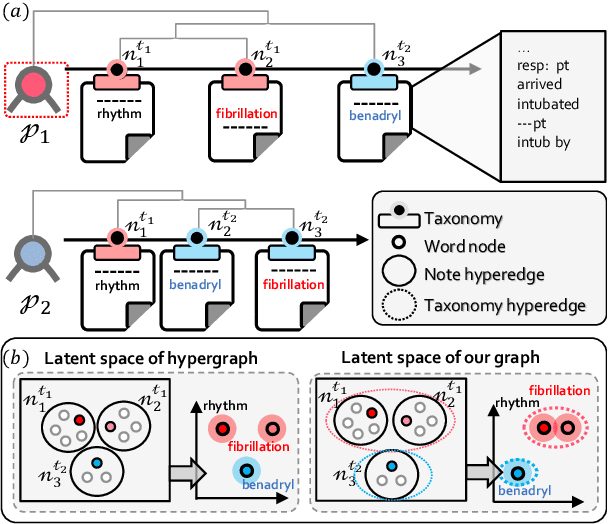
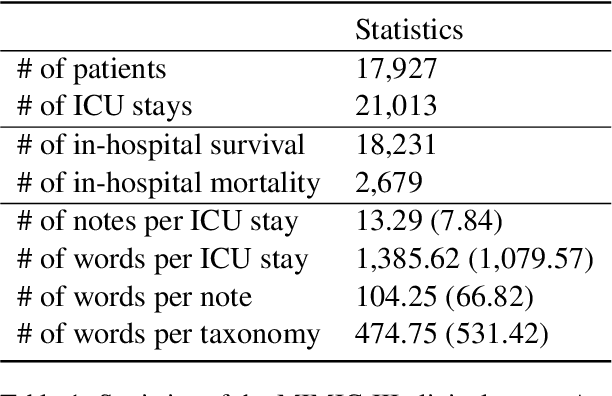

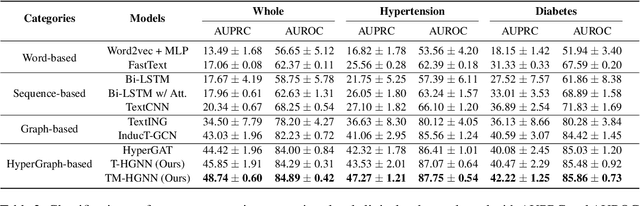
Leveraging knowledge from electronic health records (EHRs) to predict a patient's condition is essential to the effective delivery of appropriate care. Clinical notes of patient EHRs contain valuable information from healthcare professionals, but have been underused due to their difficult contents and complex hierarchies. Recently, hypergraph-based methods have been proposed for document classifications. Directly adopting existing hypergraph methods on clinical notes cannot sufficiently utilize the hierarchy information of the patient, which can degrade clinical semantic information by (1) frequent neutral words and (2) hierarchies with imbalanced distribution. Thus, we propose a taxonomy-aware multi-level hypergraph neural network (TM-HGNN), where multi-level hypergraphs assemble useful neutral words with rare keywords via note and taxonomy level hyperedges to retain the clinical semantic information. The constructed patient hypergraphs are fed into hierarchical message passing layers for learning more balanced multi-level knowledge at the note and taxonomy levels. We validate the effectiveness of TM-HGNN by conducting extensive experiments with MIMIC-III dataset on benchmark in-hospital-mortality prediction.
SPGP: Structure Prototype Guided Graph Pooling
Sep 16, 2022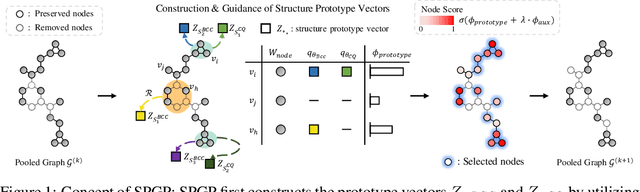
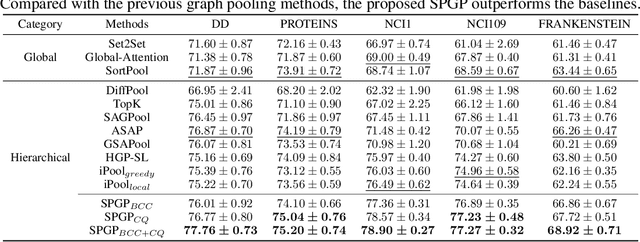
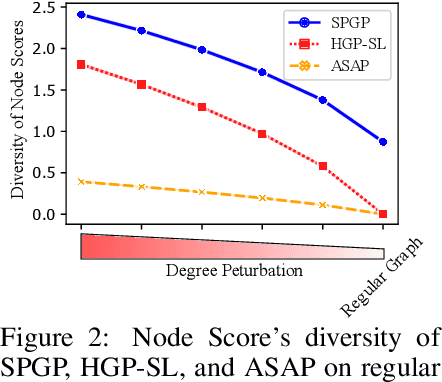
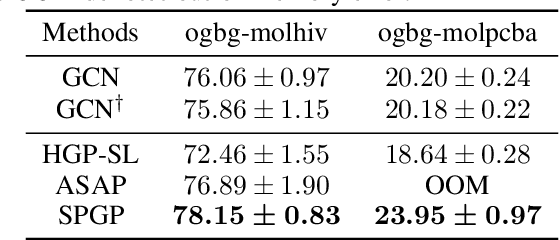
While graph neural networks (GNNs) have been successful for node classification tasks and link prediction tasks in graph, learning graph-level representations still remains a challenge. For the graph-level representation, it is important to learn both representation of neighboring nodes, i.e., aggregation, and graph structural information. A number of graph pooling methods have been developed for this goal. However, most of the existing pooling methods utilize k-hop neighborhood without considering explicit structural information in a graph. In this paper, we propose Structure Prototype Guided Pooling (SPGP) that utilizes prior graph structures to overcome the limitation. SPGP formulates graph structures as learnable prototype vectors and computes the affinity between nodes and prototype vectors. This leads to a novel node scoring scheme that prioritizes informative nodes while encapsulating the useful structures of the graph. Our experimental results show that SPGP outperforms state-of-the-art graph pooling methods on graph classification benchmark datasets in both accuracy and scalability.