 Add to Chrome
 Add to Firefox
 Add to Edge
How Compliant is Sepsis Treatment? An Expert-Guided Neuro-symbolic Pipeline for Generating Clinical Compliance Insights
Aug 12, 2026
Verifying whether clinical care follows evidence-based protocols is a natural neuro-symbolic problem, yet the safety-critical setting defeats either paradigm alone. We present an expert-guided pipeline that constrains a large language model strictly to semantic normalization, mapping messy drug and microbiology strings onto a fixed clinical vocabulary, while a Sugeno fuzzy inference system reasons over the normalized events. The fuzzy layer encodes eight Surviving Sepsis Campaign bundle rules and replaces binary judgments with graded scores in [0,1]. Applied to 2,438 MIMIC-IV v3.1 sepsis episodes, it surfaces antibiotic timing as the most critical breakdown (mean 0.24, 13% within one hour), Hour-1 underperformance (mean 36.7%), a 51% elevated-lactate drop-off, and descriptive differences in ICU stay across compliance groups (3.8 versus 5.1 days).

Find Before You Fine-Tune: A Diagnostic Study of Small LLMs for Cybersecurity QA
Jul 21, 2026Large Language Models (LLMs) are increasingly fine-tuned for critical-domain Question-Answering (QA), yet choosing which small model to adapt, before paying the cost of adaptation, remains difficult. Fine-tuning can improve domain alignment, but it may also erode prior knowledge, weaken instruction-following, or increase hallucination, especially when labeled data are scarce or rapidly evolving as in cybersecurity. We present FiT (Find before Fine-Tune), a task-oriented diagnostic framework that characterizes small LLMs along three capabilities required for cybersecurity QA: vocabulary recognition, parametric knowledge, and contextualization of retrieved information. Using FiT, we conduct an empirical study of five open-weight 7-billion-parameter models under two fine-tuning regimes. We find that fine-tuning does not uniformly help: it consistently degrades vocabulary and parametric knowledge in small models, and the two regimes trade off differently. Knowledge-focused tuning causes moderate, rank-preserving degradation, whereas instruction-focused tuning collapses measured knowledge through induced abstention, inverting the knowledge ranking while leaving retrieval-grounded contextualization essentially intact. We quantify these regime-specific patterns with rank-correlation analysis and show that pre-fine-tuning FiT scores anticipate the direction of post-tuning change. Our results suggest that task-oriented diagnosis can screen out unsuitable models, avoid unnecessary fine-tuning, and support safer deployment of small LLMs in cybersecurity QA pipelines.
UAT-LITE: Inference-Time Uncertainty-Aware Attention for Pretrained Transformers
Feb 03, 2026Neural NLP models are often miscalibrated, assigning high confidence to incorrect predictions, which undermines selective prediction and high-stakes deployment. Post-hoc calibration methods adjust output probabilities but leave internal computation unchanged, while ensemble and Bayesian approaches improve uncertainty at substantial training or storage cost. We propose UAT-LITE, an inference-time framework that makes self-attention uncertainty-aware using approximate Bayesian inference via Monte Carlo dropout in pretrained transformer classifiers. Token-level epistemic uncertainty is estimated from stochastic forward passes and used to modulate self-attention during contextualization, without modifying pretrained weights or training objectives. We additionally introduce a layerwise variance decomposition to diagnose how predictive uncertainty accumulates across transformer depth. Across the SQuAD 2.0 answerability, MNLI, and SST-2, UAT-LITE reduces Expected Calibration Error by approximately 20% on average relative to a fine-tuned BERT-base baseline while preserving task accuracy, and improves selective prediction and robustness under distribution shift.
Towards a HIPAA Compliant Agentic AI System in Healthcare
Apr 24, 2025Agentic AI systems powered by Large Language Models (LLMs) as their foundational reasoning engine, are transforming clinical workflows such as medical report generation and clinical summarization by autonomously analyzing sensitive healthcare data and executing decisions with minimal human oversight. However, their adoption demands strict compliance with regulatory frameworks such as Health Insurance Portability and Accountability Act (HIPAA), particularly when handling Protected Health Information (PHI). This work-in-progress paper introduces a HIPAA-compliant Agentic AI framework that enforces regulatory compliance through dynamic, context-aware policy enforcement. Our framework integrates three core mechanisms: (1) Attribute-Based Access Control (ABAC) for granular PHI governance, (2) a hybrid PHI sanitization pipeline combining regex patterns and BERT-based model to minimize leakage, and (3) immutable audit trails for compliance verification.
CLINICSUM: Utilizing Language Models for Generating Clinical Summaries from Patient-Doctor Conversations
Dec 05, 2024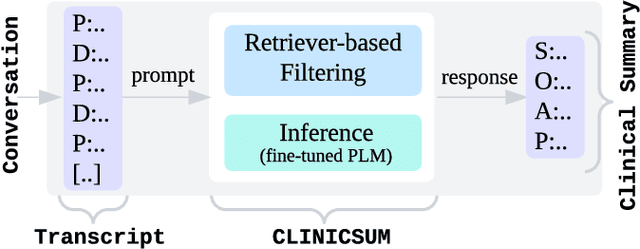
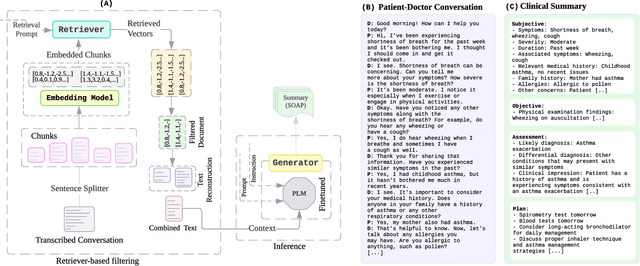
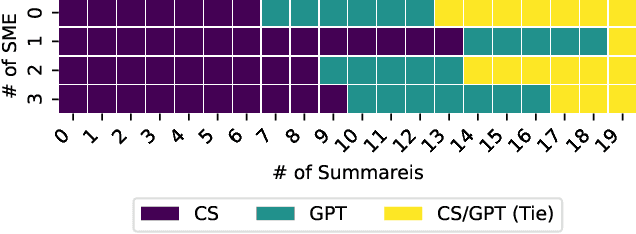
This paper presents ClinicSum, a novel framework designed to automatically generate clinical summaries from patient-doctor conversations. It utilizes a two-module architecture: a retrieval-based filtering module that extracts Subjective, Objective, Assessment, and Plan (SOAP) information from conversation transcripts, and an inference module powered by fine-tuned Pre-trained Language Models (PLMs), which leverage the extracted SOAP data to generate abstracted clinical summaries. To fine-tune the PLM, we created a training dataset of consisting 1,473 conversations-summaries pair by consolidating two publicly available datasets, FigShare and MTS-Dialog, with ground truth summaries validated by Subject Matter Experts (SMEs). ClinicSum's effectiveness is evaluated through both automatic metrics (e.g., ROUGE, BERTScore) and expert human assessments. Results show that ClinicSum outperforms state-of-the-art PLMs, demonstrating superior precision, recall, and F-1 scores in automatic evaluations and receiving high preference from SMEs in human assessment, making it a robust solution for automated clinical summarization.
IRSKG: Unified Intrusion Response System Knowledge Graph Ontology for Cyber Defense
Nov 23, 2024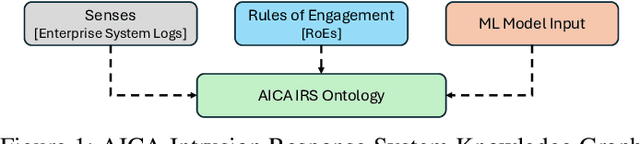
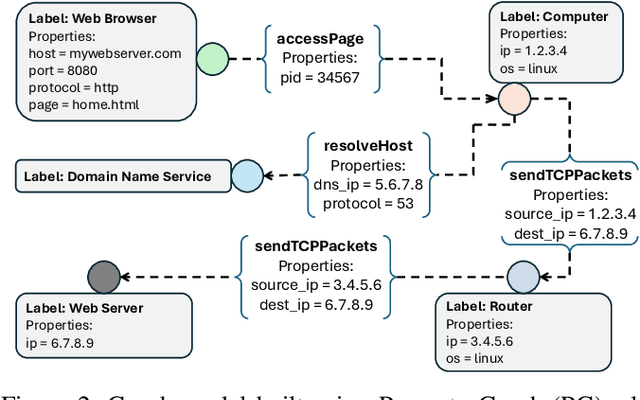


Cyberattacks are becoming increasingly difficult to detect and prevent due to their sophistication. In response, Autonomous Intelligent Cyber-defense Agents (AICAs) are emerging as crucial solutions. One prominent AICA agent is the Intrusion Response System (IRS), which is critical for mitigating threats after detection. IRS uses several Tactics, Techniques, and Procedures (TTPs) to mitigate attacks and restore the infrastructure to normal operations. Continuous monitoring of the enterprise infrastructure is an essential TTP the IRS uses. However, each system serves different purposes to meet operational needs. Integrating these disparate sources for continuous monitoring increases pre-processing complexity and limits automation, eventually prolonging critical response time for attackers to exploit. We propose a unified IRS Knowledge Graph ontology (IRSKG) that streamlines the onboarding of new enterprise systems as a source for the AICAs. Our ontology can capture system monitoring logs and supplemental data, such as a rules repository containing the administrator-defined policies to dictate the IRS responses. Besides, our ontology permits us to incorporate dynamic changes to adapt to the evolving cyber-threat landscape. This robust yet concise design allows machine learning models to train effectively and recover a compromised system to its desired state autonomously with explainability.
A Survey on Privacy Attacks Against Digital Twin Systems in AI-Robotics
Jun 27, 2024

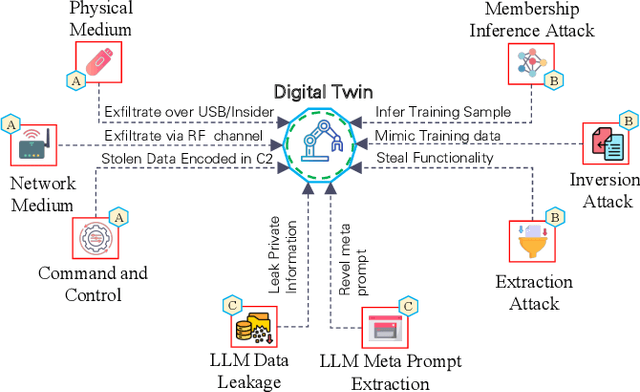
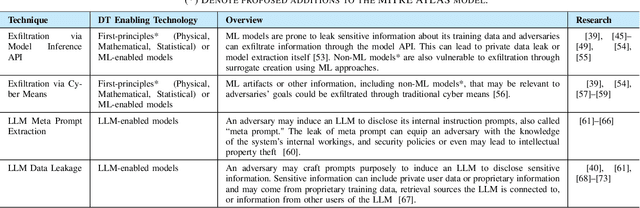
Industry 4.0 has witnessed the rise of complex robots fueled by the integration of Artificial Intelligence/Machine Learning (AI/ML) and Digital Twin (DT) technologies. While these technologies offer numerous benefits, they also introduce potential privacy and security risks. This paper surveys privacy attacks targeting robots enabled by AI and DT models. Exfiltration and data leakage of ML models are discussed in addition to the potential extraction of models derived from first-principles (e.g., physics-based). We also discuss design considerations with DT-integrated robotics touching on the impact of ML model training, responsible AI and DT safeguards, data governance and ethical considerations on the effectiveness of these attacks. We advocate for a trusted autonomy approach, emphasizing the need to combine robotics, AI, and DT technologies with robust ethical frameworks and trustworthiness principles for secure and reliable AI robotic systems.
From Questions to Insightful Answers: Building an Informed Chatbot for University Resources
May 13, 2024


This paper presents BARKPLUG V.2, a Large Language Model (LLM)-based chatbot system built using Retrieval Augmented Generation (RAG) pipelines to enhance the user experience and access to information within academic settings.The objective of BARKPLUG V.2 is to provide information to users about various campus resources, including academic departments, programs, campus facilities, and student resources at a university setting in an interactive fashion. Our system leverages university data as an external data corpus and ingests it into our RAG pipelines for domain-specific question-answering tasks. We evaluate the effectiveness of our system in generating accurate and pertinent responses for Mississippi State University, as a case study, using quantitative measures, employing frameworks such as Retrieval Augmented Generation Assessment(RAGAS). Furthermore, we evaluate the usability of this system via subjective satisfaction surveys using the System Usability Scale (SUS). Our system demonstrates impressive quantitative performance, with a mean RAGAS score of 0.96, and experience, as validated by usability assessments.
MedInsight: A Multi-Source Context Augmentation Framework for Generating Patient-Centric Medical Responses using Large Language Models
Mar 13, 2024
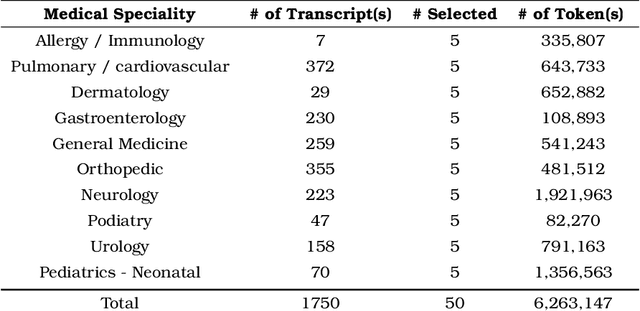
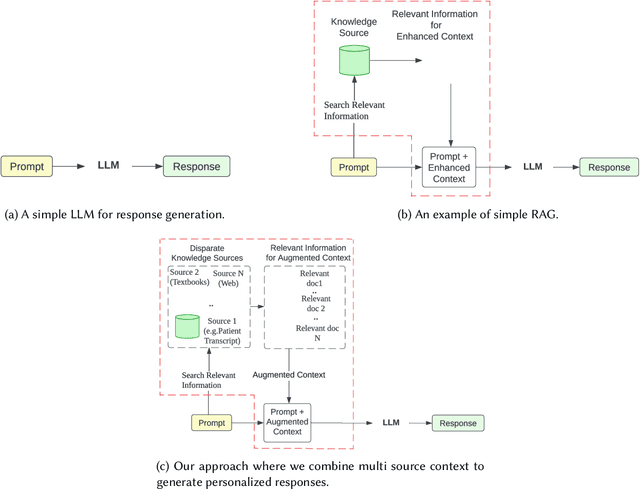
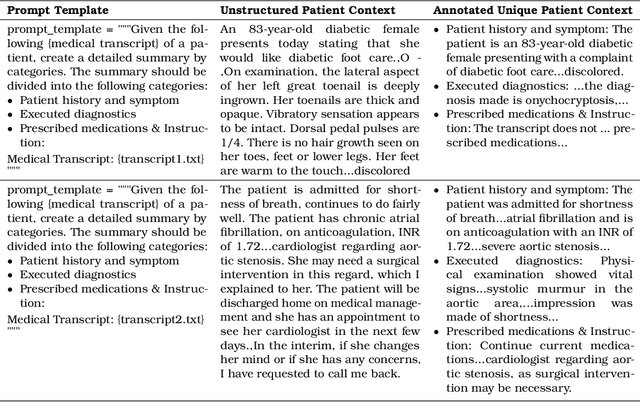
Large Language Models (LLMs) have shown impressive capabilities in generating human-like responses. However, their lack of domain-specific knowledge limits their applicability in healthcare settings, where contextual and comprehensive responses are vital. To address this challenge and enable the generation of patient-centric responses that are contextually relevant and comprehensive, we propose MedInsight:a novel retrieval augmented framework that augments LLM inputs (prompts) with relevant background information from multiple sources. MedInsight extracts pertinent details from the patient's medical record or consultation transcript. It then integrates information from authoritative medical textbooks and curated web resources based on the patient's health history and condition. By constructing an augmented context combining the patient's record with relevant medical knowledge, MedInsight generates enriched, patient-specific responses tailored for healthcare applications such as diagnosis, treatment recommendations, or patient education. Experiments on the MTSamples dataset validate MedInsight's effectiveness in generating contextually appropriate medical responses. Quantitative evaluation using the Ragas metric and TruLens for answer similarity and answer correctness demonstrates the model's efficacy. Furthermore, human evaluation studies involving Subject Matter Expert (SMEs) confirm MedInsight's utility, with moderate inter-rater agreement on the relevance and correctness of the generated responses.
Patient-Centric Knowledge Graphs: A Survey of Current Methods, Challenges, and Applications
Feb 20, 2024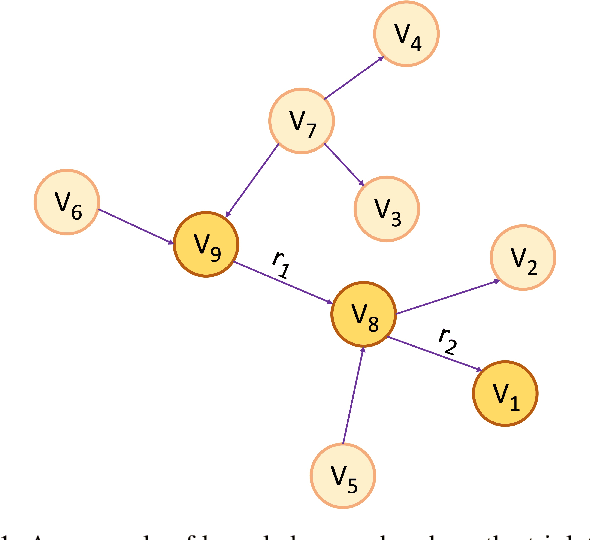
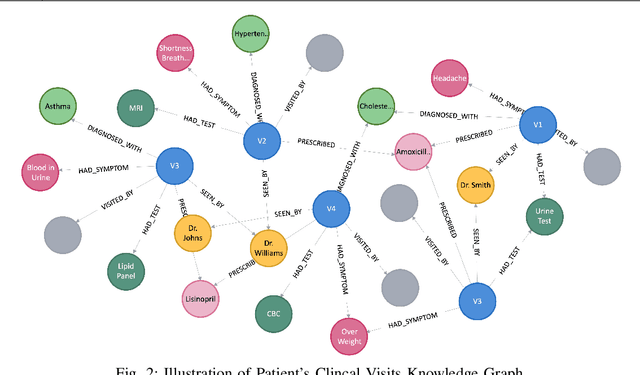
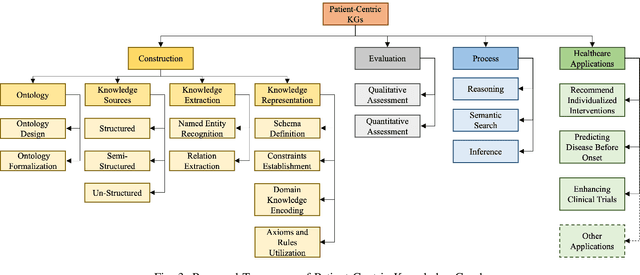
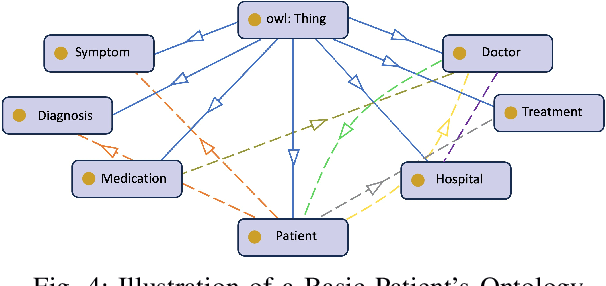
Patient-Centric Knowledge Graphs (PCKGs) represent an important shift in healthcare that focuses on individualized patient care by mapping the patient's health information in a holistic and multi-dimensional way. PCKGs integrate various types of health data to provide healthcare professionals with a comprehensive understanding of a patient's health, enabling more personalized and effective care. This literature review explores the methodologies, challenges, and opportunities associated with PCKGs, focusing on their role in integrating disparate healthcare data and enhancing patient care through a unified health perspective. In addition, this review also discusses the complexities of PCKG development, including ontology design, data integration techniques, knowledge extraction, and structured representation of knowledge. It highlights advanced techniques such as reasoning, semantic search, and inference mechanisms essential in constructing and evaluating PCKGs for actionable healthcare insights. We further explore the practical applications of PCKGs in personalized medicine, emphasizing their significance in improving disease prediction and formulating effective treatment plans. Overall, this review provides a foundational perspective on the current state-of-the-art and best practices of PCKGs, guiding future research and applications in this dynamic field.