 Add to Chrome
 Add to Firefox
 Add to Edge
Find Before You Fine-Tune: A Diagnostic Study of Small LLMs for Cybersecurity QA
Jul 21, 2026
Large Language Models (LLMs) are increasingly fine-tuned for critical-domain Question-Answering (QA), yet choosing which small model to adapt, before paying the cost of adaptation, remains difficult. Fine-tuning can improve domain alignment, but it may also erode prior knowledge, weaken instruction-following, or increase hallucination, especially when labeled data are scarce or rapidly evolving as in cybersecurity. We present FiT (Find before Fine-Tune), a task-oriented diagnostic framework that characterizes small LLMs along three capabilities required for cybersecurity QA: vocabulary recognition, parametric knowledge, and contextualization of retrieved information. Using FiT, we conduct an empirical study of five open-weight 7-billion-parameter models under two fine-tuning regimes. We find that fine-tuning does not uniformly help: it consistently degrades vocabulary and parametric knowledge in small models, and the two regimes trade off differently. Knowledge-focused tuning causes moderate, rank-preserving degradation, whereas instruction-focused tuning collapses measured knowledge through induced abstention, inverting the knowledge ranking while leaving retrieval-grounded contextualization essentially intact. We quantify these regime-specific patterns with rank-correlation analysis and show that pre-fine-tuning FiT scores anticipate the direction of post-tuning change. Our results suggest that task-oriented diagnosis can screen out unsuitable models, avoid unnecessary fine-tuning, and support safer deployment of small LLMs in cybersecurity QA pipelines.

Agentra: A Supervisable Multi-Agent Framework for Enterprise Intrusion Response
Jun 18, 2026Enterprise intrusion response still depends on static playbooks and analyst-driven triage, creating delay between alert generation and containment. We present Agentra, a supervisable multi-agent Intrusion Response System (IRS) framework that converts alerts from IDS, EDR, and XDR platforms into structured incident response plans grounded in MITRE ATT&CK, MITRE D3FEND, and NIST CSF 2.0. Agentra decomposes response reasoning across role-scoped agents, validates proposed plans through a bounded Planner--Validator review loop, screens retrieved threat intelligence through a Moderator security gateway, gates actions through an Action Catalog and risk score, and records decisions in an append-only audit log. We evaluate Agentra against a static OASIS CACAO v2.0 cyber-playbook baseline on a 120-event corpus drawn from ThreatHunter-Playbook, Splunk BOTSv3, and DARPA OpTC. The strongest configuration improves FP-aware IRS F1 from 0.61 to 0.84 and restores the projected harmful-action rate to the static baseline level of 0.0% after Planner-only configurations introduce unsafe overreaction. These results indicate that multi-agent response planning can improve ontology-grounded IRS coverage while preserving analyst approval and auditability.
Evaluating Open-Source LLMs for Multi-Label ATT&CK Technique Classification on CTI Reports
Jun 16, 2026Classifying Cyber Threat Intelligence (CTI) using MITRE Adversarial Tactics, Techniques, and Common Knowledge (ATT&CK) is essential for proactive defense, but historically required extensive human effort. Pre-Large Language Model (LLM) automation sped up this process, but could not resolve the complex language and multi-step attack patterns found in unstructured CTI reports. LLMs addressed previous limitations by using contextual reasoning to understand unstructured text. However, current evaluations rely on simplified, single-technique sentences that ignore the complexity of real-world CTI reports, which often leads to inflated performance results. Consequently, the baseline performance of open-source LLMs on complex unstructured CTI reports remains unevaluated. To address this gap, we constructed a ground-truth dataset of 2,076 human-annotated sentences (1,281 technique-positive, 795 negative) from 83 complex unstructured CTI reports. These sentences were mapped to 114 unique ATT&CK techniques using a six-phase annotation process, achieving \k{appa} = 0.68 inter-annotator agreement. Using this dataset, we evaluated seven open-source LLMs ranging from 8B to 236B parameters across prompt strategy and temperature configurations. The highest-performing LLM achieved a micro-averaged F1 score of 0.22, establishing the empirical baseline for multi-label ATT&CK classification on complex unstructured CTI. Parameter size showed a statistically significant positive correlation with F1 score. Prompt strategy and temperature produced no statistically significant gains across model configurations. These results indicate that current open-source LLMs are insufficient for production-grade ATT&CK classification. The dataset, benchmark, and findings provide a reproducible foundation for future CTI research.
On the Evaluation of Spiking Neural Network Configurations for Network Intrusion Detection
May 31, 2026Network intrusion detection is a core component of modern cybersecurity infrastructure, yet the deep learning models that dominate the field are computationally demanding, motivating interest in lightweight alternatives suited to edge and neuromorphic deployment. Spiking Neural Networks (SNNs) are therefore a natural candidate, but their design space, spanning the choice of neuron model and spike encoding scheme, remains poorly characterized for intrusion detection. We bridge this gap by using a controlled ablation study using 9 neurons coupled with 3 spike encoding schemes, making 27 variants, all implemented on snntorch evaluated over raw inputs with limited preprocessing on four benchmark datasets (NSL KDD, KDDCup99, CIC-IDS2017, and CTU-13) with 5 seeds. We find that spike encoding scheme is a better determinant for detection quality than the neuron model, where rate and delta spike encodings perform worse than latency encoding over the sweep. The LeakyParallel neuron with latency encoding performed the best overall, averaging at 92.11% accuracy and 0.80 macro- F1 at a rate of 2.01% false positives averaged over all 4 datasets, with accuracy close to perfect for CIC-IDS2017 and CTU-13, and also performed the fastest on inference. These results highlight the potential of SNNs as a viable alternative to traditional methods of intrusion detection when considering low-latency or resource-constrained deployments.
FALCON: Autonomous Cyber Threat Intelligence Mining with LLMs for IDS Rule Generation
Aug 26, 2025Signature-based Intrusion Detection Systems (IDS) detect malicious activities by matching network or host activity against predefined rules. These rules are derived from extensive Cyber Threat Intelligence (CTI), which includes attack signatures and behavioral patterns obtained through automated tools and manual threat analysis, such as sandboxing. The CTI is then transformed into actionable rules for the IDS engine, enabling real-time detection and prevention. However, the constant evolution of cyber threats necessitates frequent rule updates, which delay deployment time and weaken overall security readiness. Recent advancements in agentic systems powered by Large Language Models (LLMs) offer the potential for autonomous IDS rule generation with internal evaluation. We introduce FALCON, an autonomous agentic framework that generates deployable IDS rules from CTI data in real-time and evaluates them using built-in multi-phased validators. To demonstrate versatility, we target both network (Snort) and host-based (YARA) mediums and construct a comprehensive dataset of IDS rules with their corresponding CTIs. Our evaluations indicate FALCON excels in automatic rule generation, with an average of 95% accuracy validated by qualitative evaluation with 84% inter-rater agreement among multiple cybersecurity analysts across all metrics. These results underscore the feasibility and effectiveness of LLM-driven data mining for real-time cyber threat mitigation.
Semantic-Aware Contrastive Fine-Tuning: Boosting Multimodal Malware Classification with Discriminative Embeddings
Apr 25, 2025The rapid evolution of malware variants requires robust classification methods to enhance cybersecurity. While Large Language Models (LLMs) offer potential for generating malware descriptions to aid family classification, their utility is limited by semantic embedding overlaps and misalignment with binary behavioral features. We propose a contrastive fine-tuning (CFT) method that refines LLM embeddings via targeted selection of hard negative samples based on cosine similarity, enabling LLMs to distinguish between closely related malware families. Our approach combines high-similarity negatives to enhance discriminative power and mid-tier negatives to increase embedding diversity, optimizing both precision and generalization. Evaluated on the CIC-AndMal-2020 and BODMAS datasets, our refined embeddings are integrated into a multimodal classifier within a Model-Agnostic Meta-Learning (MAML) framework on a few-shot setting. Experiments demonstrate significant improvements: our method achieves 63.15% classification accuracy with as few as 20 samples on CIC-AndMal-2020, outperforming baselines by 11--21 percentage points and surpassing prior negative sampling strategies. Ablation studies confirm the superiority of similarity-based selection over random sampling, with gains of 10-23%. Additionally, fine-tuned LLMs generate attribute-aware descriptions that generalize to unseen variants, bridging textual and binary feature gaps. This work advances malware classification by enabling nuanced semantic distinctions and provides a scalable framework for adapting LLMs to cybersecurity challenges.
Towards a HIPAA Compliant Agentic AI System in Healthcare
Apr 24, 2025Agentic AI systems powered by Large Language Models (LLMs) as their foundational reasoning engine, are transforming clinical workflows such as medical report generation and clinical summarization by autonomously analyzing sensitive healthcare data and executing decisions with minimal human oversight. However, their adoption demands strict compliance with regulatory frameworks such as Health Insurance Portability and Accountability Act (HIPAA), particularly when handling Protected Health Information (PHI). This work-in-progress paper introduces a HIPAA-compliant Agentic AI framework that enforces regulatory compliance through dynamic, context-aware policy enforcement. Our framework integrates three core mechanisms: (1) Attribute-Based Access Control (ABAC) for granular PHI governance, (2) a hybrid PHI sanitization pipeline combining regex patterns and BERT-based model to minimize leakage, and (3) immutable audit trails for compliance verification.
CLINICSUM: Utilizing Language Models for Generating Clinical Summaries from Patient-Doctor Conversations
Dec 05, 2024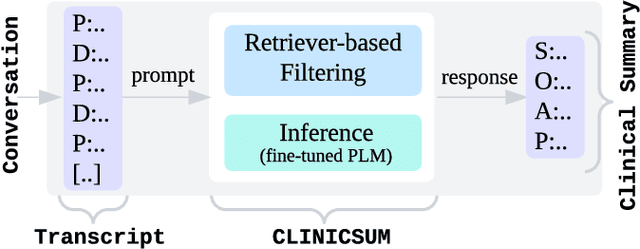
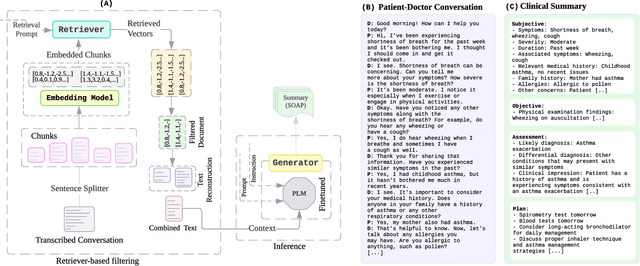
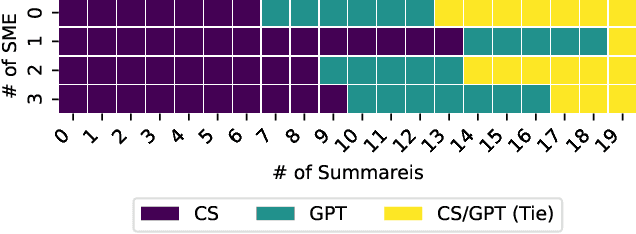
This paper presents ClinicSum, a novel framework designed to automatically generate clinical summaries from patient-doctor conversations. It utilizes a two-module architecture: a retrieval-based filtering module that extracts Subjective, Objective, Assessment, and Plan (SOAP) information from conversation transcripts, and an inference module powered by fine-tuned Pre-trained Language Models (PLMs), which leverage the extracted SOAP data to generate abstracted clinical summaries. To fine-tune the PLM, we created a training dataset of consisting 1,473 conversations-summaries pair by consolidating two publicly available datasets, FigShare and MTS-Dialog, with ground truth summaries validated by Subject Matter Experts (SMEs). ClinicSum's effectiveness is evaluated through both automatic metrics (e.g., ROUGE, BERTScore) and expert human assessments. Results show that ClinicSum outperforms state-of-the-art PLMs, demonstrating superior precision, recall, and F-1 scores in automatic evaluations and receiving high preference from SMEs in human assessment, making it a robust solution for automated clinical summarization.
IRSKG: Unified Intrusion Response System Knowledge Graph Ontology for Cyber Defense
Nov 23, 2024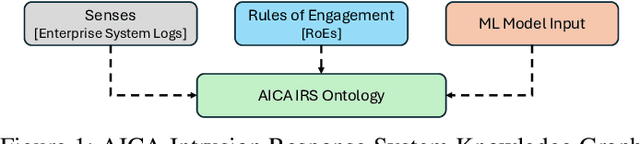
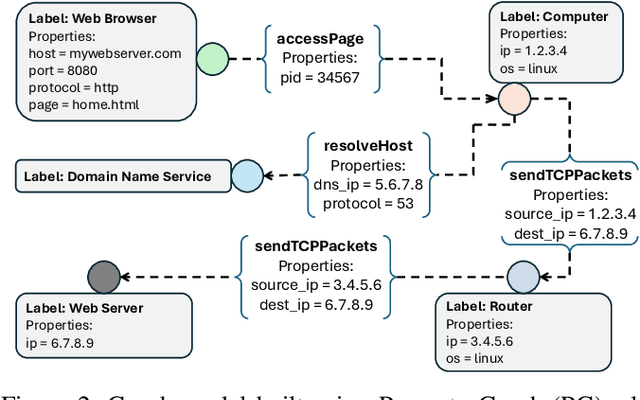


Cyberattacks are becoming increasingly difficult to detect and prevent due to their sophistication. In response, Autonomous Intelligent Cyber-defense Agents (AICAs) are emerging as crucial solutions. One prominent AICA agent is the Intrusion Response System (IRS), which is critical for mitigating threats after detection. IRS uses several Tactics, Techniques, and Procedures (TTPs) to mitigate attacks and restore the infrastructure to normal operations. Continuous monitoring of the enterprise infrastructure is an essential TTP the IRS uses. However, each system serves different purposes to meet operational needs. Integrating these disparate sources for continuous monitoring increases pre-processing complexity and limits automation, eventually prolonging critical response time for attackers to exploit. We propose a unified IRS Knowledge Graph ontology (IRSKG) that streamlines the onboarding of new enterprise systems as a source for the AICAs. Our ontology can capture system monitoring logs and supplemental data, such as a rules repository containing the administrator-defined policies to dictate the IRS responses. Besides, our ontology permits us to incorporate dynamic changes to adapt to the evolving cyber-threat landscape. This robust yet concise design allows machine learning models to train effectively and recover a compromised system to its desired state autonomously with explainability.
Transfer Learning Applied to Computer Vision Problems: Survey on Current Progress, Limitations, and Opportunities
Sep 12, 2024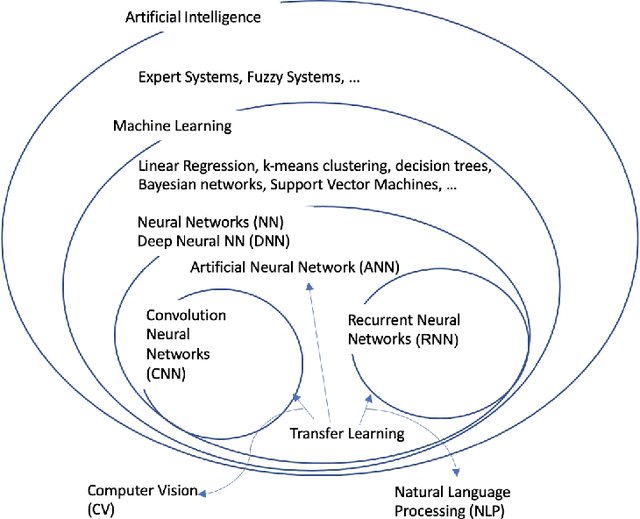

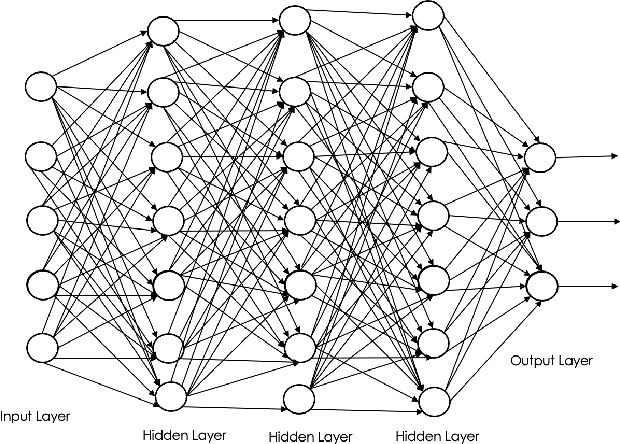

The field of Computer Vision (CV) has faced challenges. Initially, it relied on handcrafted features and rule-based algorithms, resulting in limited accuracy. The introduction of machine learning (ML) has brought progress, particularly Transfer Learning (TL), which addresses various CV problems by reusing pre-trained models. TL requires less data and computing while delivering nearly equal accuracy, making it a prominent technique in the CV landscape. Our research focuses on TL development and how CV applications use it to solve real-world problems. We discuss recent developments, limitations, and opportunities.