 Add to Chrome
 Add to Firefox
 Add to Edge
MatBind: A Shared Embedding Space for Multimodal Materials Characterization
Jul 09, 2026
Fully characterizing a crystalline material requires integrating heterogeneous data sources -- atomic structures, diffraction patterns, electronic density of states, and natural language -- each of which captures a different facet of the same physical object. In practice, however, these modalities are stored and analyzed in isolation, making it difficult to relate or query materials across representational boundaries. We present MatBind, a contrastive learning framework that aligns four materials modalities -- crystal structure, powder X-ray diffraction (pXRD) simulated from structures, density of states (DOS), and text -- into a unified embedding space using crystal structure as the central physical anchor. The framework induces alignment between modalities never explicitly paired during training, enabling emergent zero-shot cross-modal retrieval as a direct consequence of the shared representation. The learned embedding space organizes materials according to physically meaningful properties without explicit supervision, and retrieval performance improves systematically when modalities are combined at query time. These results demonstrate that treating heterogeneous materials data as complementary projections of a single physical reality, rather than as isolated data sources, is not a practical choice but is consistent with the underlying physics.

Fourier Neural Operators for Rayleigh-Bénard Convection
Jul 02, 2026We propose an improved Fourier Neural Operator (FNO) for modeling two-dimensional Rayleigh-Bénard convection by predicting time increments instead of full solutions, achieving higher accuracy than a standard FNO baseline. The resulting model is compact (314k parameters, 1.26 MB) and fast (7 ms inference), while maintaining similar accuracy as demonstrated in previous benchmarks. We show that although FNOs generalize to finer meshes, accuracy remains limited by the resolution of the training data.
* Accepted at Computational Science, ICCS 2026
Simulation-based inference for rapid Bayesian parameter estimation in epidemiological models: a comparison with MCMC
Jun 25, 2026Mechanistic epidemiological models are widely used to support infectious disease forecasting and public-health decision making. Bayesian calibration of such models is commonly performed using Markov chain Monte Carlo (MCMC), which can become computationally expensive for high-dimensional nonlinear systems and repeated near-real-time analyses. Here, we investigate simulation-based inference (SBI) using neural posterior estimation as a scalable alternative for Bayesian calibration of a mechanistic SECIR epidemiological model using COVID-19 intensive care unit (ICU) occupancy data from Germany during 2020. We compared SBI and MCMC across multiple epidemic phases using both 31-day inference windows and a substantially more challenging 201-day reconstruction problem involving multiple transmission change points. Posterior agreement was evaluated quantitatively using Wasserstein distances and Kullback-Leibler divergences together with posterior predictive checks. Across the 31-day windows, SBI recovered posterior distributions in strong agreement with MCMC while accurately reproducing observed ICU trajectories. In the 201-day setting, SBI preserved the dominant posterior structure despite increased uncertainty. SBI, by combining CPU and GPU resources, substantially reduced computational runtime compared with MCMC, which was restricted to running on CPUs. Whereas MCMC required approximately 1000 seconds for the 31-day inference problems, SBI achieved comparable posterior and predictive performance in approximately 60-70 seconds on a single GPU. For the 201-day inference problem, SBI required an average of 157 seconds, while the MCMC runs took over 19,000 seconds. Our results demonstrate that SBI provides a rapid and computationally efficient framework for Bayesian calibration of mechanistic epidemiological models, supporting repeated near-real-time inference and rapid outbreak analysis.
Machine Learning for neutron source distributions
May 12, 2026In light of the recent advancements in machine learning, we propose a novel approach to neutron source distribution estimation through the utilisation of probabilistic generative models. The estimation is based on a Monte Carlo particle list, which is only required during the training stage of the machine learning model. Once the source distribution has been learned, the model is independent of the original particle list, allowing for further sampling in an efficient, rapid, and memory-costless manner. The performance of various generative models is evaluated, including a variational autoencoder, a normalizing flow, a generative adversarial network, and a denoising diffusion model. These approaches are then compared to existing source distribution estimations, and the advantages and disadvantages of each approach are discussed. The results demonstrate that source distributions can be modeled through the use of probabilistic generative models, which paves the way for further advancements in this field.
Lossy Neural Compression for Geospatial Analytics: A Review
Mar 03, 2025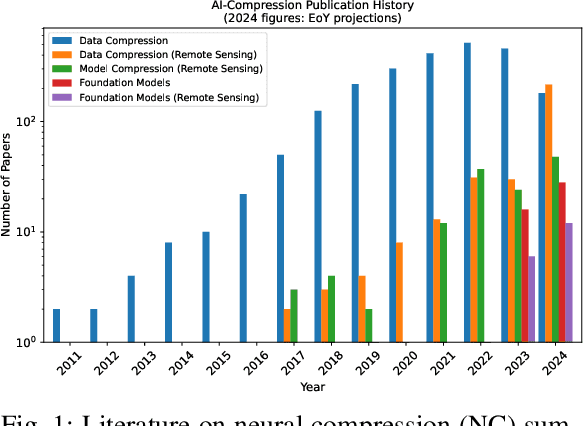
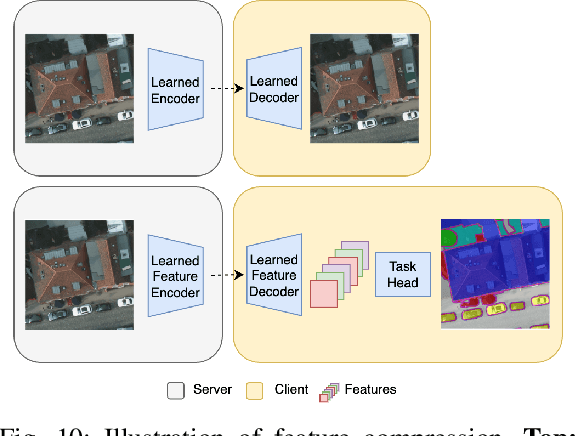
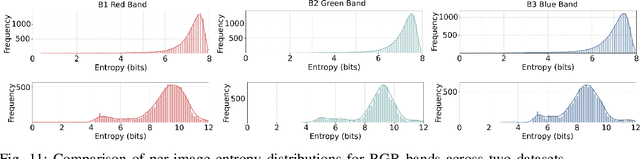
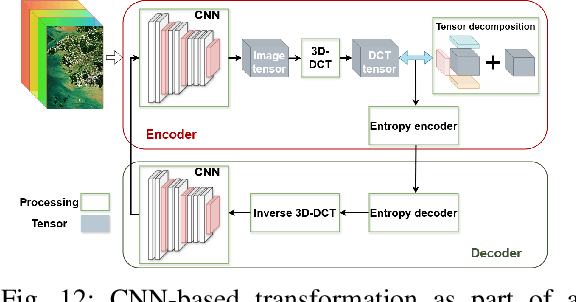
Over the past decades, there has been an explosion in the amount of available Earth Observation (EO) data. The unprecedented coverage of the Earth's surface and atmosphere by satellite imagery has resulted in large volumes of data that must be transmitted to ground stations, stored in data centers, and distributed to end users. Modern Earth System Models (ESMs) face similar challenges, operating at high spatial and temporal resolutions, producing petabytes of data per simulated day. Data compression has gained relevance over the past decade, with neural compression (NC) emerging from deep learning and information theory, making EO data and ESM outputs ideal candidates due to their abundance of unlabeled data. In this review, we outline recent developments in NC applied to geospatial data. We introduce the fundamental concepts of NC including seminal works in its traditional applications to image and video compression domains with focus on lossy compression. We discuss the unique characteristics of EO and ESM data, contrasting them with "natural images", and explain the additional challenges and opportunities they present. Moreover, we review current applications of NC across various EO modalities and explore the limited efforts in ESM compression to date. The advent of self-supervised learning (SSL) and foundation models (FM) has advanced methods to efficiently distill representations from vast unlabeled data. We connect these developments to NC for EO, highlighting the similarities between the two fields and elaborate on the potential of transferring compressed feature representations for machine--to--machine communication. Based on insights drawn from this review, we devise future directions relevant to applications in EO and ESM.
Learnable polynomial, trigonometric, and tropical activations
Feb 03, 2025This paper investigates scalable neural networks with learnable activation functions based on orthogonal function bases and tropical polynomials, targeting ImageNet-1K classification and next token prediction on OpenWebText. Traditional activations, such as ReLU, are static. In contrast, learnable activations enable the network to adapt dynamically during training. However, stability issues, such as vanishing or exploding gradients, arise with improper variance management in deeper networks. To remedy this, we propose an initialization scheme that single-handedly preserves unitary variance in transformers and convolutional networks, ensuring stable gradient flow even in deep architectures. Extensive experiments demonstrate that networks with Hermite, Fourier, and Tropical-based learnable activations significantly improve over GPT-2 and ConvNeXt networks in terms of accuracy and perplexity in train and test, highlighting the viability of learnable activations in large-scale tasks. The activation functions developed here are the subject of a library coded entirely in pure PyTorch: torchortho, available at https://github.com/K-H-Ismail/torchortho.
The Artificial Scientist -- in-transit Machine Learning of Plasma Simulations
Jan 06, 2025


Increasing HPC cluster sizes and large-scale simulations that produce petabytes of data per run, create massive IO and storage challenges for analysis. Deep learning-based techniques, in particular, make use of these amounts of domain data to extract patterns that help build scientific understanding. Here, we demonstrate a streaming workflow in which simulation data is streamed directly to a machine-learning (ML) framework, circumventing the file system bottleneck. Data is transformed in transit, asynchronously to the simulation and the training of the model. With the presented workflow, data operations can be performed in common and easy-to-use programming languages, freeing the application user from adapting the application output routines. As a proof-of-concept we consider a GPU accelerated particle-in-cell (PIConGPU) simulation of the Kelvin- Helmholtz instability (KHI). We employ experience replay to avoid catastrophic forgetting in learning from this non-steady process in a continual manner. We detail challenges addressed while porting and scaling to Frontier exascale system.
Scaling Image Tokenizers with Grouped Spherical Quantization
Dec 03, 2024

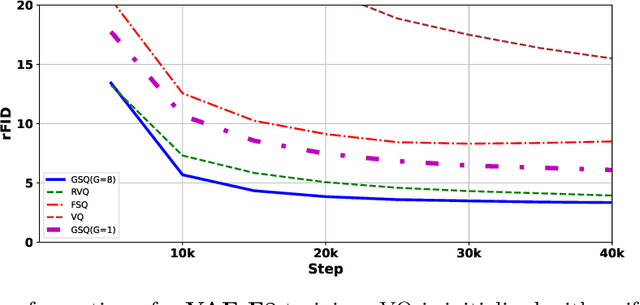

Vision tokenizers have gained a lot of attraction due to their scalability and compactness; previous works depend on old-school GAN-based hyperparameters, biased comparisons, and a lack of comprehensive analysis of the scaling behaviours. To tackle those issues, we introduce Grouped Spherical Quantization (GSQ), featuring spherical codebook initialization and lookup regularization to constrain codebook latent to a spherical surface. Our empirical analysis of image tokenizer training strategies demonstrates that GSQ-GAN achieves superior reconstruction quality over state-of-the-art methods with fewer training iterations, providing a solid foundation for scaling studies. Building on this, we systematically examine the scaling behaviours of GSQ, specifically in latent dimensionality, codebook size, and compression ratios, and their impact on model performance. Our findings reveal distinct behaviours at high and low spatial compression levels, underscoring challenges in representing high-dimensional latent spaces. We show that GSQ can restructure high-dimensional latent into compact, low-dimensional spaces, thus enabling efficient scaling with improved quality. As a result, GSQ-GAN achieves a 16x down-sampling with a reconstruction FID (rFID) of 0.50.
OneProt: Towards Multi-Modal Protein Foundation Models
Nov 07, 2024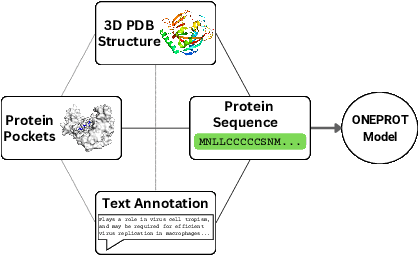
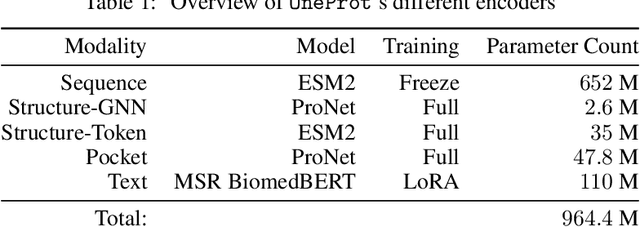
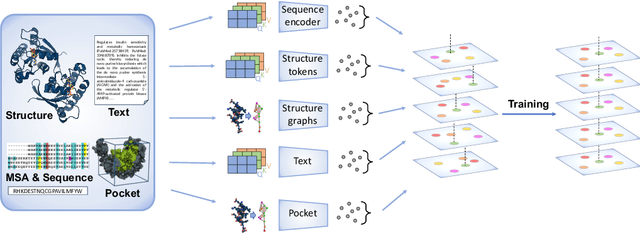
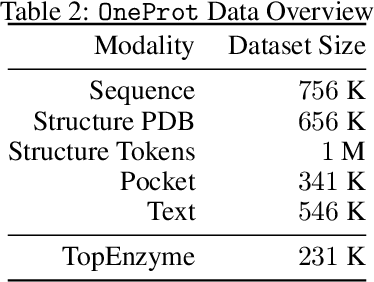
Recent AI advances have enabled multi-modal systems to model and translate diverse information spaces. Extending beyond text and vision, we introduce OneProt, a multi-modal AI for proteins that integrates structural, sequence, alignment, and binding site data. Using the ImageBind framework, OneProt aligns the latent spaces of modality encoders along protein sequences. It demonstrates strong performance in retrieval tasks and surpasses state-of-the-art methods in various downstream tasks, including metal ion binding classification, gene-ontology annotation, and enzyme function prediction. This work expands multi-modal capabilities in protein models, paving the way for applications in drug discovery, biocatalytic reaction planning, and protein engineering.
Time Transfer: On Optimal Learning Rate and Batch Size In The Infinite Data Limit
Oct 08, 2024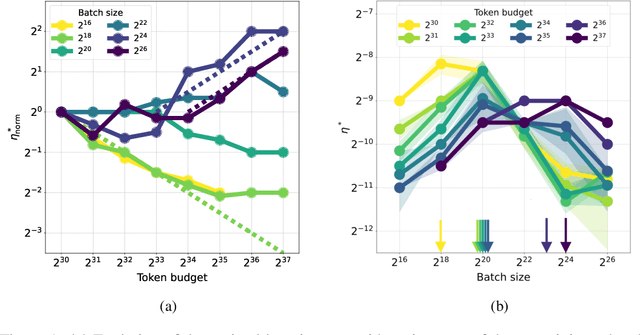
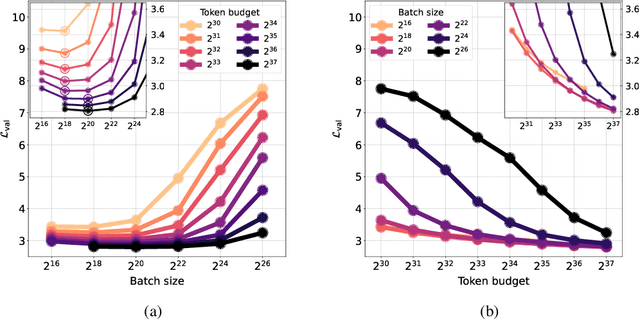
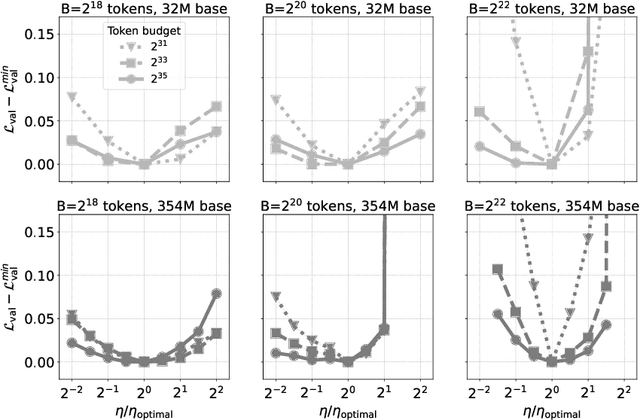
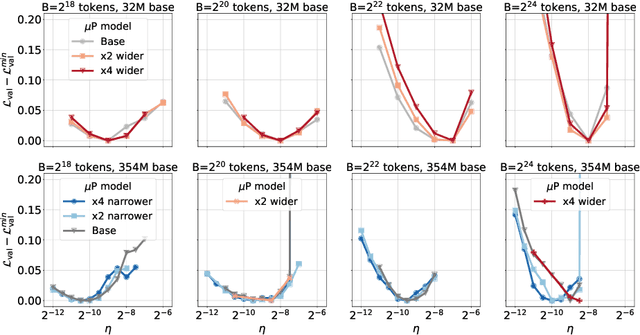
One of the main challenges in optimal scaling of large language models (LLMs) is the prohibitive cost of hyperparameter tuning, particularly learning rate $\eta$ and batch size $B$. While techniques like $\mu$P (Yang et al., 2022) provide scaling rules for optimal $\eta$ transfer in the infinite model size limit, the optimal scaling behavior in the infinite data size limit ($T \to \infty$) remains unknown. We fill in this gap by observing for the first time an interplay of three optimal $\eta$ scaling regimes: $\eta \propto \sqrt{T}$, $\eta \propto 1$, and $\eta \propto 1/\sqrt{T}$ with transitions controlled by $B$ and its relation to the time-evolving critical batch size $B_\mathrm{crit} \propto T$. Furthermore, we show that the optimal batch size is positively correlated with $B_\mathrm{crit}$: keeping it fixed becomes suboptimal over time even if learning rate is scaled optimally. Surprisingly, our results demonstrate that the observed optimal $\eta$ and $B$ dynamics are preserved with $\mu$P model scaling, challenging the conventional view of $B_\mathrm{crit}$ dependence solely on loss value. Complementing optimality, we examine the sensitivity of loss to changes in learning rate, where we find the sensitivity to decrease with $T \to \infty$ and to remain constant with $\mu$P model scaling. We hope our results make the first step towards a unified picture of the joint optimal data and model scaling.