 Add to Chrome
 Add to Firefox
 Add to Edge
Towards Precision Therapy in Hepatocellular Carcinoma: A Clinical-Reasoning LLM for Risk Stratification and Treatment Guidance
Jul 09, 2026
Hepatocellular carcinoma (HCC) is a common malignancy and a leading cause of cancer-related mortality. Current guidelines and staging systems provide coarse categories, but often miss within-stage heterogeneity and the clinical context in electronic medical records (EMRs). We present HCC-STAR (Hepatocellular Carcinoma Staging, Treatment And pRognosis), a clinically aligned large language model that reads routine EMR narratives and jointly outputs risk score-based staging, ranked guideline-consistent treatments with evidence-based rationales, and individualized survival estimates. We curated about 30,000 HCC cases from SEER and expanded them into EMR-style narrative training data using a clinician-validated, prompt-based augmentation workflow. On this corpus, we developed a knowledge-aligned reasoning framework optimized with a step-verifiable composite reward, moving beyond text-level memorization of clinical guidelines. In a multi-center cohort of 6,668 patients from 12 hospitals in China, HCC-STAR achieved state-of-the-art performance in treatment recommendation and risk stratification compared with clinical guidelines and competitive models, including GPT-5 and Gemini-2.5 Pro. Hypothetical overall-survival analysis showed a median survival of 51 months under adherence to HCC-STAR recommendations, compared with 29 and 32 months under BCLC and CNLC. In clinician-centric evaluations, blinded hepatobiliary specialists rated HCC-STAR's reasoning and evidence-based justifications as trustworthy. The model surpassed resident and attending physicians in treatment accuracy and helped physicians make more accurate decisions faster when used as an assistant. These findings support HCC-STAR as a reliable and verifiable decision-support system for risk stratification and precision therapy in HCC.

GLM-4.1V-Thinking: Towards Versatile Multimodal Reasoning with Scalable Reinforcement Learning
Jul 02, 2025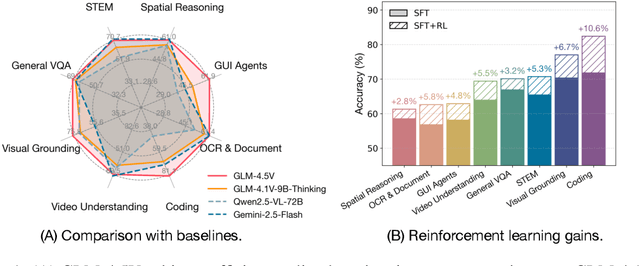
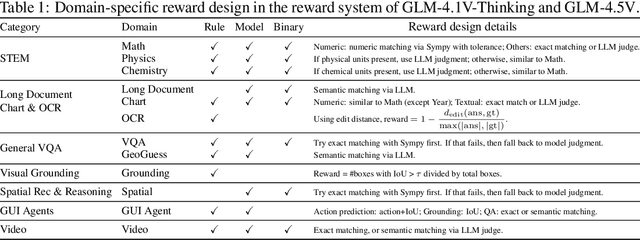
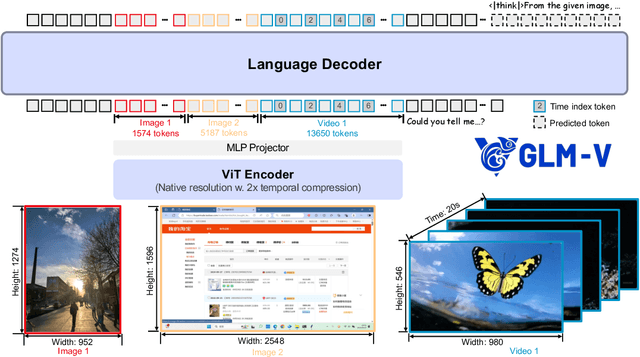
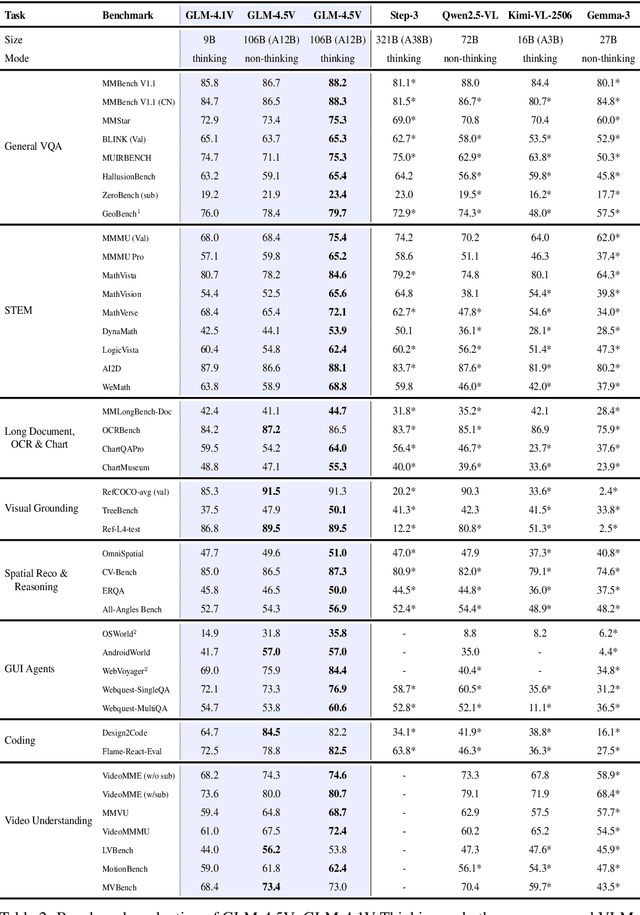
We present GLM-4.1V-Thinking, a vision-language model (VLM) designed to advance general-purpose multimodal understanding and reasoning. In this report, we share our key findings in the development of the reasoning-centric training framework. We first develop a capable vision foundation model with significant potential through large-scale pre-training, which arguably sets the upper bound for the final performance. We then propose Reinforcement Learning with Curriculum Sampling (RLCS) to unlock the full potential of the model, leading to comprehensive capability enhancement across a diverse range of tasks, including STEM problem solving, video understanding, content recognition, coding, grounding, GUI-based agents, and long document understanding. We open-source GLM-4.1V-9B-Thinking, which achieves state-of-the-art performance among models of comparable size. In a comprehensive evaluation across 28 public benchmarks, our model outperforms Qwen2.5-VL-7B on nearly all tasks and achieves comparable or even superior performance on 18 benchmarks relative to the significantly larger Qwen2.5-VL-72B. Notably, GLM-4.1V-9B-Thinking also demonstrates competitive or superior performance compared to closed-source models such as GPT-4o on challenging tasks including long document understanding and STEM reasoning, further underscoring its strong capabilities. Code, models and more information are released at https://github.com/THUDM/GLM-4.1V-Thinking.
Medical Multimodal Foundation Models in Clinical Diagnosis and Treatment: Applications, Challenges, and Future Directions
Dec 03, 2024

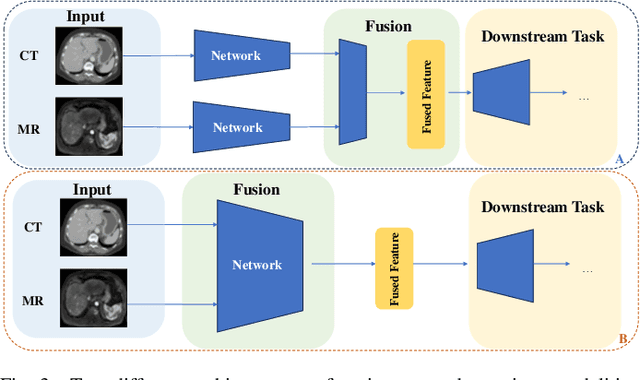
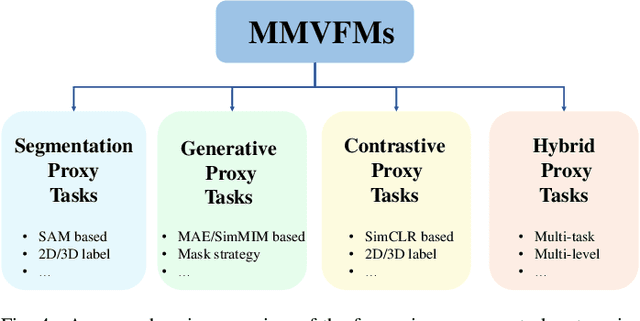
Recent advancements in deep learning have significantly revolutionized the field of clinical diagnosis and treatment, offering novel approaches to improve diagnostic precision and treatment efficacy across diverse clinical domains, thus driving the pursuit of precision medicine. The growing availability of multi-organ and multimodal datasets has accelerated the development of large-scale Medical Multimodal Foundation Models (MMFMs). These models, known for their strong generalization capabilities and rich representational power, are increasingly being adapted to address a wide range of clinical tasks, from early diagnosis to personalized treatment strategies. This review offers a comprehensive analysis of recent developments in MMFMs, focusing on three key aspects: datasets, model architectures, and clinical applications. We also explore the challenges and opportunities in optimizing multimodal representations and discuss how these advancements are shaping the future of healthcare by enabling improved patient outcomes and more efficient clinical workflows.