 Add to Chrome
 Add to Firefox
 Add to Edge
MetaKE: Meta-learning Aligned Knowledge Editing via Bi-level Optimization
Mar 16, 2026
Knowledge editing (KE) aims to precisely rectify specific knowledge in Large Language Models (LLMs) without disrupting general capabilities. State-of-the-art methods suffer from an open-loop control mismatch. We identify a critical "Semantic-Execution Disconnect": the semantic target is derived independently without feedback from the downstream's feasible region. This misalignment often causes valid semantic targets to fall within the prohibited space, resulting in gradient truncation and editing failure. To bridge this gap, we propose MetaKE (Meta-learning Aligned Knowledge Editing), a new framework that reframes KE as a bi-level optimization problem. Departing from static calculation, MetaKE treats the edit target as a learnable meta-parameter: the upper-level optimizer seeks a feasible target to maximize post-edit performance, while the lower-level solver executes the editing. To address the challenge of differentiating through complex solvers, we derive a Structural Gradient Proxy, which explicitly backpropagates editability constraints to the target learning phase. Theoretical analysis demonstrates that MetaKE automatically aligns the edit direction with the model's feasible manifold. Extensive experiments confirm that MetaKE significantly outperforms strong baselines, offering a new perspective on knowledge editing.

GAT-COBO: Cost-Sensitive Graph Neural Network for Telecom Fraud Detection
Mar 29, 2023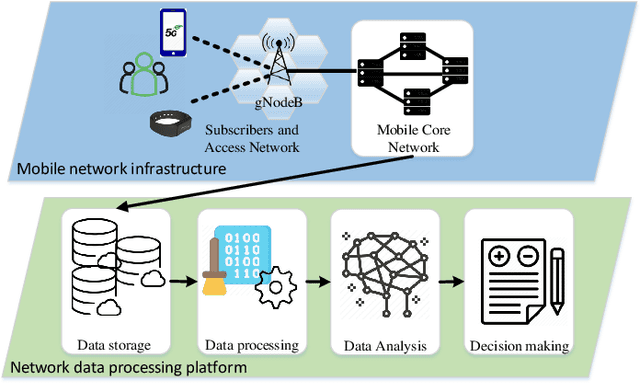
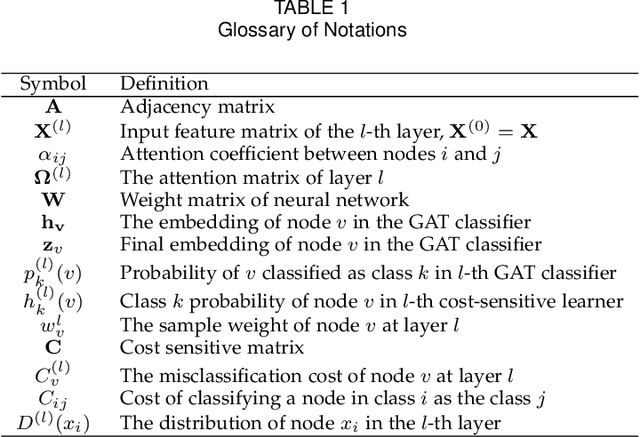
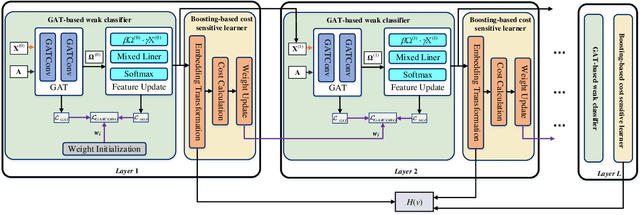
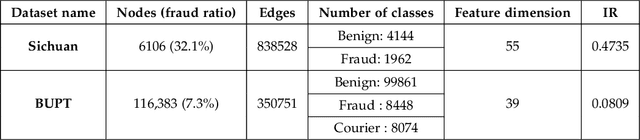
Along with the rapid evolution of mobile communication technologies, such as 5G, there has been a drastically increase in telecom fraud, which significantly dissipates individual fortune and social wealth. In recent years, graph mining techniques are gradually becoming a mainstream solution for detecting telecom fraud. However, the graph imbalance problem, caused by the Pareto principle, brings severe challenges to graph data mining. This is a new and challenging problem, but little previous work has been noticed. In this paper, we propose a Graph ATtention network with COst-sensitive BOosting (GAT-COBO) for the graph imbalance problem. First, we design a GAT-based base classifier to learn the embeddings of all nodes in the graph. Then, we feed the embeddings into a well-designed cost-sensitive learner for imbalanced learning. Next, we update the weights according to the misclassification cost to make the model focus more on the minority class. Finally, we sum the node embeddings obtained by multiple cost-sensitive learners to obtain a comprehensive node representation, which is used for the downstream anomaly detection task. Extensive experiments on two real-world telecom fraud detection datasets demonstrate that our proposed method is effective for the graph imbalance problem, outperforming the state-of-the-art GNNs and GNN-based fraud detectors. In addition, our model is also helpful for solving the widespread over-smoothing problem in GNNs. The GAT-COBO code and datasets are available at https://github.com/xxhu94/GAT-COBO.
Cost Sensitive GNN-based Imbalanced Learning for Mobile Social Network Fraud Detection
Mar 28, 2023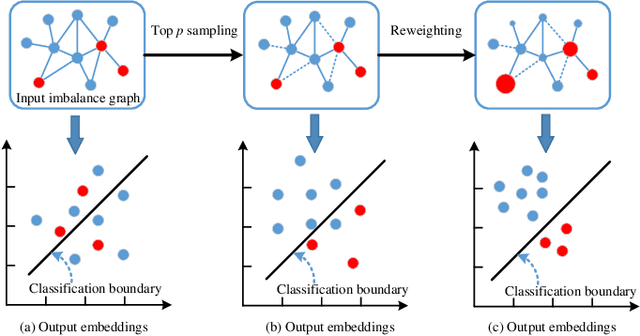

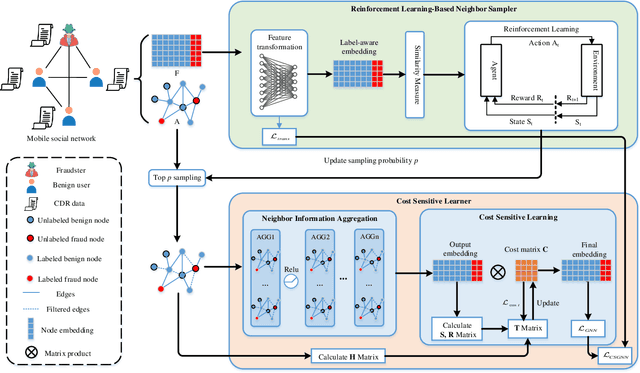

With the rapid development of mobile networks, the people's social contacts have been considerably facilitated. However, the rise of mobile social network fraud upon those networks, has caused a great deal of distress, in case of depleting personal and social wealth, then potentially doing significant economic harm. To detect fraudulent users, call detail record (CDR) data, which portrays the social behavior of users in mobile networks, has been widely utilized. But the imbalance problem in the aforementioned data, which could severely hinder the effectiveness of fraud detectors based on graph neural networks(GNN), has hardly been addressed in previous work. In this paper, we are going to present a novel Cost-Sensitive Graph Neural Network (CSGNN) by creatively combining cost-sensitive learning and graph neural networks. We conduct extensive experiments on two open-source realworld mobile network fraud datasets. The results show that CSGNN can effectively solve the graph imbalance problem and then achieve better detection performance than the state-of-the-art algorithms. We believe that our research can be applied to solve the graph imbalance problems in other fields. The CSGNN code and datasets are publicly available at https://github.com/xxhu94/CSGNN.
Large depth of range Maxwellian-viewing SMV near-eye display based on a Pancharatnam-Berry optical element
May 17, 2021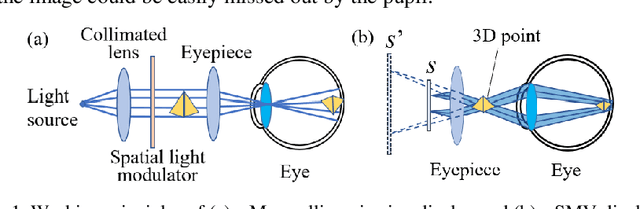
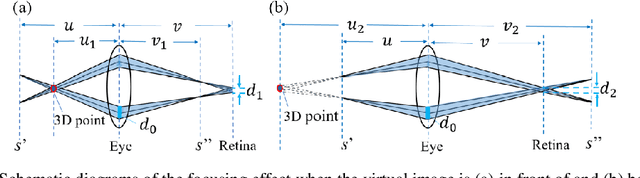
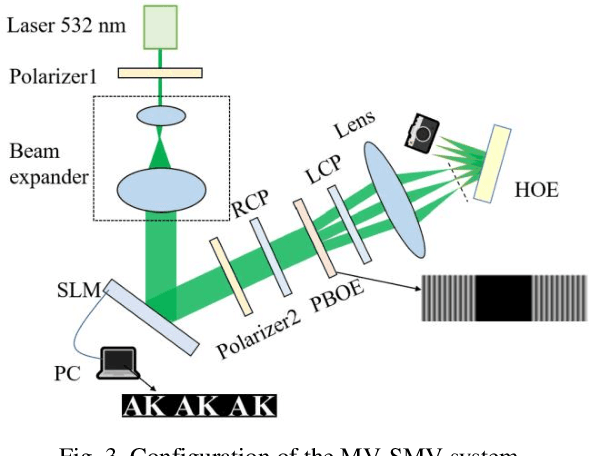
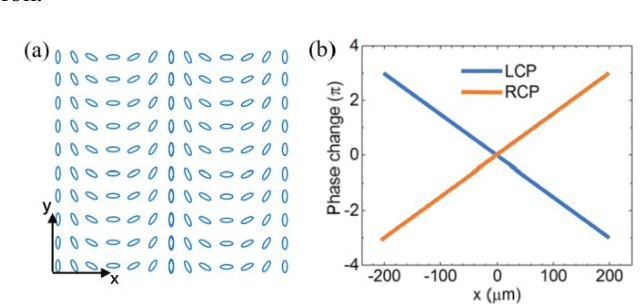
In order to overcome the accommodation and convergence (A-C) conflict that commonly causes visual fatigue in AR display, we propose a Maxwellian-viewing-super-multi-view (MV-SMV) near-eye display system based on a Pancharatnam-Berry optical element (PBOE). The PBOE, which is constituted with an array of high-efficiency polarization gratings, is implemented to direct different views to different directions simultaneously, constructing the 3D light field. Meanwhile, each view is like a Maxwellian view display that possesses a small viewpoint and a large depth of field (DOF). Hence, the MV-SMV display can display virtual images with correct accommodation depth cue within a large DOF. We implement a proof-of-concept MV-SMV display prototype with 3 x 1 and 3 x 2 viewpoints using a 1D PBOE and a 2D PBOE, respectively, and achieve a DOF of 4.37 diopters experimentally.
TSAM: Temporal Link Prediction in Directed Networks based on Self-Attention Mechanism
Aug 23, 2020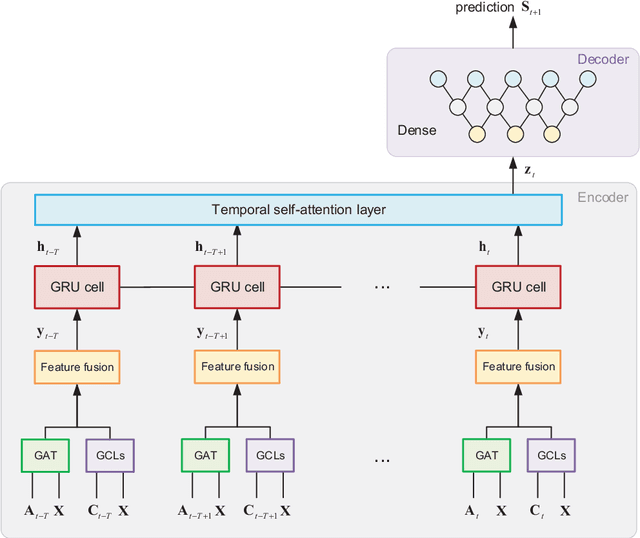
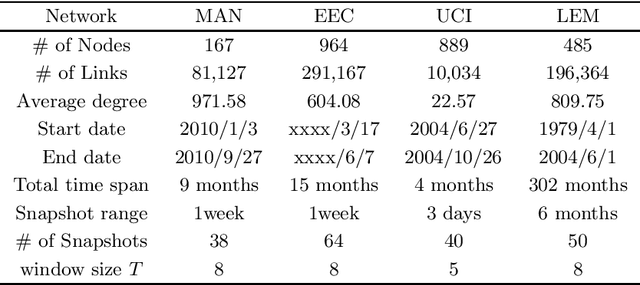
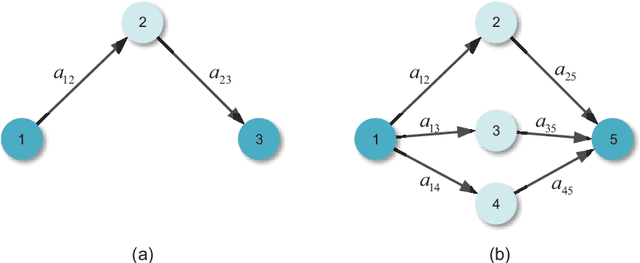
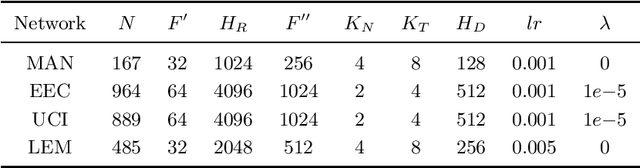
The development of graph neural networks (GCN) makes it possible to learn structural features from evolving complex networks. Even though a wide range of realistic networks are directed ones, few existing works investigated the properties of directed and temporal networks. In this paper, we address the problem of temporal link prediction in directed networks and propose a deep learning model based on GCN and self-attention mechanism, namely TSAM. The proposed model adopts an autoencoder architecture, which utilizes graph attentional layers to capture the structural feature of neighborhood nodes, as well as a set of graph convolutional layers to capture motif features. A graph recurrent unit layer with self-attention is utilized to learn temporal variations in the snapshot sequence. We run comparative experiments on four realistic networks to validate the effectiveness of TSAM. Experimental results show that TSAM outperforms most benchmarks under two evaluation metrics.