 Add to Chrome
 Add to Firefox
 Add to Edge
Towards Precision Therapy in Hepatocellular Carcinoma: A Clinical-Reasoning LLM for Risk Stratification and Treatment Guidance
Jul 09, 2026
Hepatocellular carcinoma (HCC) is a common malignancy and a leading cause of cancer-related mortality. Current guidelines and staging systems provide coarse categories, but often miss within-stage heterogeneity and the clinical context in electronic medical records (EMRs). We present HCC-STAR (Hepatocellular Carcinoma Staging, Treatment And pRognosis), a clinically aligned large language model that reads routine EMR narratives and jointly outputs risk score-based staging, ranked guideline-consistent treatments with evidence-based rationales, and individualized survival estimates. We curated about 30,000 HCC cases from SEER and expanded them into EMR-style narrative training data using a clinician-validated, prompt-based augmentation workflow. On this corpus, we developed a knowledge-aligned reasoning framework optimized with a step-verifiable composite reward, moving beyond text-level memorization of clinical guidelines. In a multi-center cohort of 6,668 patients from 12 hospitals in China, HCC-STAR achieved state-of-the-art performance in treatment recommendation and risk stratification compared with clinical guidelines and competitive models, including GPT-5 and Gemini-2.5 Pro. Hypothetical overall-survival analysis showed a median survival of 51 months under adherence to HCC-STAR recommendations, compared with 29 and 32 months under BCLC and CNLC. In clinician-centric evaluations, blinded hepatobiliary specialists rated HCC-STAR's reasoning and evidence-based justifications as trustworthy. The model surpassed resident and attending physicians in treatment accuracy and helped physicians make more accurate decisions faster when used as an assistant. These findings support HCC-STAR as a reliable and verifiable decision-support system for risk stratification and precision therapy in HCC.

AllSpark: a multimodal spatiotemporal general model
Dec 31, 2023
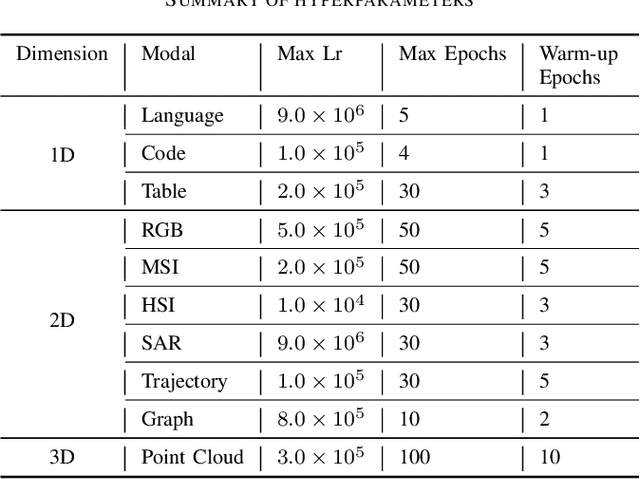

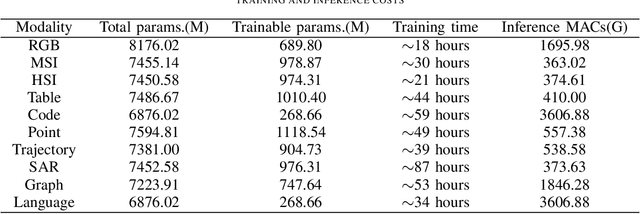
For a long time, due to the high heterogeneity in structure and semantics among various spatiotemporal modal data, the joint interpretation of multimodal spatiotemporal data has been an extremely challenging problem. The primary challenge resides in striking a trade-off between the cohesion and autonomy of diverse modalities, and this trade-off exhibits a progressively nonlinear nature as the number of modalities expands. We introduce the Language as Reference Framework (LaRF), a fundamental principle for constructing a multimodal unified model, aiming to strike a trade-off between the cohesion and autonomy among different modalities. We propose a multimodal spatiotemporal general artificial intelligence model, called AllSpark. Our model integrates thirteen different modalities into a unified framework, including 1D (text, code), 2D (RGB, infrared, SAR, multispectral, hyperspectral, tables, graphs, trajectory, oblique photography), and 3D (point clouds, videos) modalities. To achieve modal cohesion, AllSpark uniformly maps diverse modal features to the language modality. In addition, we design modality-specific prompts to guide multi-modal large language models in accurately perceiving multimodal data. To maintain modality autonomy, AllSpark introduces modality-specific encoders to extract the tokens of various spatiotemporal modalities. And modal bridge is employed to achieve dimensional projection from each modality to the language modality. Finally, observing a gap between the model's interpretation and downstream tasks, we designed task heads to enhance the model's generalization capability on specific downstream tasks. Experiments indicate that AllSpark achieves competitive accuracy in modalities such as RGB and trajectory compared to state-of-the-art models.