 Add to Chrome
 Add to Firefox
 Add to Edge
DRACULA: Hunting for the Actions Users Want Deep Research Agents to Execute
Apr 26, 2026
Scientific Deep Research (DR) agents answer user queries by synthesizing research papers into multi-section reports. User feedback can improve their utility, but existing protocols only score the final report, making it hard to study and learn which intermediate actions DR agents should take to improve reports. We collect DRACULA, the first dataset with user feedback on intermediate actions for DR. Over five weeks, nineteen expert CS researchers ask queries to a DR system that proposes actions (e.g., "Add a section on datasets"). Our users select actions they prefer, then judge whether an output report applied their selections successfully, yielding 8,103 action preferences and 5,230 execution judgments. After confirming a DR agent can execute DRACULA's actions, we study the predictability of user-preferred actions via simulation-how well LLMs predict the actions users select-a step toward learning to generate useful actions. We discover: (1) LLM judges initially struggle to predict action selections, but improve most when using a user's full selection history, rather than self-reported or extrapolated user context signals; (2) Users' selections for the same query differ based on unstated goals, bottlenecking simulation and motivating affordances that let users steer reports; and (3) Our simulation results inform an online intervention that generates new actions based on the user's past interactions, which users pick most often in follow-up studies. Overall, while work extensively studies execution, DRACULA reveals a key challenge is deciding which actions to execute in the first place. We open-source DRACULA's study design, user feedback, and simulation tasks to spur future work on action feedback for long-horizon agents.

Language Models Don't Know What You Want: Evaluating Personalization in Deep Research Needs Real Users
Mar 17, 2026Deep Research (DR) tools (e.g. OpenAI DR) help researchers cope with ballooning publishing counts. Such tools can synthesize scientific papers to answer researchers' queries, but lack understanding of their users. We change that in MyScholarQA (MySQA), a personalized DR tool that: 1) infers a profile of a user's research interests; 2) proposes personalized actions for a user's input query; and 3) writes a multi-section report for the query that follows user-approved actions. We first test MySQA with NLP's standard protocol: we design a benchmark of synthetic users and LLM judges, where MySQA beats baselines in citation metrics and personalized action-following. However, we suspect this process does not cover all aspects of personalized DR users value, so we interview users in an online version of MySQA to unmask them. We reveal nine nuanced errors of personalized DR undetectable by our LLM judges, and we study qualitative feedback to form lessons for future DR design. In all, we argue for a pillar of personalization that easy-to-use LLM judges can lead NLP to overlook: real progress in personalization is only possible with real users.
Understanding Usage and Engagement in AI-Powered Scientific Research Tools: The Asta Interaction Dataset
Feb 26, 2026AI-powered scientific research tools are rapidly being integrated into research workflows, yet the field lacks a clear lens into how researchers use these systems in real-world settings. We present and analyze the Asta Interaction Dataset, a large-scale resource comprising over 200,000 user queries and interaction logs from two deployed tools (a literature discovery interface and a scientific question-answering interface) within an LLM-powered retrieval-augmented generation platform. Using this dataset, we characterize query patterns, engagement behaviors, and how usage evolves with experience. We find that users submit longer and more complex queries than in traditional search, and treat the system as a collaborative research partner, delegating tasks such as drafting content and identifying research gaps. Users treat generated responses as persistent artifacts, revisiting and navigating among outputs and cited evidence in non-linear ways. With experience, users issue more targeted queries and engage more deeply with supporting citations, although keyword-style queries persist even among experienced users. We release the anonymized dataset and analysis with a new query intent taxonomy to inform future designs of real-world AI research assistants and to support realistic evaluation.
AstaBench: Rigorous Benchmarking of AI Agents with a Scientific Research Suite
Oct 24, 2025AI agents hold the potential to revolutionize scientific productivity by automating literature reviews, replicating experiments, analyzing data, and even proposing new directions of inquiry; indeed, there are now many such agents, ranging from general-purpose "deep research" systems to specialized science-specific agents, such as AI Scientist and AIGS. Rigorous evaluation of these agents is critical for progress. Yet existing benchmarks fall short on several fronts: they (1) fail to provide holistic, product-informed measures of real-world use cases such as science research; (2) lack reproducible agent tools necessary for a controlled comparison of core agentic capabilities; (3) do not account for confounding variables such as model cost and tool access; (4) do not provide standardized interfaces for quick agent prototyping and evaluation; and (5) lack comprehensive baseline agents necessary to identify true advances. In response, we define principles and tooling for more rigorously benchmarking agents. Using these, we present AstaBench, a suite that provides the first holistic measure of agentic ability to perform scientific research, comprising 2400+ problems spanning the entire scientific discovery process and multiple scientific domains, and including many problems inspired by actual user requests to deployed Asta agents. Our suite comes with the first scientific research environment with production-grade search tools that enable controlled, reproducible evaluation, better accounting for confounders. Alongside, we provide a comprehensive suite of nine science-optimized classes of Asta agents and numerous baselines. Our extensive evaluation of 57 agents across 22 agent classes reveals several interesting findings, most importantly that despite meaningful progress on certain individual aspects, AI remains far from solving the challenge of science research assistance.
Ai2 Scholar QA: Organized Literature Synthesis with Attribution
Apr 15, 2025Retrieval-augmented generation is increasingly effective in answering scientific questions from literature, but many state-of-the-art systems are expensive and closed-source. We introduce Ai2 Scholar QA, a free online scientific question answering application. To facilitate research, we make our entire pipeline public: as a customizable open-source Python package and interactive web app, along with paper indexes accessible through public APIs and downloadable datasets. We describe our system in detail and present experiments analyzing its key design decisions. In an evaluation on a recent scientific QA benchmark, we find that Ai2 Scholar QA outperforms competing systems.
OpenScholar: Synthesizing Scientific Literature with Retrieval-augmented LMs
Nov 21, 2024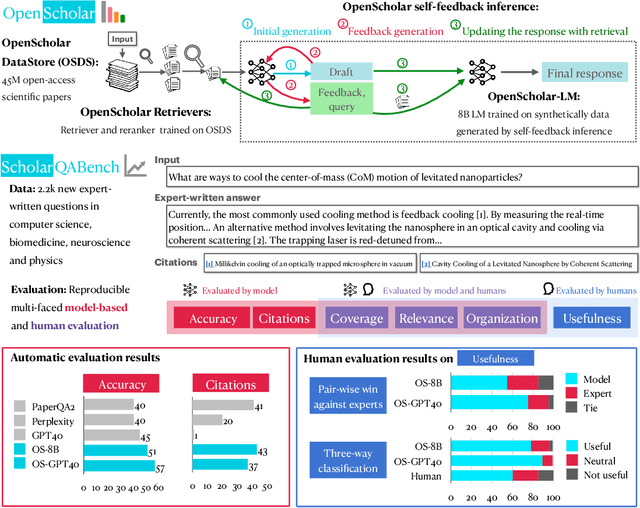


Scientific progress depends on researchers' ability to synthesize the growing body of literature. Can large language models (LMs) assist scientists in this task? We introduce OpenScholar, a specialized retrieval-augmented LM that answers scientific queries by identifying relevant passages from 45 million open-access papers and synthesizing citation-backed responses. To evaluate OpenScholar, we develop ScholarQABench, the first large-scale multi-domain benchmark for literature search, comprising 2,967 expert-written queries and 208 long-form answers across computer science, physics, neuroscience, and biomedicine. On ScholarQABench, OpenScholar-8B outperforms GPT-4o by 5% and PaperQA2 by 7% in correctness, despite being a smaller, open model. While GPT4o hallucinates citations 78 to 90% of the time, OpenScholar achieves citation accuracy on par with human experts. OpenScholar's datastore, retriever, and self-feedback inference loop also improves off-the-shelf LMs: for instance, OpenScholar-GPT4o improves GPT-4o's correctness by 12%. In human evaluations, experts preferred OpenScholar-8B and OpenScholar-GPT4o responses over expert-written ones 51% and 70% of the time, respectively, compared to GPT4o's 32%. We open-source all of our code, models, datastore, data and a public demo.
TOPICAL: TOPIC Pages AutomagicaLly
May 03, 2024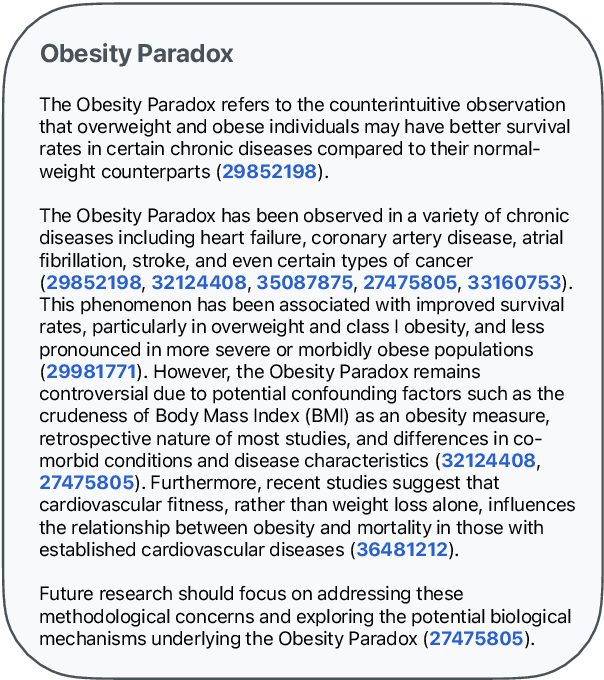
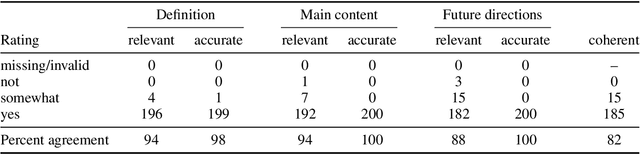
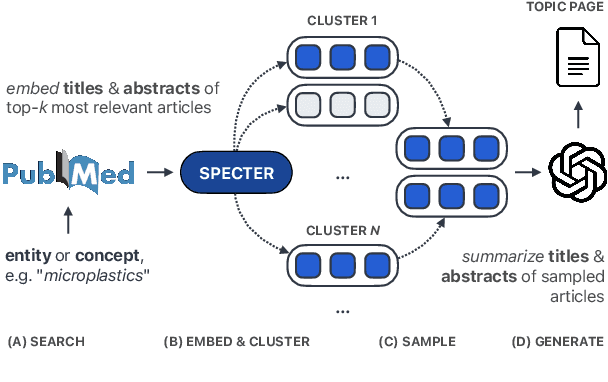
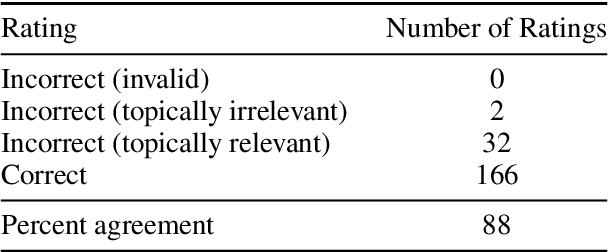
Topic pages aggregate useful information about an entity or concept into a single succinct and accessible article. Automated creation of topic pages would enable their rapid curation as information resources, providing an alternative to traditional web search. While most prior work has focused on generating topic pages about biographical entities, in this work, we develop a completely automated process to generate high-quality topic pages for scientific entities, with a focus on biomedical concepts. We release TOPICAL, a web app and associated open-source code, comprising a model pipeline combining retrieval, clustering, and prompting, that makes it easy for anyone to generate topic pages for a wide variety of biomedical entities on demand. In a human evaluation of 150 diverse topic pages generated using TOPICAL, we find that the vast majority were considered relevant, accurate, and coherent, with correct supporting citations. We make all code publicly available and host a free-to-use web app at: https://s2-topical.apps.allenai.org
On-the-fly Definition Augmentation of LLMs for Biomedical NER
Mar 29, 2024Despite their general capabilities, LLMs still struggle on biomedical NER tasks, which are difficult due to the presence of specialized terminology and lack of training data. In this work we set out to improve LLM performance on biomedical NER in limited data settings via a new knowledge augmentation approach which incorporates definitions of relevant concepts on-the-fly. During this process, to provide a test bed for knowledge augmentation, we perform a comprehensive exploration of prompting strategies. Our experiments show that definition augmentation is useful for both open source and closed LLMs. For example, it leads to a relative improvement of 15\% (on average) in GPT-4 performance (F1) across all (six) of our test datasets. We conduct extensive ablations and analyses to demonstrate that our performance improvements stem from adding relevant definitional knowledge. We find that careful prompting strategies also improve LLM performance, allowing them to outperform fine-tuned language models in few-shot settings. To facilitate future research in this direction, we release our code at https://github.com/allenai/beacon.
RCT Rejection Sampling for Causal Estimation Evaluation
Jul 27, 2023
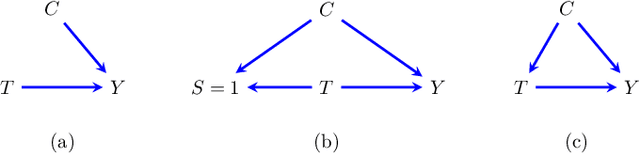


Confounding is a significant obstacle to unbiased estimation of causal effects from observational data. For settings with high-dimensional covariates -- such as text data, genomics, or the behavioral social sciences -- researchers have proposed methods to adjust for confounding by adapting machine learning methods to the goal of causal estimation. However, empirical evaluation of these adjustment methods has been challenging and limited. In this work, we build on a promising empirical evaluation strategy that simplifies evaluation design and uses real data: subsampling randomized controlled trials (RCTs) to create confounded observational datasets while using the average causal effects from the RCTs as ground-truth. We contribute a new sampling algorithm, which we call RCT rejection sampling, and provide theoretical guarantees that causal identification holds in the observational data to allow for valid comparisons to the ground-truth RCT. Using synthetic data, we show our algorithm indeed results in low bias when oracle estimators are evaluated on the confounded samples, which is not always the case for a previously proposed algorithm. In addition to this identification result, we highlight several finite data considerations for evaluation designers who plan to use RCT rejection sampling on their own datasets. As a proof of concept, we implement an example evaluation pipeline and walk through these finite data considerations with a novel, real-world RCT -- which we release publicly -- consisting of approximately 70k observations and text data as high-dimensional covariates. Together, these contributions build towards a broader agenda of improved empirical evaluation for causal estimation.
S2abEL: A Dataset for Entity Linking from Scientific Tables
Apr 30, 2023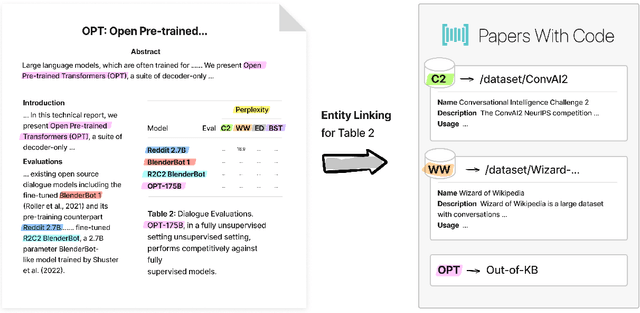
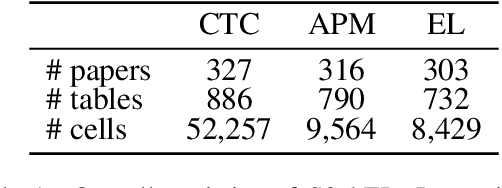
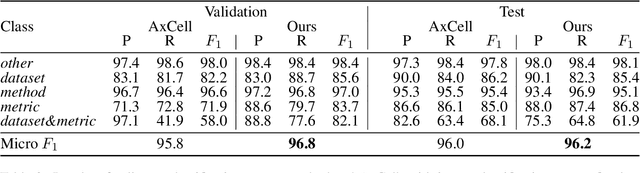
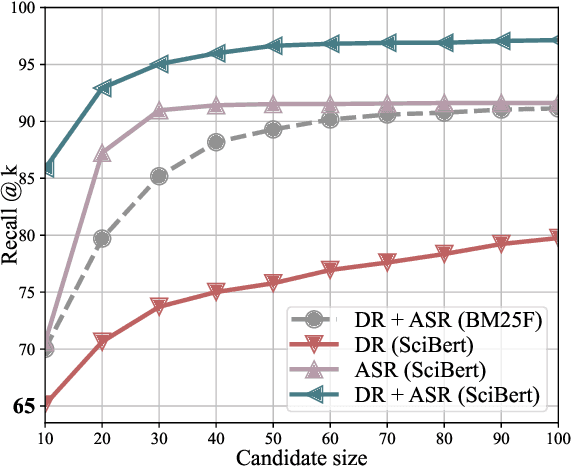
Entity linking (EL) is the task of linking a textual mention to its corresponding entry in a knowledge base, and is critical for many knowledge-intensive NLP applications. When applied to tables in scientific papers, EL is a step toward large-scale scientific knowledge bases that could enable advanced scientific question answering and analytics. We present the first dataset for EL in scientific tables. EL for scientific tables is especially challenging because scientific knowledge bases can be very incomplete, and disambiguating table mentions typically requires understanding the papers's tet in addition to the table. Our dataset, S2abEL, focuses on EL in machine learning results tables and includes hand-labeled cell types, attributed sources, and entity links from the PaperswithCode taxonomy for 8,429 cells from 732 tables. We introduce a neural baseline method designed for EL on scientific tables containing many out-of-knowledge-base mentions, and show that it significantly outperforms a state-of-the-art generic table EL method. The best baselines fall below human performance, and our analysis highlights avenues for improvement.