 Add to Chrome
 Add to Firefox
 Add to Edge
Universal Pyramid Adversarial Training for Improved ViT Performance
Dec 26, 2023
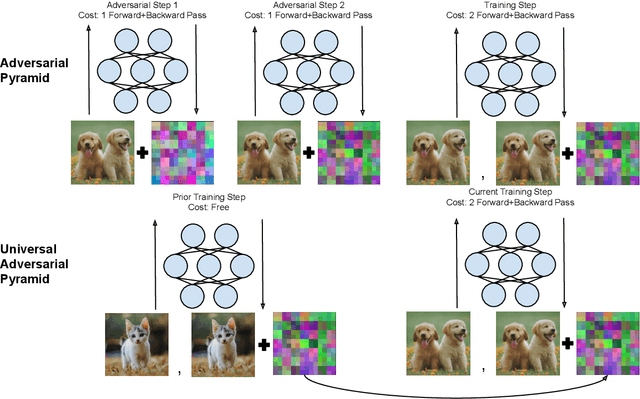


Recently, Pyramid Adversarial training (Herrmann et al., 2022) has been shown to be very effective for improving clean accuracy and distribution-shift robustness of vision transformers. However, due to the iterative nature of adversarial training, the technique is up to 7 times more expensive than standard training. To make the method more efficient, we propose Universal Pyramid Adversarial training, where we learn a single pyramid adversarial pattern shared across the whole dataset instead of the sample-wise patterns. With our proposed technique, we decrease the computational cost of Pyramid Adversarial training by up to 70% while retaining the majority of its benefit on clean performance and distribution-shift robustness. In addition, to the best of our knowledge, we are also the first to find that universal adversarial training can be leveraged to improve clean model performance.

Jack of All Tasks, Master of Many: Designing General-purpose Coarse-to-Fine Vision-Language Model
Dec 19, 2023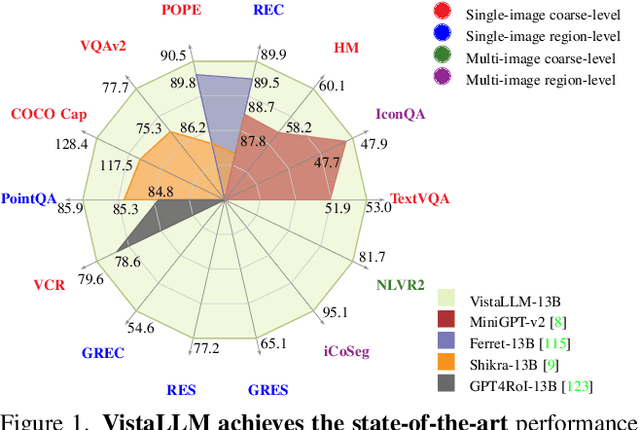
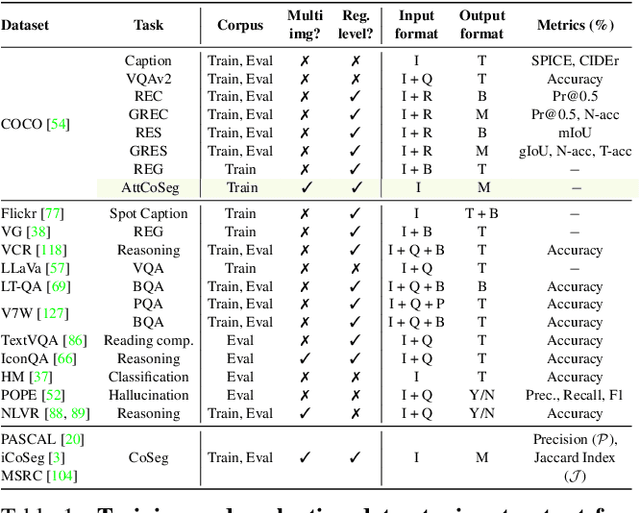
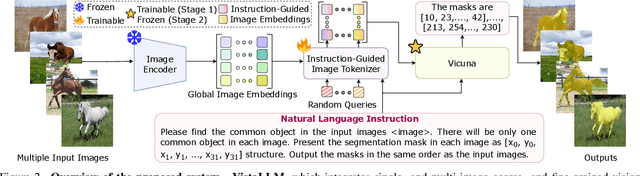
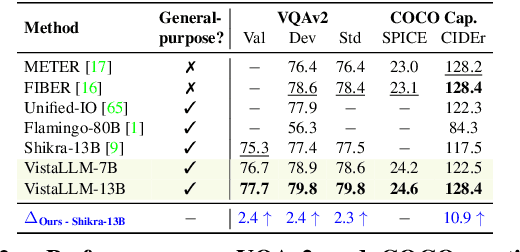
The ability of large language models (LLMs) to process visual inputs has given rise to general-purpose vision systems, unifying various vision-language (VL) tasks by instruction tuning. However, due to the enormous diversity in input-output formats in the vision domain, existing general-purpose models fail to successfully integrate segmentation and multi-image inputs with coarse-level tasks into a single framework. In this work, we introduce VistaLLM, a powerful visual system that addresses coarse- and fine-grained VL tasks over single and multiple input images using a unified framework. VistaLLM utilizes an instruction-guided image tokenizer that filters global embeddings using task descriptions to extract compressed and refined features from numerous images. Moreover, VistaLLM employs a gradient-aware adaptive sampling technique to represent binary segmentation masks as sequences, significantly improving over previously used uniform sampling. To bolster the desired capability of VistaLLM, we curate CoinIt, a comprehensive coarse-to-fine instruction tuning dataset with 6.8M samples. We also address the lack of multi-image grounding datasets by introducing a novel task, AttCoSeg (Attribute-level Co-Segmentation), which boosts the model's reasoning and grounding capability over multiple input images. Extensive experiments on a wide range of V- and VL tasks demonstrate the effectiveness of VistaLLM by achieving consistent state-of-the-art performance over strong baselines across all downstream tasks. Our project page can be found at https://shramanpramanick.github.io/VistaLLM/.
Video Dynamics Prior: An Internal Learning Approach for Robust Video Enhancements
Dec 13, 2023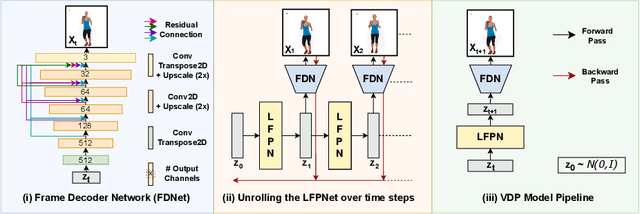

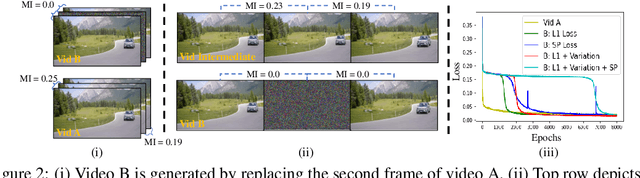

In this paper, we present a novel robust framework for low-level vision tasks, including denoising, object removal, frame interpolation, and super-resolution, that does not require any external training data corpus. Our proposed approach directly learns the weights of neural modules by optimizing over the corrupted test sequence, leveraging the spatio-temporal coherence and internal statistics of videos. Furthermore, we introduce a novel spatial pyramid loss that leverages the property of spatio-temporal patch recurrence in a video across the different scales of the video. This loss enhances robustness to unstructured noise in both the spatial and temporal domains. This further results in our framework being highly robust to degradation in input frames and yields state-of-the-art results on downstream tasks such as denoising, object removal, and frame interpolation. To validate the effectiveness of our approach, we conduct qualitative and quantitative evaluations on standard video datasets such as DAVIS, UCF-101, and VIMEO90K-T.
On the Robustness of Large Multimodal Models Against Image Adversarial Attacks
Dec 08, 2023Recent advances in instruction tuning have led to the development of State-of-the-Art Large Multimodal Models (LMMs). Given the novelty of these models, the impact of visual adversarial attacks on LMMs has not been thoroughly examined. We conduct a comprehensive study of the robustness of various LMMs against different adversarial attacks, evaluated across tasks including image classification, image captioning, and Visual Question Answer (VQA). We find that in general LMMs are not robust to visual adversarial inputs. However, our findings suggest that context provided to the model via prompts, such as questions in a QA pair helps to mitigate the effects of visual adversarial inputs. Notably, the LMMs evaluated demonstrated remarkable resilience to such attacks on the ScienceQA task with only an 8.10% drop in performance compared to their visual counterparts which dropped 99.73%. We also propose a new approach to real-world image classification which we term query decomposition. By incorporating existence queries into our input prompt we observe diminished attack effectiveness and improvements in image classification accuracy. This research highlights a previously under-explored facet of LMM robustness and sets the stage for future work aimed at strengthening the resilience of multimodal systems in adversarial environments.
Object Recognition as Next Token Prediction
Dec 04, 2023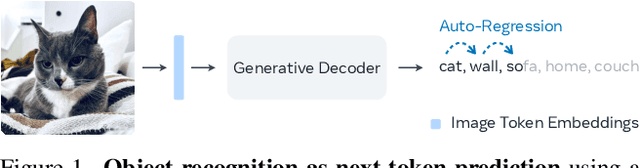
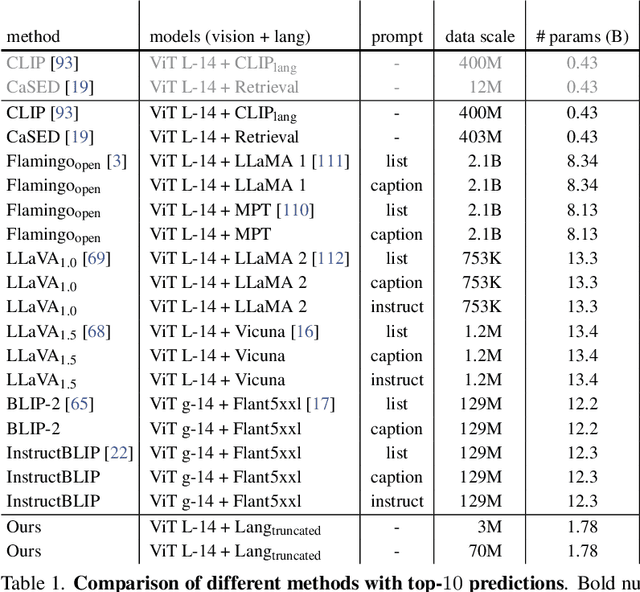
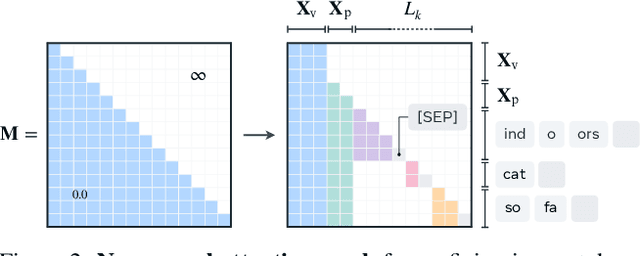
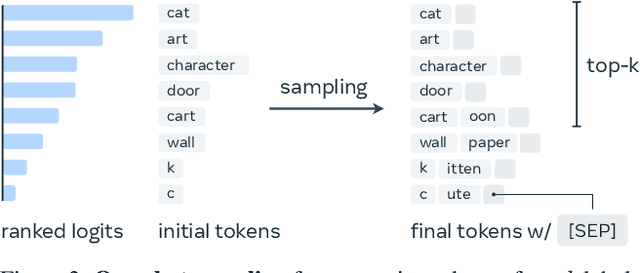
We present an approach to pose object recognition as next token prediction. The idea is to apply a language decoder that auto-regressively predicts the text tokens from image embeddings to form labels. To ground this prediction process in auto-regression, we customize a non-causal attention mask for the decoder, incorporating two key features: modeling tokens from different labels to be independent, and treating image tokens as a prefix. This masking mechanism inspires an efficient method - one-shot sampling - to simultaneously sample tokens of multiple labels in parallel and rank generated labels by their probabilities during inference. To further enhance the efficiency, we propose a simple strategy to construct a compact decoder by simply discarding the intermediate blocks of a pretrained language model. This approach yields a decoder that matches the full model's performance while being notably more efficient. The code is available at https://github.com/kaiyuyue/nxtp
CLAMP: Contrastive LAnguage Model Prompt-tuning
Dec 04, 2023
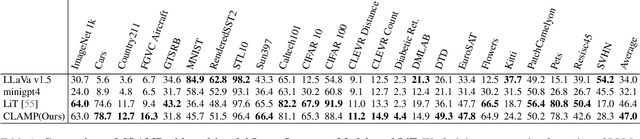

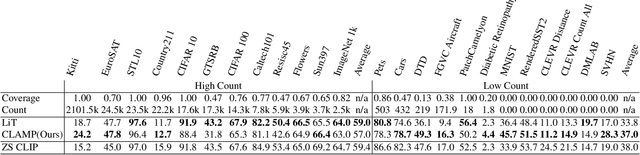
Large language models (LLMs) have emerged as powerful general-purpose interfaces for many machine learning problems. Recent work has adapted LLMs to generative visual tasks like image captioning, visual question answering, and visual chat, using a relatively small amount of instruction-tuning data. In this paper, we explore whether modern LLMs can also be adapted to classifying an image into a set of categories. First, we evaluate multimodal LLMs that are tuned for generative tasks on zero-shot image classification and find that their performance is far below that of specialized models like CLIP. We then propose an approach for light fine-tuning of LLMs using the same contrastive image-caption matching objective as CLIP. Our results show that LLMs can, indeed, achieve good image classification performance when adapted this way. Our approach beats state-of-the-art mLLMs by 13% and slightly outperforms contrastive learning with a custom text model, while also retaining the LLM's generative abilities. LLM initialization appears to particularly help classification in domains under-represented in the visual pre-training data.
Label Delay in Continual Learning
Dec 01, 2023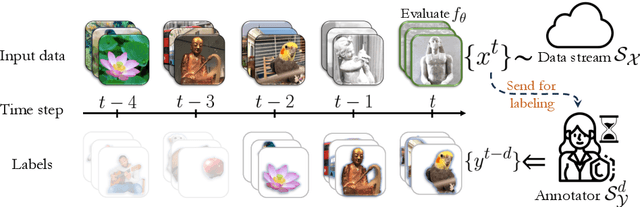
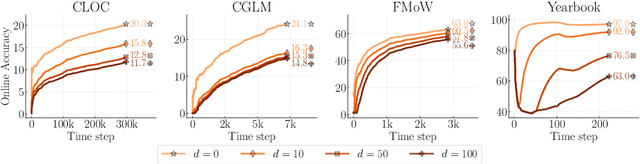
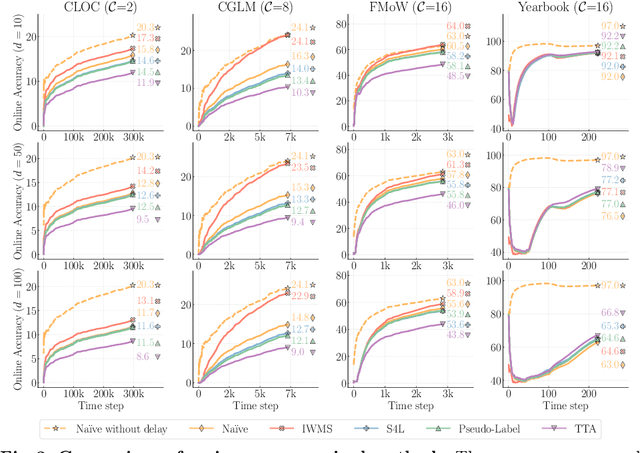
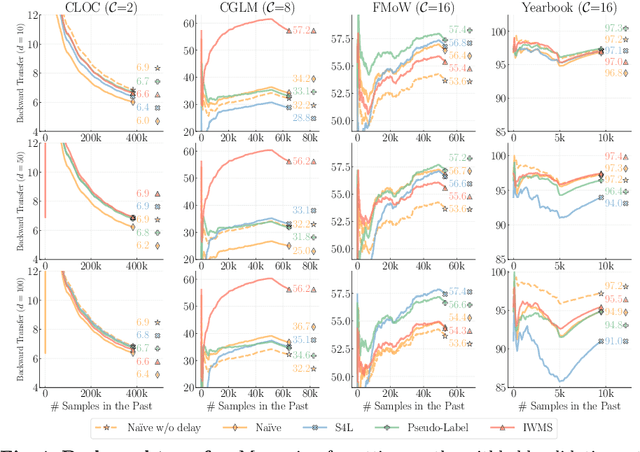
Online continual learning, the process of training models on streaming data, has gained increasing attention in recent years. However, a critical aspect often overlooked is the label delay, where new data may not be labeled due to slow and costly annotation processes. We introduce a new continual learning framework with explicit modeling of the label delay between data and label streams over time steps. In each step, the framework reveals both unlabeled data from the current time step $t$ and labels delayed with $d$ steps, from the time step $t-d$. In our extensive experiments amounting to 1060 GPU days, we show that merely augmenting the computational resources is insufficient to tackle this challenge. Our findings underline a notable performance decline when solely relying on labeled data when the label delay becomes significant. More surprisingly, when using state-of-the-art SSL and TTA techniques to utilize the newer, unlabeled data, they fail to surpass the performance of a na\"ive method that simply trains on the delayed supervised stream. To this end, we introduce a simple, efficient baseline that rehearses from the labeled memory samples that are most similar to the new unlabeled samples. This method bridges the accuracy gap caused by label delay without significantly increasing computational complexity. We show experimentally that our method is the least affected by the label delay factor and in some cases successfully recovers the accuracy of the non-delayed counterpart. We conduct various ablations and sensitivity experiments, demonstrating the effectiveness of our approach.
From Categories to Classifier: Name-Only Continual Learning by Exploring the Web
Nov 19, 2023Continual Learning (CL) often relies on the availability of extensive annotated datasets, an assumption that is unrealistically time-consuming and costly in practice. We explore a novel paradigm termed name-only continual learning where time and cost constraints prohibit manual annotation. In this scenario, learners adapt to new category shifts using only category names without the luxury of annotated training data. Our proposed solution leverages the expansive and ever-evolving internet to query and download uncurated webly-supervised data for image classification. We investigate the reliability of our web data and find them comparable, and in some cases superior, to manually annotated datasets. Additionally, we show that by harnessing the web, we can create support sets that surpass state-of-the-art name-only classification that create support sets using generative models or image retrieval from LAION-5B, achieving up to 25% boost in accuracy. When applied across varied continual learning contexts, our method consistently exhibits a small performance gap in comparison to models trained on manually annotated datasets. We present EvoTrends, a class-incremental dataset made from the web to capture real-world trends, created in just minutes. Overall, this paper underscores the potential of using uncurated webly-supervised data to mitigate the challenges associated with manual data labeling in continual learning.
Riemannian Residual Neural Networks
Oct 16, 2023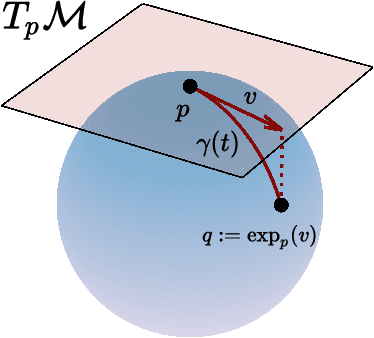
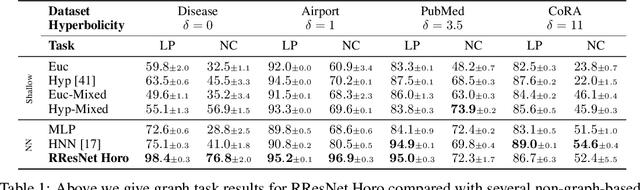
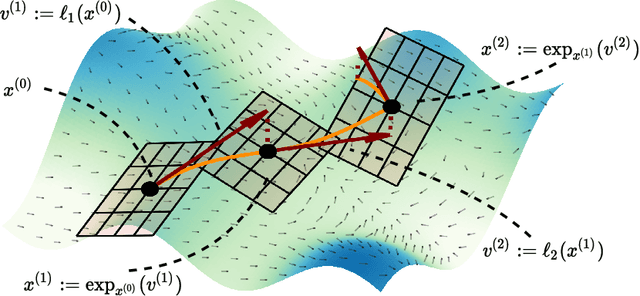

Recent methods in geometric deep learning have introduced various neural networks to operate over data that lie on Riemannian manifolds. Such networks are often necessary to learn well over graphs with a hierarchical structure or to learn over manifold-valued data encountered in the natural sciences. These networks are often inspired by and directly generalize standard Euclidean neural networks. However, extending Euclidean networks is difficult and has only been done for a select few manifolds. In this work, we examine the residual neural network (ResNet) and show how to extend this construction to general Riemannian manifolds in a geometrically principled manner. Originally introduced to help solve the vanishing gradient problem, ResNets have become ubiquitous in machine learning due to their beneficial learning properties, excellent empirical results, and easy-to-incorporate nature when building varied neural networks. We find that our Riemannian ResNets mirror these desirable properties: when compared to existing manifold neural networks designed to learn over hyperbolic space and the manifold of symmetric positive definite matrices, we outperform both kinds of networks in terms of relevant testing metrics and training dynamics.
Stable Estimation of Survival Causal Effects
Oct 01, 2023We study the problem of estimating survival causal effects, where the aim is to characterize the impact of an intervention on survival times, i.e., how long it takes for an event to occur. Applications include determining if a drug reduces the time to ICU discharge or if an advertising campaign increases customer dwell time. Historically, the most popular estimates have been based on parametric or semiparametric (e.g. proportional hazards) models; however, these methods suffer from problematic levels of bias. Recently debiased machine learning approaches are becoming increasingly popular, especially in applications to large datasets. However, despite their appealing theoretical properties, these estimators tend to be unstable because the debiasing step involves the use of the inverses of small estimated probabilities -- small errors in the estimated probabilities can result in huge changes in their inverses and therefore the resulting estimator. This problem is exacerbated in survival settings where probabilities are a product of treatment assignment and censoring probabilities. We propose a covariate balancing approach to estimating these inverses directly, sidestepping this problem. The result is an estimator that is stable in practice and enjoys many of the same theoretical properties. In particular, under overlap and asymptotic equicontinuity conditions, our estimator is asymptotically normal with negligible bias and optimal variance. Our experiments on synthetic and semi-synthetic data demonstrate that our method has competitive bias and smaller variance than debiased machine learning approaches.