 Add to Chrome
 Add to Firefox
 Add to Edge
FoRA: Fisher-orthogonal Rank Adaptation for Parameter-Efficient Fine-Tuning
May 28, 2026
Parameter-efficient fine-tuning(PEFT) has largely focused on LoRA and its accuracy-oriented variants, leaving the original goal of reducing trainable parameters has receivedcomparatively little attention. We introduce FoRA, which revisits this goal by reducing the number of adapted layers rather than adapter rank. FoRA selects task-informative layers via a single-pass diagonal Fisher score (under 1% of training cost) and trains the LoRA down-projection at selected layers on the Stiefel manifold, preserving column orthonormality and effective rank. FoRA consistently outperforms LoRA and DoRA at half their parameter budget, and falls within 0.7-0.8 accuracy points of AdaLoRA at one-quarter its parameter count, across five LLaMA-family backbones. Cross-architecture experiments on twelve backbones from the LLaMA, Qwen3, and Gemma families confirm consistent gains from 270M to 32B parameters. The two components combine super-additively: Fisher selection alone matches rank reduction at the same budget, while the Stiefel constraint provides the decisive additional gain.

Decoder-Free Distillation for Quantized Image Restoration
Mar 10, 2026Quantization-Aware Training (QAT), combined with Knowledge Distillation (KD), holds immense promise for compressing models for edge deployment. However, joint optimization for precision-sensitive image restoration (IR) to recover visual quality from degraded images remains largely underexplored. Directly adapting QAT-KD to low-level vision reveals three critical bottlenecks: teacher-student capacity mismatch, spatial error amplification during decoder distillation, and an optimization "tug-of-war" between reconstruction and distillation losses caused by quantization noise. To tackle these, we introduce Quantization-aware Distilled Restoration (QDR), a framework for edge-deployed IR. QDR eliminates capacity mismatch via FP32 self-distillation and prevents error amplification through Decoder-Free Distillation (DFD), which corrects quantization errors strictly at the network bottleneck. To stabilize the optimization tug-of-war, we propose a Learnable Magnitude Reweighting (LMR) that dynamically balances competing gradients. Finally, we design an Edge-Friendly Model (EFM) featuring a lightweight Learnable Degradation Gating (LDG) to dynamically modulate spatial degradation localization. Extensive experiments across four IR tasks demonstrate that our Int8 model recovers 96.5% of FP32 performance, achieves 442 frames per second (FPS) on an NVIDIA Jetson Orin, and boosts downstream object detection by 16.3 mAP
Memory-Efficient Structured Backpropagation for On-Device LLM Fine-Tuning
Feb 13, 2026On-device fine-tuning enables privacy-preserving personalization of large language models, but mobile devices impose severe memory constraints, typically 6--12GB shared across all workloads. Existing approaches force a trade-off between exact gradients with high memory (MeBP) and low memory with noisy estimates (MeZO). We propose Memory-efficient Structured Backpropagation (MeSP), which bridges this gap by manually deriving backward passes that exploit LoRA's low-rank structure. Our key insight is that the intermediate projection $h = xA$ can be recomputed during backward at minimal cost since rank $r \ll d_{in}$, eliminating the need to store it. MeSP achieves 49\% average memory reduction compared to MeBP on Qwen2.5 models (0.5B--3B) while computing mathematically identical gradients. Our analysis also reveals that MeZO's gradient estimates show near-zero correlation with true gradients (cosine similarity $\approx$0.001), explaining its slow convergence. MeSP reduces peak memory from 361MB to 136MB for Qwen2.5-0.5B, enabling fine-tuning scenarios previously infeasible on memory-constrained devices.
Riemannian Optimization for LoRA on the Stiefel Manifold
Aug 25, 2025While powerful, large language models (LLMs) present significant fine-tuning challenges due to their size. Parameter-efficient fine-tuning (PEFT) methods like LoRA provide solutions, yet suffer from critical optimizer inefficiencies; notably basis redundancy in LoRA's $B$ matrix when using AdamW, which fundamentally limits performance. We address this by optimizing the $B$ matrix on the Stiefel manifold, imposing explicit orthogonality constraints that achieve near-perfect orthogonality and full effective rank. This geometric approach dramatically enhances parameter efficiency and representational capacity. Our Stiefel optimizer consistently outperforms AdamW across benchmarks with both LoRA and DoRA, demonstrating that geometric constraints are the key to unlocking LoRA's full potential for effective LLM fine-tuning.
The Tenth NTIRE 2025 Image Denoising Challenge Report
Apr 16, 2025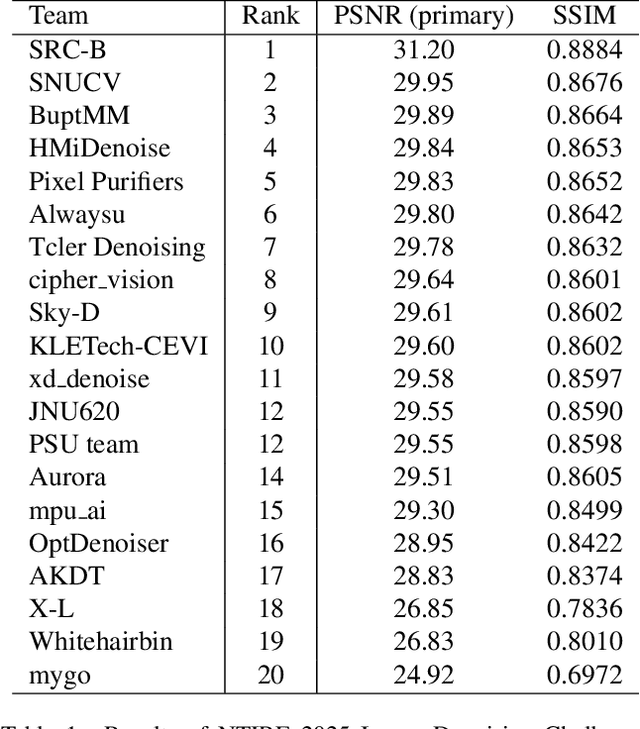
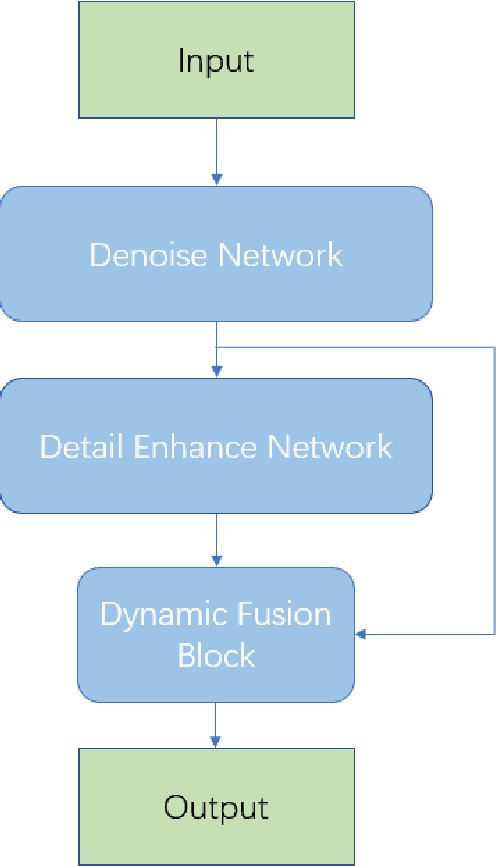
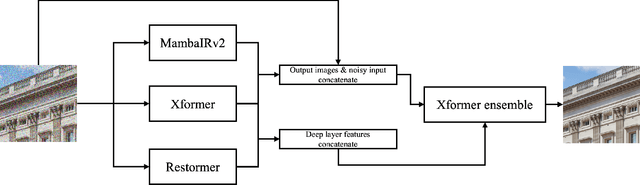
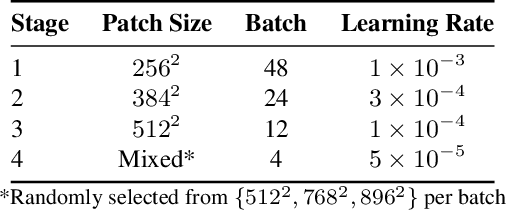
This paper presents an overview of the NTIRE 2025 Image Denoising Challenge ({\sigma} = 50), highlighting the proposed methodologies and corresponding results. The primary objective is to develop a network architecture capable of achieving high-quality denoising performance, quantitatively evaluated using PSNR, without constraints on computational complexity or model size. The task assumes independent additive white Gaussian noise (AWGN) with a fixed noise level of 50. A total of 290 participants registered for the challenge, with 20 teams successfully submitting valid results, providing insights into the current state-of-the-art in image denoising.
NTIRE 2024 Challenge on Low Light Image Enhancement: Methods and Results
Apr 22, 2024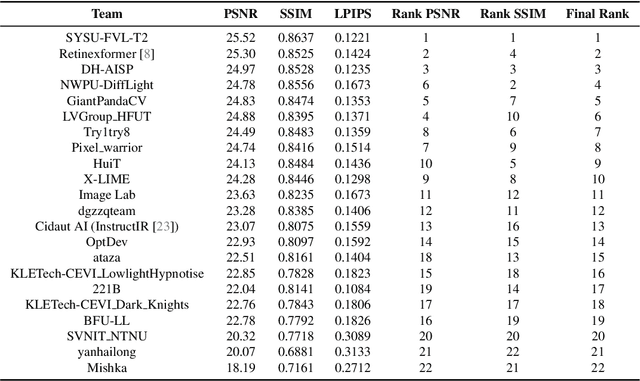
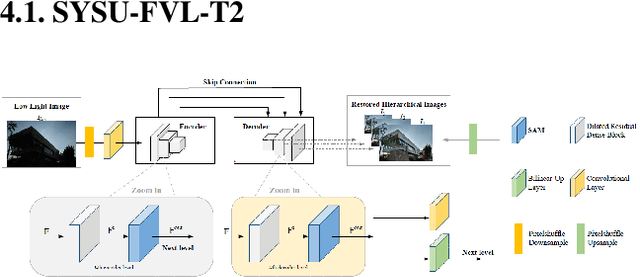
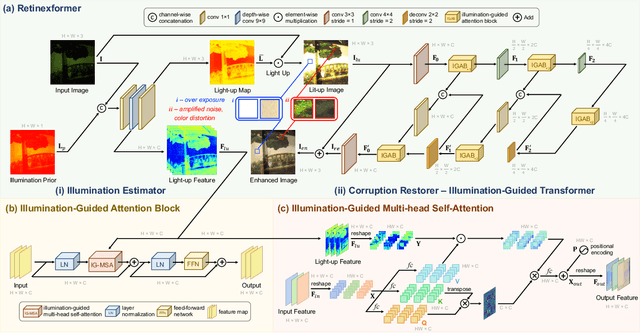
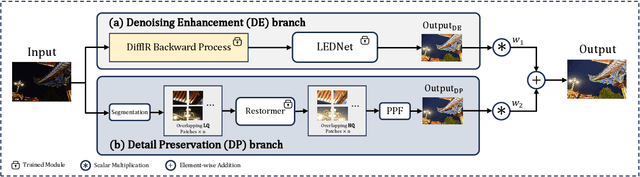
This paper reviews the NTIRE 2024 low light image enhancement challenge, highlighting the proposed solutions and results. The aim of this challenge is to discover an effective network design or solution capable of generating brighter, clearer, and visually appealing results when dealing with a variety of conditions, including ultra-high resolution (4K and beyond), non-uniform illumination, backlighting, extreme darkness, and night scenes. A notable total of 428 participants registered for the challenge, with 22 teams ultimately making valid submissions. This paper meticulously evaluates the state-of-the-art advancements in enhancing low-light images, reflecting the significant progress and creativity in this field.