 Add to Chrome
 Add to Firefox
 Add to Edge
Vision-Language Models as Zero-Annotation Oracles in Histopathology
Jun 15, 2026
Foreground segmentation is the critical first step of every computational pathology pipeline, yet existing methods rely on hand-tuned heuristics or supervised models that overfit to narrow stain and scanner distributions, failing silently on specialised stains such as Jones silver or Elastica van Gieson. We propose a coarse-to-fine approach that recasts foreground segmentation as a visual perception task and leverages general-purpose vision-language models (VLMs) as zero-annotation oracles. Our key insight is that tissue-versus-background discrimination is a natural-image recognition problem, not a histopathological one, so VLMs trained on internet-scale corpora generalise where domain-specific models cannot. We introduce Leica-75, a benchmark of 75 renal transplant whole-slide images spanning three stain families. On Leica-75, our method achieves the highest segmentation quality on out-of-distribution stains (Dice 0.858 +/- 0.027 on Jones, 0.853 +/- 0.041 on EVG) with 7x lower cross-stain variance than the best supervised baseline, while remaining competitive on in-distribution H&E. Few-shot prompting with automatically curated exemplars (Auto-context) rescues hard cases on Stress-32 (n=32), a curated stress-test subset (Dice 0.470 to 0.819 for the 2B model). VLM-based annotation review matches human expert consensus (kappa=0.989 for blur detection; mean precision/recall grading accuracy 0.708 vs. human 0.646 for segmentation mask review). The resulting pseudo-labels are used to distil lightweight student models that are as performant as the teacher model while running for a fraction of the cost. Our framework provides a principled, scalable solution to a persistent infrastructure bottleneck in digital pathology.

Graph Conditioned Diffusion for Controllable Histopathology Image Generation
Oct 08, 2025Recent advances in Diffusion Probabilistic Models (DPMs) have set new standards in high-quality image synthesis. Yet, controlled generation remains challenging, particularly in sensitive areas such as medical imaging. Medical images feature inherent structure such as consistent spatial arrangement, shape or texture, all of which are critical for diagnosis. However, existing DPMs operate in noisy latent spaces that lack semantic structure and strong priors, making it difficult to ensure meaningful control over generated content. To address this, we propose graph-based object-level representations for Graph-Conditioned-Diffusion. Our approach generates graph nodes corresponding to each major structure in the image, encapsulating their individual features and relationships. These graph representations are processed by a transformer module and integrated into a diffusion model via the text-conditioning mechanism, enabling fine-grained control over generation. We evaluate this approach using a real-world histopathology use case, demonstrating that our generated data can reliably substitute for annotated patient data in downstream segmentation tasks. The code is available here.
Video Dataset Condensation with Diffusion Models
May 10, 2025In recent years, the rapid expansion of dataset sizes and the increasing complexity of deep learning models have significantly escalated the demand for computational resources, both for data storage and model training. Dataset distillation has emerged as a promising solution to address this challenge by generating a compact synthetic dataset that retains the essential information from a large real dataset. However, existing methods often suffer from limited performance and poor data quality, particularly in the video domain. In this paper, we focus on video dataset distillation by employing a video diffusion model to generate high-quality synthetic videos. To enhance representativeness, we introduce Video Spatio-Temporal U-Net (VST-UNet), a model designed to select a diverse and informative subset of videos that effectively captures the characteristics of the original dataset. To further optimize computational efficiency, we explore a training-free clustering algorithm, Temporal-Aware Cluster-based Distillation (TAC-DT), to select representative videos without requiring additional training overhead. We validate the effectiveness of our approach through extensive experiments on four benchmark datasets, demonstrating performance improvements of up to \(10.61\%\) over the state-of-the-art. Our method consistently outperforms existing approaches across all datasets, establishing a new benchmark for video dataset distillation.
Dataset Distillation with Probabilistic Latent Features
May 10, 2025As deep learning models grow in complexity and the volume of training data increases, reducing storage and computational costs becomes increasingly important. Dataset distillation addresses this challenge by synthesizing a compact set of synthetic data that can effectively replace the original dataset in downstream classification tasks. While existing methods typically rely on mapping data from pixel space to the latent space of a generative model, we propose a novel stochastic approach that models the joint distribution of latent features. This allows our method to better capture spatial structures and produce diverse synthetic samples, which benefits model training. Specifically, we introduce a low-rank multivariate normal distribution parameterized by a lightweight network. This design maintains low computational complexity and is compatible with various matching networks used in dataset distillation. After distillation, synthetic images are generated by feeding the learned latent features into a pretrained generator. These synthetic images are then used to train classification models, and performance is evaluated on real test set. We validate our method on several benchmarks, including ImageNet subsets, CIFAR-10, and the MedMNIST histopathological dataset. Our approach achieves state-of-the-art cross architecture performance across a range of backbone architectures, demonstrating its generality and effectiveness.
Image Generation Diversity Issues and How to Tame Them
Nov 25, 2024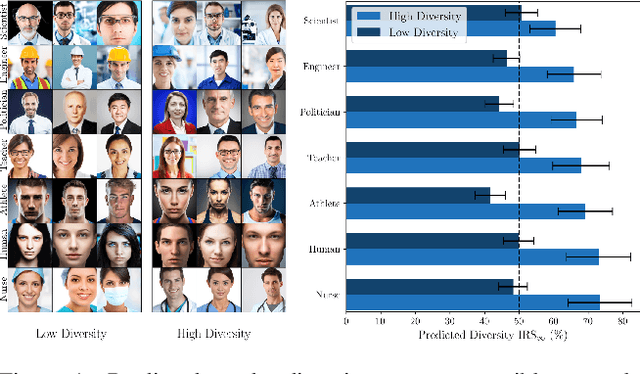

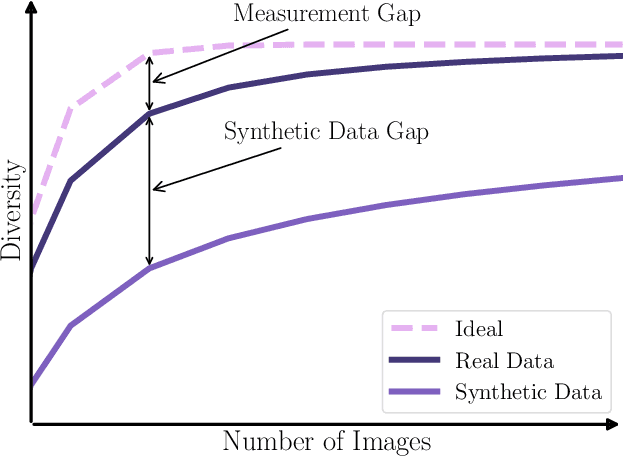
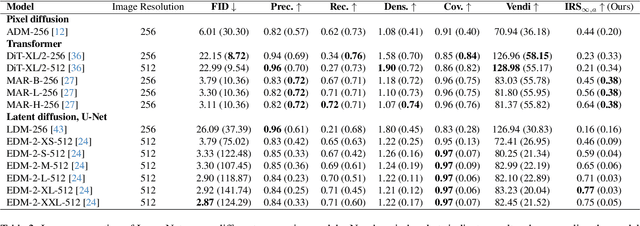
Generative methods now produce outputs nearly indistinguishable from real data but often fail to fully capture the data distribution. Unlike quality issues, diversity limitations in generative models are hard to detect visually, requiring specific metrics for assessment. In this paper, we draw attention to the current lack of diversity in generative models and the inability of common metrics to measure this. We achieve this by framing diversity as an image retrieval problem, where we measure how many real images can be retrieved using synthetic data as queries. This yields the Image Retrieval Score (IRS), an interpretable, hyperparameter-free metric that quantifies the diversity of a generative model's output. IRS requires only a subset of synthetic samples and provides a statistical measure of confidence. Our experiments indicate that current feature extractors commonly used in generative model assessment are inadequate for evaluating diversity effectively. Consequently, we perform an extensive search for the best feature extractors to assess diversity. Evaluation reveals that current diffusion models converge to limited subsets of the real distribution, with no current state-of-the-art models superpassing 77% of the diversity of the training data. To address this limitation, we introduce Diversity-Aware Diffusion Models (DiADM), a novel approach that improves diversity of unconditional diffusion models without loss of image quality. We do this by disentangling diversity from image quality by using a diversity aware module that uses pseudo-unconditional features as input. We provide a Python package offering unified feature extraction and metric computation to further facilitate the evaluation of generative models https://github.com/MischaD/beyondfid.
JVID: Joint Video-Image Diffusion for Visual-Quality and Temporal-Consistency in Video Generation
Sep 21, 2024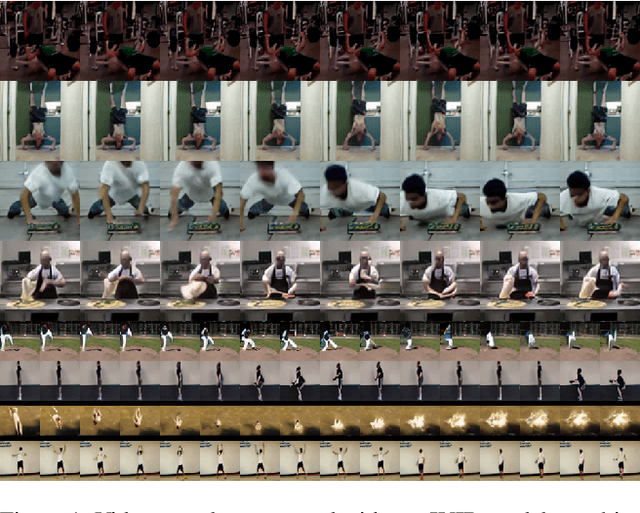
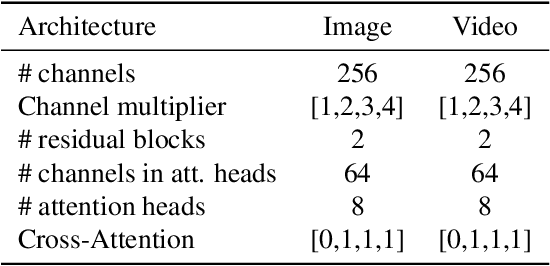
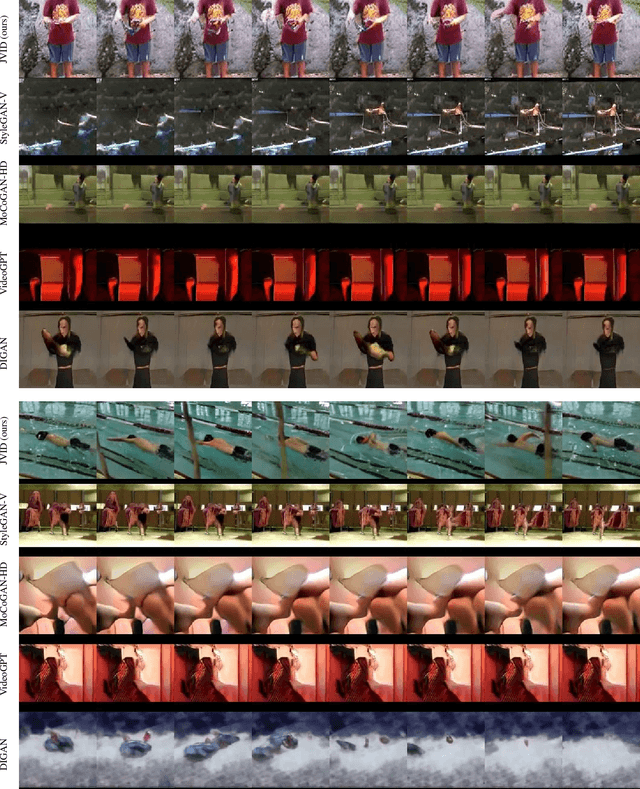

We introduce the Joint Video-Image Diffusion model (JVID), a novel approach to generating high-quality and temporally coherent videos. We achieve this by integrating two diffusion models: a Latent Image Diffusion Model (LIDM) trained on images and a Latent Video Diffusion Model (LVDM) trained on video data. Our method combines these models in the reverse diffusion process, where the LIDM enhances image quality and the LVDM ensures temporal consistency. This unique combination allows us to effectively handle the complex spatio-temporal dynamics in video generation. Our results demonstrate quantitative and qualitative improvements in producing realistic and coherent videos.
Data-Efficient Generation for Dataset Distillation
Sep 05, 2024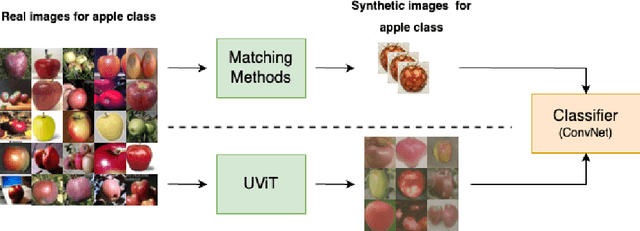

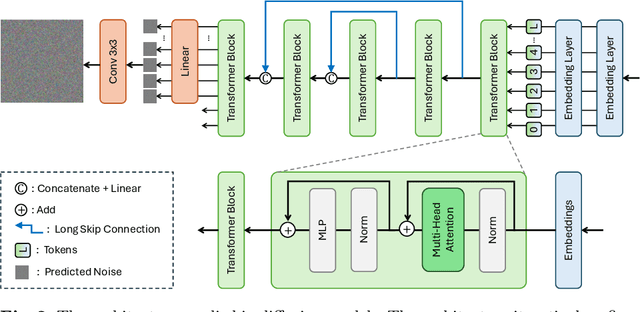

While deep learning techniques have proven successful in image-related tasks, the exponentially increased data storage and computation costs become a significant challenge. Dataset distillation addresses these challenges by synthesizing only a few images for each class that encapsulate all essential information. Most current methods focus on matching. The problems lie in the synthetic images not being human-readable and the dataset performance being insufficient for downstream learning tasks. Moreover, the distillation time can quickly get out of bounds when the number of synthetic images per class increases even slightly. To address this, we train a class conditional latent diffusion model capable of generating realistic synthetic images with labels. The sampling time can be reduced to several tens of images per seconds. We demonstrate that models can be effectively trained using only a small set of synthetic images and evaluated on a large real test set. Our approach achieved rank \(1\) in The First Dataset Distillation Challenge at ECCV 2024 on the CIFAR100 and TinyImageNet datasets.
URCDM: Ultra-Resolution Image Synthesis in Histopathology
Jul 18, 2024Diagnosing medical conditions from histopathology data requires a thorough analysis across the various resolutions of Whole Slide Images (WSI). However, existing generative methods fail to consistently represent the hierarchical structure of WSIs due to a focus on high-fidelity patches. To tackle this, we propose Ultra-Resolution Cascaded Diffusion Models (URCDMs) which are capable of synthesising entire histopathology images at high resolutions whilst authentically capturing the details of both the underlying anatomy and pathology at all magnification levels. We evaluate our method on three separate datasets, consisting of brain, breast and kidney tissue, and surpass existing state-of-the-art multi-resolution models. Furthermore, an expert evaluation study was conducted, demonstrating that URCDMs consistently generate outputs across various resolutions that trained evaluators cannot distinguish from real images. All code and additional examples can be found on GitHub.
Stability and Generalizability in SDE Diffusion Models with Measure-Preserving Dynamics
Jun 19, 2024Inverse problems describe the process of estimating the causal factors from a set of measurements or data. Mapping of often incomplete or degraded data to parameters is ill-posed, thus data-driven iterative solutions are required, for example when reconstructing clean images from poor signals. Diffusion models have shown promise as potent generative tools for solving inverse problems due to their superior reconstruction quality and their compatibility with iterative solvers. However, most existing approaches are limited to linear inverse problems represented as Stochastic Differential Equations (SDEs). This simplification falls short of addressing the challenging nature of real-world problems, leading to amplified cumulative errors and biases. We provide an explanation for this gap through the lens of measure-preserving dynamics of Random Dynamical Systems (RDS) with which we analyse Temporal Distribution Discrepancy and thus introduce a theoretical framework based on RDS for SDE diffusion models. We uncover several strategies that inherently enhance the stability and generalizability of diffusion models for inverse problems and introduce a novel score-based diffusion framework, the \textbf{D}ynamics-aware S\textbf{D}E \textbf{D}iffusion \textbf{G}enerative \textbf{M}odel (D$^3$GM). The \textit{Measure-preserving property} can return the degraded measurement to the original state despite complex degradation with the RDS concept of \textit{stability}. Our extensive experimental results corroborate the effectiveness of D$^3$GM across multiple benchmarks including a prominent application for inverse problems, magnetic resonance imaging. Code and data will be publicly available.
Ultra-Resolution Cascaded Diffusion Model for Gigapixel Image Synthesis in Histopathology
Dec 02, 2023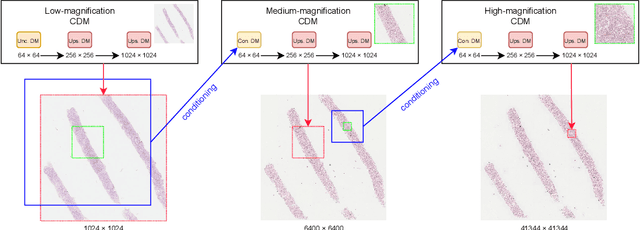
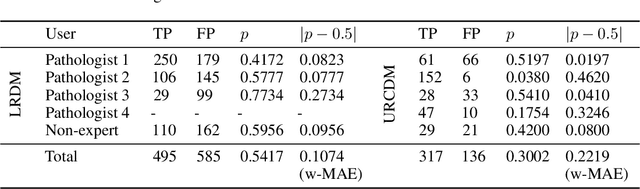
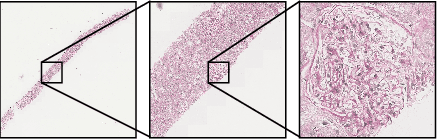
Diagnoses from histopathology images rely on information from both high and low resolutions of Whole Slide Images. Ultra-Resolution Cascaded Diffusion Models (URCDMs) allow for the synthesis of high-resolution images that are realistic at all magnification levels, focusing not only on fidelity but also on long-distance spatial coherency. Our model beats existing methods, improving the pFID-50k [2] score by 110.63 to 39.52 pFID-50k. Additionally, a human expert evaluation study was performed, reaching a weighted Mean Absolute Error (MAE) of 0.11 for the Lower Resolution Diffusion Models and a weighted MAE of 0.22 for the URCDM.