 Add to Chrome
 Add to Firefox
 Add to Edge
Proxy-informed Bayesian transfer learning with unknown sources
Nov 05, 2024

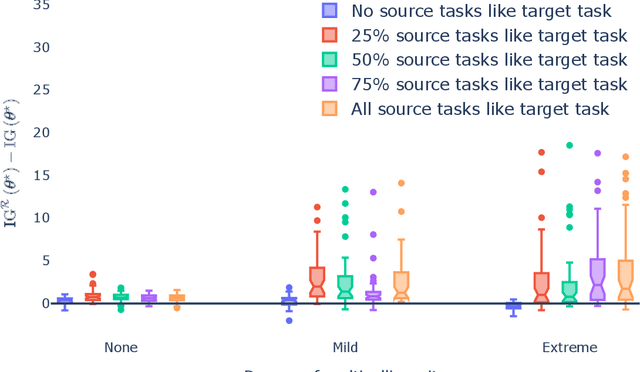
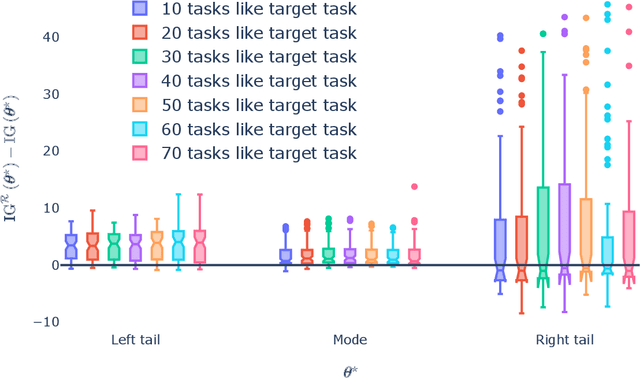

Generalization outside the scope of one's training data requires leveraging prior knowledge about the effects that transfer, and the effects that don't, between different data sources. Bayesian transfer learning is a principled paradigm for specifying this knowledge, and refining it on the basis of data from the source (training) and target (prediction) tasks. We address the challenging transfer learning setting where the learner (i) cannot fine-tune in the target task, and (ii) does not know which source data points correspond to the same task (i.e., the data sources are unknown). We propose a proxy-informed robust method for probabilistic transfer learning (PROMPT), which provides a posterior predictive estimate tailored to the structure of the target task, without requiring the learner have access to any outcome information from the target task. Instead, PROMPT relies on the availability of proxy information. PROMPT uses the same proxy information for two purposes: (i) estimation of effects specific to the target task, and (ii) construction of a robust reweighting of the source data for estimation of effects that transfer between tasks. We provide theoretical results on the effect of this reweighting on the risk of negative transfer, and demonstrate application of PROMPT in two synthetic settings.

Amortized Bayesian Experimental Design for Decision-Making
Nov 04, 2024


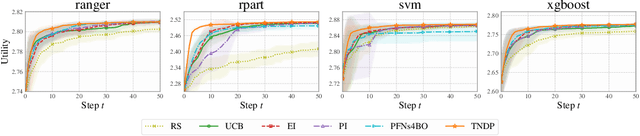
Many critical decisions, such as personalized medical diagnoses and product pricing, are made based on insights gained from designing, observing, and analyzing a series of experiments. This highlights the crucial role of experimental design, which goes beyond merely collecting information on system parameters as in traditional Bayesian experimental design (BED), but also plays a key part in facilitating downstream decision-making. Most recent BED methods use an amortized policy network to rapidly design experiments. However, the information gathered through these methods is suboptimal for down-the-line decision-making, as the experiments are not inherently designed with downstream objectives in mind. In this paper, we present an amortized decision-aware BED framework that prioritizes maximizing downstream decision utility. We introduce a novel architecture, the Transformer Neural Decision Process (TNDP), capable of instantly proposing the next experimental design, whilst inferring the downstream decision, thus effectively amortizing both tasks within a unified workflow. We demonstrate the performance of our method across several tasks, showing that it can deliver informative designs and facilitate accurate decision-making.
Amortized Probabilistic Conditioning for Optimization, Simulation and Inference
Oct 20, 2024Amortized meta-learning methods based on pre-training have propelled fields like natural language processing and vision. Transformer-based neural processes and their variants are leading models for probabilistic meta-learning with a tractable objective. Often trained on synthetic data, these models implicitly capture essential latent information in the data-generation process. However, existing methods do not allow users to flexibly inject (condition on) and extract (predict) this probabilistic latent information at runtime, which is key to many tasks. We introduce the Amortized Conditioning Engine (ACE), a new transformer-based meta-learning model that explicitly represents latent variables of interest. ACE affords conditioning on both observed data and interpretable latent variables, the inclusion of priors at runtime, and outputs predictive distributions for discrete and continuous data and latents. We show ACE's modeling flexibility and performance in diverse tasks such as image completion and classification, Bayesian optimization, and simulation-based inference.
LoKO: Low-Rank Kalman Optimizer for Online Fine-Tuning of Large Models
Oct 15, 2024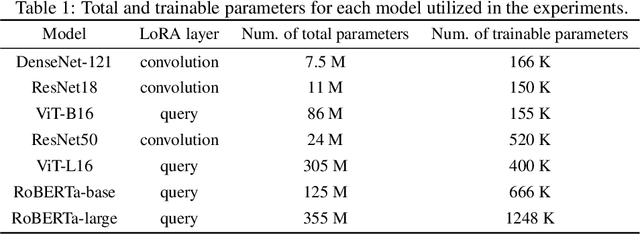
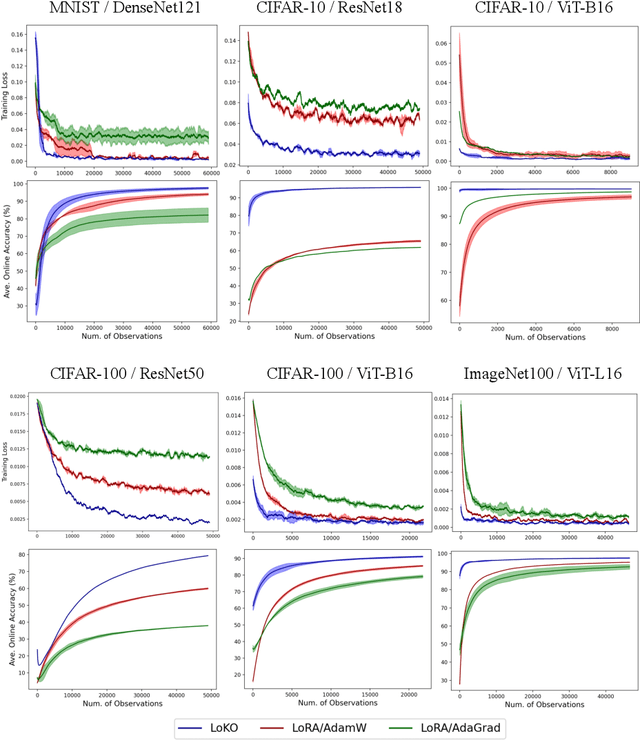
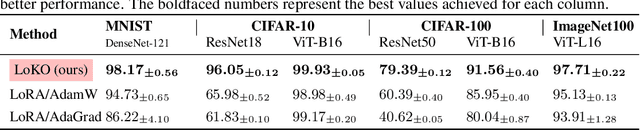
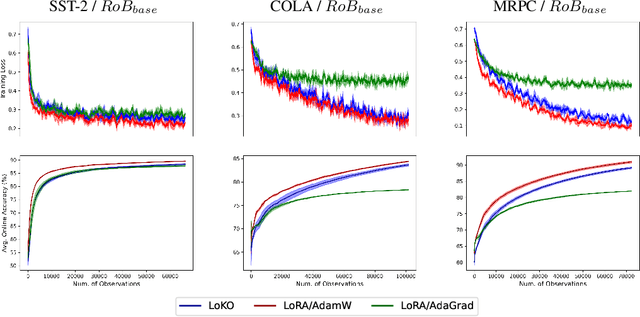
Training large models with millions or even billions of parameters from scratch incurs substantial computational costs. Parameter Efficient Fine-Tuning (PEFT) methods, particularly Low-Rank Adaptation (LoRA), address this challenge by adapting only a reduced number of parameters to specific tasks with gradient-based optimizers. In this paper, we cast PEFT as an optimal filtering/state estimation problem and present Low-Rank Kalman Optimizer (LoKO) to estimate the optimal trainable parameters in an online manner. We leverage the low-rank decomposition in LoRA to significantly reduce matrix sizes in Kalman iterations and further capitalize on a diagonal approximation of the covariance matrix to effectively decrease computational complexity from quadratic to linear in the number of trainable parameters. Moreover, we discovered that the initialization of the covariance matrix within the Kalman algorithm and the accurate estimation of the observation noise covariance are the keys in this formulation, and we propose robust approaches that work well across a vast range of well-established computer vision and language models. Our results show that LoKO converges with fewer iterations and yields better performance models compared to commonly used optimizers with LoRA in both image classifications and language tasks. Our study opens up the possibility of leveraging the Kalman filter as an effective optimizer for the online fine-tuning of large models.
Cost-aware Simulation-based Inference
Oct 10, 2024


Simulation-based inference (SBI) is the preferred framework for estimating parameters of intractable models in science and engineering. A significant challenge in this context is the large computational cost of simulating data from complex models, and the fact that this cost often depends on parameter values. We therefore propose \textit{cost-aware SBI methods} which can significantly reduce the cost of existing sampling-based SBI methods, such as neural SBI and approximate Bayesian computation. This is achieved through a combination of rejection and self-normalised importance sampling, which significantly reduces the number of expensive simulations needed. Our approach is studied extensively on models from epidemiology to telecommunications engineering, where we obtain significant reductions in the overall cost of inference.
Identifying latent disease factors differently expressed in patient subgroups using group factor analysis
Oct 10, 2024
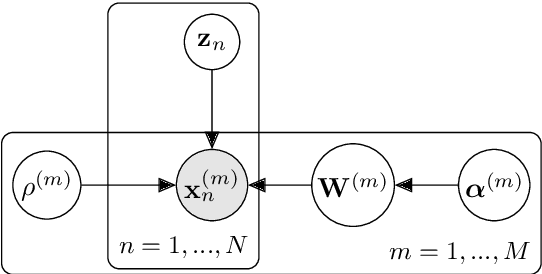


In this study, we propose a novel approach to uncover subgroup-specific and subgroup-common latent factors addressing the challenges posed by the heterogeneity of neurological and mental disorders, which hinder disease understanding, treatment development, and outcome prediction. The proposed approach, sparse Group Factor Analysis (GFA) with regularised horseshoe priors, was implemented with probabilistic programming and can uncover associations (or latent factors) among multiple data modalities differentially expressed in sample subgroups. Synthetic data experiments showed the robustness of our sparse GFA by correctly inferring latent factors and model parameters. When applied to the Genetic Frontotemporal Dementia Initiative (GENFI) dataset, which comprises patients with frontotemporal dementia (FTD) with genetically defined subgroups, the sparse GFA identified latent disease factors differentially expressed across the subgroups, distinguishing between "subgroup-specific" latent factors within homogeneous groups and "subgroup common" latent factors shared across subgroups. The latent disease factors captured associations between brain structure and non-imaging variables (i.e., questionnaires assessing behaviour and disease severity) across the different genetic subgroups, offering insights into disease profiles. Importantly, two latent factors were more pronounced in the two more homogeneous FTD patient subgroups (progranulin (GRN) and microtubule-associated protein tau (MAPT) mutation), showcasing the method's ability to reveal subgroup-specific characteristics. These findings underscore the potential of sparse GFA for integrating multiple data modalities and identifying interpretable latent disease factors that can improve the characterization and stratification of patients with neurological and mental health disorders.
DroneDiffusion: Robust Quadrotor Dynamics Learning with Diffusion Models
Sep 17, 2024
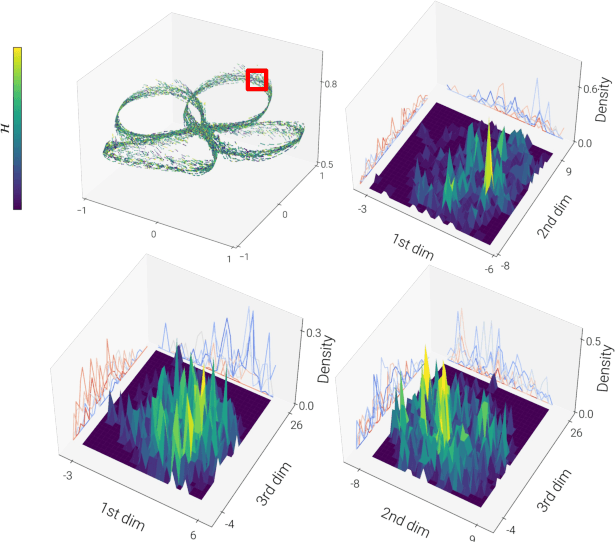
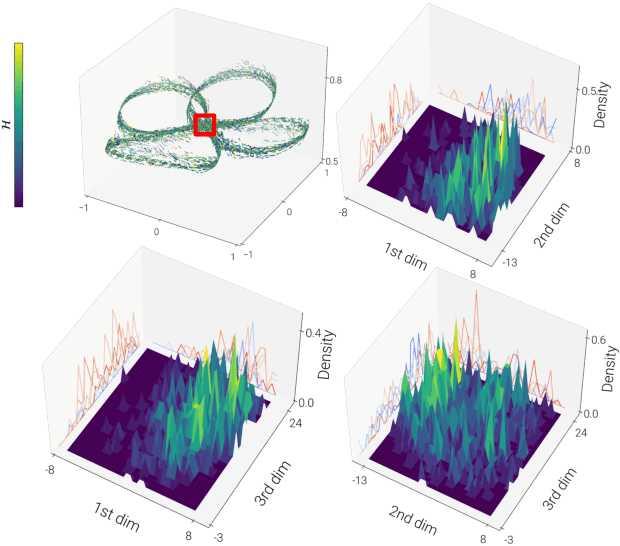
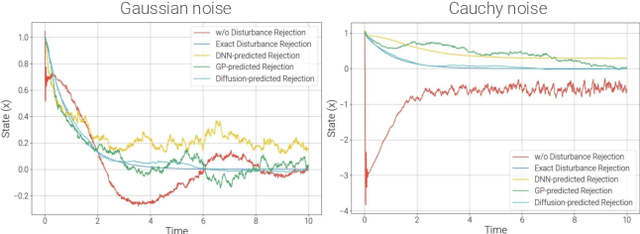
An inherent fragility of quadrotor systems stems from model inaccuracies and external disturbances. These factors hinder performance and compromise the stability of the system, making precise control challenging. Existing model-based approaches either make deterministic assumptions, utilize Gaussian-based representations of uncertainty, or rely on nominal models, all of which often fall short in capturing the complex, multimodal nature of real-world dynamics. This work introduces DroneDiffusion, a novel framework that leverages conditional diffusion models to learn quadrotor dynamics, formulated as a sequence generation task. DroneDiffusion achieves superior generalization to unseen, complex scenarios by capturing the temporal nature of uncertainties and mitigating error propagation. We integrate the learned dynamics with an adaptive controller for trajectory tracking with stability guarantees. Extensive experiments in both simulation and real-world flights demonstrate the robustness of the framework across a range of scenarios, including unfamiliar flight paths and varying payloads, velocities, and wind disturbances.
What Ails Generative Structure-based Drug Design: Too Little or Too Much Expressivity?
Aug 12, 2024
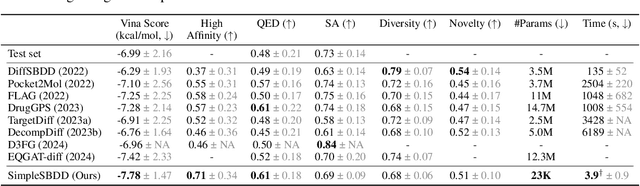

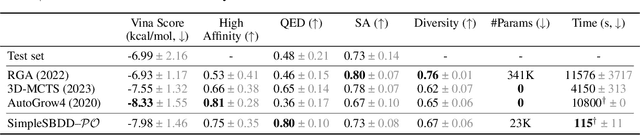
Several generative models with elaborate training and sampling procedures have been proposed recently to accelerate structure-based drug design (SBDD); however, perplexingly, their empirical performance turns out to be suboptimal. We seek to better understand this phenomenon from both theoretical and empirical perspectives. Since most of these models apply graph neural networks (GNNs), one may suspect that they inherit the representational limitations of GNNs. We analyze this aspect, establishing the first such results for protein-ligand complexes. A plausible counterview may attribute the underperformance of these models to their excessive parameterizations, inducing expressivity at the expense of generalization. We also investigate this possibility with a simple metric-aware approach that learns an economical surrogate for affinity to infer an unlabelled molecular graph and optimizes for labels conditioned on this graph and molecular properties. The resulting model achieves state-of-the-art results using 100x fewer trainable parameters and affords up to 1000x speedup. Collectively, our findings underscore the need to reassess and redirect the existing paradigm and efforts for SBDD.
Transformer Normalisation Layers and the Independence of Semantic Subspaces
Jun 25, 2024
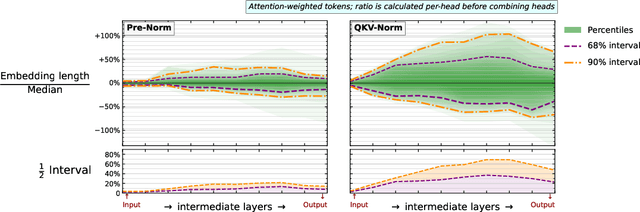
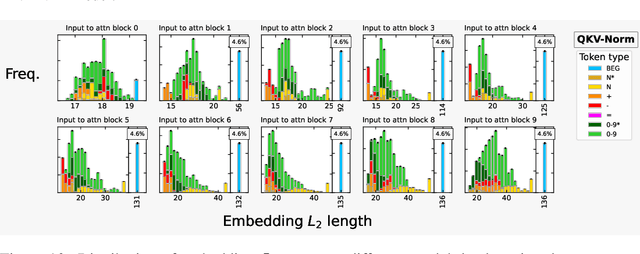
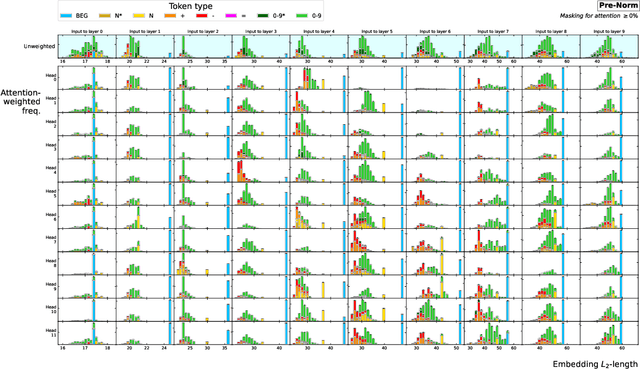
Recent works have shown that transformers can solve contextual reasoning tasks by internally executing computational graphs called circuits. Circuits often use attention to logically match information from subspaces of the representation, e.g. using position-in-sequence to identify the previous token. In this work, we consider a semantic subspace to be any independent subspace of the latent representation that can fully determine an attention distribution. We show that Pre-Norm, the placement of normalisation layer used by state-of-the-art transformers, violates this ability unless the model learns a strict representation structure of orthogonal spheres. This is because it causes linear subspaces to interfere through their common normalisation factor. Theoretically, we analyse circuit stability by modelling this interference as random noise on the $L_2$-norms of the query/key/value vectors, predicting a phenomenon of circuit collapse when sparse-attention shifts to a different token. Empirically, we investigate the sensitivity of real-world models trained for mathematical addition, observing a 1% rate of circuit collapse when the norms are artificially perturbed by $\lesssim$10%. We contrast Pre-Norm with QKV-Norm, which places normalisation after the attention head's linear operators. Theoretically this relaxes the representational constraints. Empirically we observe comparable in-distribution but worse out-of-distribution performance.
Improving robustness to corruptions with multiplicative weight perturbations
Jun 24, 2024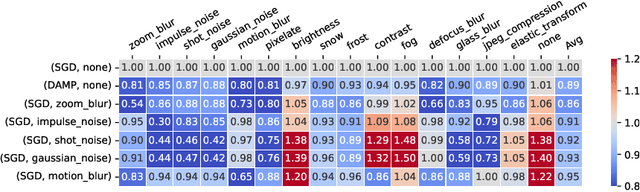

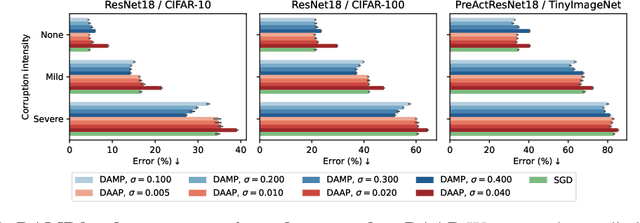

Deep neural networks (DNNs) excel on clean images but struggle with corrupted ones. Incorporating specific corruptions into the data augmentation pipeline can improve robustness to those corruptions but may harm performance on clean images and other types of distortion. In this paper, we introduce an alternative approach that improves the robustness of DNNs to a wide range of corruptions without compromising accuracy on clean images. We first demonstrate that input perturbations can be mimicked by multiplicative perturbations in the weight space. Leveraging this, we propose Data Augmentation via Multiplicative Perturbation (DAMP), a training method that optimizes DNNs under random multiplicative weight perturbations. We also examine the recently proposed Adaptive Sharpness-Aware Minimization (ASAM) and show that it optimizes DNNs under adversarial multiplicative weight perturbations. Experiments on image classification datasets (CIFAR-10/100, TinyImageNet and ImageNet) and neural network architectures (ResNet50, ViT-S/16) show that DAMP enhances model generalization performance in the presence of corruptions across different settings. Notably, DAMP is able to train a ViT-S/16 on ImageNet from scratch, reaching the top-1 error of 23.7% which is comparable to ResNet50 without extensive data augmentations.