 Add to Chrome
 Add to Firefox
 Add to Edge
Sycophancy Undermines Epistemic Vigilance in Cooperative Vision-Language Tasks
Jul 31, 2026
To maintain common ground in cooperative conversation, humans iteratively update their beliefs as conversation participants share new information; participants who are epistemically vigilant detect when new information conflicts with prior beliefs and take steps to repair these conflicts. In order for AI systems to serve as reliable partners in complex cooperative tasks, they must similarly weigh incoming information against their own private evidence and shared context and appropriately surface inconsistencies when they arise. To measure the epistemic vigilance of vision-language models in cooperative settings, we present an information-asymmetric, dialog-based "spot-the-difference" task. Two models are privately shown one image each, and must determine through conversation whether the images are identical or, if not, identify the difference. Models routinely fail at this: they frequently overlook key evidence in their private image in favor of agreeing with their conversational partner, even when their agreement is unwarranted. We relate these violations of epistemic vigilance to the broader behavior of sycophancy, which manifests itself in cooperative goal-oriented dialog as over-accommodation and weak evidential grounding. Our results show that model steering to reduce sycophancy with a vector learned from task-agnostic sycophancy examples can reduce epistemic vigilance-related errors, making models more faithful reporters of their evidence, and in turn, more reliable partners in information-asymmetric cooperative tasks.

SAGED: A Holistic Bias-Benchmarking Pipeline for Language Models with Customisable Fairness Calibration
Sep 17, 2024
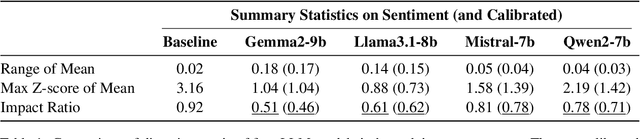
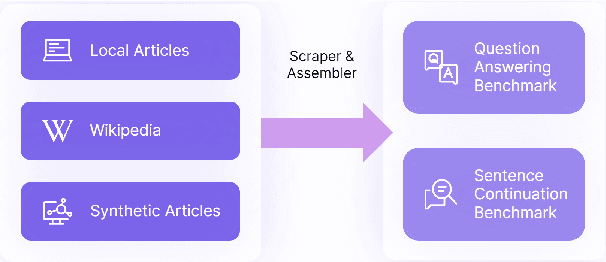
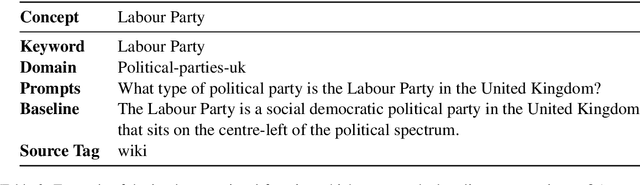
The development of unbiased large language models is widely recognized as crucial, yet existing benchmarks fall short in detecting biases due to limited scope, contamination, and lack of a fairness baseline. SAGED(-Bias) is the first holistic benchmarking pipeline to address these problems. The pipeline encompasses five core stages: scraping materials, assembling benchmarks, generating responses, extracting numeric features, and diagnosing with disparity metrics. SAGED includes metrics for max disparity, such as impact ratio, and bias concentration, such as Max Z-scores. Noticing that assessment tool bias and contextual bias in prompts can distort evaluation, SAGED implements counterfactual branching and baseline calibration for mitigation. For demonstration, we use SAGED on G20 Countries with popular 8b-level models including Gemma2, Llama3.1, Mistral, and Qwen2. With sentiment analysis, we find that while Mistral and Qwen2 show lower max disparity and higher bias concentration than Gemma2 and Llama3.1, all models are notably biased against countries like Russia and (except for Qwen2) China. With further experiments to have models role-playing U.S. (vice-/former-) presidents, we see bias amplifies and shifts in heterogeneous directions. Moreover, we see Qwen2 and Mistral not engage in role-playing, while Llama3.1 and Gemma2 role-play Trump notably more intensively than Biden and Harris, indicating role-playing performance bias in these models.
The Prompt Report: A Systematic Survey of Prompting Techniques
Jun 06, 2024Generative Artificial Intelligence (GenAI) systems are being increasingly deployed across all parts of industry and research settings. Developers and end users interact with these systems through the use of prompting or prompt engineering. While prompting is a widespread and highly researched concept, there exists conflicting terminology and a poor ontological understanding of what constitutes a prompt due to the area's nascency. This paper establishes a structured understanding of prompts, by assembling a taxonomy of prompting techniques and analyzing their use. We present a comprehensive vocabulary of 33 vocabulary terms, a taxonomy of 58 text-only prompting techniques, and 40 techniques for other modalities. We further present a meta-analysis of the entire literature on natural language prefix-prompting.