 Add to Chrome
 Add to Firefox
 Add to Edge
ESF-Bench: Benchmarking Challenging Slot-Filling Scenarios for Real-World Enterprise Applications
Jul 25, 2026
The rapid rise of large language models (LLMs) has driven transformative adoption across enterprises. However, deploying these models in real-world settings presents unique challenges due to complex system constraints and unexpected user behaviors. Among these applications, slot filling is essential for converting unstructured input into structured, actionable data. In this work, we introduce ESF-Bench, a challenging Enterprise Slot Filling benchmark consisting of 810 multi-turn samples and 6530 slots over 8 unique domains. Curated using a taxonomy of the 57 most challenging slot-filling scenarios observed during real-world enterprise deployments, ESF-Bench exposes notable limitations in current state-of-the-art LLMs, with GPT-OSS-120b low successfully extracting slots for only 20.7% of benchmark samples. To support continued research in this area, we publicly release the benchmark dataset, taxonomy, and accompanying evaluation code on GitHub.

SynthDocBench: Controlled Benchmark for Long-Context Visual Document Understanding
Jul 11, 2026Vision language models (VLMs) have achieved strong performance on visual document understanding benchmarks such as DocVQA, ChartQA, and MMLongBench-Doc. However, real-world documents combine multiple factors such as length, layout complexity, modality, and question difficulty, which makes it difficult to attribute model failures to specific causes. We introduce SynthDocBench, a fully synthetic benchmark for long-context visual document understanding that systematically controls factors including document length, layout structure, modality composition, and question type. The benchmark is constructed using a combinatorial design, each factor is varied independently across generated documents, enabling controlled analysis of model behavior. Documents are generated end to end using an LLM pipeline across six layout archetypes, with a 40 percent random override to prevent models from exploiting spurious correlations. Additionally, SynthDocBench spans long-context documents with substantially greater length and structural diversity than existing benchmarks. Evaluating seven frontier VLMs, we uncover three failure modes that existing benchmarks cannot surface: sharp degradation with document length, a systematic positional sensitivity in which the middle third of a document is hardest for five of six models and five of six models show a negative Early-to-Late trend (steepest decline: 8.3 percentage points), and breakdown of chart comprehension in long-document settings. These results suggest that current models may be overfitting to benchmark artifacts rather than achieving robust long-context visual document understanding.
Do Enterprise Systems Need Learned World Models? The Importance of Context to Infer Dynamics
May 12, 2026World models enable agents to anticipate the effects of their actions by internalizing environment dynamics. In enterprise systems, however, these dynamics are often defined by tenant-specific business logic that varies across deployments and evolves over time, making models trained on historical transitions brittle under deployment shift. We ask a question the world-models literature has not addressed: when the rules can be read at inference time, does an agent still need to learn them? We argue, and demonstrate empirically, that in settings where transition dynamics are configurable and readable, runtime discovery complements offline training by grounding predictions in the active system instance. We propose enterprise discovery agents, which recover relevant transition dynamics at runtime by reading the system's configuration rather than relying solely on internalized representations. We introduce CascadeBench, a reasoning-focused benchmark for enterprise cascade prediction that adopts the evaluation methodology of World of Workflows on diverse synthetic environments, and use it together with deployment-shift evaluation to show that offline-trained world models can perform well in-distribution but degrade as dynamics change, whereas discovery-based agents are more robust under shift by grounding their predictions in the current instance. Our findings suggest that, in configurable enterprise environments, agents should not rely solely on fixed internalized dynamics, but should incorporate mechanisms for discovering relevant transition logic at runtime.
Terminal Agents Suffice for Enterprise Automation
Mar 31, 2026There has been growing interest in building agents that can interact with digital platforms to execute meaningful enterprise tasks autonomously. Among the approaches explored are tool-augmented agents built on abstractions such as Model Context Protocol (MCP) and web agents that operate through graphical interfaces. Yet, it remains unclear whether such complex agentic systems are necessary given their cost and operational overhead. We argue that a coding agent equipped only with a terminal and a filesystem can solve many enterprise tasks more effectively by interacting directly with platform APIs. We evaluate this hypothesis across diverse real-world systems and show that these low-level terminal agents match or outperform more complex agent architectures. Our findings suggest that simple programmatic interfaces, combined with strong foundation models, are sufficient for practical enterprise automation.
EnterpriseOps-Gym: Environments and Evaluations for Stateful Agentic Planning and Tool Use in Enterprise Settings
Mar 13, 2026Large language models are shifting from passive information providers to active agents intended for complex workflows. However, their deployment as reliable AI workers in enterprise is stalled by benchmarks that fail to capture the intricacies of professional environments, specifically, the need for long-horizon planning amidst persistent state changes and strict access protocols. In this work, we introduce EnterpriseOps-Gym, a benchmark designed to evaluate agentic planning in realistic enterprise settings. Specifically, EnterpriseOps-Gym features a containerized sandbox with 164 database tables and 512 functional tools to mimic real-world search friction. Within this environment, agents are evaluated on 1,150 expert-curated tasks across eight mission-critical verticals (including Customer Service, HR, and IT). Our evaluation of 14 frontier models reveals critical limitations in state-of-the-art models: the top-performing Claude Opus 4.5 achieves only 37.4% success. Further analysis shows that providing oracle human plans improves performance by 14-35 percentage points, pinpointing strategic reasoning as the primary bottleneck. Additionally, agents frequently fail to refuse infeasible tasks (best model achieves 53.9%), leading to unintended and potentially harmful side effects. Our findings underscore that current agents are not yet ready for autonomous enterprise deployment. More broadly, EnterpriseOps-Gym provides a concrete testbed to advance the robustness of agentic planning in professional workflows.
Revitalizing Saturated Benchmarks: A Weighted Metric Approach for Differentiating Large Language Model Performance
Mar 07, 2025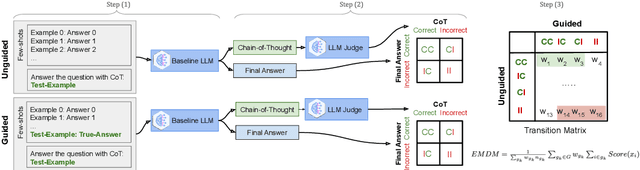
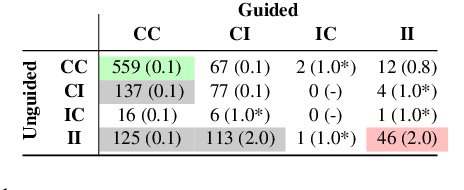
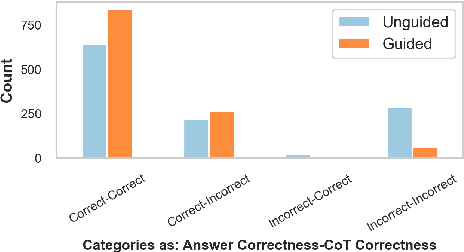
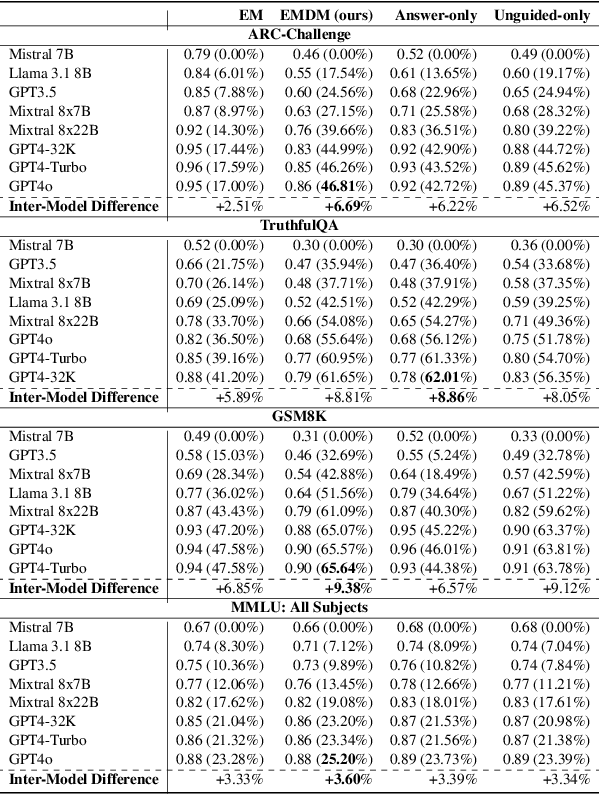
Existing benchmarks are becoming saturated and struggle to separate model performances due to factors like data contamination and advancing LLM capabilities. This paper introduces EMDM (Enhanced Model Differentiation Metric), a novel weighted metric that revitalizes benchmarks by enhancing model separation. EMDM integrates final answer and Chain-of-Thought (CoT) reasoning correctness, assigning weights based on the complexity and reasoning depth required to solve a given sample in the evaluation data. Using a baseline LLM in two setups-Unguided, where the model has no prior exposure to test samples, and Guided, where the model has prior knowledge of the desired answer-EMDM distinguishes instances of varying difficulty. The CoT and answer correctness from these setups inform an optimization objective for weight assignment, resulting in a more nuanced evaluation of model performance. Compared to the exact match (EM) metric, which achieves 17% separation on ARC-Challenge, EMDM achieves 46%, demonstrating its effectiveness in differentiating models based on reasoning and knowledge requirements.
* conference NAACL, TrustNLP Workshop