 Add to Chrome
 Add to Firefox
 Add to Edge
MOSAIC: A Self-supervised Dynamic Multi-encoding Reconstruction Framework for 3D Late Gadolinium Enhancement MRI
Aug 19, 2026
Purpose: To develop and evaluate a self-supervised dynamic reconstruction framework for highly undersampled dual-echo three-dimensional late gadolinium enhancement (3D LGE) MRI. Methods: MOSAIC jointly models multi-echo image content, coil sensitivity maps, and beat-specific nonrigid motion directly from acquired undersampled data, without requiring fully sampled training datasets or accurate precomputed sensitivity maps. Unlike existing methods that bin the acquired data into different motion states, with or without motion compensation, MOSAIC reconstructs a motion-resolved 3D LGE image from each heartbeat. The method was evaluated using digital phantoms with simulated myocardial scars and in vivo animal and human studies. Results: In phantom experiments, MOSAIC achieved higher peak signal-to-noise ratio and structural similarity index measure than low-rank deep image prior reconstruction and ablation variants of MOSAIC. In animal and human studies, MOSAIC achieved higher blinded expert image-quality scores than inline image-navigated compressed-sensing and low-rank deep image prior reconstructions. Conclusion: MOSAIC demonstrated the feasibility of motion-resolved free-breathing dual-echo 3D LGE MRI at acceleration factors exceeding 1,000, with improved detail preservation and artifact suppression relative to the state-of-the-art comparison methods.

CoBA: Integrated Deep Learning Model for Reliable Low-Altitude UAV Classification in mmWave Radio Networks
Jan 28, 2026Uncrewed Aerial Vehicles (UAVs) are increasingly used in civilian and industrial applications, making secure low-altitude operations crucial. In dense mmWave environments, accurately classifying low-altitude UAVs as either inside authorized or restricted airspaces remains challenging, requiring models that handle complex propagation and signal variability. This paper proposes a deep learning model, referred to as CoBA, which stands for integrated Convolutional Neural Network (CNN), Bidirectional Long Short-Term Memory (BiLSTM), and Attention which leverages Fifth Generation (5G) millimeter-wave (mmWave) radio measurements to classify UAV operations in authorized and restricted airspaces at low altitude. The proposed CoBA model integrates convolutional, bidirectional recurrent, and attention layers to capture both spatial and temporal patterns in UAV radio measurements. To validate the model, a dedicated dataset is collected using the 5G mmWave network at TalTech, with controlled low altitude UAV flights in authorized and restricted scenarios. The model is evaluated against conventional ML models and a fingerprinting-based benchmark. Experimental results show that CoBA achieves superior accuracy, significantly outperforming all baseline models and demonstrating its potential for reliable and regulated UAV airspace monitoring.
Enabling Ultra-Fast Cardiovascular Imaging Across Heterogeneous Clinical Environments with a Generalist Foundation Model and Multimodal Database
Dec 25, 2025Multimodal cardiovascular magnetic resonance (CMR) imaging provides comprehensive and non-invasive insights into cardiovascular disease (CVD) diagnosis and underlying mechanisms. Despite decades of advancements, its widespread clinical adoption remains constrained by prolonged scan times and heterogeneity across medical environments. This underscores the urgent need for a generalist reconstruction foundation model for ultra-fast CMR imaging, one capable of adapting across diverse imaging scenarios and serving as the essential substrate for all downstream analyses. To enable this goal, we curate MMCMR-427K, the largest and most comprehensive multimodal CMR k-space database to date, comprising 427,465 multi-coil k-space data paired with structured metadata across 13 international centers, 12 CMR modalities, 15 scanners, and 17 CVD categories in populations across three continents. Building on this unprecedented resource, we introduce CardioMM, a generalist reconstruction foundation model capable of dynamically adapting to heterogeneous fast CMR imaging scenarios. CardioMM unifies semantic contextual understanding with physics-informed data consistency to deliver robust reconstructions across varied scanners, protocols, and patient presentations. Comprehensive evaluations demonstrate that CardioMM achieves state-of-the-art performance in the internal centers and exhibits strong zero-shot generalization to unseen external settings. Even at imaging acceleration up to 24x, CardioMM reliably preserves key cardiac phenotypes, quantitative myocardial biomarkers, and diagnostic image quality, enabling a substantial increase in CMR examination throughput without compromising clinical integrity. Together, our open-access MMCMR-427K database and CardioMM framework establish a scalable pathway toward high-throughput, high-quality, and clinically accessible cardiovascular imaging.
Deep Learning-Driven Inversion Framework for Shear Modulus Estimation in Magnetic Resonance Elastography (DIME)
Dec 15, 2025The Multimodal Direct Inversion (MMDI) algorithm is widely used in Magnetic Resonance Elastography (MRE) to estimate tissue shear stiffness. However, MMDI relies on the Helmholtz equation, which assumes wave propagation in a uniform, homogeneous, and infinite medium. Furthermore, the use of the Laplacian operator makes MMDI highly sensitive to noise, which compromises the accuracy and reliability of stiffness estimates. In this study, we propose the Deep-Learning driven Inversion Framework for Shear Modulus Estimation in MRE (DIME), aimed at enhancing the robustness of inversion. DIME is trained on the displacement fields-stiffness maps pair generated through Finite Element Modelling (FEM) simulations. To capture local wave behavior and improve robustness to global image variations, DIME is trained on small image patches. We first validated DIME using homogeneous and heterogeneous datasets simulated with FEM, where DIME produced stiffness maps with low inter-pixel variability, accurate boundary delineation, and higher correlation with ground truth (GT) compared to MMDI. Next, DIME was evaluated in a realistic anatomy-informed simulated liver dataset with known GT and compared directly to MMDI. DIME reproduced ground-truth stiffness patterns with high fidelity (r = 0.99, R^2 = 0.98), while MMDI showed greater underestimation. After validating DIME on synthetic data, we tested the model in in vivo liver MRE data from eight healthy and seven fibrotic subjects. DIME preserved physiologically consistent stiffness patterns and closely matched MMDI, which showed directional bias. Overall, DIME showed higher correlation with ground truth and visually similar stiffness patterns, whereas MMDI displayed a larger bias that can potentially be attributed to directional filtering. These preliminary results highlight the feasibility of DIME for clinical applications in MRE.
Minimax Multi-Target Conformal Prediction with Applications to Imaging Inverse Problems
Nov 17, 2025In ill-posed imaging inverse problems, uncertainty quantification remains a fundamental challenge, especially in safety-critical applications. Recently, conformal prediction has been used to quantify the uncertainty that the inverse problem contributes to downstream tasks like image classification, image quality assessment, fat mass quantification, etc. While existing works handle only a scalar estimation target, practical applications often involve multiple targets. In response, we propose an asymptotically minimax approach to multi-target conformal prediction that provides tight prediction intervals while ensuring joint marginal coverage. We then outline how our minimax approach can be applied to multi-metric blind image quality assessment, multi-task uncertainty quantification, and multi-round measurement acquisition. Finally, we numerically demonstrate the benefits of our minimax method, relative to existing multi-target conformal prediction methods, using both synthetic and magnetic resonance imaging (MRI) data.
Conformal Bounds on Full-Reference Image Quality for Imaging Inverse Problems
May 14, 2025In imaging inverse problems, we would like to know how close the recovered image is to the true image in terms of full-reference image quality (FRIQ) metrics like PSNR, SSIM, LPIPS, etc. This is especially important in safety-critical applications like medical imaging, where knowing that, say, the SSIM was poor could potentially avoid a costly misdiagnosis. But since we don't know the true image, computing FRIQ is non-trivial. In this work, we combine conformal prediction with approximate posterior sampling to construct bounds on FRIQ that are guaranteed to hold up to a user-specified error probability. We demonstrate our approach on image denoising and accelerated magnetic resonance imaging (MRI) problems. Code is available at https://github.com/jwen307/quality_uq.
Solving Inverse Problems using Diffusion with Fast Iterative Renoising
Jan 29, 2025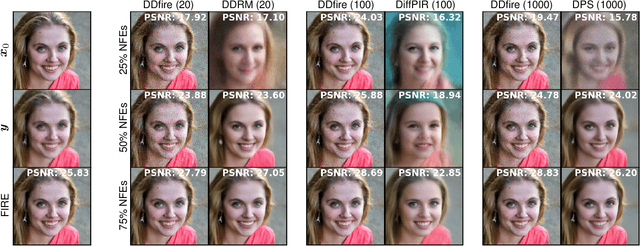
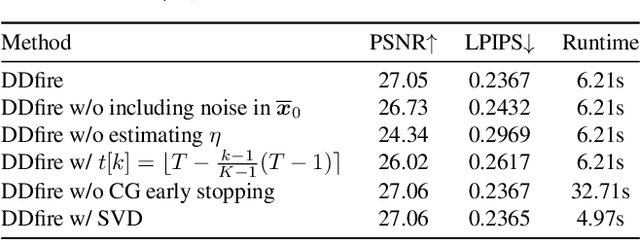
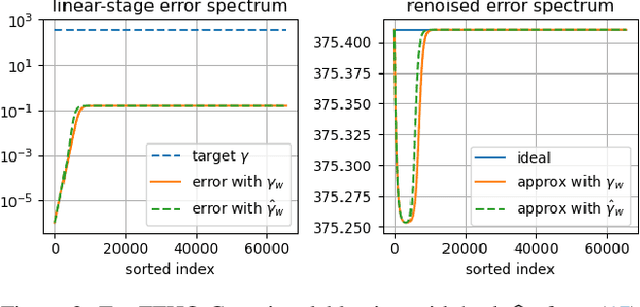
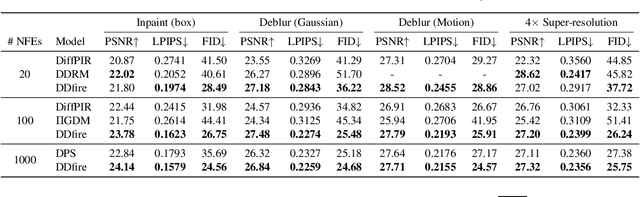
Imaging inverse problems can be solved in an unsupervised manner using pre-trained diffusion models. In most cases, that involves approximating the gradient of the measurement-conditional score function in the reverse process. Since the approximations produced by existing methods are quite poor, especially early in the reverse process, we propose a new approach that re-estimates and renoises the image several times per diffusion step. Renoising adds carefully shaped colored noise that ensures the pre-trained diffusion model sees white-Gaussian error, in accordance with how it was trained. We demonstrate the effectiveness of our "DDfire" method at 20, 100, and 1000 neural function evaluations on linear inverse problems and phase retrieval.
An unsupervised method for MRI recovery: Deep image prior with structured sparsity
Jan 02, 2025
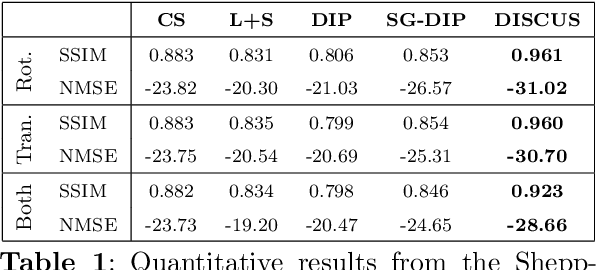
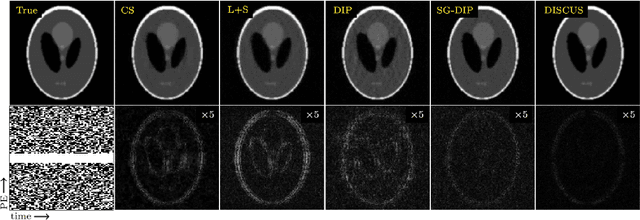
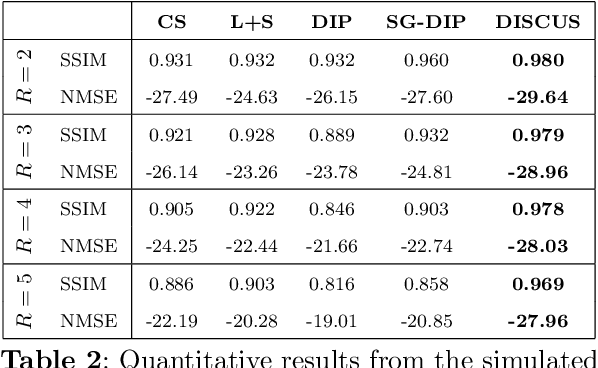
Objective: To propose and validate an unsupervised MRI reconstruction method that does not require fully sampled k-space data. Materials and Methods: The proposed method, deep image prior with structured sparsity (DISCUS), extends the deep image prior (DIP) by introducing group sparsity to frame-specific code vectors, enabling the discovery of a low-dimensional manifold for capturing temporal variations. \discus was validated using four studies: (I) simulation of a dynamic Shepp-Logan phantom to demonstrate its manifold discovery capabilities, (II) comparison with compressed sensing and DIP-based methods using simulated single-shot late gadolinium enhancement (LGE) image series from six distinct digital cardiac phantoms in terms of normalized mean square error (NMSE) and structural similarity index measure (SSIM), (III) evaluation on retrospectively undersampled single-shot LGE data from eight patients, and (IV) evaluation on prospectively undersampled single-shot LGE data from eight patients, assessed via blind scoring from two expert readers. Results: DISCUS outperformed competing methods, demonstrating superior reconstruction quality in terms of NMSE and SSIM (Studies I--III) and expert reader scoring (Study IV). Discussion: An unsupervised image reconstruction method is presented and validated on simulated and measured data. These developments can benefit applications where acquiring fully sampled data is challenging.
Motion-Guided Deep Image Prior for Cardiac MRI
Dec 05, 2024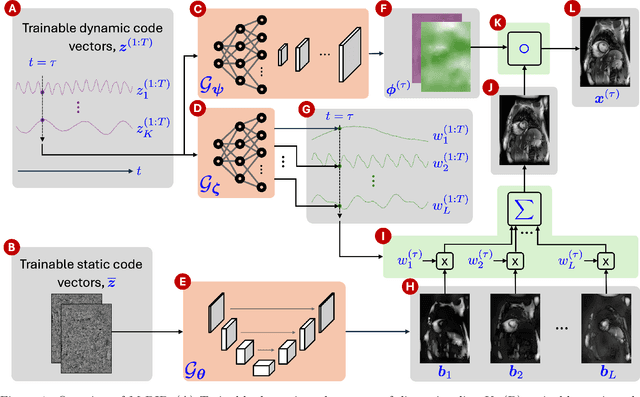


Cardiovascular magnetic resonance imaging is a powerful diagnostic tool for assessing cardiac structure and function. Traditional breath-held imaging protocols, however, pose challenges for patients with arrhythmias or limited breath-holding capacity. We introduce Motion-Guided Deep Image prior (M-DIP), a novel unsupervised reconstruction framework for accelerated real-time cardiac MRI. M-DIP employs a spatial dictionary to synthesize a time-dependent template image, which is further refined using time-dependent deformation fields that model cardiac and respiratory motion. Unlike prior DIP-based methods, M-DIP simultaneously captures physiological motion and frame-to-frame content variations, making it applicable to a wide range of dynamic applications. We validate M-DIP using simulated MRXCAT cine phantom data as well as free-breathing real-time cine and single-shot late gadolinium enhancement data from clinical patients. Comparative analyses against state-of-the-art supervised and unsupervised approaches demonstrate M-DIP's performance and versatility. M-DIP achieved better image quality metrics on phantom data, as well as higher reader scores for in-vivo patient data.
pcaGAN: Improving Posterior-Sampling cGANs via Principal Component Regularization
Nov 01, 2024In ill-posed imaging inverse problems, there can exist many hypotheses that fit both the observed measurements and prior knowledge of the true image. Rather than returning just one hypothesis of that image, posterior samplers aim to explore the full solution space by generating many probable hypotheses, which can later be used to quantify uncertainty or construct recoveries that appropriately navigate the perception/distortion trade-off. In this work, we propose a fast and accurate posterior-sampling conditional generative adversarial network (cGAN) that, through a novel form of regularization, aims for correctness in the posterior mean as well as the trace and K principal components of the posterior covariance matrix. Numerical experiments demonstrate that our method outperforms contemporary cGANs and diffusion models in imaging inverse problems like denoising, large-scale inpainting, and accelerated MRI recovery. The code for our model can be found here: https://github.com/matt-bendel/pcaGAN.