 Add to Chrome
 Add to Firefox
 Add to Edge
MUPA$^{2}$E: Multimodal Unified Perception with Asymmetric Attention for Emotion Assessment
Aug 17, 2026
Automatic emotion assessment can benefit from combining neural and behavioral signals, but many multimodal approaches rely on separate, modality-specific feature-extraction pipelines before fusion. This paper presents MUPA\textsuperscript{2}E, a unified perception framework that processes facial video and electroencephalography (EEG) through a single shared asymmetric-attention backbone. Facial video is represented through axis-folded frame tokens, while EEG is processed either as a raw multichannel waveform or projected into the spatial domain for multimodal fusion. The framework is evaluated on the DMER dataset under a stratified subject-independent protocol, comparing unimodal video, unimodal EEG, and fused video--EEG configurations with per-channel and merged EEG projections. Using the original recordings, with shorter trials zero-padded to match the longest duration, merged fusion at stride~$30$ achieves the highest validation performance and a test accuracy of $70.07\%$. Further analysis revealed that recording duration is unevenly distributed across the affective classes, making the padding pattern a potential classification cue. Controlling for this factor by cropping all recordings to a common duration of $20$ seconds yielded a test accuracy of $62.71\%$, providing a stricter duration-controlled assessment of the framework in which differences in recording length are removed as a potential classification cue. These findings demonstrate the feasibility of processing structurally different neural and visual signals within a compact unified architecture while highlighting the importance of controlling duration-related cues in affective datasets.

A Multi-Scale Temporal Framework with Dynamic Fusion for EEG-Based Emotion Recognition
Aug 10, 2026Mixed emotions represent a clinically relevant but still underexplored target for automatic emotion recognition. EEG provides millisecond-level access to neural activity, yet most EEG pipelines analyze the signal through a single temporal window, thereby fixing the temporal structure available to the model. This study introduces a multi-scale temporal framework for EEG-based emotion recognition. The EEG waveform is decomposed into windows of one or several durations, processed by a shared attention-based encoder, and integrated through a dynamic fusion module that assigns sample-specific weights across temporal scales. The framework is evaluated under a subject-independent protocol in binary and three-class settings, with the three-class task including the mixed affective category. The best results are 65.22% for the two-class task and 45.43% for the three-class task. Both are obtained with three-scale dynamic-fusion configurations and remain substantially above the full-signal baseline. The best-performing temporal scales differ between the two tasks. Dynamic fusion outperforms concatenation in the highest-scoring two-class configuration and slightly exceeds it in the highest-scoring three-class configuration, although these multi-scale settings require substantially more computation than the full-signal baseline.
Multimodal Voice Activity Projection for Turn-Taking in Social Robots with Voice-Activity-Related Pretrained Encoders
Jul 08, 2026Turn-taking prediction is a key requirement for social robots involved in human-human interaction, particularly in mediator settings, where the robot must anticipate conversational dynamics rather than merely react to pauses. This work presents a Multimodal Voice Activity Projection (MM-VAP) framework that extends the original audio-only VAP formulation to synchronized audio-visual inputs while preserving its self-supervised future-projection objective. The proposed approach builds on pretrained audio-visual backbones originally optimized for speech-related tasks and adapts them through Low-Rank Adaptation to the multimodal turn-taking problem. After independent speaker encoding, an inter-speaker attention stage models the relational dynamics required to project future voice activity. In addition, a semantic consistency loss is introduced to regularize the 256-state output space according to higher-level dialogue activity patterns. Experiments on NoXi and NoXi+J showed improvements over the current baselines, particularly for some turn-taking events. Additional evaluation on the Haru EDR corpus further supported the suitability of this direction for mediation-oriented human-robot interaction.
Efficient Emotion-Aware Iconic Gesture Prediction for Robot Co-Speech
Apr 13, 2026Co-speech gestures increase engagement and improve speech understanding. Most data-driven robot systems generate rhythmic beat-like motion, yet few integrate semantic emphasis. To address this, we propose a lightweight transformer that derives iconic gesture placement and intensity from text and emotion alone, requiring no audio input at inference time. The model outperforms GPT-4o in both semantic gesture placement classification and intensity regression on the BEAT2 dataset, while remaining computationally compact and suitable for real-time deployment on embodied agents.
Adding More Value Than Work: Practical Guidelines for Integrating Robots into Intercultural Competence Learning
Feb 08, 2026While social robots have demonstrated effectiveness in supporting students' intercultural competence development, it is unclear how they can effectively be adopted for integrated use in K-12 schools. We conducted two phases of design workshops with teachers, where they co-designed robot-mediated intercultural activities while considering student needs and school integration concerns. Using thematic analysis, we identify appropriate scenarios and roles for classroom robots, explore how robots could complement rather than replace teachers, and consider how to address ethical and compliance considerations. Our findings provide practical design guidelines for the HRI community to develop social robots that can effectively support intercultural education in K-12 schools.
Ain't Misbehavin' -- Using LLMs to Generate Expressive Robot Behavior in Conversations with the Tabletop Robot Haru
Feb 18, 2024Social robots aim to establish long-term bonds with humans through engaging conversation. However, traditional conversational approaches, reliant on scripted interactions, often fall short in maintaining engaging conversations. This paper addresses this limitation by integrating large language models (LLMs) into social robots to achieve more dynamic and expressive conversations. We introduce a fully-automated conversation system that leverages LLMs to generate robot responses with expressive behaviors, congruent with the robot's personality. We incorporate robot behavior with two modalities: 1) a text-to-speech (TTS) engine capable of various delivery styles, and 2) a library of physical actions for the robot. We develop a custom, state-of-the-art emotion recognition model to dynamically select the robot's tone of voice and utilize emojis from LLM output as cues for generating robot actions. A demo of our system is available here. To illuminate design and implementation issues, we conduct a pilot study where volunteers chat with a social robot using our proposed system, and we analyze their feedback, conducting a rigorous error analysis of chat transcripts. Feedback was overwhelmingly positive, with participants commenting on the robot's empathy, helpfulness, naturalness, and entertainment. Most negative feedback was due to automatic speech recognition (ASR) errors which had limited impact on conversations. However, we observed a small class of errors, such as the LLM repeating itself or hallucinating fictitious information and human responses, that have the potential to derail conversations, raising important issues for LLM application.
* Accepted as Late Breaking Report (LBR) at the 19th Annual ACM/IEEE International Conference on Human Robot Interaction (HRI '24)
Developing Autonomous Robot-Mediated Behavior Coaching Sessions with Haru
Feb 18, 2024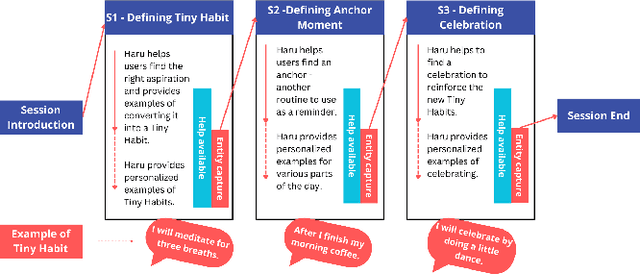
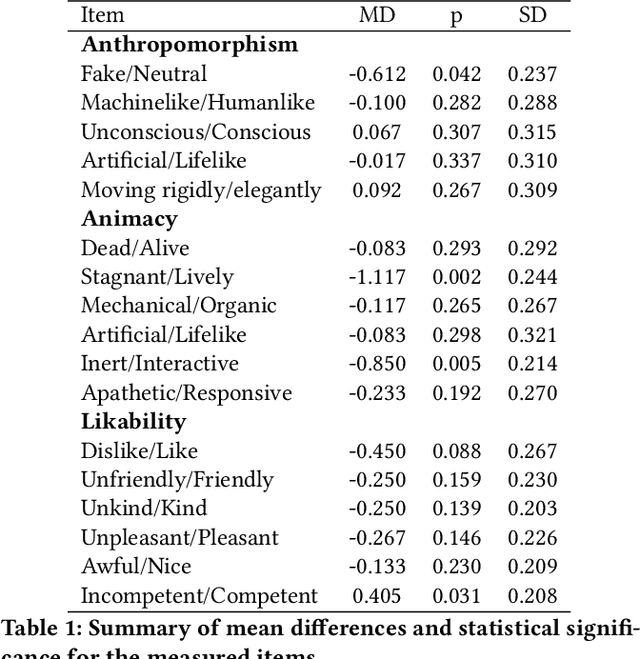
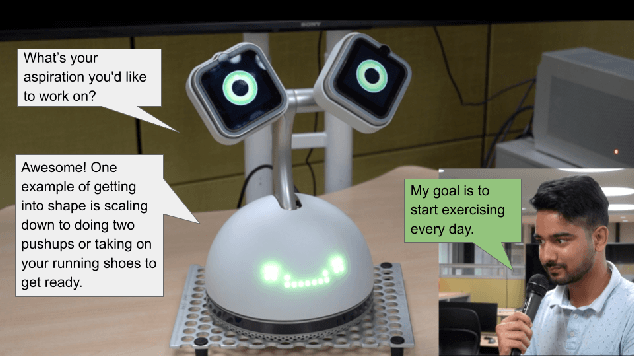
This study presents an empirical investigation into the design and impact of autonomous dialogues in human-robot interaction for behavior change coaching. We focus on the use of Haru, a tabletop social robot, and explore the implementation of the Tiny Habits method for fostering positive behavior change. The core of our study lies in developing a fully autonomous dialogue system that maximizes Haru's emotional expressiveness and unique personality. Our methodology involved iterative design and extensive testing of the dialogue system, ensuring it effectively embodied the principles of the Tiny Habits method while also incorporating strategies for trust-raising and trust-dampening. The effectiveness of the final version of the dialogue was evaluated in an experimental study with human participants (N=12). The results indicated a significant improvement in perceptions of Haru's liveliness, interactivity, and neutrality. Additionally, our study contributes to the broader understanding of dialogue design in social robotics, offering practical insights for future developments in the field.
* Accepted as Late Breaking Report (LBR) at the 19th Annual ACM/IEEE International Conference on Human Robot Interaction (HRI '24)
A Study on Social Robot Behavior in Group Conversation
Dec 21, 2023Recently, research in human-robot interaction began to consider a robot's influence at the group level. Despite the recent growth in research investigating the effects of robots within groups of people, our overall understanding of what happens when robots are placed within groups or teams of people is still limited. This paper investigates several key problems for social robots that manage conversations in a group setting, where the number of participants is more than two. In a group setting, the conversation dynamics are a lot more complicated than the conventional one-to-one conversation, thus, there are more challenges need to be solved.
Social Robot Mediator for Multiparty Interaction
Oct 20, 2023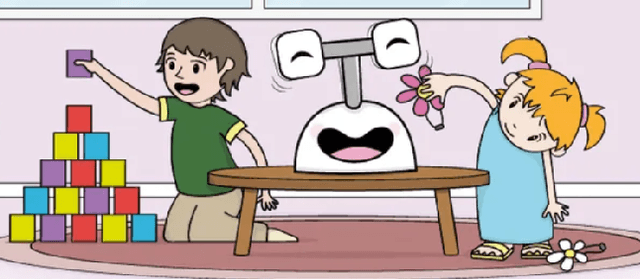
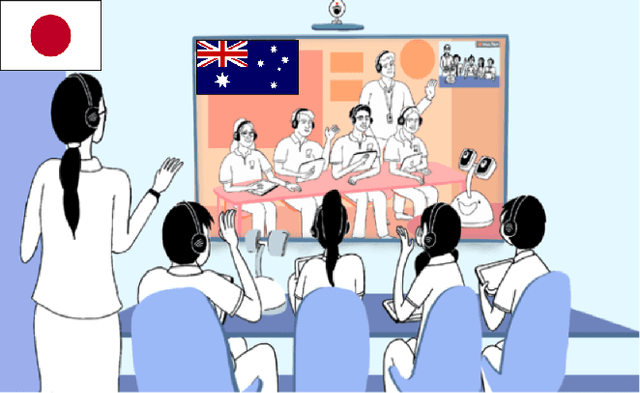
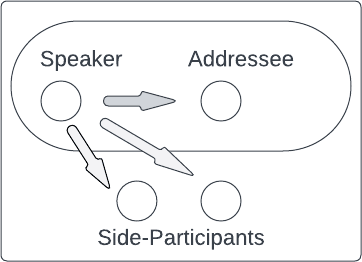
A social robot acting as a 'mediator' can enhance interactions between humans, for example, in fields such as education and healthcare. A particularly promising area of research is the use of a social robot mediator in a multiparty setting, which tends to be the most applicable in real-world scenarios. However, research in social robot mediation for multiparty interactions is still emerging and faces numerous challenges. This paper provides an overview of social robotics and mediation research by highlighting relevant literature and some of the ongoing problems. The importance of incorporating relevant psychological principles for developing social robot mediators is also presented. Additionally, the potential of implementing a Theory of Mind in a social robot mediator is explored, given how such a framework could greatly improve mediation by reading the individual and group mental states to interact effectively.
GAN-Based Interactive Reinforcement Learning from Demonstration and Human Evaluative Feedback
Apr 14, 2021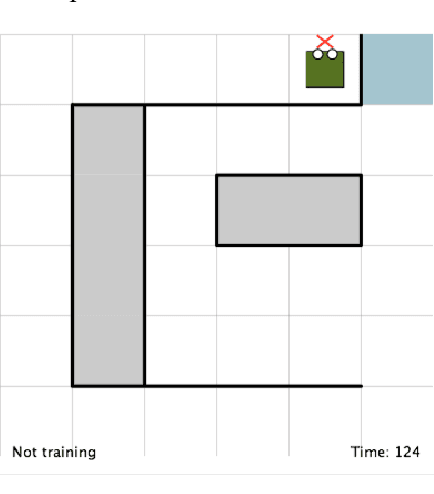
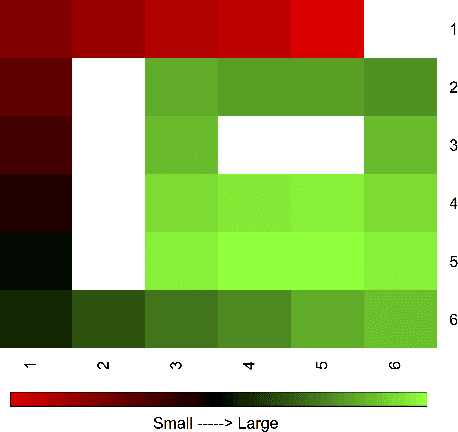
Deep reinforcement learning (DRL) has achieved great successes in many simulated tasks. The sample inefficiency problem makes applying traditional DRL methods to real-world robots a great challenge. Generative Adversarial Imitation Learning (GAIL) -- a general model-free imitation learning method, allows robots to directly learn policies from expert trajectories in large environments. However, GAIL shares the limitation of other imitation learning methods that they can seldom surpass the performance of demonstrations. In this paper, to address the limit of GAIL, we propose GAN-Based Interactive Reinforcement Learning (GAIRL) from demonstration and human evaluative feedback by combining the advantages of GAIL and interactive reinforcement learning. We tested our proposed method in six physics-based control tasks, ranging from simple low-dimensional control tasks -- Cart Pole and Mountain Car, to difficult high-dimensional tasks -- Inverted Double Pendulum, Lunar Lander, Hopper and HalfCheetah. Our results suggest that with both optimal and suboptimal demonstrations, a GAIRL agent can always learn a more stable policy with optimal or close to optimal performance, while the performance of the GAIL agent is upper bounded by the performance of demonstrations or even worse than it. In addition, our results indicate the reason that GAIRL is superior over GAIL is the complementary effect of demonstrations and human evaluative feedback.