 Add to Chrome
 Add to Firefox
 Add to Edge
LEMUR: Learning to Align with Multi-Objective Reinforcement Learning from Preference Feedback
Jul 31, 2026
Reinforcement Learning (RL) systems are typically trained using a single, well-specified scalar reward function. However, real-world decision-making tasks often involve multiple, competing objectives, such as performance versus efficiency, where ground-truth reward functions are difficult to specify or inaccessible. While Multi-Objective RL (MORL) addresses such trade-offs by modeling rewards as vectors, existing approaches typically assume access to a well-specified reward function for each objective, inheriting the same challenges faced by single-objective RL. Meanwhile, Preference-based RL (PbRL) has shown great potential in solving complex tasks without access to a pre-defined reward function through reward learning from human feedback, yet has largely been studied in single-objective settings. In this work, we bridge this gap with LEMUR: Learning to Align with Multi-Objective Reinforcement Learning with Preference feedback, a novel framework where an agent interactively learns from the preferences of multiple humans to learn optimal multi-objective policies. Our approach jointly learns policies and multiple objective-specific reward models from human feedback, enabling agents to effectively balance competing objectives during learning. We evaluate LEMUR on a variety of benchmark multi-objective tasks, and empirical results demonstrate its superior performance over baseline methods. Our method presents a promising direction for solving multi-objective decision-making tasks without pre-defined reward functions.

Grounding Hierarchical Vision-Language-Action Models Through Explicit Language-Action Alignment
Apr 07, 2026Achieving robot transparency is a critical step toward effective human-robot collaboration. To be transparent, a robot's natural language communication must be consistent with its actions and explicitly grounded in the task and environment. Existing hierarchical Vision-Language-Action (VLA) models can generate language (e.g., through chain-of-thought) and low-level actions. However, current work does not consider explicit alignment between these modalities during training. To address this crucial gap, we propose a novel training framework that explicitly grounds hierarchical VLA sub-task descriptions with respect to the visual observation and action space. Our framework uses a contrastive model to assess the alignment between generated language and corresponding action trajectories. This contrastive model enables direct ranking of different language-trajectory pairs based on their alignment, allowing us to refine the grounding of our hierarchical VLA through offline preference learning. We apply our framework to the LanguageTable dataset, a benchmark dataset of human language-annotated trajectories, and provide critical insights into multimodal grounding representations, all while establishing a strong baseline that achieves performance comparable to fully supervised fine-tuning and minimizing the need for costly data annotations.
Social Robot Mediator for Multiparty Interaction
Oct 20, 2023
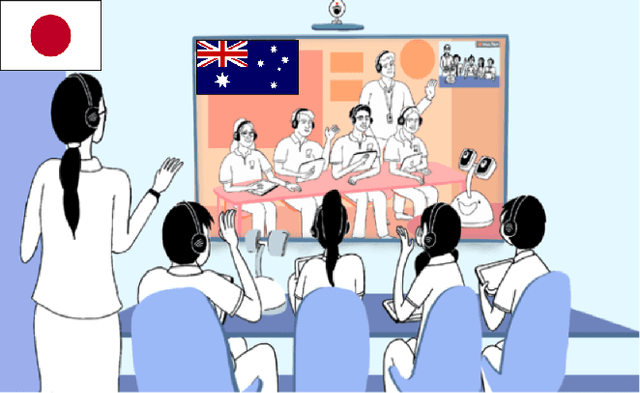
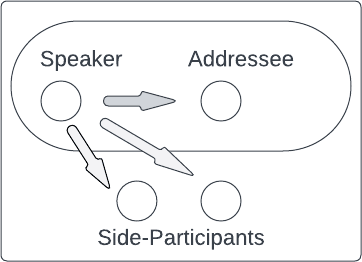
A social robot acting as a 'mediator' can enhance interactions between humans, for example, in fields such as education and healthcare. A particularly promising area of research is the use of a social robot mediator in a multiparty setting, which tends to be the most applicable in real-world scenarios. However, research in social robot mediation for multiparty interactions is still emerging and faces numerous challenges. This paper provides an overview of social robotics and mediation research by highlighting relevant literature and some of the ongoing problems. The importance of incorporating relevant psychological principles for developing social robot mediators is also presented. Additionally, the potential of implementing a Theory of Mind in a social robot mediator is explored, given how such a framework could greatly improve mediation by reading the individual and group mental states to interact effectively.