 Add to Chrome
 Add to Firefox
 Add to Edge
RNA-FM: Flow-Matching Generative Model for Genome-wide RNA-Seq Prediction
May 12, 2026
Histopathology whole-slide images (WSIs) are routinely acquired in clinical practice and contain rich tissue morphology but lack direct molecular architecture and functional programs defining pathological states, whereas RNA sequencing (RNA-seq) provides genome-wide transcriptional profiles at substantial cost, thereby motivating WSI-based genome-wide transcriptomic prediction. Existing approaches for predicting gene expression from WSIs predominantly rely on deterministic regression with one-to-one mapping, limiting their ability to capture biological heterogeneity and predictive uncertainty. We propose RNA-FM, a flow-matching generative framework for genome-wide bulk RNA-seq prediction from WSIs. RNA-FM formulates transcriptomic prediction as a continuous-time conditional transport problem, learning a velocity field that maps a simple prior to the target gene expression distribution conditioned on morphologies. By integrating pathway-level structure, RNA-FM enables scalable and biologically interpretable genome-wide gene expression imputation. Extensive experiments demonstrate that RNA-FM consistently outperforms state-of-the-art approaches while maintaining biological meaningfulness. Code is available at https://github.com/YXSong000/RNA-FM.

Neuro-Symbolic Learning: Principles and Applications in Ophthalmology
Jul 31, 2022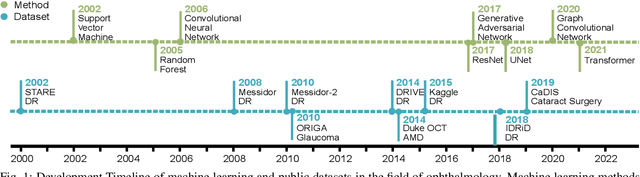
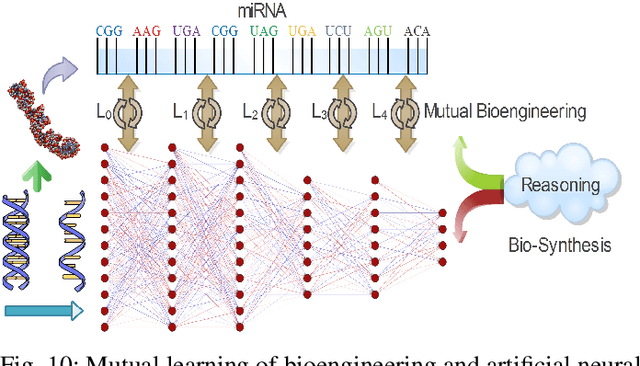
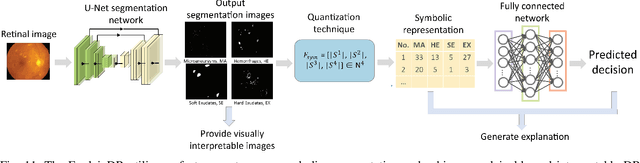
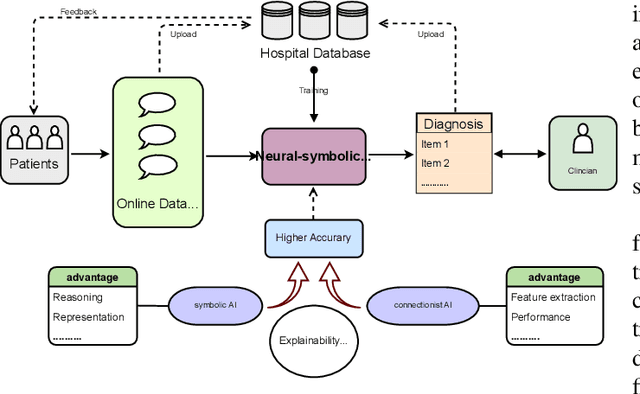
Neural networks have been rapidly expanding in recent years, with novel strategies and applications. However, challenges such as interpretability, explainability, robustness, safety, trust, and sensibility remain unsolved in neural network technologies, despite the fact that they will unavoidably be addressed for critical applications. Attempts have been made to overcome the challenges in neural network computing by representing and embedding domain knowledge in terms of symbolic representations. Thus, the neuro-symbolic learning (NeSyL) notion emerged, which incorporates aspects of symbolic representation and bringing common sense into neural networks (NeSyL). In domains where interpretability, reasoning, and explainability are crucial, such as video and image captioning, question-answering and reasoning, health informatics, and genomics, NeSyL has shown promising outcomes. This review presents a comprehensive survey on the state-of-the-art NeSyL approaches, their principles, advances in machine and deep learning algorithms, applications such as opthalmology, and most importantly, future perspectives of this emerging field.