 Add to Chrome
 Add to Firefox
 Add to Edge
REChart: Reasoning-Efficient Chart Editing with Large Reasoning Models
Aug 18, 2026
Chart editing requires inferring and modifying visualization code from a reference chart image based on an editing instruction, challenging fine-grained visual reasoning, instruction following, and executable code synthesis capabilities of MLLMs. Large reasoning models (LRMs) with extended Chain-of-Thought (CoT) reasoning are suitable for tackling such complex multimodal tasks. However, our preliminary study reveals an ``inverted-U'' relationship between reasoning length and chart-editing performance: Excessive reasoning often leads to ``overthinking,'' where models drift toward hallucinated visual details or get stuck in redundant reasoning loops. To address the gap, we introduce REChart, a two-stage training framework that provides process-level supervision over intermediate reasoning steps, improving both editing fidelity and reasoning efficiency. First, we synthesize 200k high-quality reasoning trajectories for supervised fine-tuning from a large image-instruction-code pool, using a role-specialized agentic Reason-Score-Refine workflow that iteratively refine the chart code toward higher quality. Second, we optimize the model via reinforcement learning with two complementary rewards: a \emph{fidelity} reward evaluating code correctness, visual fidelity, and structural consistency, and an \emph{efficiency} reward that assigns each rollout a random thinking budget, truncates the reasoning process, and credits the final reasoning segment according to its contribution to the output. On the ChartEdit and ChartMIMIC benchmarks, our model achieves state-of-the-art chart-editing performance among open-source models of comparable scale, while mitigating overthinking and reducing average reasoning token usage by 79.0\% under a maximum thinking budget of 16,384 tokens compared with the base model.

Estimating Uncertainty in Galaxy Morphology Classification
Aug 09, 2026Astronomers classify galaxy morphology to investigate cosmic evolution. While deep foundation models are increasingly utilized in Galaxy Morphology Classification (GMC), little work has been done on evaluating the uncertainty of GMC results. Uncertainty evaluation is important because astronomical data are inherently noisy due to instrumental and environmental limitations. Also, the continuous evolution of galaxies creates intrinsic morphological ambiguity. However, current foundation models operate as deterministic point estimators, failing to quantify the uncertainty. To overcome this limitation, we propose UEGMC, a post-hoc framework of Uncertainty Estimation for Galaxy Morphology Classification. It categorizes uncertainty in GMC into distinct types by model parameters, astronomical data, reference standards, or intrinsic physical ambiguities, thereby facilitating better classification. Our framework can directly predict uncertainties from representations extracted from the frozen backbones of foundation models, without computationally expensive sampling, therefore enabling fine-grained uncertainty evaluations. Our experimental results demonstrate that UEGMC provides competitive uncertainty quantification performance compared with previous methods.
Cross-Modal Clinical Knowledge Integration for Mammography Report Generation
May 29, 2026Breast cancer is a major global health concern, and mammography screening plays a central role in early detection. The large volume of screening examinations creates a substantial workload for radiologists, making accurate and consistent report generation a critical clinical challenge. Existing automated mammography report generation methods primarily focus on direct visual-to-text mapping, while overlooking the structured clinical reasoning process followed by radiologists in real-world practice. To address this limitation, we propose MammoRG, a mammography report generation framework that explicitly simulates the clinical reporting workflow by following the BI-RADS guideline and incorporating prior clinical knowledge to produce diagnostic reports. Specifically, MammoRG adopts a two-stage training framework. In the first stage, the model learns to integrate clinically relevant prior knowledge from a patient's four-view mammograms through classification-based supervision. In the second stage, a terminology-aware supervised fine-tuning strategy is introduced to model mammography-specific clinical terms as atomic semantic units, enabling the generation of high-quality reports with improved clinical consistency. To facilitate clinical efficacy evaluation of generated reports, we further develop MammoRGTool, a dedicated mammography report parsing tool that extracts structured clinical information from free-text reports. Extensive experiments demonstrate that MammoRG consistently outperforms existing methods across multiple clinical efficacy metrics, particularly in diagnosis-related BI-RADS F1, where it surpasses the second-best model by 2.73%, 2.04%, 1.90%, and 3.27% on the internal, external 1, external 2, and VinDr-Mammo datasets, respectively.
VVTRec: Radio Interferometric Reconstruction through Visual and Textual Modality Enrichment
Jan 10, 2026Radio astronomy is an indispensable discipline for observing distant celestial objects. Measurements of wave signals from radio telescopes, called visibility, need to be transformed into images for astronomical observations. These dirty images blend information from real sources and artifacts. Therefore, astronomers usually perform reconstruction before imaging to obtain cleaner images. Existing methods consider only a single modality of sparse visibility data, resulting in images with remaining artifacts and insufficient modeling of correlation. To enhance the extraction of visibility information and emphasize output quality in the image domain, we propose VVTRec, a multimodal radio interferometric data reconstruction method with visibility-guided visual and textual modality enrichment. In our VVTRec, sparse visibility is transformed into image-form and text-form features to obtain enhancements in terms of spatial and semantic information, improving the structural integrity and accuracy of images. Also, we leverage Vision-Language Models (VLMs) to achieve additional training-free performance improvements. VVTRec enables sparse visibility, as a foreign modality unseen by VLMs, to accurately extract pre-trained knowledge as a supplement. Our experiments demonstrate that VVTRec effectively enhances imaging results by exploiting multimodal information without introducing excessive computational overhead.
D-GAP: Improving Out-of-Domain Robustness via Dataset-Agnostic and Gradient-Guided Augmentation in Amplitude and Pixel Spaces
Nov 14, 2025Out-of-domain (OOD) robustness is challenging to achieve in real-world computer vision applications, where shifts in image background, style, and acquisition instruments always degrade model performance. Generic augmentations show inconsistent gains under such shifts, whereas dataset-specific augmentations require expert knowledge and prior analysis. Moreover, prior studies show that neural networks adapt poorly to domain shifts because they exhibit a learning bias to domain-specific frequency components. Perturbing frequency values can mitigate such bias but overlooks pixel-level details, leading to suboptimal performance. To address these problems, we propose D-GAP (Dataset-agnostic and Gradient-guided augmentation in Amplitude and Pixel spaces), improving OOD robustness by introducing targeted augmentation in both the amplitude space (frequency space) and pixel space. Unlike conventional handcrafted augmentations, D-GAP computes sensitivity maps in the frequency space from task gradients, which reflect how strongly the model responds to different frequency components, and uses the maps to adaptively interpolate amplitudes between source and target samples. This way, D-GAP reduces the learning bias in frequency space, while a complementary pixel-space blending procedure restores fine spatial details. Extensive experiments on four real-world datasets and three domain-adaptation benchmarks show that D-GAP consistently outperforms both generic and dataset-specific augmentations, improving average OOD performance by +5.3% on real-world datasets and +1.8% on benchmark datasets.
Improving Out-of-Domain Robustness with Targeted Augmentation in Frequency and Pixel Spaces
May 18, 2025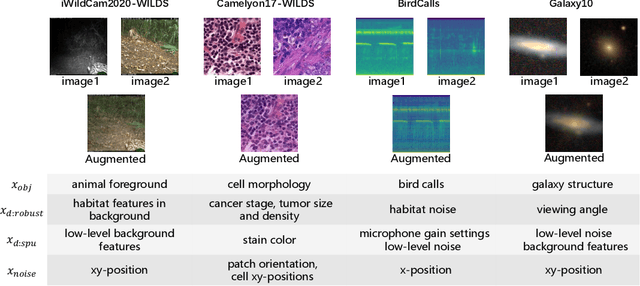
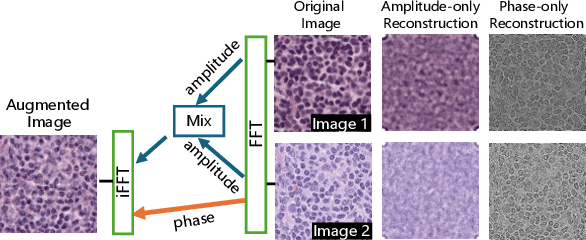
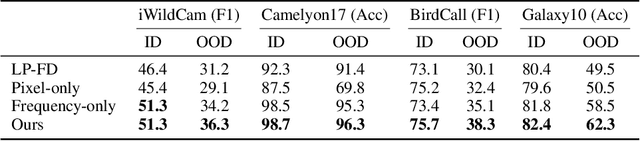
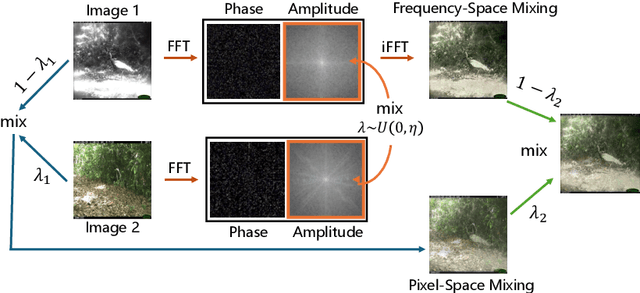
Out-of-domain (OOD) robustness under domain adaptation settings, where labeled source data and unlabeled target data come from different distributions, is a key challenge in real-world applications. A common approach to improving OOD robustness is through data augmentations. However, in real-world scenarios, models trained with generic augmentations can only improve marginally when generalized under distribution shifts toward unlabeled target domains. While dataset-specific targeted augmentations can address this issue, they typically require expert knowledge and extensive prior data analysis to identify the nature of the datasets and domain shift. To address these challenges, we propose Frequency-Pixel Connect, a domain-adaptation framework that enhances OOD robustness by introducing a targeted augmentation in both the frequency space and pixel space. Specifically, we mix the amplitude spectrum and pixel content of a source image and a target image to generate augmented samples that introduce domain diversity while preserving the semantic structure of the source image. Unlike previous targeted augmentation methods that are both dataset-specific and limited to the pixel space, Frequency-Pixel Connect is dataset-agnostic, enabling broader and more flexible applicability beyond natural image datasets. We further analyze the effectiveness of Frequency-Pixel Connect by evaluating the performance of our method connecting same-class cross-domain samples while separating different-class examples. We demonstrate that Frequency-Pixel Connect significantly improves cross-domain connectivity and outperforms previous generic methods on four diverse real-world benchmarks across vision, medical, audio, and astronomical domains, and it also outperforms other dataset-specific targeted augmentation methods.
JRE-L: Journalist, Reader, and Editor LLMs in the Loop for Science Journalism for the General Audience
Jan 28, 2025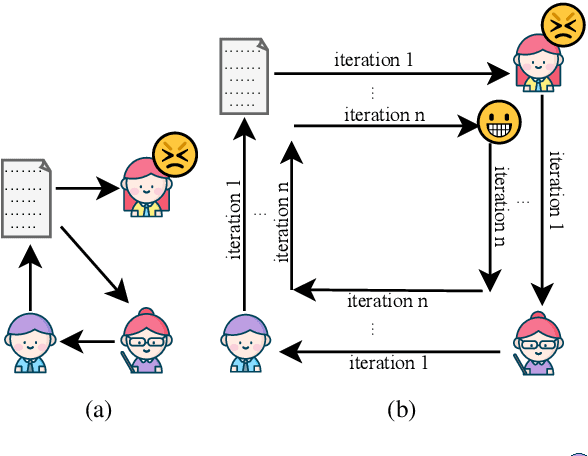
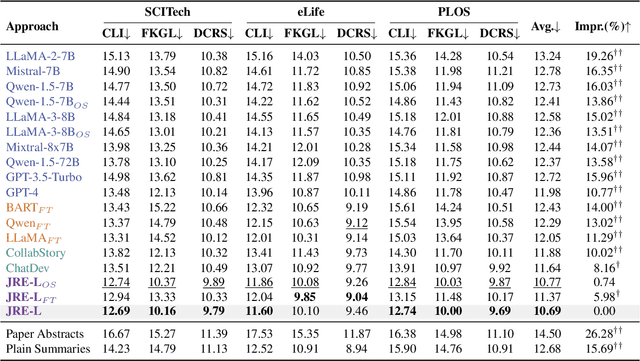
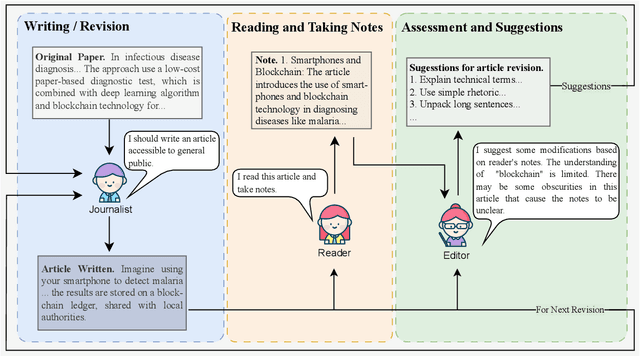
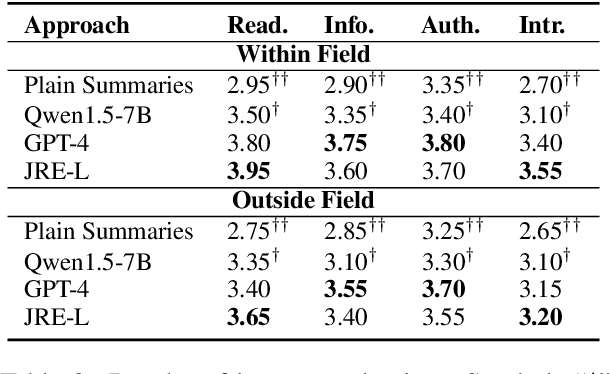
Science journalism reports current scientific discoveries to non-specialists, aiming to enable public comprehension of the state of the art. This task is challenging as the audience often lacks specific knowledge about the presented research. We propose a JRE-L framework that integrates three LLMs mimicking the writing-reading-feedback-revision loop. In JRE-L, one LLM acts as the journalist, another LLM as the general public reader, and the third LLM as an editor. The journalist's writing is iteratively refined by feedback from the reader and suggestions from the editor. Our experiments demonstrate that by leveraging the collaboration of two 7B and one 1.8B open-source LLMs, we can generate articles that are more accessible than those generated by existing methods, including prompting single advanced models such as GPT-4 and other LLM-collaboration strategies. Our code is publicly available at github.com/Zzoay/JRE-L.
Effective Fine-Tuning of Vision-Language Models for Accurate Galaxy Morphology Analysis
Nov 29, 2024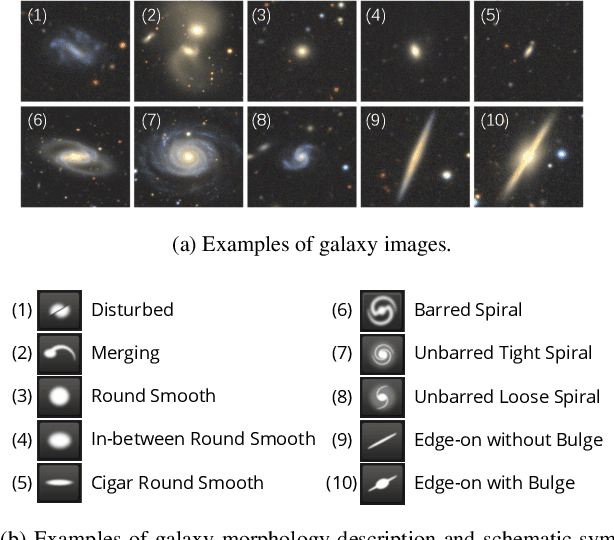
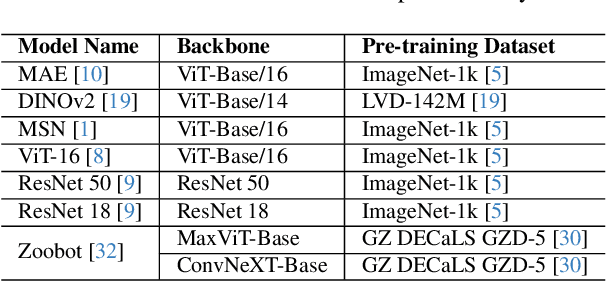
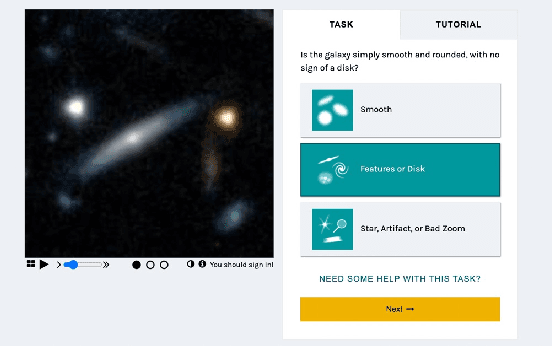
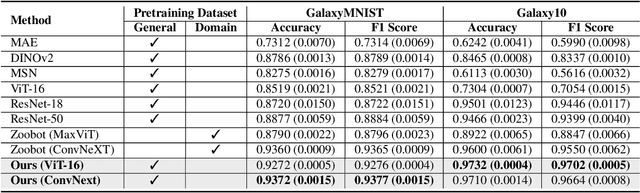
Galaxy morphology analysis involves classifying galaxies by their shapes and structures. For this task, directly training domain-specific models on large, annotated astronomical datasets is effective but costly. In contrast, fine-tuning vision foundation models on a smaller set of astronomical images is more resource-efficient but generally results in lower accuracy. To harness the benefits of both approaches and address their shortcomings, we propose GalaxAlign, a novel method that fine-tunes pre-trained foundation models to achieve high accuracy on astronomical tasks. Specifically, our method extends a contrastive learning architecture to align three types of data in fine-tuning: (1) a set of schematic symbols representing galaxy shapes and structures, (2) textual labels of these symbols, and (3) galaxy images. This way, GalaxAlign not only eliminates the need for expensive pretraining but also enhances the effectiveness of fine-tuning. Extensive experiments on galaxy classification and similarity search demonstrate that our method effectively fine-tunes general pre-trained models for astronomical tasks by incorporating domain-specific multi-modal knowledge.
LLM-Collaboration on Automatic Science Journalism for the General Audience
Jul 13, 2024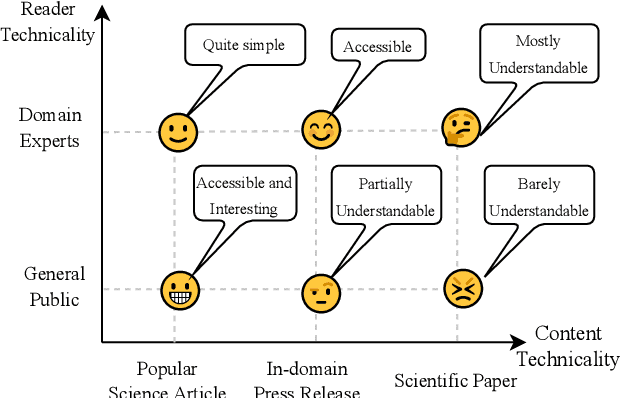
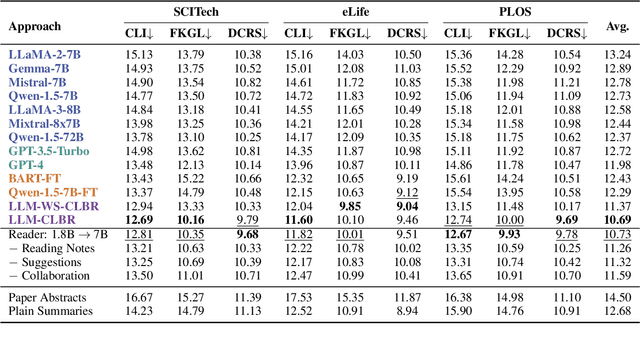
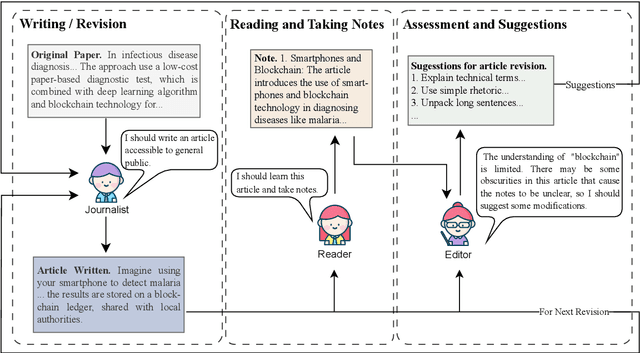
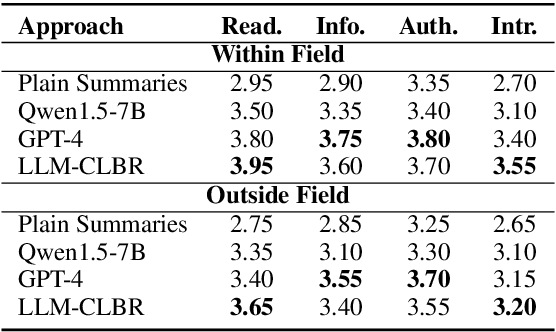
Science journalism reports current scientific discoveries to non-specialists, aiming to enable public comprehension of the state of the art. However, this task can be challenging as the audience often lacks specific knowledge about the presented research. To address this challenge, we propose a framework that integrates three LLMs mimicking the real-world writing-reading-feedback-revision workflow, with one LLM acting as the journalist, a smaller LLM as the general public reader, and the third LLM as an editor. The journalist's writing is iteratively refined by feedback from the reader and suggestions from the editor. Our experiments demonstrate that by leveraging the collaboration of two 7B and one 1.8B open-source LLMs, we can generate articles that are more accessible than those generated by existing methods, including advanced models such as GPT-4.
VisRec: A Semi-Supervised Approach to Radio Interferometric Data Reconstruction
Mar 01, 2024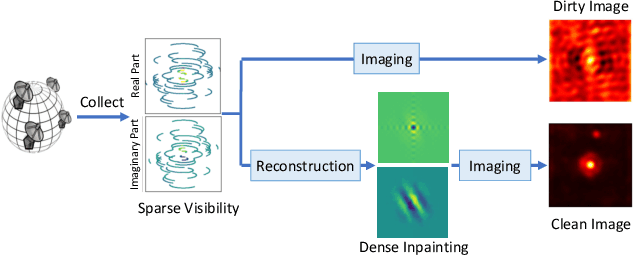
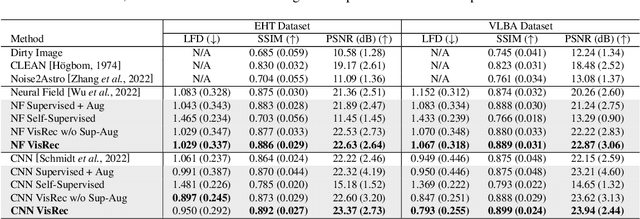
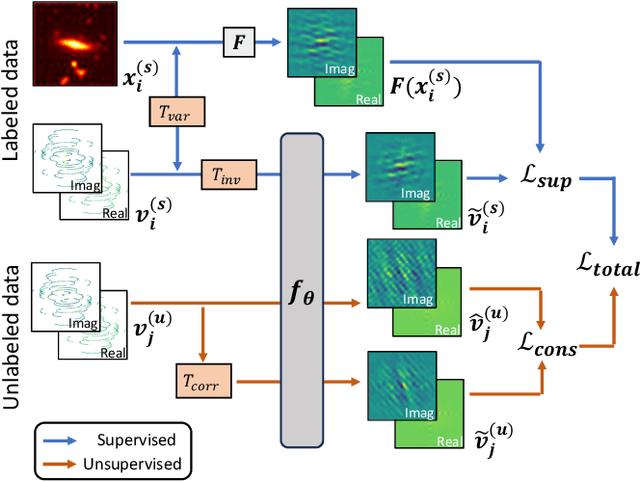
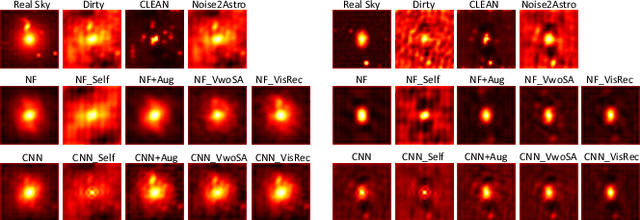
Radio telescopes produce visibility data about celestial objects, but these data are sparse and noisy. As a result, images created on raw visibility data are of low quality. Recent studies have used deep learning models to reconstruct visibility data to get cleaner images. However, these methods rely on a substantial amount of labeled training data, which requires significant labeling effort from radio astronomers. Addressing this challenge, we propose VisRec, a model-agnostic semi-supervised learning approach to the reconstruction of visibility data. Specifically, VisRec consists of both a supervised learning module and an unsupervised learning module. In the supervised learning module, we introduce a set of data augmentation functions to produce diverse training examples. In comparison, the unsupervised learning module in VisRec augments unlabeled data and uses reconstructions from non-augmented visibility data as pseudo-labels for training. This hybrid approach allows VisRec to effectively leverage both labeled and unlabeled data. This way, VisRec performs well even when labeled data is scarce. Our evaluation results show that VisRec outperforms all baseline methods in reconstruction quality, robustness against common observation perturbation, and generalizability to different telescope configurations.