 Add to Chrome
 Add to Firefox
 Add to Edge
DreamReg: Belief-Driven World Model for 2D-3D Ultrasound Registration
Jun 17, 2026
Ultrasound (US) is widely used for surgical navigation, yet real-time registration between intraoperative 2D slices and preoperative 3D volumes remains challenging due to partial observability, speckle noise, and the action-dependent US acquisition. Existing methods are one-shot or short-horizon, making it hard for them to gather evidence over time or capture how surgeons adjust probe motion based on on-screen feedback. We propose DreamReg, a belief-driven world-model framework that formulates 2D-3D registration as belief updating over rigid transformations. DreamReg maintains a latent belief state that summarizes past observations and poses information, and continuously refines the transformation through learned dynamics as new slices arrive. During training, DreamReg is exposed to probe-motion trajectories that mimic clinical scanning behavior and learns to update its belief by conditioning pose refinement on the current US observation. During inference, DreamReg refines registration via internal imagination: it rolls out the learned world model to simulate candidate probe motions and their predicted observations, and integrates these imagined outcomes to converge to an accurate rigid transformation. Experiments on CAMUS and u-RegPro datasets demonstrate improved robustness and competitive registration accuracy for real-time guidance compared with state-of-the-art methods.

Information-Theoretic Geometry Optimization and Physics-Aware Learning for Calibration-Free Magnetic Localization
Apr 24, 2026Wireless localization of permanent magnets enables occlusion-free guidance for medical interventions, yet its practical accuracy is fundamentally limited by two coupled challenges: the poor observability of conventional planar sensor arrays and the simulation-to-reality (Sim-to-Real) gap of learning-based estimators. To address these issues, this article presents a unified framework that combines information-theoretic sensor geometry optimization with physics-aware deep learning. First, a rigorous Fisher Information Matrix (FIM)-based evaluation framework is established to quantify geometry-induced observability limitations. The results show that a staggered split-array topology provides a substantially stronger observability foundation for localization while remaining compatible with practical external deployment. Second, building on this optimized sensing configuration, we propose Phy-GAANet, a calibration-free estimator trained entirely on hardware-aware synthetic data. By incorporating Physics-Informed Features (PIF) for saturation modeling and Geometry-Aware Attention (GAA) for preserving cross-layer vector structure, the network effectively bridges the Sim-to-Real gap. Extensive real-world experiments demonstrate state-of-the-art performance, achieving a position error of 1.84 mm and an orientation error of 3.18 degrees at a refresh rate exceeding 270 Hz. The proposed method consistently outperforms classical Levenberg--Marquardt solvers and generic convolutional baselines, particularly in suppressing catastrophic outliers and maintaining robustness in challenging near-field boundary regions. Beyond the proposed network, the FIM-guided analysis also provides a framework for sensor geometry design in magnetic localization systems under practical deployment constraints.
FingerViP: Learning Real-World Dexterous Manipulation with Fingertip Visual Perception
Apr 23, 2026The current practice of dexterous manipulation generally relies on a single wrist-mounted view, which is often occluded and limits performance on tasks requiring multi-view perception. In this work, we present FingerViP, a learning system that utilizes a visuomotor policy with fingertip visual perception for dexterous manipulation. Specifically, we design a vision-enhanced fingertip module with an embedded miniature camera and install the modules on each finger of a multi-fingered hand. The fingertip cameras substantially improve visual perception by providing comprehensive, multi-view feedback of both the hand and its surrounding environment. Building on the integrated fingertip modules, we develop a diffusion-based whole-body visuomotor policy conditioned on a third-view camera and multi-view fingertip vision, which effectively learns complex manipulation skills directly from human demonstrations. To improve view-proprioception alignment and contact awareness, each fingertip visual feature is augmented with its corresponding camera pose encoding and per-finger joint-current encoding. We validate the effectiveness of the multi-view fingertip vision and demonstrate the robustness and adaptability of FingerViP on various challenging real-world tasks, including pressing buttons inside a confined box, retrieving sticks from an unstable support, retrieving objects behind an occluding curtain, and performing long-horizon cabinet opening and object retrieval, achieving an overall success rate of 80.8%. All hardware designs and code will be fully open-sourced.
Open-H-Embodiment: A Large-Scale Dataset for Enabling Foundation Models in Medical Robotics
Apr 22, 2026Autonomous medical robots hold promise to improve patient outcomes, reduce provider workload, democratize access to care, and enable superhuman precision. However, autonomous medical robotics has been limited by a fundamental data problem: existing medical robotic datasets are small, single-embodiment, and rarely shared openly, restricting the development of foundation models that the field needs to advance. We introduce Open-H-Embodiment, the largest open dataset of medical robotic video with synchronized kinematics to date, spanning more than 49 institutions and multiple robotic platforms including the CMR Versius, Intuitive Surgical's da Vinci, da Vinci Research Kit (dVRK), Rob Surgical BiTrack, Virtual Incision's MIRA, Moon Surgical Maestro, and a variety of custom systems, spanning surgical manipulation, robotic ultrasound, and endoscopy procedures. We demonstrate the research enabled by this dataset through two foundation models. GR00T-H is the first open foundation vision-language-action model for medical robotics, which is the only evaluated model to achieve full end-to-end task completion on a structured suturing benchmark (25% of trials vs. 0% for all others) and achieves 64% average success across a 29-step ex vivo suturing sequence. We also train Cosmos-H-Surgical-Simulator, the first action-conditioned world model to enable multi-embodiment surgical simulation from a single checkpoint, spanning nine robotic platforms and supporting in silico policy evaluation and synthetic data generation for the medical domain. These results suggest that open, large-scale medical robot data collection can serve as critical infrastructure for the research community, enabling advances in robot learning, world modeling, and beyond.
A Vision-Language-Action Model for Adaptive Ultrasound-Guided Needle Insertion and Needle Tracking
Apr 22, 2026Ultrasound (US)-guided needle insertion is a critical yet challenging procedure due to dynamic imaging conditions and difficulties in needle visualization. Many methods have been proposed for automated needle insertion, but they often rely on hand-crafted pipelines with modular controllers, whose performance degrades in challenging cases. In this paper, a Vision-Language-Action (VLA) model is proposed for adaptive and automated US-guided needle insertion and tracking on a robotic ultrasound (RUS) system. This framework provides a unified approach to needle tracking and needle insertion control, enabling real-time, dynamically adaptive adjustment of insertion based on the obtained needle position and environment awareness. To achieve real-time and end-to-end tracking, a Cross-Depth Fusion (CDF) tracking head is proposed, integrating shallow positional and deep semantic features from the large-scale vision backbone. To adapt the pretrained vision backbone for tracking tasks, a Tracking-Conditioning (TraCon) register is introduced for parameter-efficient feature conditioning. After needle tracking, an uncertainty-aware control policy and an asynchronous VLA pipeline are presented for adaptive needle insertion control, ensuring timely decision-making for improved safety and outcomes. Extensive experiments on both needle tracking and insertion show that our method consistently outperforms state-of-the-art trackers and manual operation, achieving higher tracking accuracy, improved insertion success rates, and reduced procedure time, highlighting promising directions for RUS-based intelligent intervention.
MrTrack: Register Mamba for Needle Tracking with Rapid Reciprocating Motion during Ultrasound-Guided Aspiration Biopsy
May 14, 2025Ultrasound-guided fine needle aspiration (FNA) biopsy is a common minimally invasive diagnostic procedure. However, an aspiration needle tracker addressing rapid reciprocating motion is still missing. MrTrack, an aspiration needle tracker with a mamba-based register mechanism, is proposed. MrTrack leverages a Mamba-based register extractor to sequentially distill global context from each historical search map, storing these temporal cues in a register bank. The Mamba-based register retriever then retrieves temporal prompts from the register bank to provide external cues when current vision features are temporarily unusable due to rapid reciprocating motion and imaging degradation. A self-supervised register diversify loss is proposed to encourage feature diversity and dimension independence within the learned register, mitigating feature collapse. Comprehensive experiments conducted on both motorized and manual aspiration datasets demonstrate that MrTrack not only outperforms state-of-the-art trackers in accuracy and robustness but also achieves superior inference efficiency.
MambaXCTrack: Mamba-based Tracker with SSM Cross-correlation and Motion Prompt for Ultrasound Needle Tracking
Nov 13, 2024


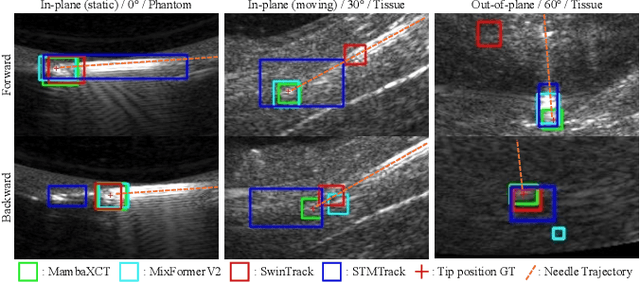
Ultrasound (US)-guided needle insertion is widely employed in percutaneous interventions. However, providing feedback on the needle tip position via US image presents challenges due to noise, artifacts, and the thin imaging plane of US, which degrades needle features and leads to intermittent tip visibility. In this paper, a Mamba-based US needle tracker MambaXCTrack utilizing structured state space models cross-correlation (SSMX-Corr) and implicit motion prompt is proposed, which is the first application of Mamba in US needle tracking. The SSMX-Corr enhances cross-correlation by long-range modeling and global searching of distant semantic features between template and search maps, benefiting the tracking under noise and artifacts by implicitly learning potential distant semantic cues. By combining with cross-map interleaved scan (CIS), local pixel-wise interaction with positional inductive bias can also be introduced to SSMX-Corr. The implicit low-level motion descriptor is proposed as a non-visual prompt to enhance tracking robustness, addressing the intermittent tip visibility problem. Extensive experiments on a dataset with motorized needle insertion in both phantom and tissue samples demonstrate that the proposed tracker outperforms other state-of-the-art trackers while ablation studies further highlight the effectiveness of each proposed tracking module.
Refined Motion Compensation with Soft Laser Manipulators using Data-Driven Surrogate Models
Jul 02, 2024

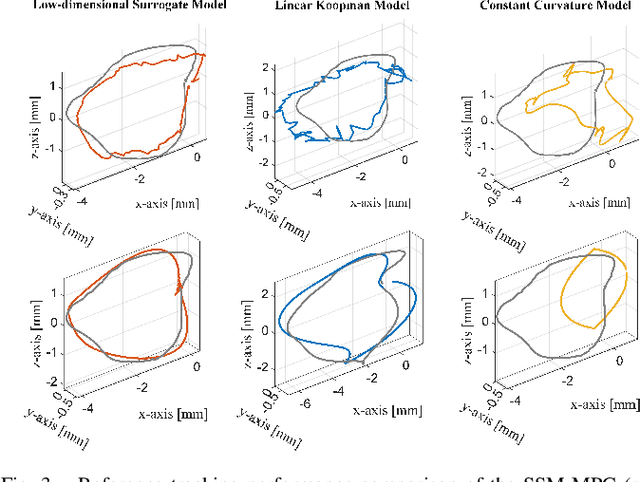
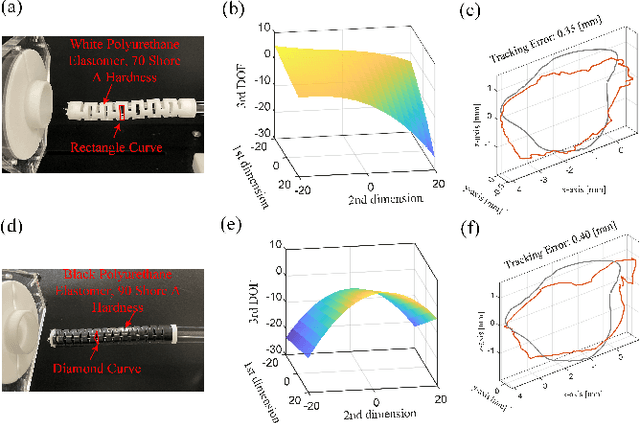
Non-contact laser ablation, a precise thermal technique, simultaneously cuts and coagulates tissue without the insertion errors associated with rigid needles. Human organ motions, such as those in the liver, exhibit rhythmic components influenced by respiratory and cardiac cycles, making effective laser energy delivery to target lesions while compensating for tumor motion crucial. This research introduces a data-driven method to derive surrogate models of a soft manipulator. These low-dimensional models offer computational efficiency when integrated into the Model Predictive Control (MPC) framework, while still capturing the manipulator's dynamics with and without control input. Spectral Submanifolds (SSM) theory models the manipulator's autonomous dynamics, acknowledging its tendency to reach equilibrium when external forces are removed. Preliminary results show that the MPC controller using the surrogate model outperforms two other models within the same MPC framework. The data-driven MPC controller also supports a design-agnostic feature, allowing the interchangeability of different soft manipulators within the laser ablation surgery robot system.