 Add to Chrome
 Add to Firefox
 Add to Edge
HD-maps as Prior Information for Globally Consistent Mapping in GPS-denied Environments
Jul 28, 2024
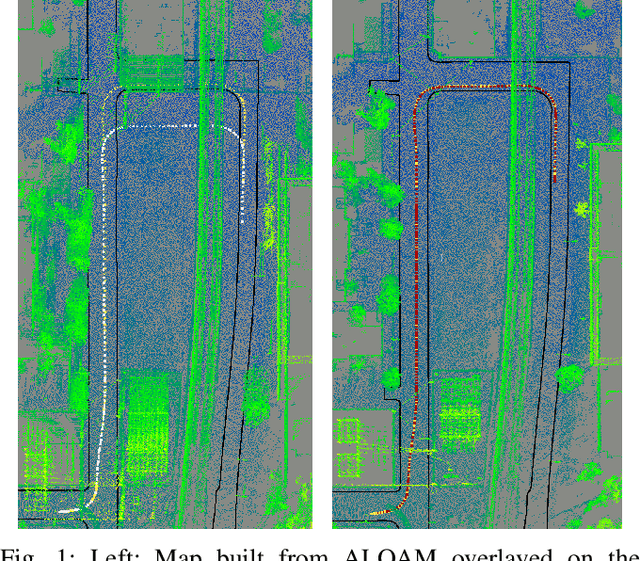
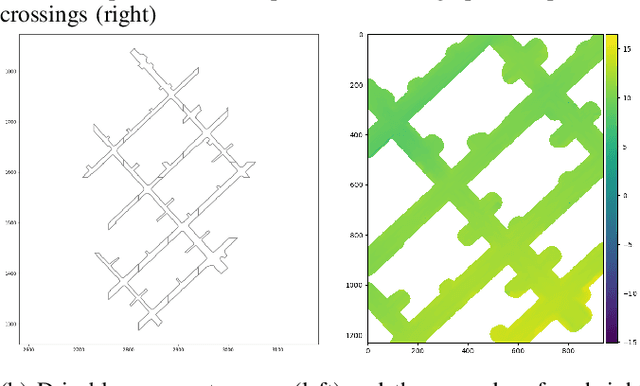
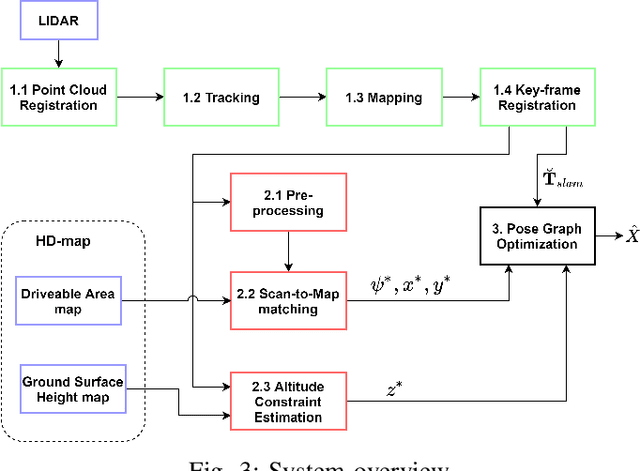
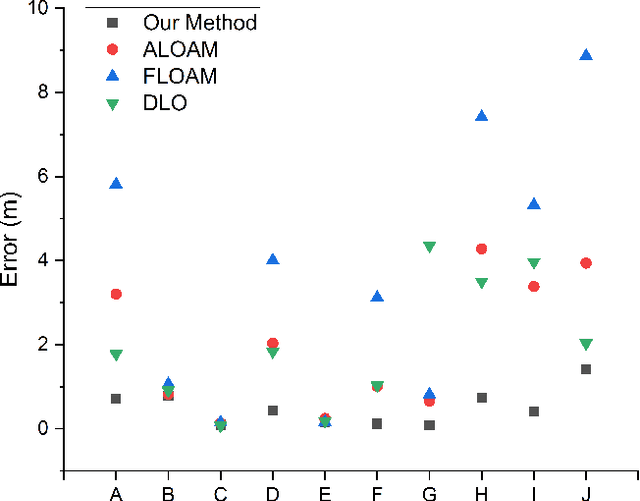
In recent years, prior maps have become a mainstream tool in autonomous navigation. However, commonly available prior maps are still tailored to control-and-decision tasks, and the use of these maps for localization remains largely unexplored. To bridge this gap, we propose a lidar-based localization and mapping (LOAM) system that can exploit the common HD-maps in autonomous driving scenarios. Specifically, we propose a technique to extract information from the drivable area and ground surface height components of the HD-maps to construct 4DOF pose priors. These pose priors are then further integrated into the pose-graph optimization problem to create a globally consistent 3D map. Experiments show that our scheme can significantly improve the global consistency of the map compared to state-of-the-art lidar-only approaches, proven to be a useful technology to enhance the system's robustness, especially in GPS-denied environment. Moreover, our work also serves as a first step towards long-term navigation of robots in familiar environment, by updating a map. In autonomous driving this could enable updating the HD-maps without sourcing a new from a third party company, which is expensive and introduces delays from change in the world to updated map.

SeFlow: A Self-Supervised Scene Flow Method in Autonomous Driving
Jul 01, 2024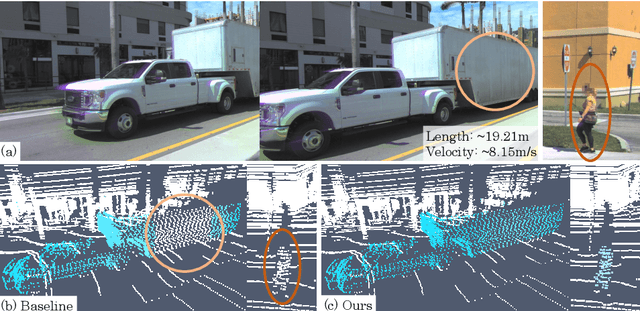
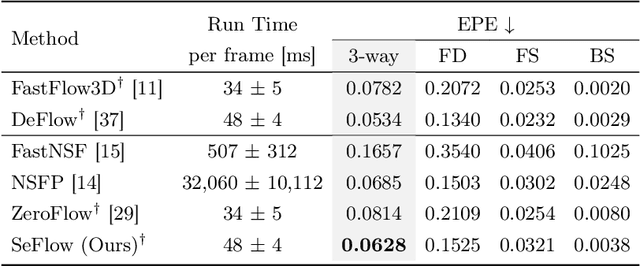
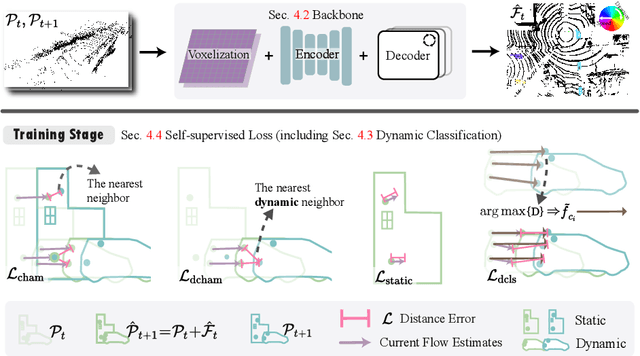

Scene flow estimation predicts the 3D motion at each point in successive LiDAR scans. This detailed, point-level, information can help autonomous vehicles to accurately predict and understand dynamic changes in their surroundings. Current state-of-the-art methods require annotated data to train scene flow networks and the expense of labeling inherently limits their scalability. Self-supervised approaches can overcome the above limitations, yet face two principal challenges that hinder optimal performance: point distribution imbalance and disregard for object-level motion constraints. In this paper, we propose SeFlow, a self-supervised method that integrates efficient dynamic classification into a learning-based scene flow pipeline. We demonstrate that classifying static and dynamic points helps design targeted objective functions for different motion patterns. We also emphasize the importance of internal cluster consistency and correct object point association to refine the scene flow estimation, in particular on object details. Our real-time capable method achieves state-of-the-art performance on the self-supervised scene flow task on Argoverse 2 and Waymo datasets. The code is open-sourced at https://github.com/KTH-RPL/SeFlow along with trained model weights.
Beyond the Frontier: Predicting Unseen Walls from Occupancy Grids by Learning from Floor Plans
Jun 13, 2024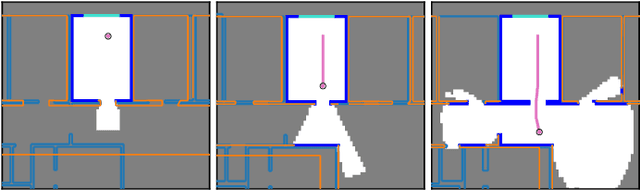
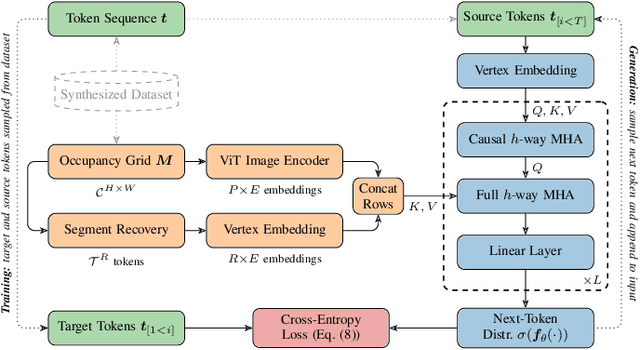
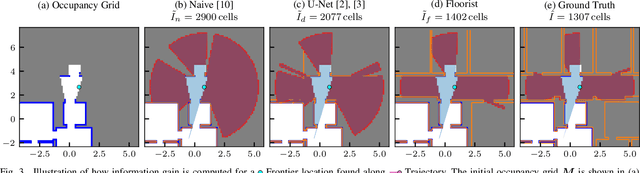
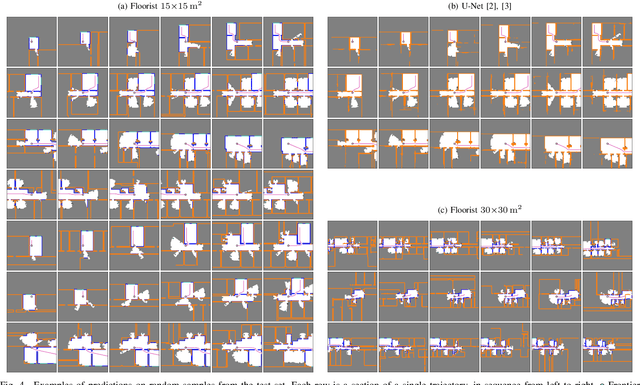
In this paper, we tackle the challenge of predicting the unseen walls of a partially observed environment as a set of 2D line segments, conditioned on occupancy grids integrated along the trajectory of a 360{\deg} LIDAR sensor. A dataset of such occupancy grids and their corresponding target wall segments is collected by navigating a virtual robot between a set of randomly sampled waypoints in a collection of office-scale floor plans from a university campus. The line segment prediction task is formulated as an autoregressive sequence prediction task, and an attention-based deep network is trained on the dataset. The sequence-based autoregressive formulation is evaluated through predicted information gain, as in frontier-based autonomous exploration, demonstrating significant improvements over both non-predictive estimation and convolution-based image prediction found in the literature. Ablations on key components are evaluated, as well as sensor range and the occupancy grid's metric area. Finally, model generality is validated by predicting walls in a novel floor plan reconstructed on-the-fly in a real-world office environment.
* RA-L, 8 pages
BeautyMap: Binary-Encoded Adaptable Ground Matrix for Dynamic Points Removal in Global Maps
May 12, 2024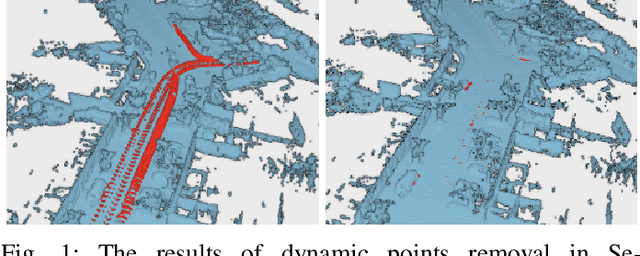
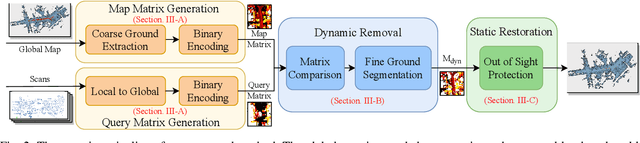
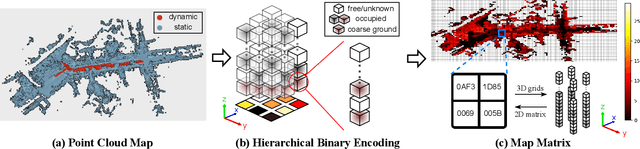
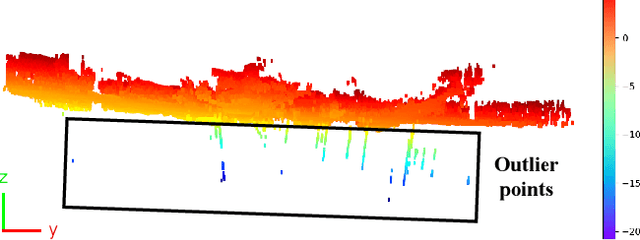
Global point clouds that correctly represent the static environment features can facilitate accurate localization and robust path planning. However, dynamic objects introduce undesired ghost tracks that are mixed up with the static environment. Existing dynamic removal methods normally fail to balance the performance in computational efficiency and accuracy. In response, we present BeautyMap to efficiently remove the dynamic points while retaining static features for high-fidelity global maps. Our approach utilizes a binary-encoded matrix to efficiently extract the environment features. With a bit-wise comparison between matrices of each frame and the corresponding map region, we can extract potential dynamic regions. Then we use coarse to fine hierarchical segmentation of the $z$-axis to handle terrain variations. The final static restoration module accounts for the range-visibility of each single scan and protects static points out of sight. Comparative experiments underscore BeautyMap's superior performance in both accuracy and efficiency against other dynamic points removal methods. The code is open-sourced at https://github.com/MKJia/BeautyMap.
Neural Graph Mapping for Dense SLAM with Efficient Loop Closure
May 06, 2024Existing neural field-based SLAM methods typically employ a single monolithic field as their scene representation. This prevents efficient incorporation of loop closure constraints and limits scalability. To address these shortcomings, we propose a neural mapping framework which anchors lightweight neural fields to the pose graph of a sparse visual SLAM system. Our approach shows the ability to integrate large-scale loop closures, while limiting necessary reintegration. Furthermore, we verify the scalability of our approach by demonstrating successful building-scale mapping taking multiple loop closures into account during the optimization, and show that our method outperforms existing state-of-the-art approaches on large scenes in terms of quality and runtime. Our code is available at https://kth-rpl.github.io/neural_graph_mapping/.
UADA3D: Unsupervised Adversarial Domain Adaptation for 3D Object Detection with Sparse LiDAR and Large Domain Gaps
Mar 28, 2024In this study, we address a gap in existing unsupervised domain adaptation approaches on LiDAR-based 3D object detection, which have predominantly concentrated on adapting between established, high-density autonomous driving datasets. We focus on sparser point clouds, capturing scenarios from different perspectives: not just from vehicles on the road but also from mobile robots on sidewalks, which encounter significantly different environmental conditions and sensor configurations. We introduce Unsupervised Adversarial Domain Adaptation for 3D Object Detection (UADA3D). UADA3D does not depend on pre-trained source models or teacher-student architectures. Instead, it uses an adversarial approach to directly learn domain-invariant features. We demonstrate its efficacy in various adaptation scenarios, showing significant improvements in both self-driving car and mobile robot domains. Our code is open-source and will be available soon.
Addressing Data Annotation Challenges in Multiple Sensors: A Solution for Scania Collected Datasets
Mar 27, 2024Data annotation in autonomous vehicles is a critical step in the development of Deep Neural Network (DNN) based models or the performance evaluation of the perception system. This often takes the form of adding 3D bounding boxes on time-sequential and registered series of point-sets captured from active sensors like Light Detection and Ranging (LiDAR) and Radio Detection and Ranging (RADAR). When annotating multiple active sensors, there is a need to motion compensate and translate the points to a consistent coordinate frame and timestamp respectively. However, highly dynamic objects pose a unique challenge, as they can appear at different timestamps in each sensor's data. Without knowing the speed of the objects, their position appears to be different in different sensor outputs. Thus, even after motion compensation, highly dynamic objects are not matched from multiple sensors in the same frame, and human annotators struggle to add unique bounding boxes that capture all objects. This article focuses on addressing this challenge, primarily within the context of Scania collected datasets. The proposed solution takes a track of an annotated object as input and uses the Moving Horizon Estimation (MHE) to robustly estimate its speed. The estimated speed profile is utilized to correct the position of the annotated box and add boxes to object clusters missed by the original annotation.
MCD: Diverse Large-Scale Multi-Campus Dataset for Robot Perception
Mar 18, 2024Perception plays a crucial role in various robot applications. However, existing well-annotated datasets are biased towards autonomous driving scenarios, while unlabelled SLAM datasets are quickly over-fitted, and often lack environment and domain variations. To expand the frontier of these fields, we introduce a comprehensive dataset named MCD (Multi-Campus Dataset), featuring a wide range of sensing modalities, high-accuracy ground truth, and diverse challenging environments across three Eurasian university campuses. MCD comprises both CCS (Classical Cylindrical Spinning) and NRE (Non-Repetitive Epicyclic) lidars, high-quality IMUs (Inertial Measurement Units), cameras, and UWB (Ultra-WideBand) sensors. Furthermore, in a pioneering effort, we introduce semantic annotations of 29 classes over 59k sparse NRE lidar scans across three domains, thus providing a novel challenge to existing semantic segmentation research upon this largely unexplored lidar modality. Finally, we propose, for the first time to the best of our knowledge, continuous-time ground truth based on optimization-based registration of lidar-inertial data on large survey-grade prior maps, which are also publicly released, each several times the size of existing ones. We conduct a rigorous evaluation of numerous state-of-the-art algorithms on MCD, report their performance, and highlight the challenges awaiting solutions from the research community.
DUFOMap: Efficient Dynamic Awareness Mapping
Mar 03, 2024

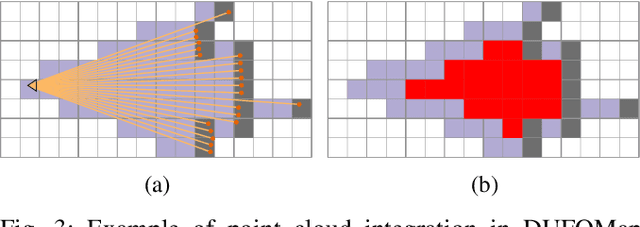
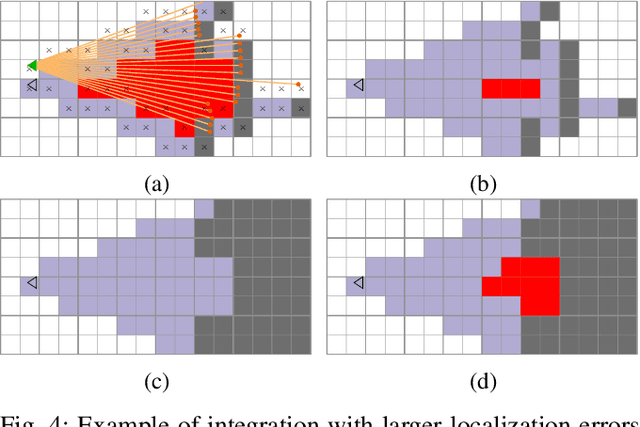
The dynamic nature of the real world is one of the main challenges in robotics. The first step in dealing with it is to detect which parts of the world are dynamic. A typical benchmark task is to create a map that contains only the static part of the world to support, for example, localization and planning. Current solutions are often applied in post-processing, where parameter tuning allows the user to adjust the setting for a specific dataset. In this paper, we propose DUFOMap, a novel dynamic awareness mapping framework designed for efficient online processing. Despite having the same parameter settings for all scenarios, it performs better or is on par with state-of-the-art methods. Ray casting is utilized to identify and classify fully observed empty regions. Since these regions have been observed empty, it follows that anything inside them at another time must be dynamic. Evaluation is carried out in various scenarios, including outdoor environments in KITTI and Argoverse 2, open areas on the KTH campus, and with different sensor types. DUFOMap outperforms the state of the art in terms of accuracy and computational efficiency. The source code, benchmarks, and links to the datasets utilized are provided. See https://kin-zhang.github.io/dufomap for more details.
DeFlow: Decoder of Scene Flow Network in Autonomous Driving
Jan 29, 2024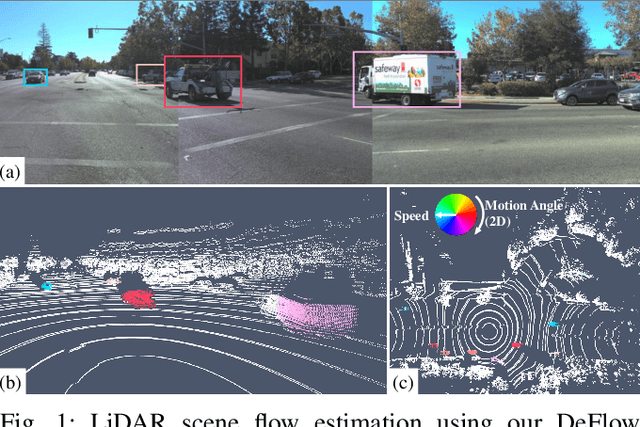
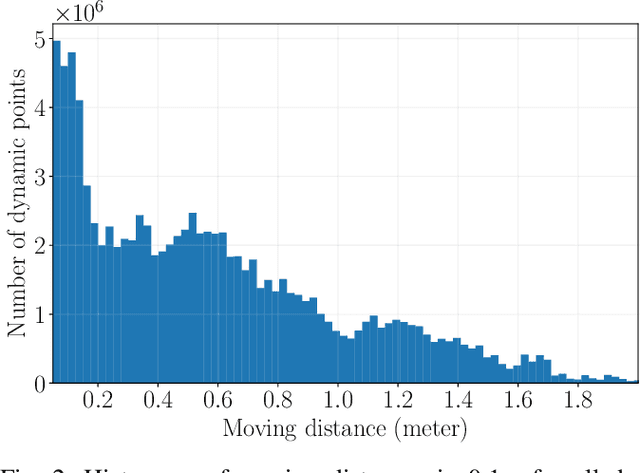
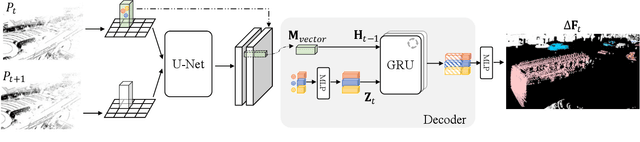
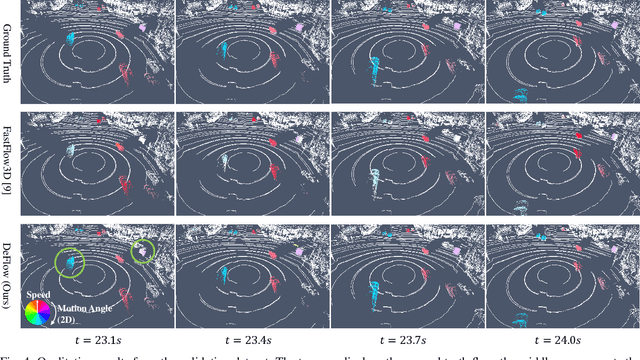
Scene flow estimation determines a scene's 3D motion field, by predicting the motion of points in the scene, especially for aiding tasks in autonomous driving. Many networks with large-scale point clouds as input use voxelization to create a pseudo-image for real-time running. However, the voxelization process often results in the loss of point-specific features. This gives rise to a challenge in recovering those features for scene flow tasks. Our paper introduces DeFlow which enables a transition from voxel-based features to point features using Gated Recurrent Unit (GRU) refinement. To further enhance scene flow estimation performance, we formulate a novel loss function that accounts for the data imbalance between static and dynamic points. Evaluations on the Argoverse 2 scene flow task reveal that DeFlow achieves state-of-the-art results on large-scale point cloud data, demonstrating that our network has better performance and efficiency compared to others. The code is open-sourced at https://github.com/KTH-RPL/deflow.