 Add to Chrome
 Add to Firefox
 Add to Edge
Event-Centric Human Value Understanding in News-Domain Texts: An Actor-Conditioned, Multi-Granularity Benchmark
Mar 18, 2026
Existing human value datasets do not directly support value understanding in factual news: many are actor-agnostic, rely on isolated utterances or synthetic scenarios, and lack explicit event structure or value direction. We present \textbf{NEVU} (\textbf{N}ews \textbf{E}vent-centric \textbf{V}alue \textbf{U}nderstanding), a benchmark for \emph{actor-conditioned}, \emph{event-centric}, and \emph{direction-aware} human value recognition in factual news. NEVU evaluates whether models can identify value cues, attribute them to the correct actor, and determine value direction from grounded evidence. Built from 2{,}865 English news articles, NEVU organizes annotations at four semantic unit levels (\textbf{Subevent}, \textbf{behavior-based composite event}, \textbf{story-based composite event}, and \textbf{Article}) and labels \mbox{(unit, actor)} pairs for fine-grained evaluation across local and composite contexts. The annotations are produced through an LLM-assisted pipeline with staged verification and targeted human auditing. Using a hierarchical value space with \textbf{54} fine-grained values and \textbf{20} coarse-grained categories, NEVU covers 45{,}793 unit--actor pairs and 168{,}061 directed value instances. We provide unified baselines for proprietary and open-source LLMs, and find that lightweight adaptation (LoRA) consistently improves open-source models, showing that although NEVU is designed primarily as a benchmark, it also supports supervised adaptation beyond prompting-only evaluation. Data availability is described in Appendix~\ref{app:data_code_availability}.

Assessing the Effectiveness of LLMs in Delivering Cognitive Behavioral Therapy
Mar 04, 2026As mental health issues continue to rise globally, there is an increasing demand for accessible and scalable therapeutic solutions. Many individuals currently seek support from Large Language Models (LLMs), even though these models have not been validated for use in counseling services. In this paper, we evaluate LLMs' ability to emulate professional therapists practicing Cognitive Behavioral Therapy (CBT). Using anonymized, transcribed role-play sessions between licensed therapists and clients, we compare two approaches: (1) a generation-only method and (2) a Retrieval-Augmented Generation (RAG) approach using CBT guidelines. We evaluate both proprietary and open-source models for linguistic quality, semantic coherence, and therapeutic fidelity using standard natural language generation (NLG) metrics, natural language inference (NLI), and automated scoring for skills assessment. Our results indicate that while LLMs can generate CBT-like dialogues, they are limited in their ability to convey empathy and maintain consistency.
Characterizing Personality from Eye-Tracking: The Role of Gaze and Its Absence in Interactive Search Environments
Jan 13, 2026Personality traits influence how individuals engage, behave, and make decisions during the information-seeking process. However, few studies have linked personality to observable search behaviors. This study aims to characterize personality traits through a multimodal time-series model that integrates eye-tracking data and gaze missingness-periods when the user's gaze is not captured. This approach is based on the idea that people often look away when they think, signaling disengagement or reflection. We conducted a user study with 25 participants, who used an interactive application on an iPad, allowing them to engage with digital artifacts from a museum. We rely on raw gaze data from an eye tracker, minimizing preprocessing so that behavioral patterns can be preserved without substantial data cleaning. From this perspective, we trained models to predict personality traits using gaze signals. Our results from a five-fold cross-validation study demonstrate strong predictive performance across all five dimensions: Neuroticism (Macro F1 = 77.69%), Conscientiousness (74.52%), Openness (77.52%), Agreeableness (73.09%), and Extraversion (76.69%). The ablation study examines whether the absence of gaze information affects the model performance, demonstrating that incorporating missingness improves multimodal time-series modeling. The full model, which integrates both time-series signals and missingness information, achieves 10-15% higher accuracy and macro F1 scores across all Big Five traits compared to the model without time-series signals and missingness. These findings provide evidence that personality can be inferred from search-related gaze behavior and demonstrate the value of incorporating missing gaze data into time-series multimodal modeling.
Are LLMs effective psychological assessors? Leveraging adaptive RAG for interpretable mental health screening through psychometric practice
Jan 02, 2025
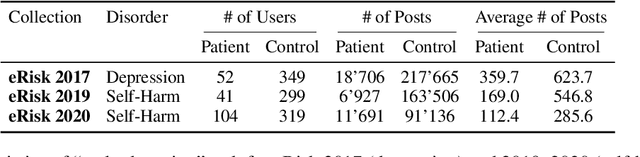


In psychological practice, standardized questionnaires serve as essential tools for assessing mental constructs (e.g., attitudes, traits, and emotions) through structured questions (aka items). With the increasing prevalence of social media platforms where users share personal experiences and emotions, researchers are exploring computational methods to leverage this data for rapid mental health screening. In this study, we propose a novel adaptive Retrieval-Augmented Generation (RAG) approach that completes psychological questionnaires by analyzing social media posts. Our method retrieves the most relevant user posts for each question in a psychological survey and uses Large Language Models (LLMs) to predict questionnaire scores in a zero-shot setting. Our findings are twofold. First we demonstrate that this approach can effectively predict users' responses to psychological questionnaires, such as the Beck Depression Inventory II (BDI-II), achieving performance comparable to or surpassing state-of-the-art models on Reddit-based benchmark datasets without relying on training data. Second, we show how this methodology can be generalized as a scalable screening tool, as the final assessment is systematically derived by completing standardized questionnaires and tracking how individual item responses contribute to the diagnosis, aligning with established psychometric practices.
Perspectives on Large Language Models for Relevance Judgment
Apr 13, 2023
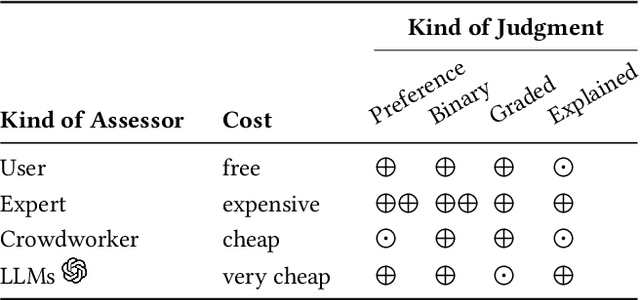

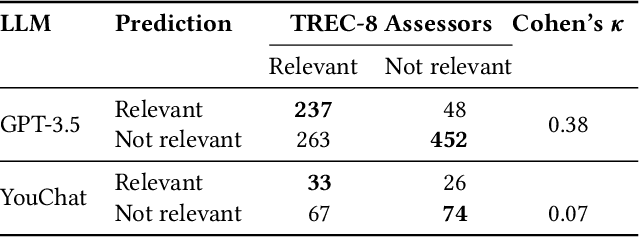
When asked, current large language models (LLMs) like ChatGPT claim that they can assist us with relevance judgments. Many researchers think this would not lead to credible IR research. In this perspective paper, we discuss possible ways for LLMs to assist human experts along with concerns and issues that arise. We devise a human-machine collaboration spectrum that allows categorizing different relevance judgment strategies, based on how much the human relies on the machine. For the extreme point of "fully automated assessment", we further include a pilot experiment on whether LLM-based relevance judgments correlate with judgments from trained human assessors. We conclude the paper by providing two opposing perspectives - for and against the use of LLMs for automatic relevance judgments - and a compromise perspective, informed by our analyses of the literature, our preliminary experimental evidence, and our experience as IR researchers. We hope to start a constructive discussion within the community to avoid a stale-mate during review, where work is dammed if is uses LLMs for evaluation and dammed if it doesn't.
Test Collections for Patent-to-Patent Retrieval and Patent Map Generation in NTCIR-4 Workshop
Apr 10, 2004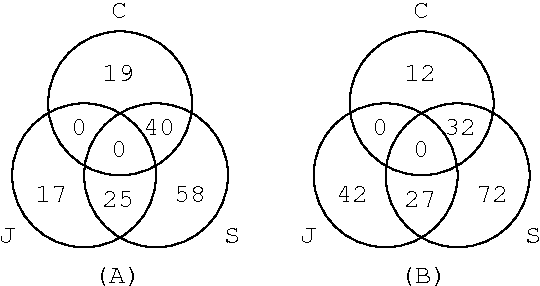
This paper describes the Patent Retrieval Task in the Fourth NTCIR Workshop, and the test collections produced in this task. We perform the invalidity search task, in which each participant group searches a patent collection for the patents that can invalidate the demand in an existing claim. We also perform the automatic patent map generation task, in which the patents associated with a specific topic are organized in a multi-dimensional matrix.
* 4 pages, Proceedings of the 4th International Conference on Language Resources and Evaluation (to appear)